Castle of Vidigueira: A Medieval Frontier Fortress in Portugal
Site at a Glance
- Rating
- 4
- Popularity
- Very Low
- Country
- Portugal
- Primary era
- Medieval
- Eras represented
- Medieval, Early Modern
- Civilizations
- Portuguese
- Site type
- Military
- Remains
- Castle
On this page12 sections
History
The Castle of Vidigueira is a medieval Portuguese fortress in Vidigueira, Portugal, built as part of the Christian repopulation and defence of the Guadiana frontier during the thirteenth century. The frontier castles of the period served both military and settlement purposes during the Reconquista, the long expansion of Christian kingdoms into Muslim-ruled territories. Some interpretations propose that the settlement began at an earlier Roman fortification and was later occupied during the Muslim conquest of the Iberian Peninsula, but this remains a possibility rather than an established origin.
Medieval frontier settlement
Portuguese forces conquered Vidigueira in 1235, during the reign of Sancho II. The first documentary reference to the settlement dates from 1255, when the foundation of São Cucufate Monastery and the creation of its parish also defined Vidigueira and its boundaries.
During the reign of Afonso III, Vidigueira and its domains were granted to Mestre Tomé, treasurer of Braga Cathedral. He is credited with erecting and strengthening the castle as part of the frontier repopulation programme. He also built the former parish church of Santa Clara. Between 1304 and 1315, Vidigueira returned to the Portuguese Crown under King Denis.
The Braganza connection
In 1385, during the crisis of 1383 to 1385, King John I granted Vidigueira to his constable, Nuno Álvares Pereira. The crisis was a succession struggle that secured the independence of Portugal under the new royal dynasty. Through the marriage of Pereira’s daughter, Beatriz Pereira Alvim, to Afonso, Count of Barcelos and first Duke of Braganza, the town, castle, and surrounding domain passed to the House of Braganza, one of Portugal’s leading aristocratic and later royal families.
Fernando, the second Duke of Braganza, is traditionally credited with constructing the fortified tower that survives today during the first half of the fifteenth century. The tower may later have been adapted as a residence for the Counts of Vidigueira.
From noble possession to the Gama title
The properties of the House of Braganza were confiscated in 1483 and reverted to the Crown. Manuel I annulled the proceedings against the Braganzas in 1500 and granted Vidigueira a charter around 1512.
In 1519, Manuel I granted Vasco da Gama, the Portuguese navigator who commanded the first Portuguese voyage to India around the Cape of Good Hope, the title of first Count of Vidigueira in recognition of his services. On 7 November that year, Vasco da Gama reached an agreement with the Duke of Braganza concerning the transfer, exchange, and renunciation of the relevant possessions. The Paço de Évora was replaced by the Paço da Vidigueira, a palace attached to the fortifications.
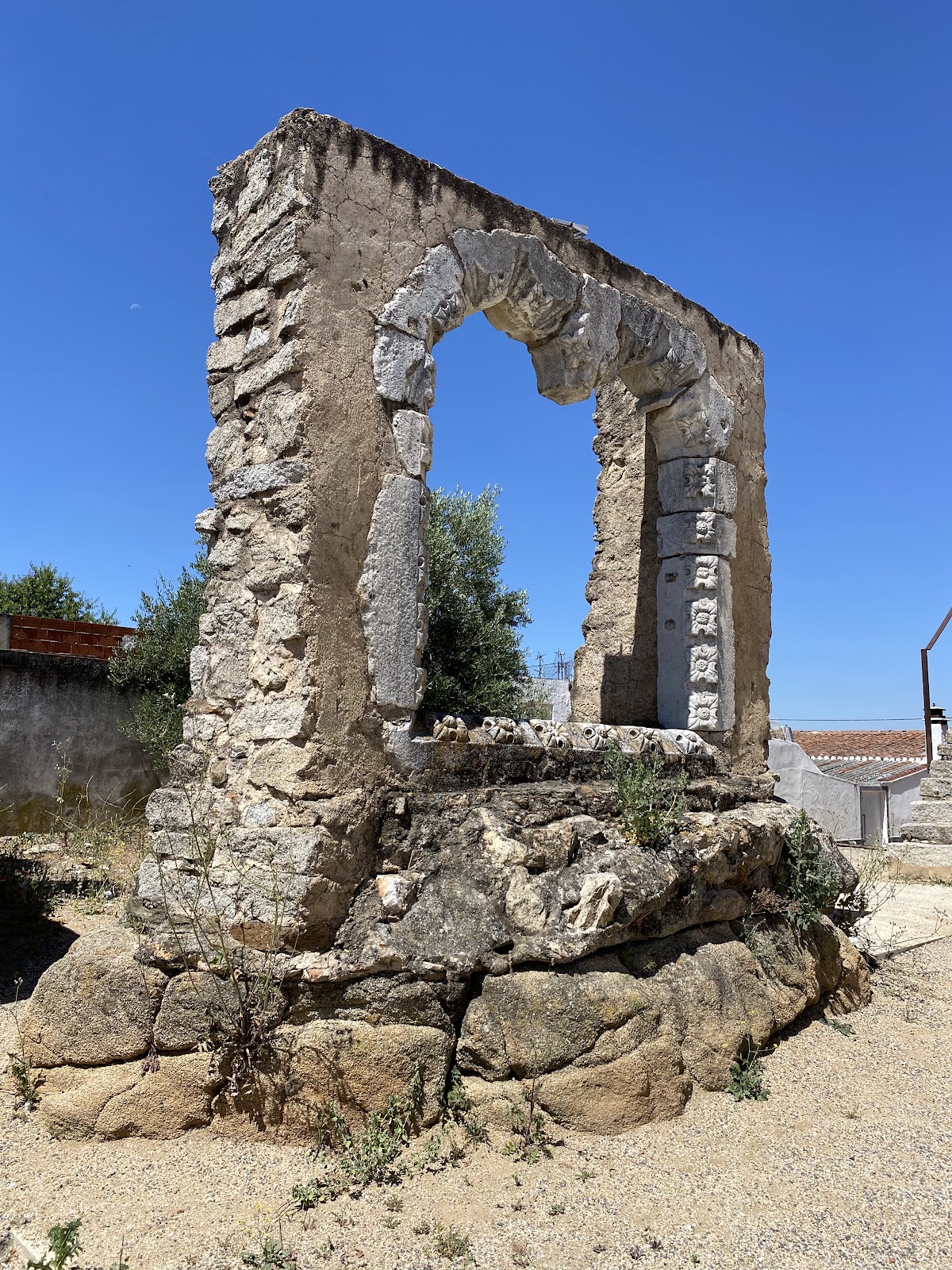
The palace was an important part of the complex, but almost none of it survives. A Manueline window, made in the richly ornamental style associated with the reign of Manuel I, was brought from Vila de Frades and is considered to have belonged to the palace. It may be the only surviving element of that building.
Heritage protection and administration
The ruins of the keep, also known as Atalaia das Vidigueiras, were classified as a Property of Public Interest under a decree published on 3 June 1970. This Portuguese designation recognizes a site’s national cultural-heritage importance. On 1 June 1992, the property was transferred to the Instituto Português do Património Arquitectónico, Portugal’s former institute for architectural heritage and preservation. Responsibility passed from the national government to the municipality in 2021.
Remains
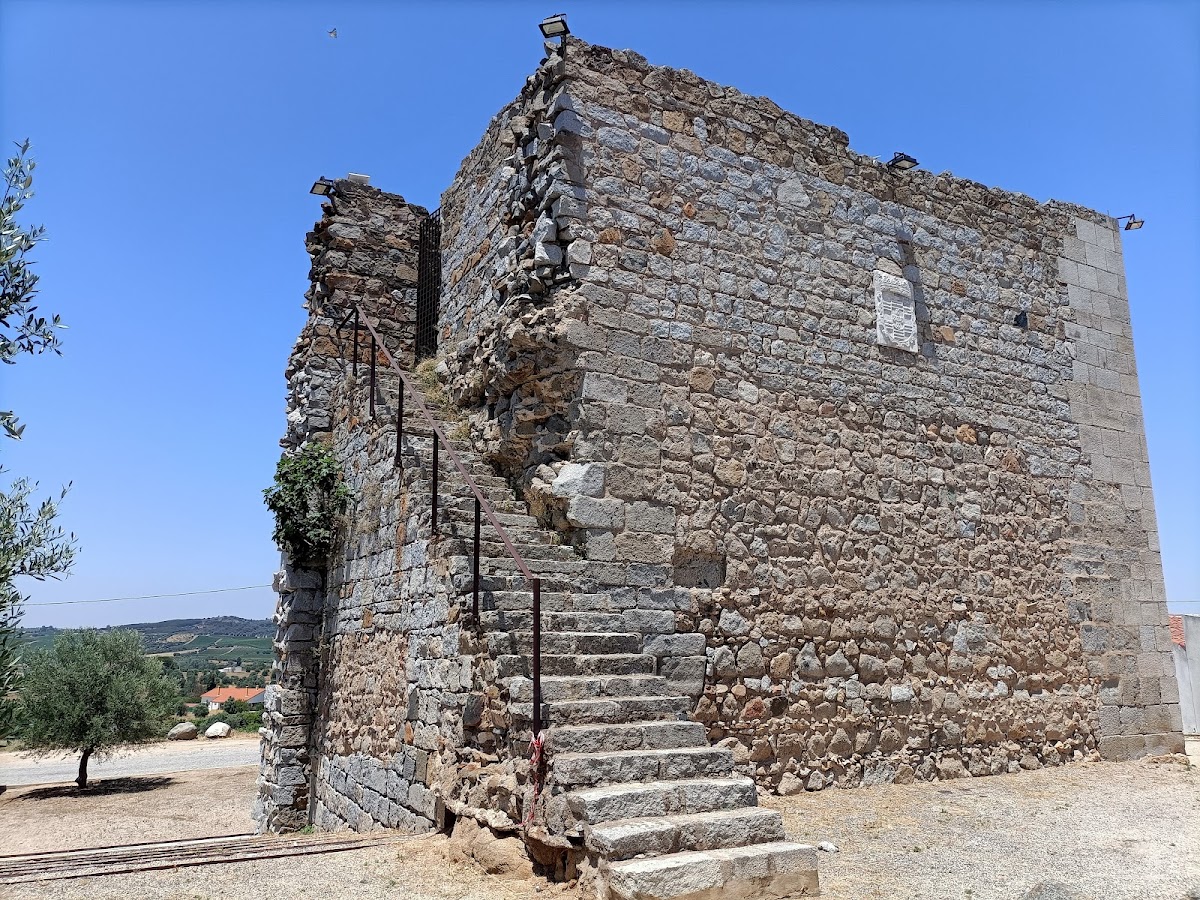
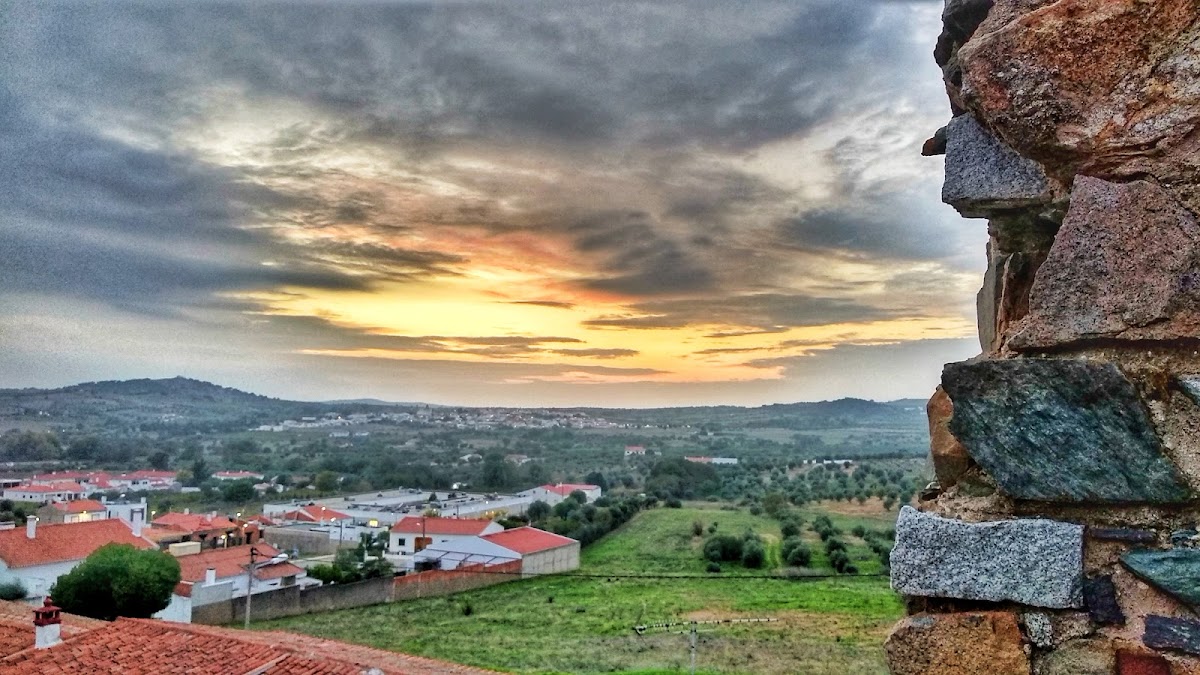
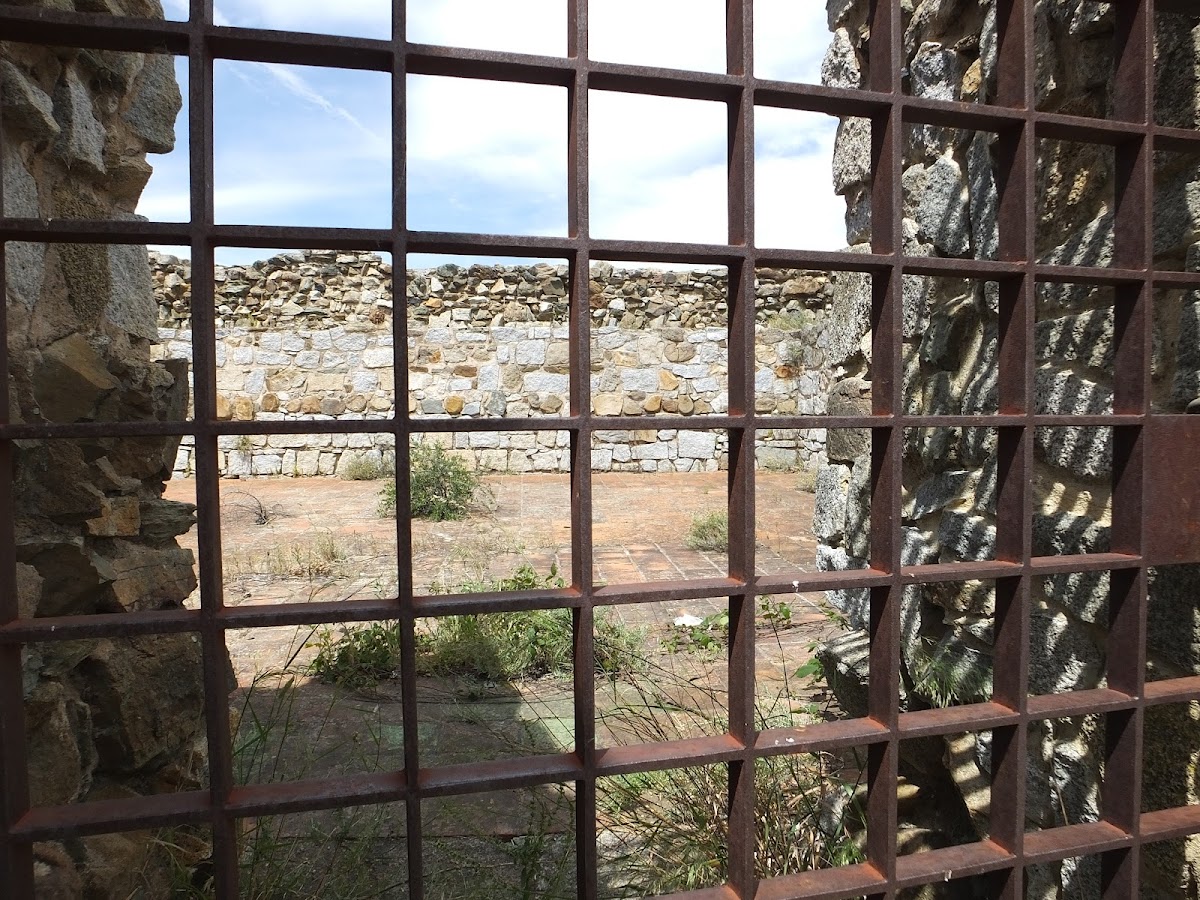
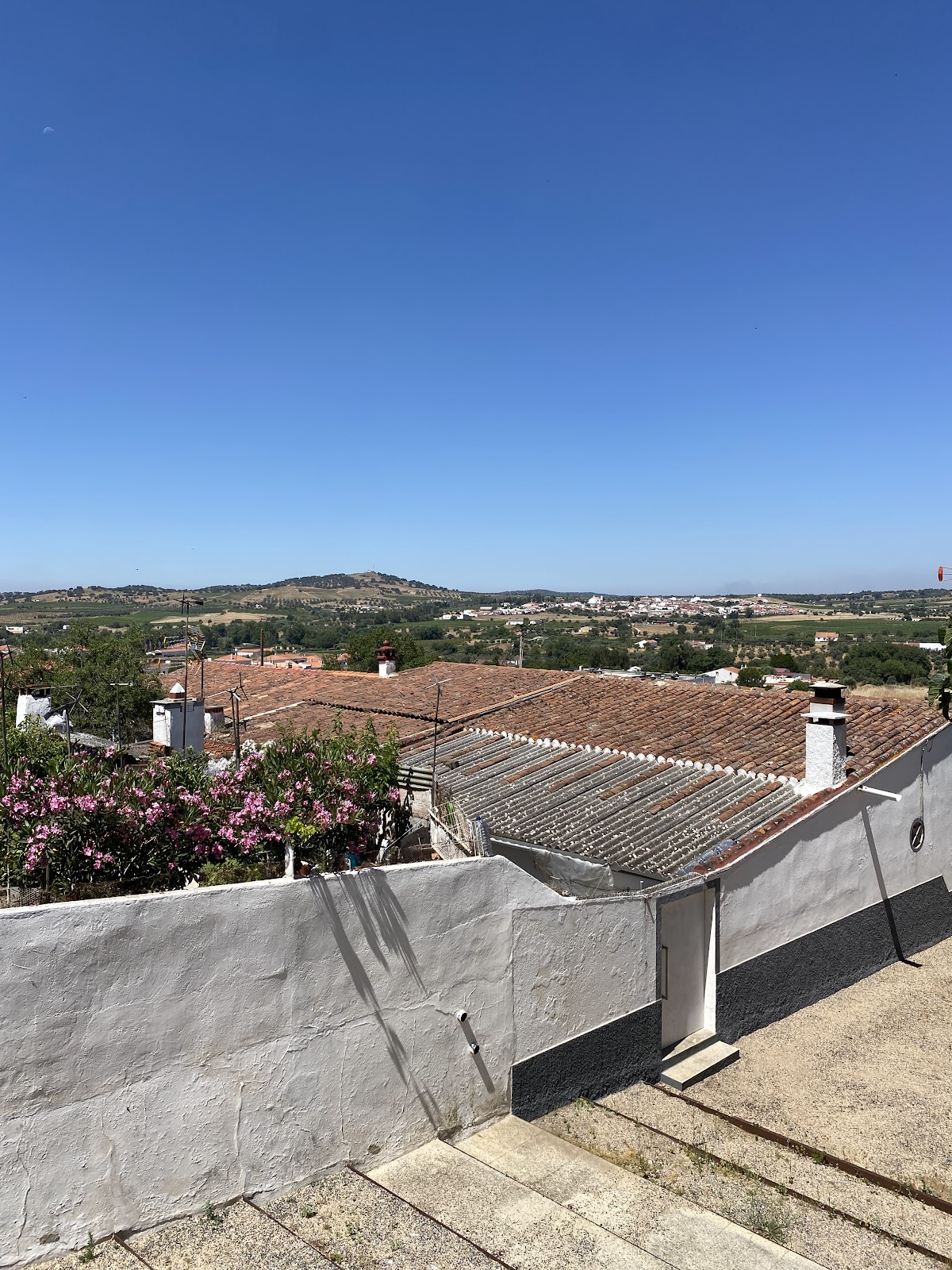
The castle occupies an isolated position on a plateau within Vidigueira’s urban area, on the western side of the town. Other buildings and structures surround the site. Its principal surviving feature is a massive fortified keep, a castle’s main defensive and residential tower, standing as a tall rectangular or square block.
Fortified core
The fortified keep
The keep is built from regularly coursed stone masonry and has been substantially altered by successive interventions. It survives in partial ruin, without a roof or other covering. Its parapets retain no merlons, the raised sections between openings along a battlement, and it remains uncertain whether the tower originally had a merloned crown. The remains are traditionally associated with construction under Fernando, second Duke of Braganza, during the first half of the fifteenth century.
Southwestern wall and heraldic stone
To the southwest, a surviving stretch of wall forms the beginning of a structure that was transformed into a staircase giving access to the tower. On the southeastern side, a sculpted stone carries the arms of the Counts of Vidigueira. Its heraldic design has a central shield surrounded by five smaller shields arranged in a cross. The stone is considered a later placement.
Palace and associated elements
The Manueline window
A geminated window, divided into two adjoining openings by a central vertical element, stands beside the tower. It was brought from Vila de Frades and is judged to have belonged to the palace of the Counts of Vidigueira. The window is regarded as a possible surviving element of the former Paço dos Gamas, whose palace annex was attached to the fortifications.
The Gama bell
Vidigueira’s Clock Tower preserves a bell bearing the arms of the Gamas. The Count of Vidigueira gave the bell to the town, and it commemorates the association between Vidigueira and Vasco da Gama’s family.