Carriganass Castle: A Sixteenth-Century Irish Tower House
Site at a Glance
- Rating
- 4.5
- Popularity
- Low
- Country
- Ireland
- Primary era
- Early Modern
- External website
- Open
- Eras represented
- Early Modern
- Civilizations
- Irish
- Site type
- Military
- Remains
- Castle
On this page7 sections
History
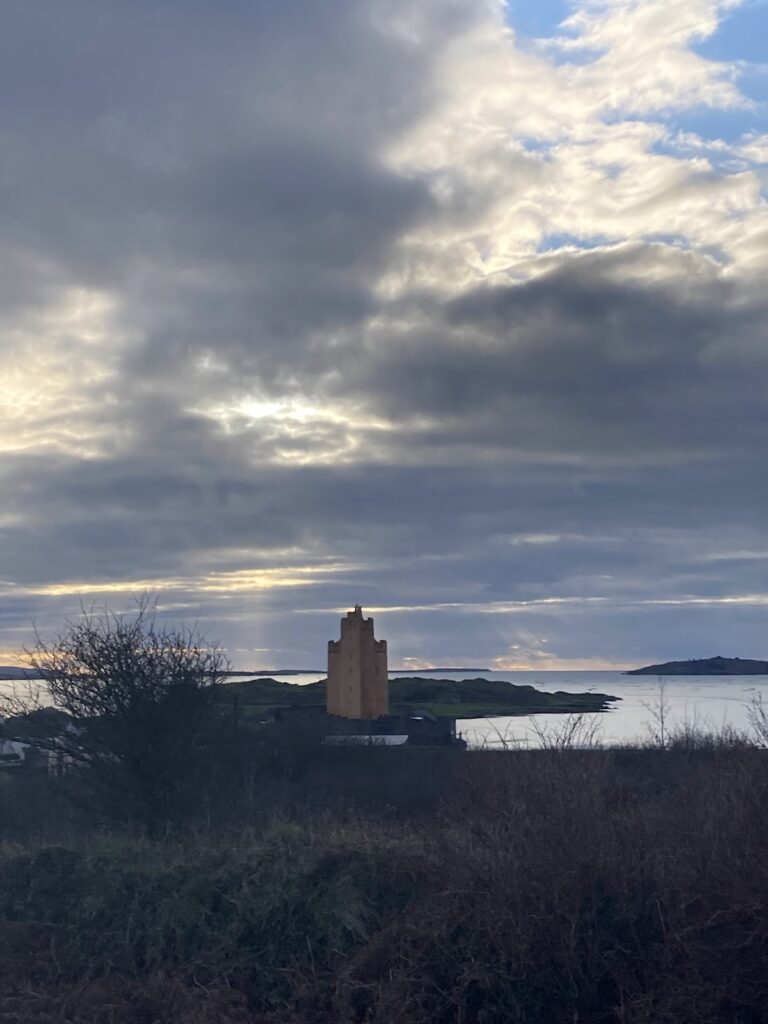
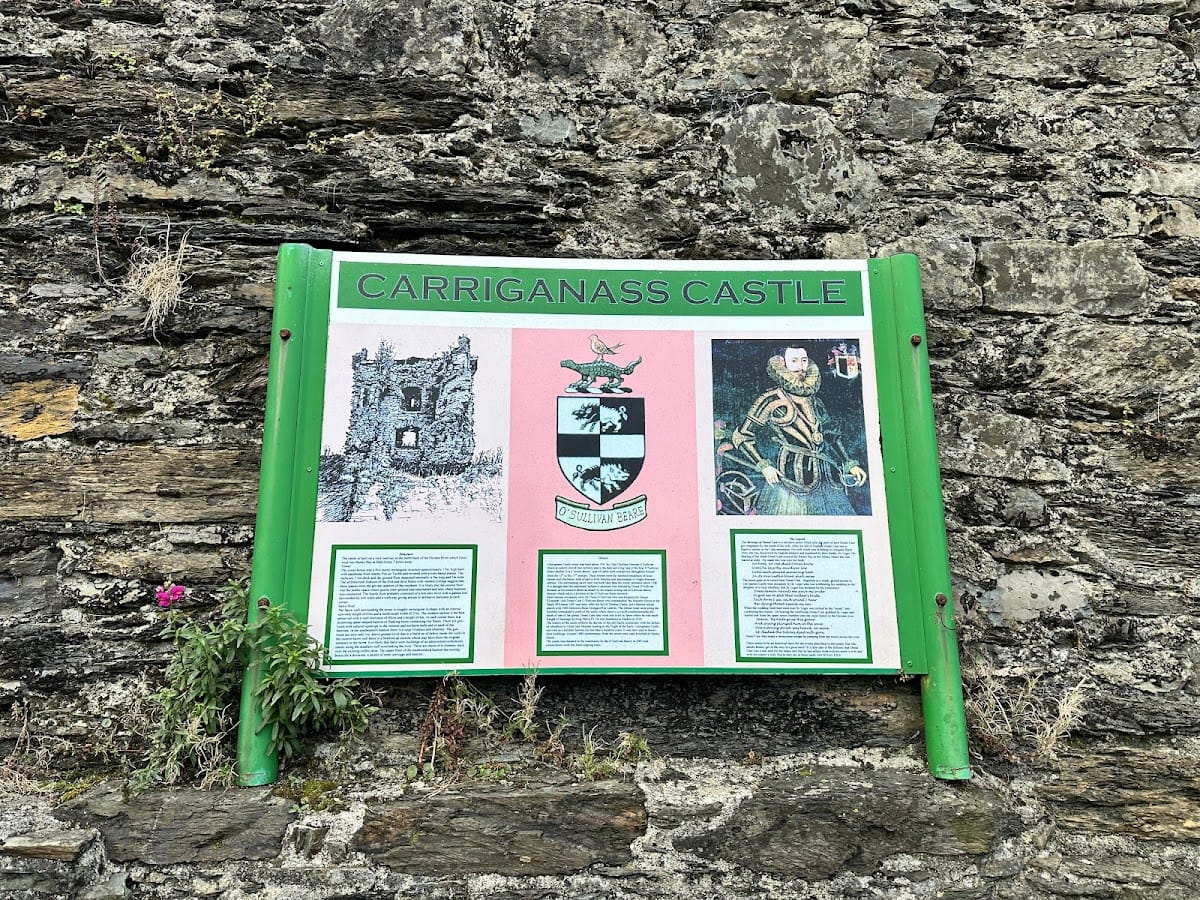
Carriganass Castle is a sixteenth-century Irish tower house in County Cork, Ireland, near Kealkill and about 8 kilometres northeast of Bantry. Probably built around 1540 by Dermot O’Sullivan, it belonged to the O’Sullivan Beare sept, a branch of the wider O’Sullivan family that controlled territory in Beara and West Cork. The castle combined a fortified residence with defensive features and formed part of a powerful clan’s territorial network.
O’Sullivan ownership
During the internal feuding that divided the O’Sullivan clan, Carriganass Castle passed between different members of the family. These disputes continued until 1601, when the O’Sullivans united behind Hugh O’Neill, a leading Irish nobleman who commanded the alliance opposing English rule during the Nine Years’ War.
Capture and confiscation
After the Irish defeat at the Battle of Kinsale in 1601, Sir George Carew pursued the O’Sullivan forces towards the Beara Peninsula. Carew, an English military commander and administrator, found a small garrison at Carriganass while the main O’Sullivan force had returned to Dunboy Castle. His army captured Carriganass before continuing to the siege of Dunboy.
The O’Sullivans were subsequently dispossessed, and Carriganass Castle was confiscated and granted to the Barrett family. The Barretts retained the property until the 1930s, living in a new house beside the castle rather than in the fortified tower. After the castle was abandoned, it deteriorated into a ruin.
Carriganass also lies along routes associated with O’Sullivan Beare’s march from West Cork to Leitrim, where he joined the Flight of the Earls, the departure from Ireland in 1607 of prominent Gaelic leaders after the defeat of the Irish forces. The site is also associated with St Finbarr’s Way, a pilgrimage route tracing the journey from Drimoleague to Gougane Barra. St Finbarr is an Irish Christian saint traditionally linked with Cork and its religious history.
Remains
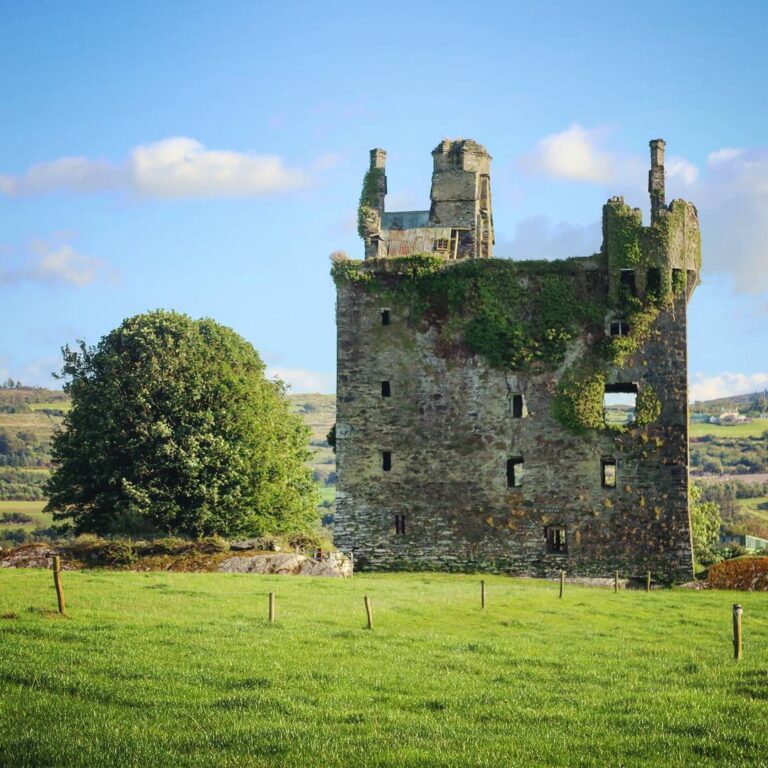
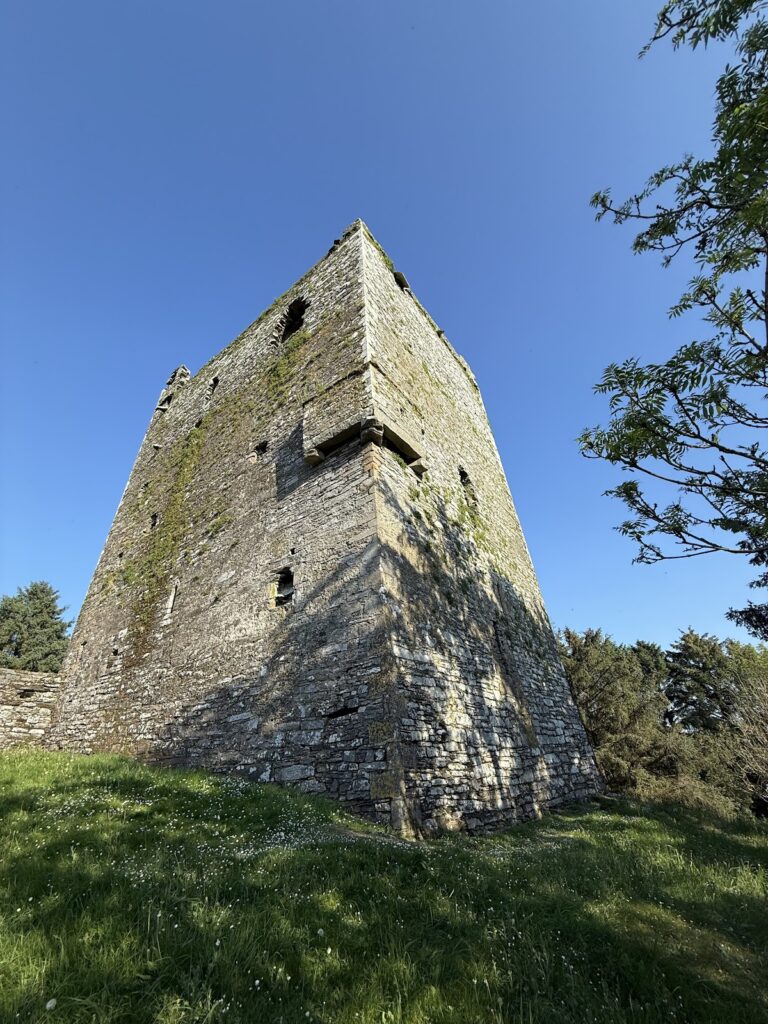
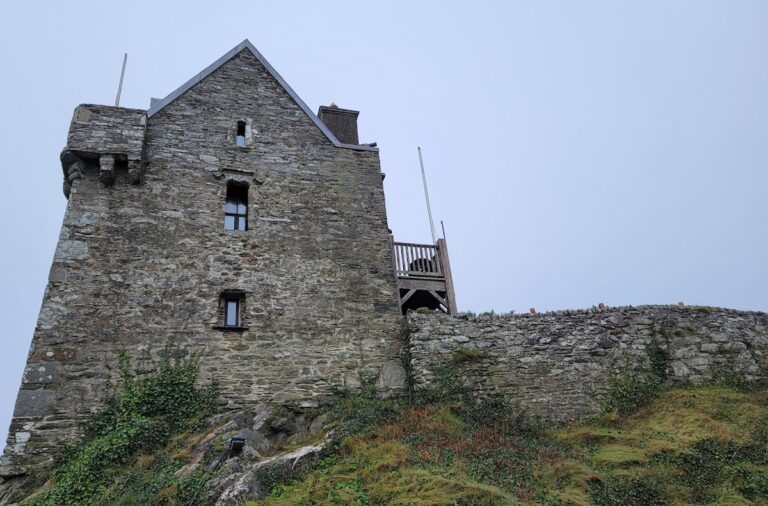
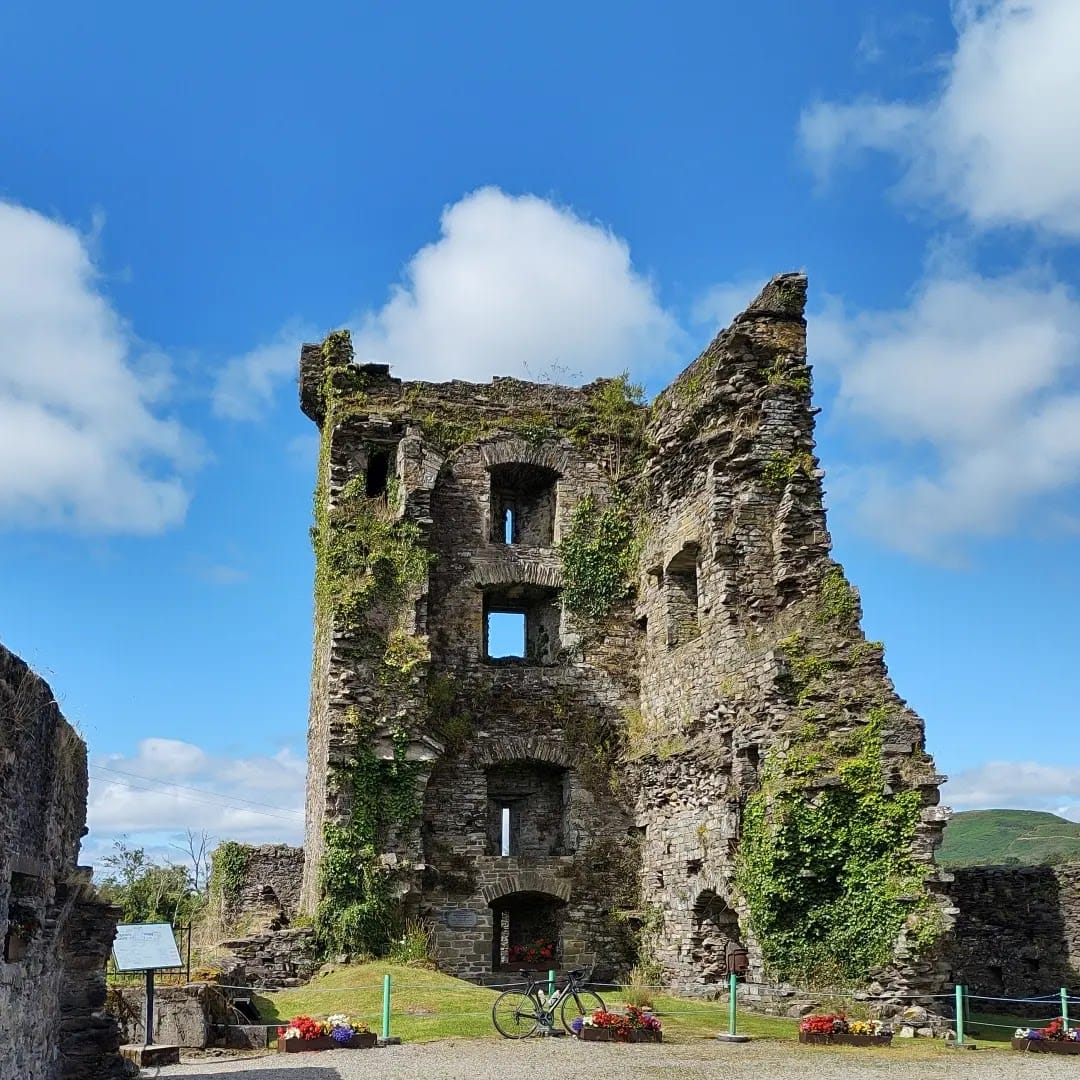
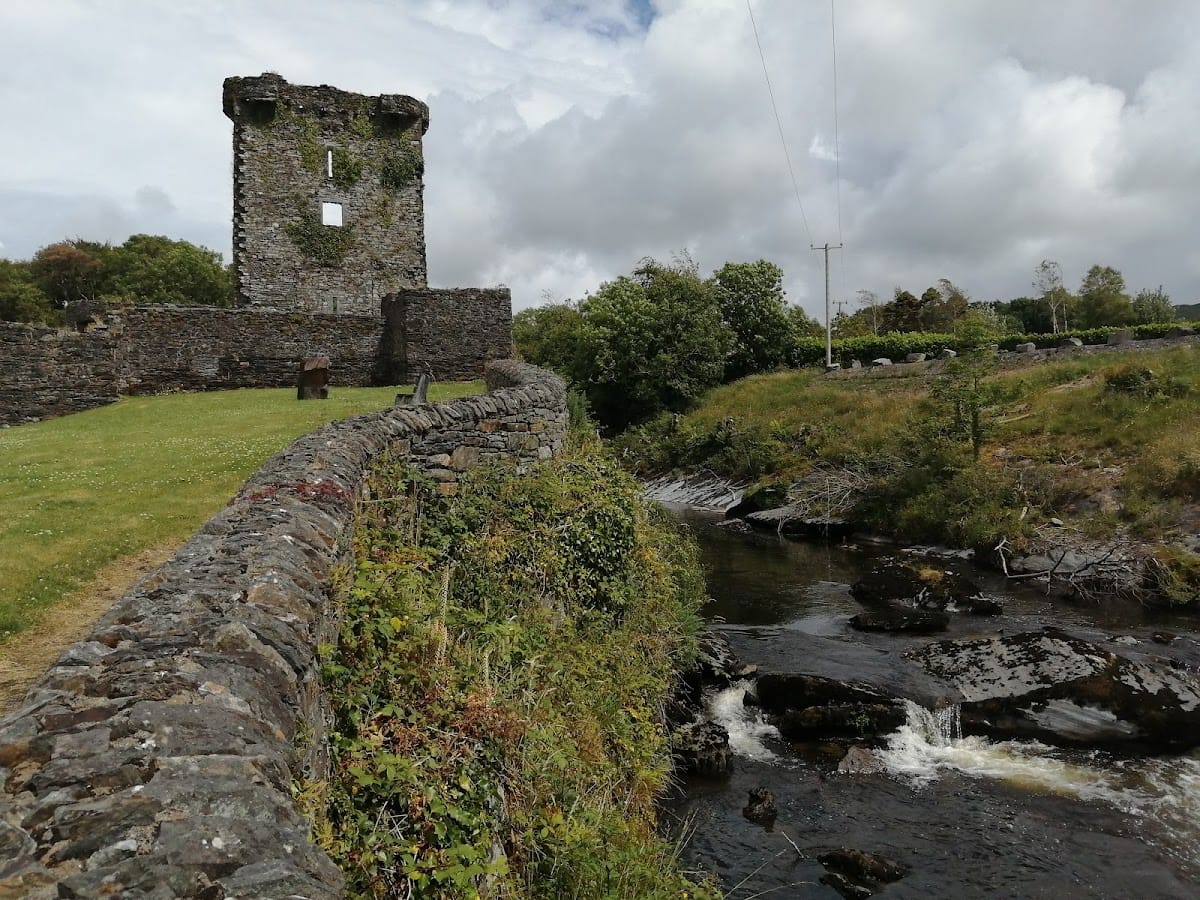
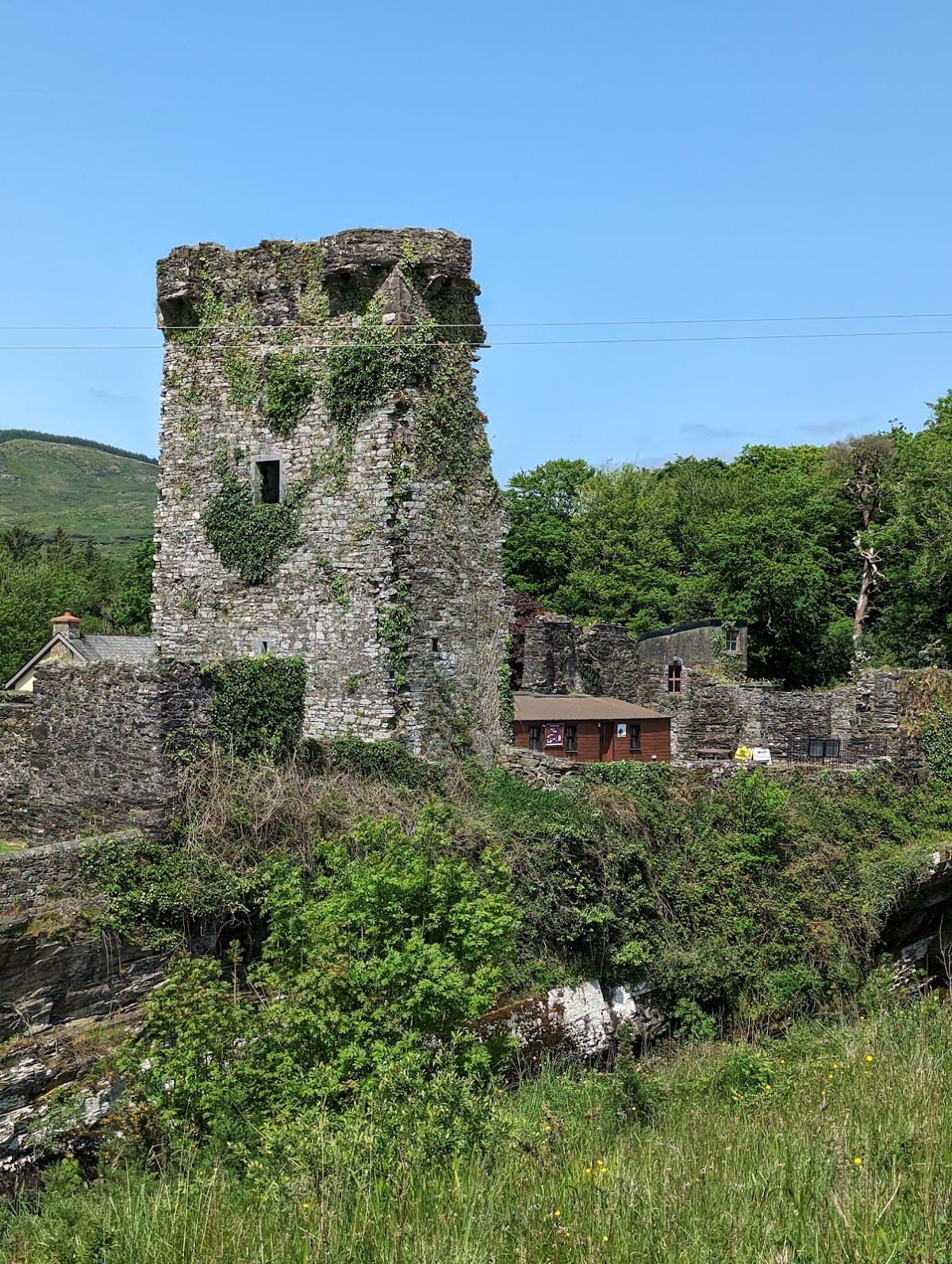
Carriganass is a ruined sixteenth-century tower house built from rubble stone. The main tower stands on an overhanging rock above the Ouvane River and is incorporated into the western side of a larger defensive enclosure.
Enclosure and tower
The bawn
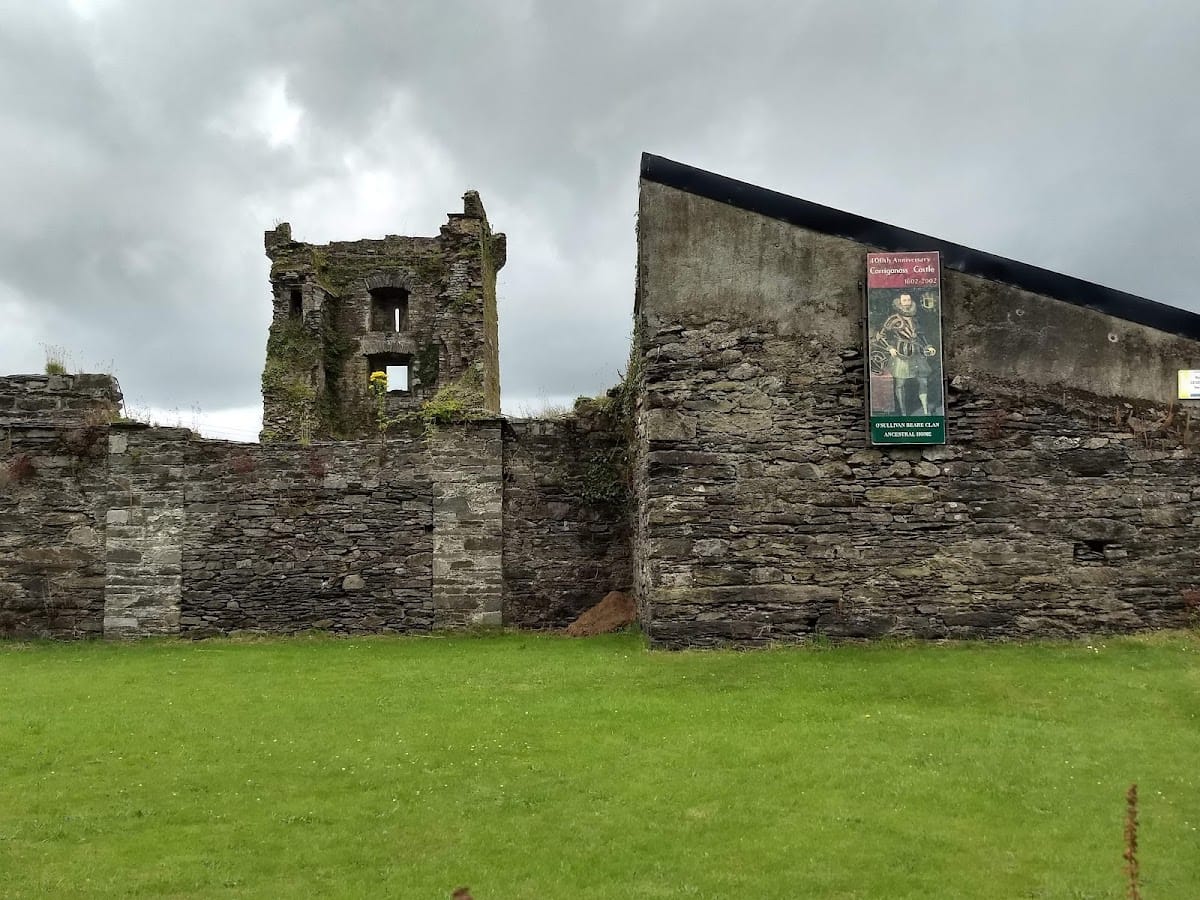
The outer enclosure, or bawn, was a defensive yard surrounding the fortified building. Its curtain wall stood approximately 14 feet, or 4.2 metres, high and was reinforced by four corner towers. Entry was through a gate in the northern wall, while the main tower formed part of the enclosure’s western boundary.
The main tower
The principal structure is a four-storey tower with four corner turrets. Its position on the rocky ground above the Ouvane River helped define the castle’s setting and defensive form. Parts of the tower have collapsed, leaving the building as a substantial but fragmentary ruin.