Buják Castle: A Medieval Frontier Fortress in Hungary


Site at a Glance
- Rating
- 4.5
- Popularity
- Low
- Country
- Hungary
- Primary era
- Medieval
- External website
- Open
- Eras represented
- Medieval, Early Modern
- Civilizations
- Hungarian, Ottoman
- Site type
- Military
- Remains
- Castle
On this page10 sections
History
Buják Castle is a medieval Hungarian hill castle in Buják, Hungary, whose origins probably lie in the thirteenth-century construction of a royal fortress. Its earliest core, including the old tower, may have been built after the Mongol invasion of Hungary in 1241–1242, a devastating campaign that led to the construction or strengthening of many Hungarian fortresses. The castle is first recorded in 1303, when the old tower was already associated with the site.
Royal fortress and noble possession
During the early fourteenth century, Buják was besieged in the revolt of Máté Csák, a powerful Hungarian magnate who controlled extensive territories while opposing King Charles I of Hungary. The attackers did not capture the fortress because a relieving army forced them to end the siege.
Queen Mary, who ruled Hungary in her own right from 1382 to 1395, granted Buják Castle to the nobleman Miklós Garai in 1386. King Sigismund confirmed the grant in 1393 and ordered an expansion of the castle during this period. When the Garai family became extinct, the property returned to the Crown. On 20 May 1424, Sigismund granted Buják, together with the neighboring castle of Szanda and surrounding estates, to his wife, Queen Barbara. In 1439, her successor, King Albert, confiscated the castle from Barbara and gave it to István Báthory.
Fifteenth- and sixteenth-century conflict
Hussite forces unsuccessfully attacked Buják during the 1440s. The Hussites were followers of the reformer Jan Hus and formed a major military and religious movement in fifteenth-century Central Europe. After the Hungarian defeat at the Battle of Mohács, a major defeat that weakened the Hungarian kingdom and intensified the struggle for the succession, King John Zápolya granted Buják to the jurist and political figure István Werbőczy in 1528. The grant followed the Báthory family’s disloyalty. By 1551, however, the castle was again held by András Báthory.
Increasing Ottoman pressure changed Buják’s function. The Ottoman Empire was the Turkish imperial state that expanded into central Europe during the sixteenth and seventeenth centuries, and Buják was transformed into a frontier fortress, a stronghold intended to defend a border region or important approach. Major expansion took place around the middle of the sixteenth century. The Báthory family developed the outer defensive wall, while András Báthory probably commissioned the large northern round bastion around 1551.
Ottoman conquest and later recapture
Ali Pasha of Buda, an Ottoman provincial governor and military commander, captured Buják on 19 July 1552 after a siege lasting barely five days. Part of the garrison escaped during the night. The Ottoman garrison numbered 28 men according to the pay register for 1556–1557.
Hungarian forces recaptured the castle in 1593 under István Báthory, the judge royal, a senior Hungarian officeholder. István Bocskai’s troops occupied it in 1605 during the uprising associated with his rule. The Treaty of Vienna of 1606, which helped end that conflict, returned Buják to royal control.
After the Báthory family died out, ownership passed to the Várady family and to Tamás Bosnyák, captain of Fülek. The Ottomans recaptured Buják in 1663 and placed a garrison of 50 men there. Hungarian troops led by Imre Balassa later took the castle on the condition that the Ottoman soldiers could withdraw freely. Despite the agreement, most of the withdrawing soldiers were killed near Csécse.
Later in 1663, Martuzán Agha, the Ottoman commander at Hatvan, besieged Buják again. Captain János Berczely surrendered the castle on the same condition of free withdrawal, but Ottoman forces attacked the departing Hungarian soldiers and killed most of them. After the Ottoman recapture, the castle was repaired by Ottoman forces. It was finally liberated from Ottoman control in 1666 and was probably blown up by the Ottomans that year. Buják then lost its military role and remained a deteriorating ruin. The ruins are recognized as a monument.
Remains
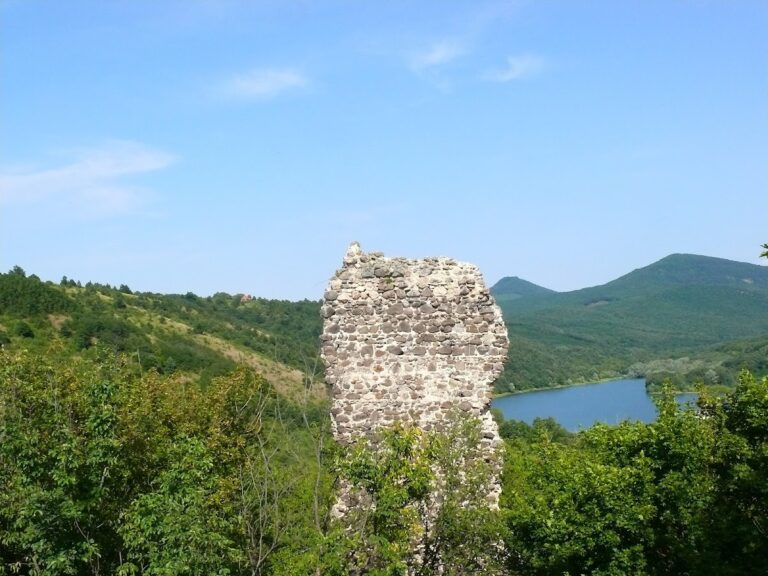
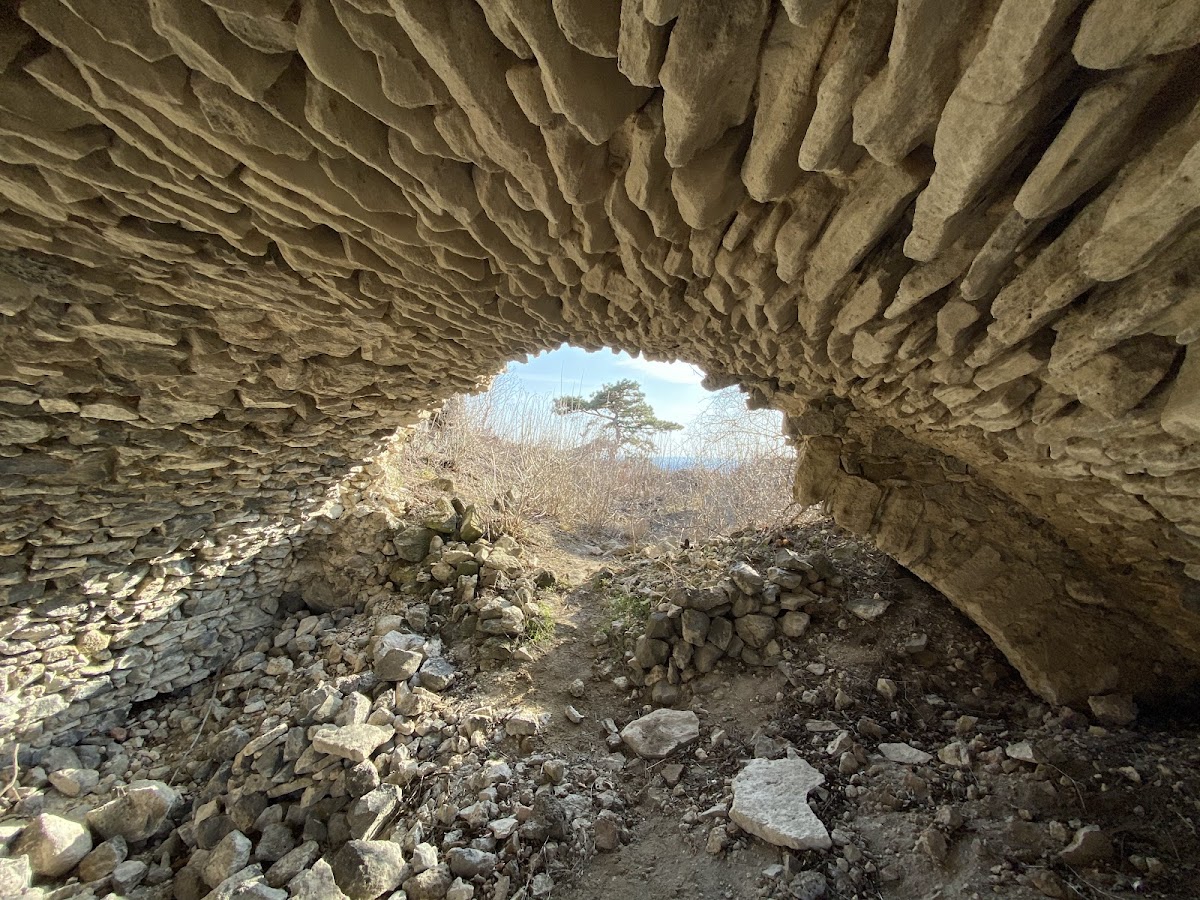
Buják Castle stands on a wooded hill north of Buják. The complex is arranged around a central castle on the summit, an outer castle, and a continuous circuit wall. Built of stone, it survives in generally very poor condition, with substantial weathering, unstable wall sections, and visible portions of the central walls among the ruins.
Central castle
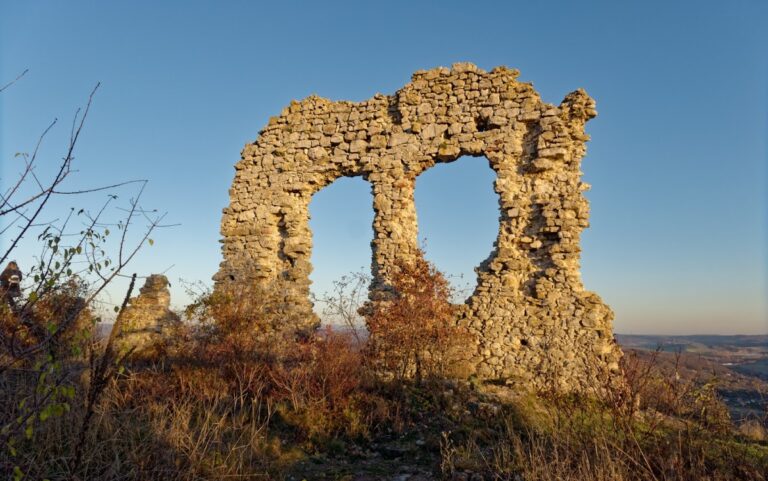
The central castle occupies the summit and includes the old tower, probably one of the earliest structures at Buják. The surviving walls are fragmentary and exposed within the ruined complex. Their present condition reflects the destruction and long deterioration that followed the castle’s loss of military purpose.
Gate and defended passage
The lower part of the complex contained the main gate and a protected passage leading into the outer castle. This route included a rondel, a rounded artillery bastion, and other defensive structures. Together, these elements formed part of the castle’s approach defenses and connected the lower area with the outer enclosure.
Outer defenses
The outer castle was enclosed by a continuous wall ring. Its northern side included a large round bastion, probably built around 1551 during the transformation of Buják into a frontier fortress. The bastion belonged to the expanded defensive system developed during the period of Ottoman pressure.
Ottoman mosque
Within the castle, the walls of an Ottoman mosque can still be seen. These remains preserve physical evidence of the period when Buják served as an Ottoman-held military post.
Later brick structure
A small brick structure built at a later date stands directly in front of the castle walls. It is in poor condition and forms a separate, later element within the surviving ruins.