Bash Tapia Castle: A Fortress of Mosul’s Defensive System
Site at a Glance
- Rating
- 4.4
- Popularity
- Low
- Country
- Iraq
- Primary era
- Medieval
- Eras represented
- Medieval, Early Modern
- Civilizations
- Ottoman, Umayyad
- Site type
- Military
- Remains
- Castle
On this page7 sections
History
Bash Tapia Castle, also known as Bashtabiya Castle or Mosul Castle, is a fortress in Mosul, Iraq, built as part of the city’s defensive system. Its foundation date is uncertain. It is described as a twelfth-century castle and as one of seven fortifications in Mosul’s walls, while another tradition places its origins in the second century AH. An early account attributes its construction to Marwan ibn Muhammad, the last caliph of the Umayyad dynasty. The Hamdanids, a medieval dynasty that ruled parts of northern Mesopotamia and Syria, later built Mosul’s city wall in 180 AH.
Early Destruction and Medieval Rebuilding
Al-Basasiri, an eleventh-century military commander active in Iraq, destroyed the castle in 450 AH. Sharaf al-Dawla al-Uqayli, a ruler of the Uqaylid dynasty, rebuilt it when he reconstructed Mosul in 474 AH, corresponding to 1081. The fortress later became important under the Atabeg state, a medieval polity in which military guardians could exercise political authority. During the rule of the successive Zengid rulers Imad al-Din Zengi and Nur al-Din Zengi, Bash Tapia served as the state’s eastern fortress.
Mongol, Timurid, and Ottoman-Era Phases
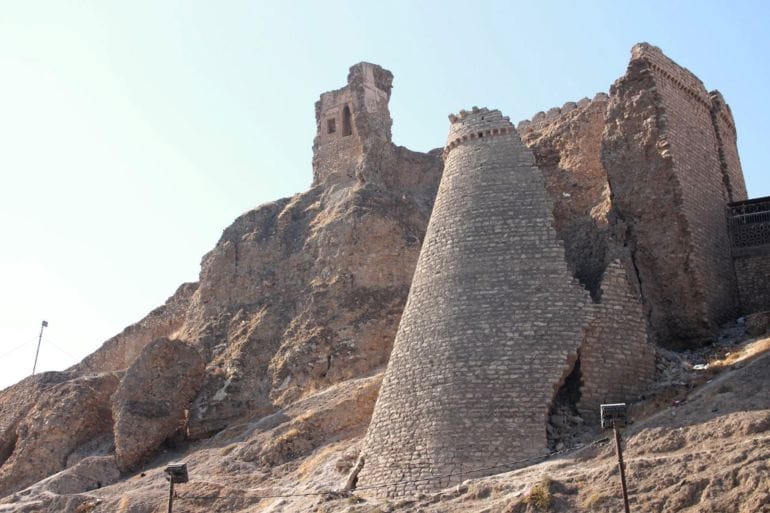
Hulagu Khan, the Mongol ruler who led the conquest of much of the Middle East, destroyed the castle during his campaign in 660 AH. Timur, the Central Asian conqueror also known as Tamerlane, later damaged it during his campaigns, including the attack of 1393. The fortress was rebuilt together with Mosul’s wall in 1625 by Bakr Pasha Ismail al-Mawsili, the city’s governor, who added a tall tower. It was repaired again in 1743 under Husayn Pasha al-Jalili, the governor of Mosul.
Bash Tapia played a central defensive role during the siege of Mosul in the Ottoman-Persian War of 1743-1746, a conflict between the Ottoman Empire and Nader Shah’s Iran. The siege began on 14 September 1743, when Nader Shah entered the region and surrounded the city. Husayn Pasha al-Jalili used the castle as a command center for Mosul’s defense while Nader Shah’s forces, described as numbering more than 300,000 men, maintained a bombardment with approximately 200 guns. The siege ended with a peace agreement on 23 October 1743, without Nader Shah capturing Mosul.
Damage and Recent History
After the Islamic State of Iraq and the Levant seized Mosul on 10 June 2014, Bash Tapia was damaged during the ensuing conflict. A nearby strike on 10 July 2014 and two projectiles fired by drones on 23 July caused further damage. Iraqi Tourism Ministry reporting identified the castle as partly destroyed by ISIL in April 2015, while images released by the group in 2016 showed that parts of the fortress remained. Iraqi forces regained control of the ruins in June 2017.
The castle is regarded as an archaeological site and forms one of the few surviving sections of Mosul’s city walls. Its remains are considered a major landmark and an authentic symbol of the city’s identity. The site suffered neglect after the 2003 invasion of Iraq, and the surviving ruins were later used by an Iraqi Federal Police unit.
Remains
Setting and Defensive Layout
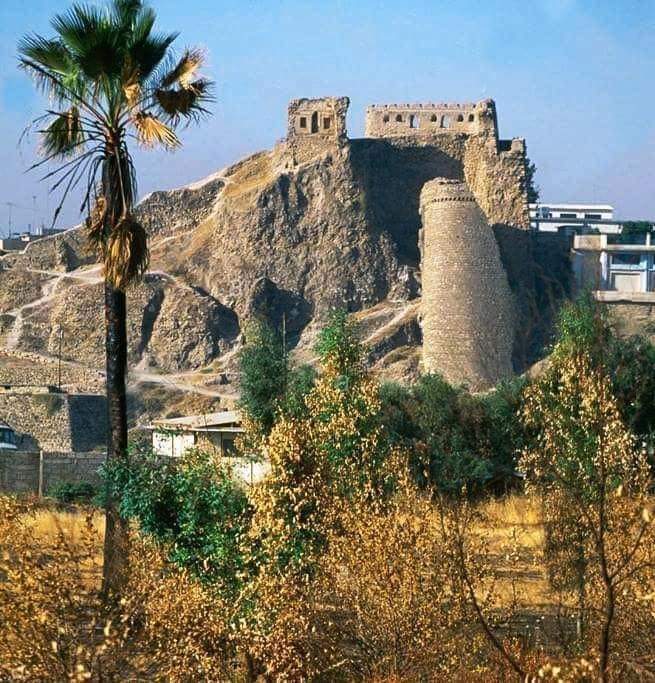
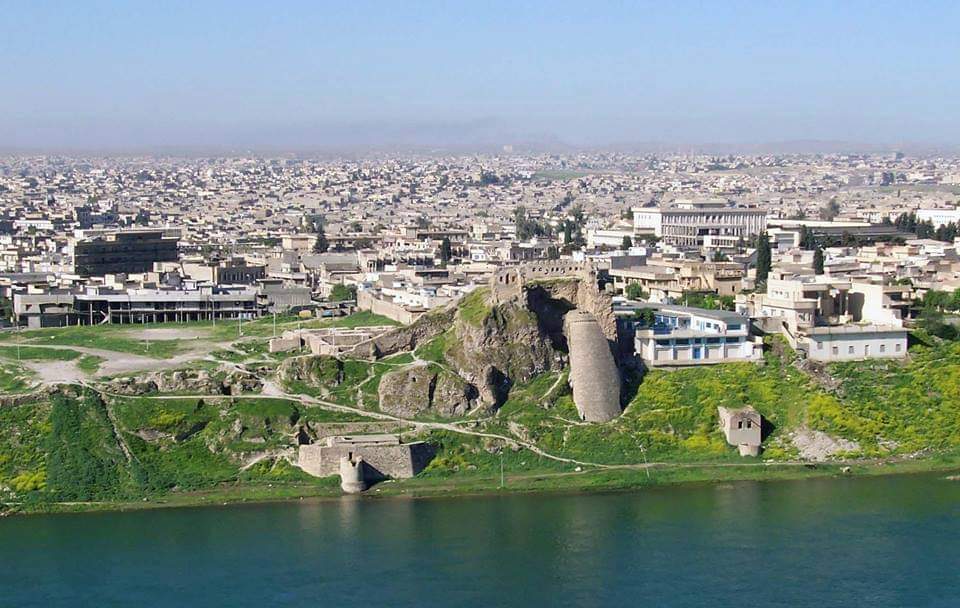
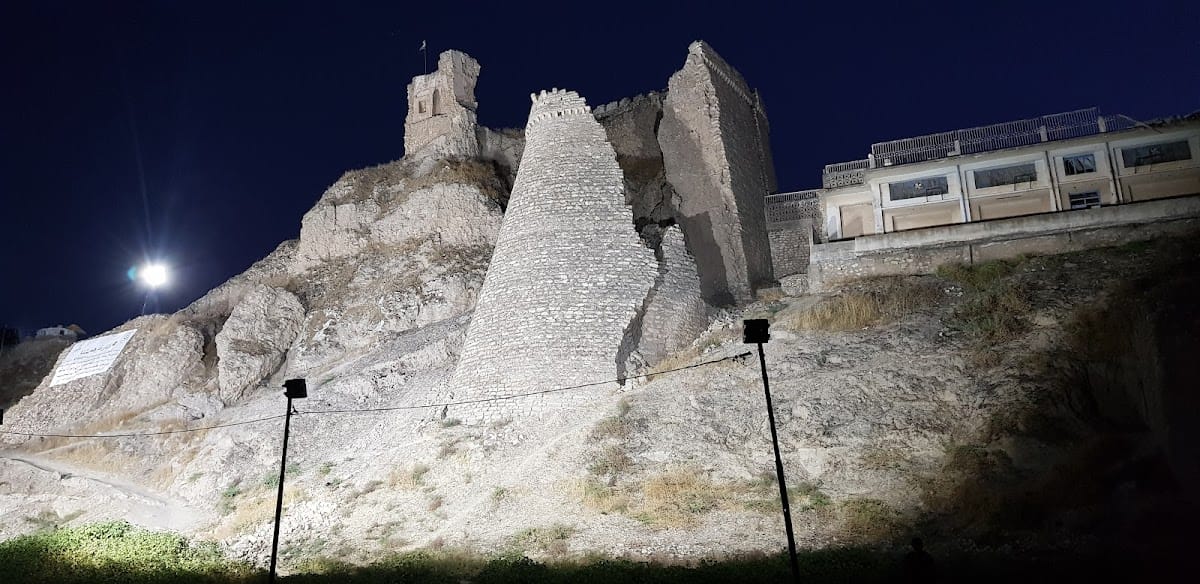
Bash Tapia stands in the old city of Mosul on the western bank of the Tigris River. It occupies the city’s highest point, rising approximately 75 feet above sea level on the landward side and 150 feet above sea level on the river side. This elevated position is reflected in the name Bash Tapia, explained as Turkish for “main tower” or “main fortress.” The castle formed part of Mosul’s city wall and combined a tall tower with rooms, a fortified section, underground tunnels linking it with the old city, additional secret tunnels leading outside the city, and ammunition stores.
Construction and Surviving Ruins
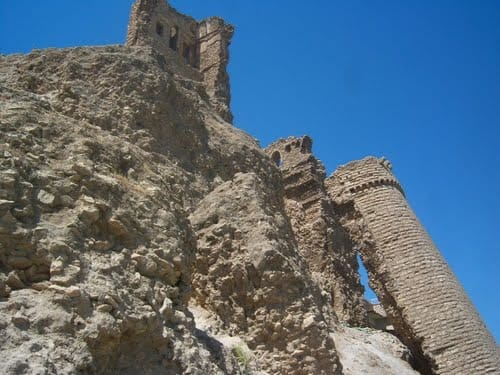
The fortress was built with stone and stucco, with rock also described among its construction materials. Its tower fell after 2003, and the castle now survives in ruinous form. Only portions remained after the destruction of 2015, preserving part of the defensive complex and its connection with the former wall of Mosul.