Al-Mujahidi Mosque: A 12th-Century Friday Mosque in Mosul
Site at a Glance
- Rating
- 4.5
- Popularity
- Medium
- Country
- Iraq
- Primary era
- Medieval
- Eras represented
- Medieval
- Civilizations
- Unclassified
- Site type
- Religious
- Remains
- Mosque
On this page7 sections
History
Al-Mujahidi Mosque is a 12th-century Friday mosque in Mosul, Iraq, founded under the patronage of Mujahid al-Din Qaimaz, a medieval ruler and patron. It served worshippers beyond the walled center and became the city’s third mosque for Friday prayers.
Foundation and medieval reputation
Built in Mosul’s lower outskirts, the mosque provided another place for Friday worship because the Great Mosque of al-Nuri and the Umayyad Mosque were overcrowded. Its prayer hall was completed first, allowing the inaugural Friday prayer to take place before work on the rest of the building was finished.
The mosque was called Al-Rabad Mosque for its position in the outskirts, and Al-Mujahidi Mosque in honor of Qaimaz. Later names included Al-Khidr Mosque, reflecting a local belief that a shrine to al-Khidr, a revered figure in Islamic tradition associated with Moses in the Quran, stood there. It was also known as the Red Mosque because its prayer hall was painted red. The Andalusian traveler and geographer Ibn Jubayr visited and prayed there in 1184, praising its setting, design, and ornament. The medieval historian Ali ibn al-Athir described it as large and exceptionally beautiful.
Neglect, repairs, and destruction
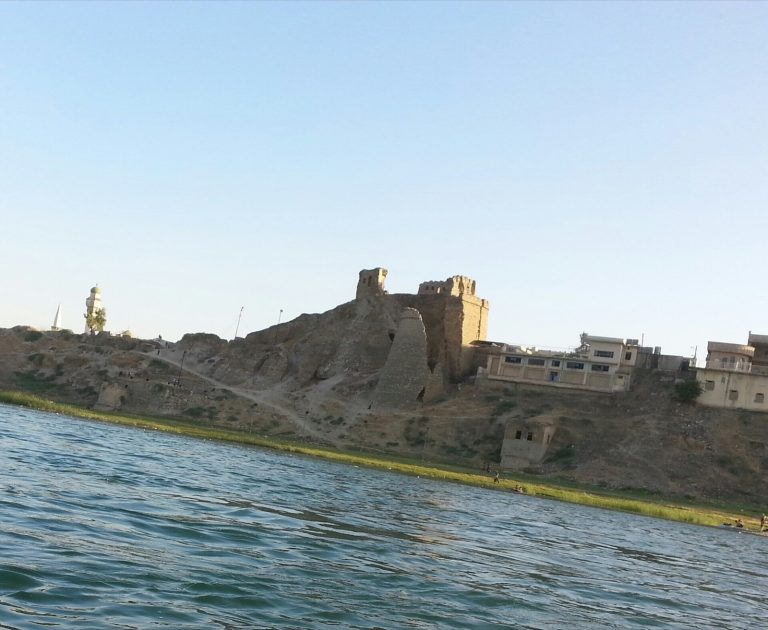
After Mongol and Tatar forces captured Mosul, the surrounding area became remote from habitation and the mosque fell into neglect. Its structure deteriorated, and part of it collapsed into the Tigris, where the remains could be seen during the river’s summer low water. In 1718, Ottoman governor Ali Pasha of Mosul arranged repairs to part of the prayer hall. The Directorate of Endowments carried out further repairs and maintenance by the end of the 20th century.
In the 21st century, inadequate maintenance raised concerns about the mosque’s structure and foundations. Its imam and preacher, Tariqi Hamdun, warned that the damage could lead to collapse. The Islamic State of Iraq and the Levant, a militant organization active in Iraq and Syria, destroyed the mosque with explosives in 2014–15, believing that a tomb lay inside.
Remains
Before its destruction, the mosque stood in southern Mosul beside the Tigris, on Corniche Street and about 500 metres from Bab al-Tob. Its layout included a prayer hall, one minaret, and one dome. The mosque was larger in its earlier form than in later years.
Dome, brickwork, and inscriptions
The dome above the prayer hall had an exterior faced with blue-green glazed bricks. Raised brick patterns and other ornament in brick and plaster decorated parts of the building. Inscriptions displayed several forms of Arabic calligraphy, including an unusual script with no known parallel. Successive repairs obscured or erased much of the writing and decoration. Before the mosque’s destruction, plasterwork above the principal mihrab (a niche indicating the direction of prayer) remained as its described surviving ornament.
Screened prayer enclosure
Ibn Jubayr described the maqsurah, an enclosed, screened area within a mosque, as richly decorated and compared it to the gardens of paradise. Iron screens surrounded the enclosure, and adjoining raised seating overlooked the Tigris.
Reconstruction
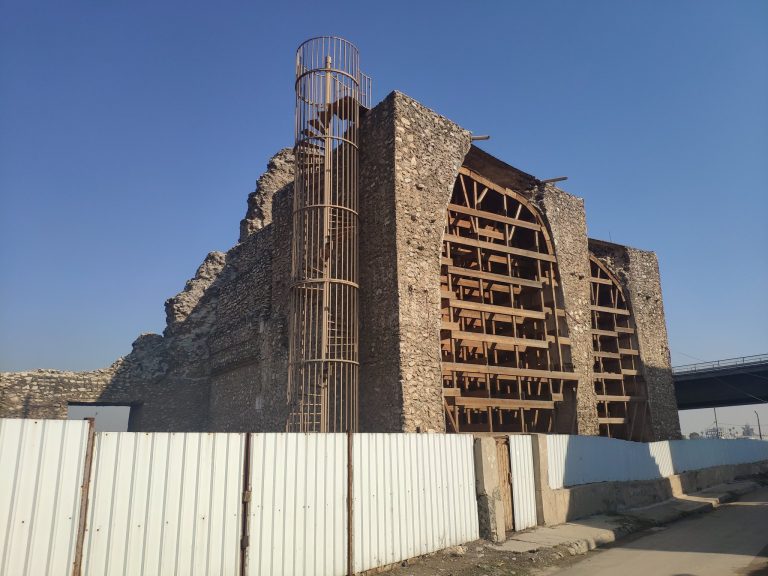
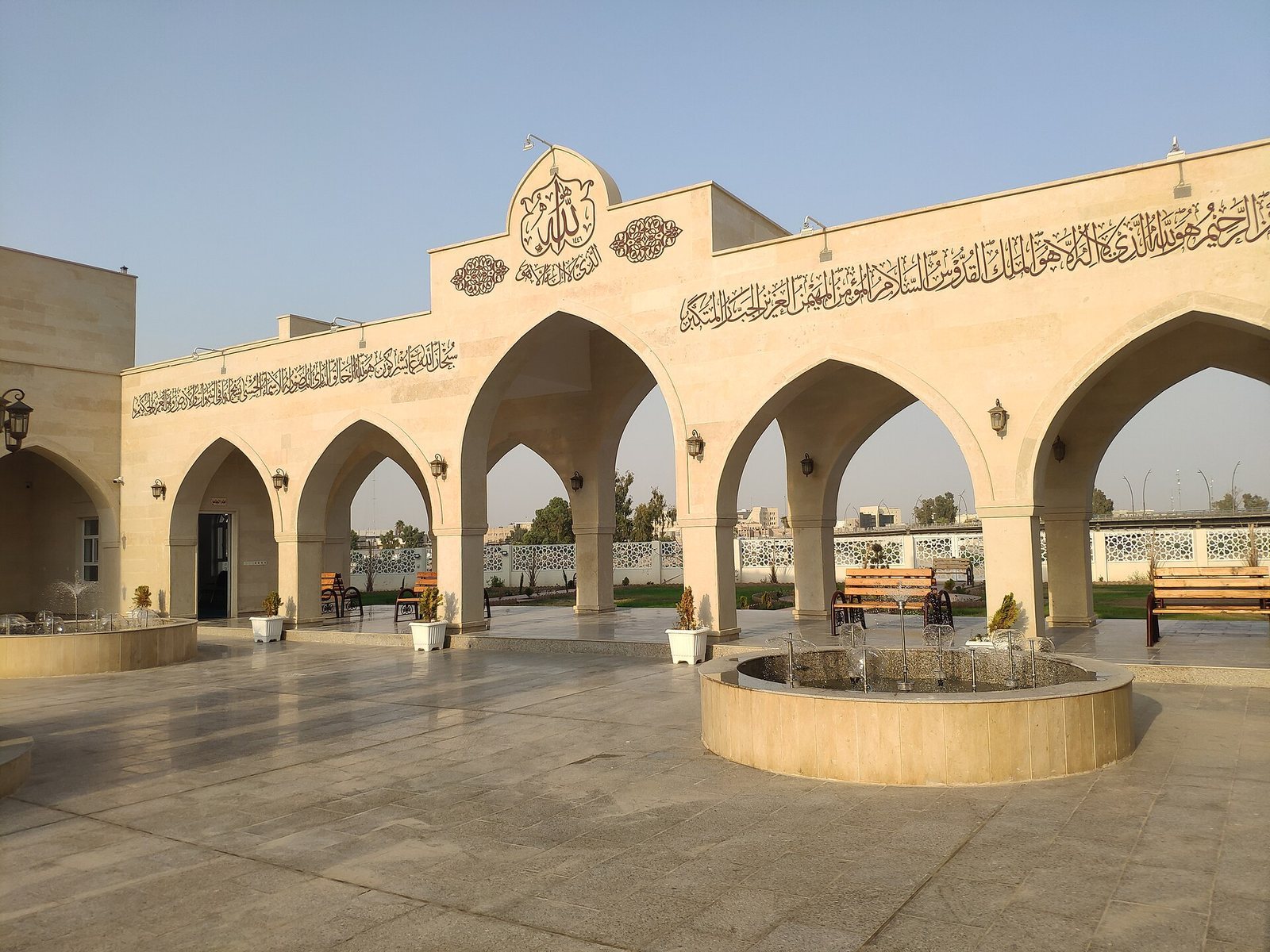
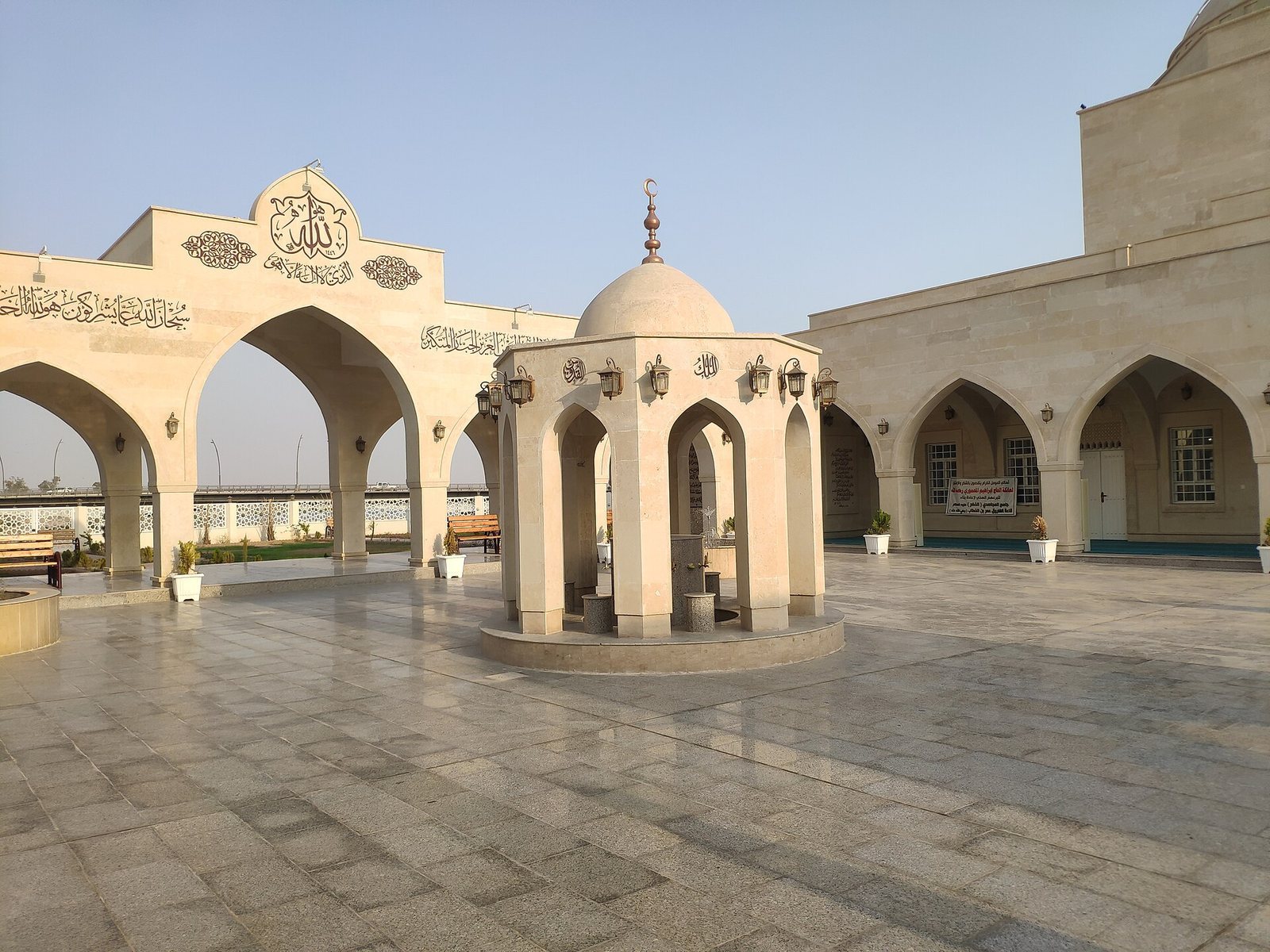
By 2024, the mosque was described as partially restored, with reconstruction underway.