Castello Manservisi: A Neo-Gothic Historic Residence and Museum in Italy


Site at a Glance
- Rating
- 4.6
- Popularity
- Low
- Country
- Italy
- Primary era
- Modern
- External website
- Open
- Eras represented
- Modern
- Civilizations
- Italian
- Site type
- Domestic
- Remains
- Castle
On this page8 sections
History
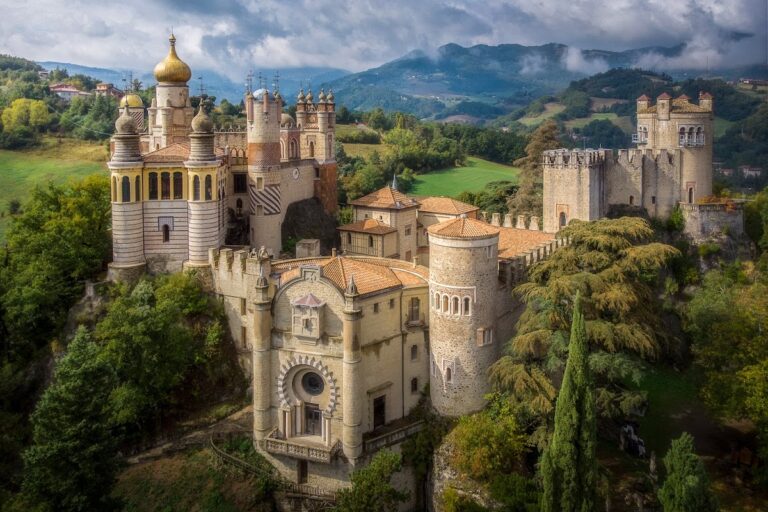
Castello Manservisi is a Neo-Gothic historic residence in Castelluccio, Italy, at the center of the mountain settlement in the municipality of Alto Reno Terme. Its medieval appearance reflects the nineteenth-century revival of Gothic forms, including pointed arches and towers, rather than a medieval foundation. The complex was remodeled extensively from 1886, when Alessandro Manservisi and three partners acquired it and began adapting it to contemporary taste.
Before the Manservisi renovations
Before it became a castle-like residence, the complex belonged to the Nanni-Levera family, noble landowners of the Apennines. The family had acquired its fortune through service to Cardinal Prospero Lambertini, who later became Pope Benedict XIV and served as pope from 1740 to 1758. A former Nanni family residence preceded the present castle and was later put to use as a stable.
The late nineteenth-century transformation
In 1886, Alessandro Manservisi and three other partners purchased the complex. The partners were later bought out, leaving the Manservisis to direct the major redevelopment. Skilled stonecutters and makers of hand-forged ironwork contributed to the work, producing grilles, lamps, brackets, rings for tethering horses, and fittings for wooden windows and doors. The existing residence was reshaped in the Neo-Gothic style, with towers, porticoes, and pointed arches that gave it the appearance of a medieval castle.
The renovated building became a setting for summer parties and receptions attended by Bologna’s upper bourgeoisie, Bolognese noble families, and artists of the period, including Alfredo Testoni. Its position in Castelluccio also placed the residence within a mountain landscape associated with the local Apennine community.
School colony and museum
After Alessandro Manservisi died in 1912, the complex was converted into a school colony, a residential educational institution that provided children with organized schooling and care away from their usual homes. The building was altered with terraces and new roofs and was enlarged to include the spaces now occupied by the museum.
The ethnographic LabOrantes Museum later developed through the initiative of the local Pro Loco, a civic association devoted to promoting community heritage and traditions. Donations from local residents expanded its collections, which record the life of the Bolognese Apennine community. The museum preserves tools and objects connected with mountain culture and traditional activities that declined during the twentieth century as urbanization and changing lifestyles transformed everyday life. It occupies an entire wing of the castle, which remains in use and is recognized as Italian national heritage.
Remains
Castello Manservisi stands at an elevation of 810 metres on the ridge between Monte Cavallo and Monte Tresca, above the surrounding valleys. The present complex follows the proportions and lines of Romantic architecture fashionable during the final three decades of the nineteenth century and the opening years of the twentieth. Its Neo-Gothic remodeling combines castle-like towers, porticoes, and pointed arches with furnished residential interiors and spaces later adapted for museum use.
Residence and architectural features
The interior retains a frescoed grand staircase, furnished rooms and halls, and colored maiolica stoves. Maiolica is glazed earthenware with a colored and decorated surface. A monumental staircase is surmounted by a bust of Alessandro Manservisi, linking the building’s ceremonial interior with the family responsible for its late nineteenth-century transformation. Several caves are also present in the basement.
LabOrantes Museum collections
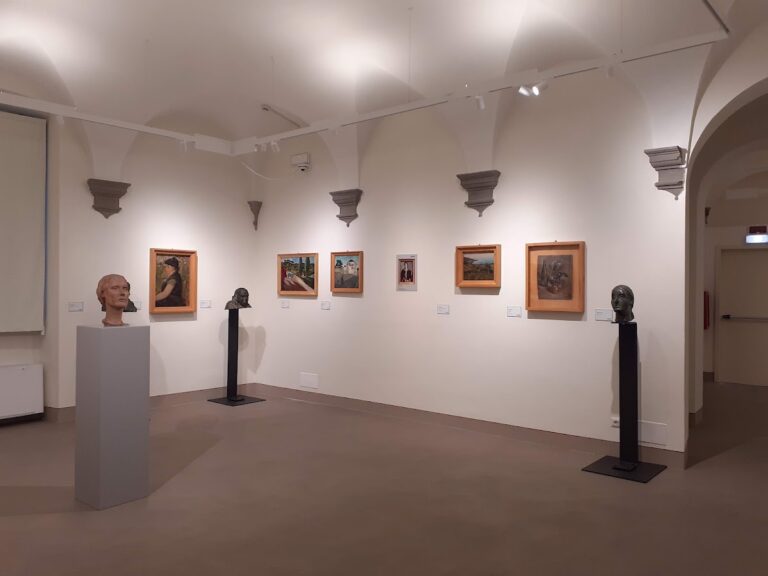
The LabOrantes Museum occupies 26 rooms in one wing. Its ethnographic section brings together traditional objects, craft equipment, and domestic artifacts, including a reconstructed kitchen, tools used for gathering chestnuts, period clothing, and rudimentary lighting systems. Together, these displays present material aspects of life and work in the Bolognese Apennines.
A second section contains sacred furnishings and liturgical objects from the parish oratory of Castelluccio, the Sanctuary of the Madonna del Faggio, and the Sanctuary of the Madonna del Ponte. The collection includes votive tablets, ex votos, books, vestments, clerical clothing, and religious decorations. An ex voto is a votive offering made in fulfillment of a vow or in gratitude for divine assistance. These objects preserve evidence of popular religious practice in the surrounding community.
Tapestries Room
The Tapestries Room contains eight coarse-weave canvases made at the beginning of the twentieth century by Giacomo Lolli (1857–1930). Their painted surfaces depict tapestries through the trompe-l’oeil technique, which creates the illusion of three-dimensional objects on a flat surface. The canvases have been restored and remain part of the museum’s displays.