Castle of Penha Garcia: A Medieval Border Fortress in Portugal


Site at a Glance
- Rating
- 4.6
- Popularity
- Medium
- Country
- Portugal
- Primary era
- Medieval
- Eras represented
- Medieval
- Civilizations
- Portuguese
- Site type
- Military
- Remains
- Castle
On this page6 sections
History
Castle of Penha Garcia is a medieval border fortress in Penha Garcia, Portugal, probably begun under Sancho I during the Christian Reconquista, the long expansion of Christian powers across Iberia at the expense of Muslim-ruled territories. It formed part of defensive efforts in Beira against the Kingdom of León to the east and Muslim forces to the south.
Early occupation and medieval foundation
The hill had been occupied since prehistory by a Neolithic hillfort, a defended settlement of the later Stone Age. The site was later brought under Roman influence, and this earlier occupation is believed to have been connected with alluvial gold mining in the Pônsul River. Gold working continued in the area until the end of the twentieth century.
In 1220, Afonso II donated Penha Garcia and its castle to the Order of Santiago, a military-religious order responsible for organizing settlement and defence in territories under its control. Afonso III granted the town a charter on 31 October 1256, giving its inhabitants the rights, customs, and usages of Penamacor. In 1303, Denis transferred the town and castle to the Knights Templar through their Portuguese master, Vasco Fernandes. After the Templars were dissolved, their domain passed to the Order of Christ, which inherited many Templar possessions in Portugal.
Royal administration and decline
When Portugal’s military orders were incorporated into the Crown during the sixteenth century, Penha Garcia returned to royal possession. Manuel I granted the town a new charter at Santarém on 1 June 1510. Around 1509, the Portuguese military surveyor and illustrator Duarte de Armas depicted the castle in the Book of Fortresses. From the seventeenth century, its commandery, an estate or administrative holding, passed to the counts of São Vicente da Beira.
Penha Garcia remained a royal couto, a privileged settlement that could offer legal refuge to fugitives, until Maria I abolished this status in 1790. The abolition of the municipality on 6 November 1836 began the castle’s decline, which was further worsened by treasure-hunting activities. Recent restoration work has improved the condition of the surviving medieval walls. A local legend tells of Garcia, the castle’s castellan, who abducted Branca, the daughter of the governor of Monsanto. After Garcia was captured, Branca’s pleas reportedly spared his life, although his left arm was taken as a “pledge of justice.” Local tradition says that the one-armed figure still watches over the hill facing Monsanto from the castle towers.
Remains
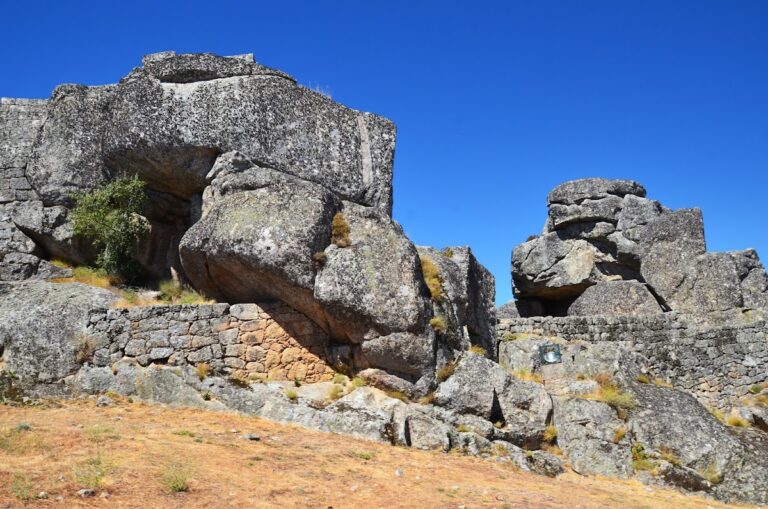
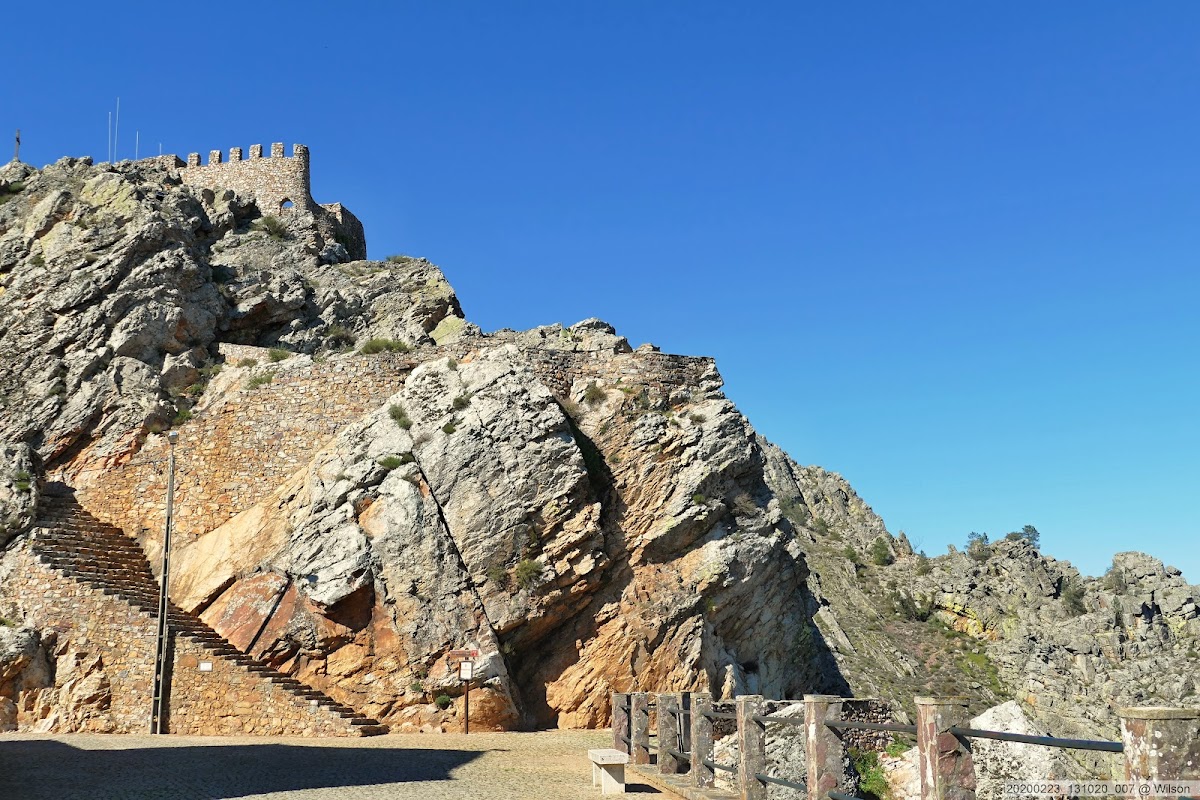
The castle occupies a dominant position on the Serra do Ramiro, above the right bank of the Pônsul River and on the southern slope of the Serra de Penha Garcia, a branch of the Serra da Malcata. Its elevated position forms the physical setting of a border fortress, while the surviving medieval walls define the principal remains of the site.
Defensive walls and hilltop setting
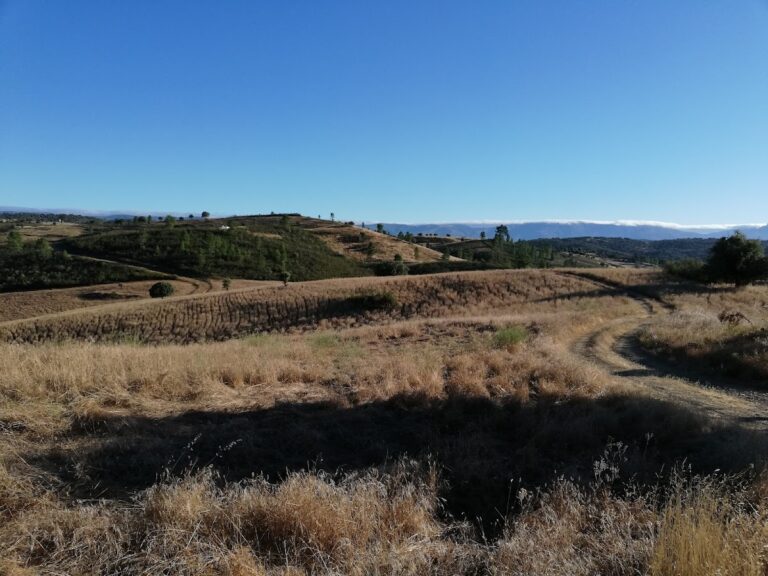
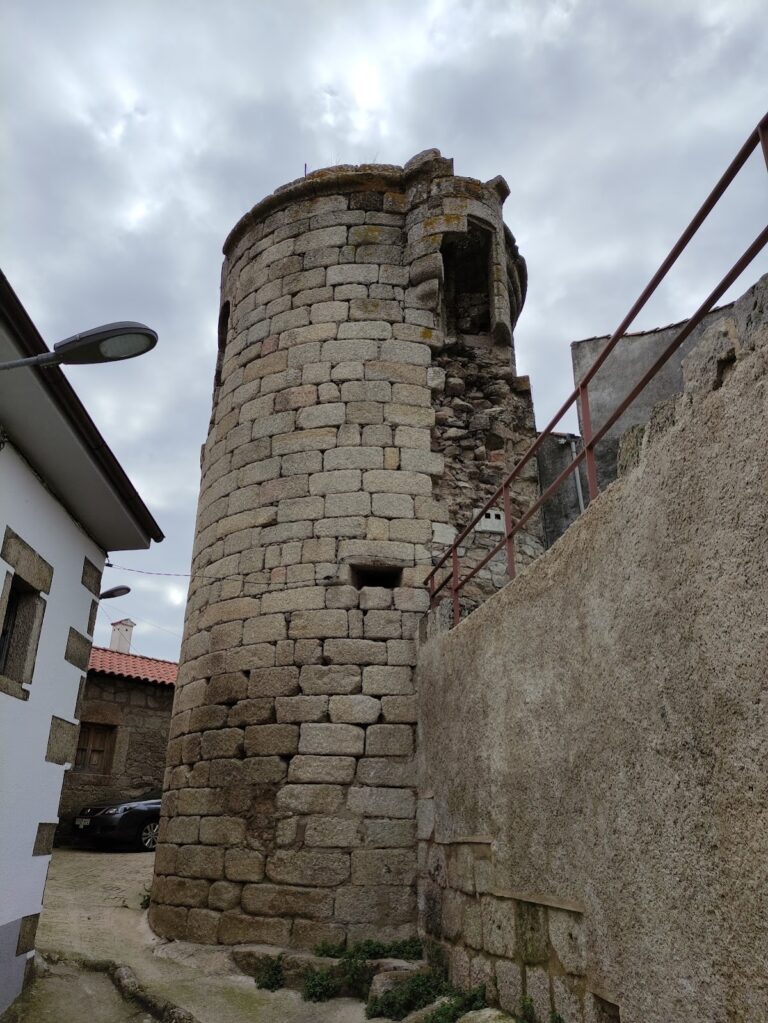
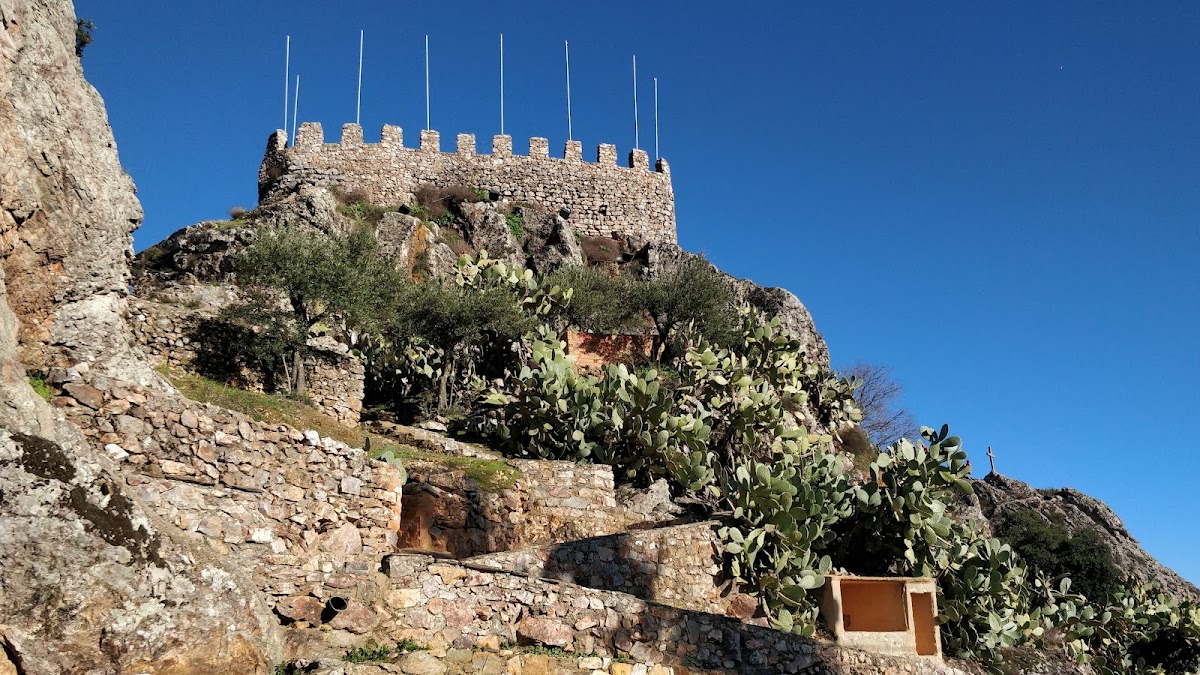
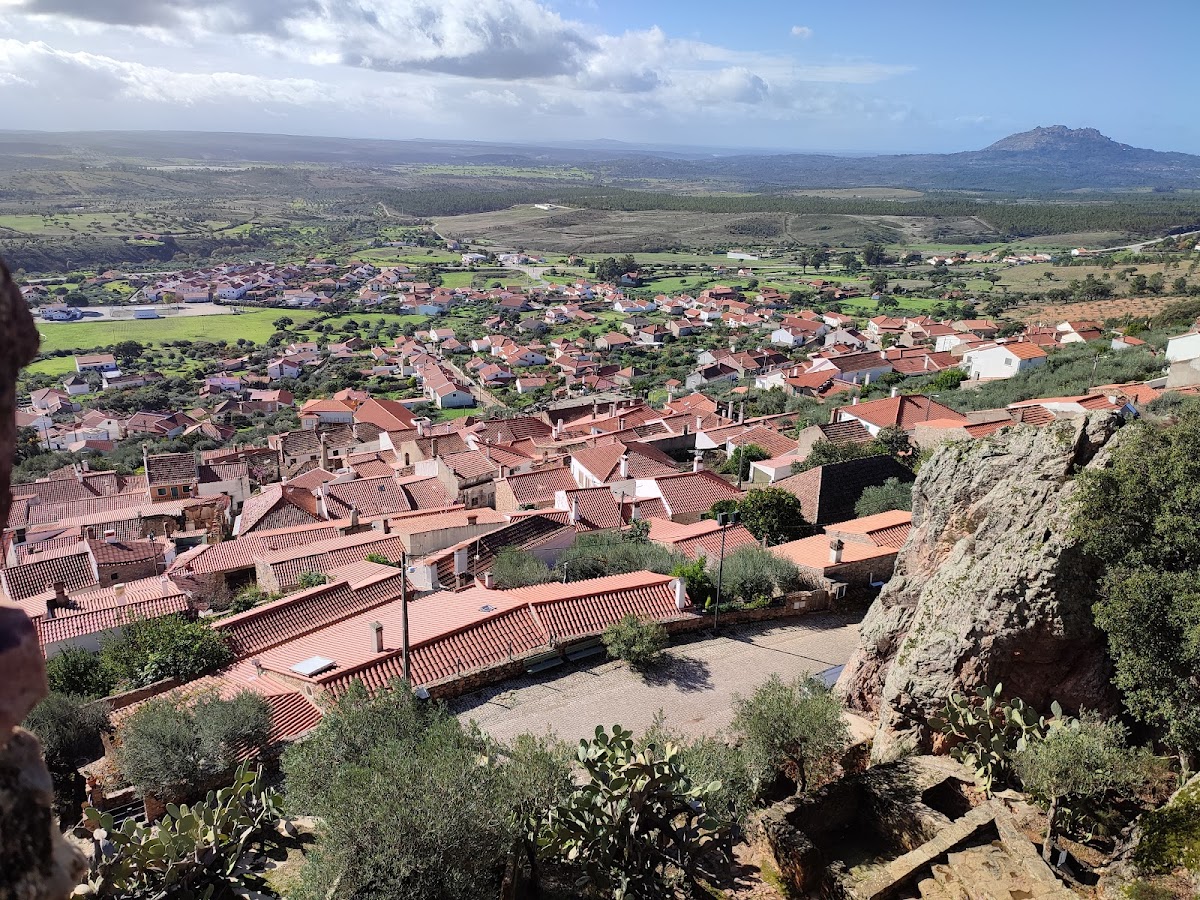
Several sections of the medieval defensive wall survive on the hilltop. These wall remains have recently been restored and are in good condition. Their elevated position provides views across the surrounding countryside toward the Feitoso valley and its dam.
Earlier settlement and artillery
The castle hill also preserves the context of the earlier Neolithic hillfort, whose occupation was later Romanized. In the settlement of Penha Garcia, a smoothbore muzzle-loading cannon survives. This type of weapon was loaded through the front of its barrel and had an unrifled bore.