Castle of Koroni: A Venetian and Ottoman Fortress in Greece


Site at a Glance
- Rating
- 4.5
- Popularity
- Medium
- Country
- Greece
- Primary era
- Medieval
- Eras represented
- Medieval, Early Modern, Modern
- Civilizations
- Byzantine, Greek, Ottoman, Venetian
- Site type
- Military
- Remains
- Castle
On this page18 sections
History
Castle of Koroni is a fortified site in Greece, on the Akritas promontory at the southern end of the Messenian Gulf. It incorporates an earlier Byzantine fortress of uncertain date and was substantially strengthened by the Venetians in the early thirteenth century on the site of the ancient acropolis of Asine. Its position made Koroni a naval base, commercial port, and strategic stronghold in the eastern Mediterranean.
Ancient and Byzantine Foundations
Ancient Asine was traditionally identified with one of the seven cities that Agamemnon offered Achilles in Homeric tradition. The name Koroni is traditionally explained either by a copper coin found while the castle walls were being built or by a supposed first inhabitant from Koroneia in Boeotia. The Byzantine fortress occupied the highest part of the site, providing the foundation for later fortification.
Venetian Rule
After Constantinople fell during the Fourth Crusade in 1204, a campaign that divided much of the Byzantine world among western powers, the Venetian fleet occupied Koroni. Its harbor became a naval supply and service base, and the settlement developed into a Venetian colony known in Italian and wider European usage as Koron.
Koroni formally entered the Principality of Achaea in 1205, a Frankish-ruled state established in the Peloponnese after the Fourth Crusade. Venetian control was established or confirmed through a transfer made by Geoffroi de Villehardouin in 1209, and the Byzantine emperor Michael VIII Palaiologos later confirmed Venetian authority in 1265.
Over roughly a century, the Venetians reconstructed and reinforced the fortifications. During the fourteenth century, the castellans of Koroni and Methoni, working with the town councils, organized convoys for Venetian merchant ships traveling east. These convoys helped protect shipping from Genoese attacks and piracy.
Koroni prospered through the trade in cochineal dye and silk and through its position on the pilgrimage route to the Holy Land. Together with Methoni, it became a key port for commerce with the eastern Mediterranean. The two towns retained economic importance into the nineteenth century as centers of craft production and trade. Ottoman attempts to capture Koroni and Methoni in 1337 contributed to their reputation as “the eyes of Venice” in this part of the Mediterranean, although Venice later agreed to pay tribute to the Ottomans.
Ottoman Conquest and Venetian Return
During the Second Ottoman–Venetian War, the Ottomans captured Koroni in 1500 after their fleet, commanded by Admiral Kemal Reis, defeated the Venetian fleet at the naval battle of Modon. In 1532, an allied fleet commanded by the Genoese admiral Andrea Doria, acting for Emperor Charles V, the pope, and the Knights of Malta, retook Koroni and devastated the surrounding area.
In 1534, an Ottoman army under Yahya Pashazade Mehmed Bey besieged the town and forced its surrender on 1 April. The Spanish garrison was allowed to leave unharmed and sail to Italy. In 1582, the castle contained 300 Christian households and 10 Jewish households. Its Muslim population consisted mainly of officials and a garrison of about 300 soldiers, a number believed to have remained broadly constant during Ottoman rule.
Venetian forces led by Admiral Francesco Morosini recaptured Koroni in 1685. The town remained under the Venetian Republic until 1715, when a peace settlement returned it to the Ottomans. During the eighteenth century, the castle declined, though it continued to export silk and olive oil. Four French merchant houses operated there by the 1770s.
Decline and Liberation
The castle was severely damaged by bombardment in 1770, when it was attacked by the Orlov brothers. By 1805, William Martin Leake reported that trade had ceased, the harbor provided only an unprotected anchorage, and the janissary garrison mistreated the local population. A janissary was a soldier of the Ottoman sultan’s elite infantry corps.
Greek insurgents were unable to take the fortified town during the Greek Revolution. Koroni was liberated in 1828 by the French expeditionary force commanded by Marshal Nicolas Joseph Maison, after the Battle of Navarino. The marble monument called Resalto commemorates Greeks killed on 28 February 1824 while attempting to seize the castle from the Ottomans.
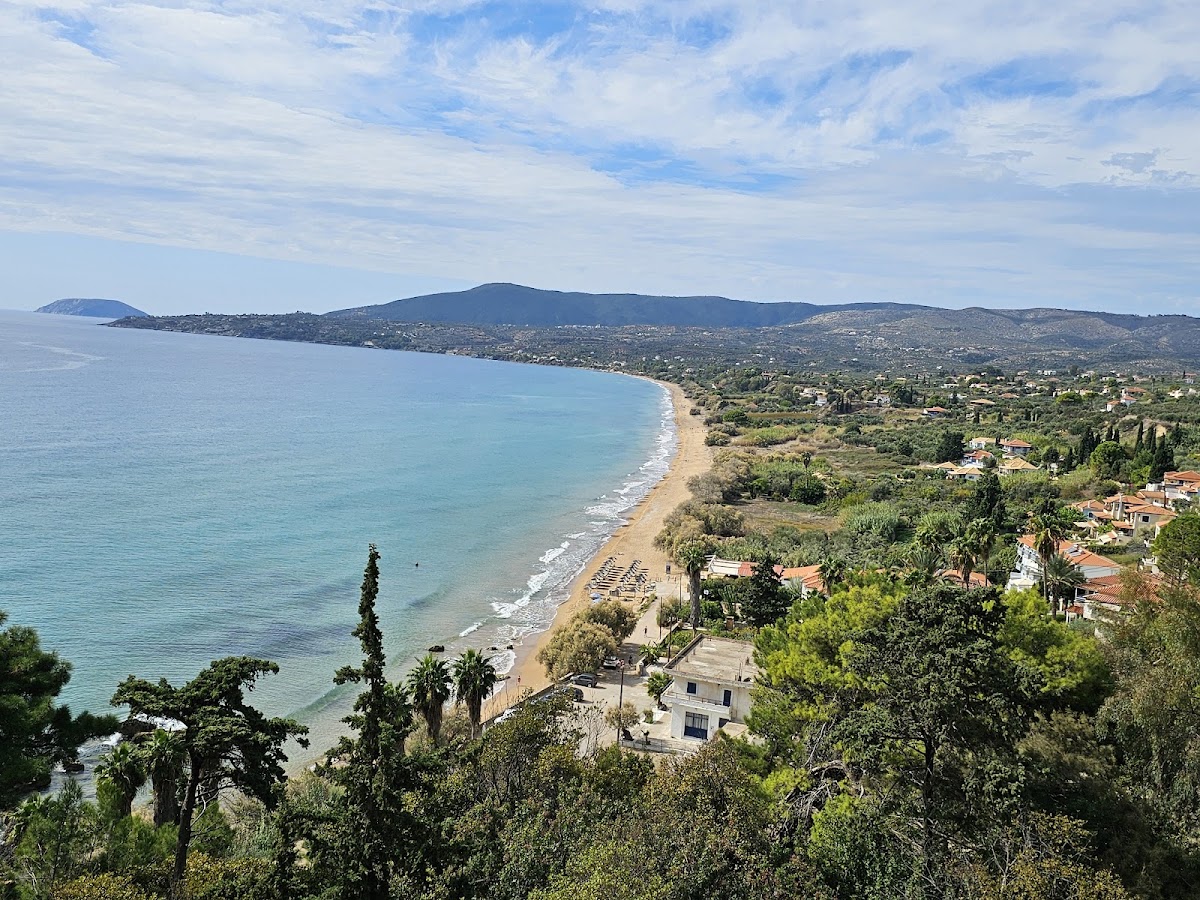
In the late nineteenth century, emigration from the region gradually depopulated the town and castle. Residents who remained moved outside the walls, settling on the hill above the harbor and along the beach. The castle is designated an archaeological site in Greece. During the Second World War, German forces blew up the northern bastion, leaving only limited ruins of that section.
Remains
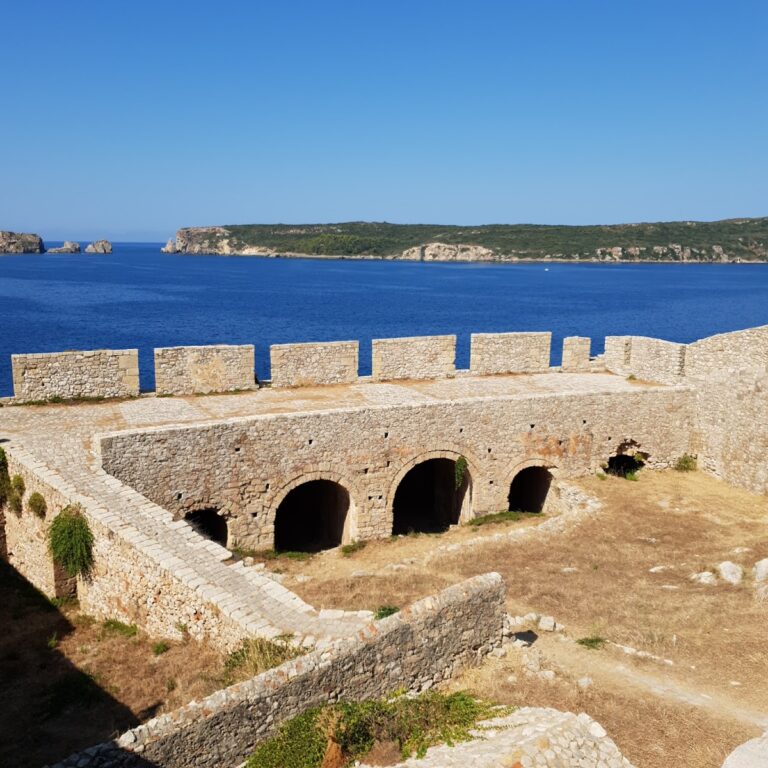
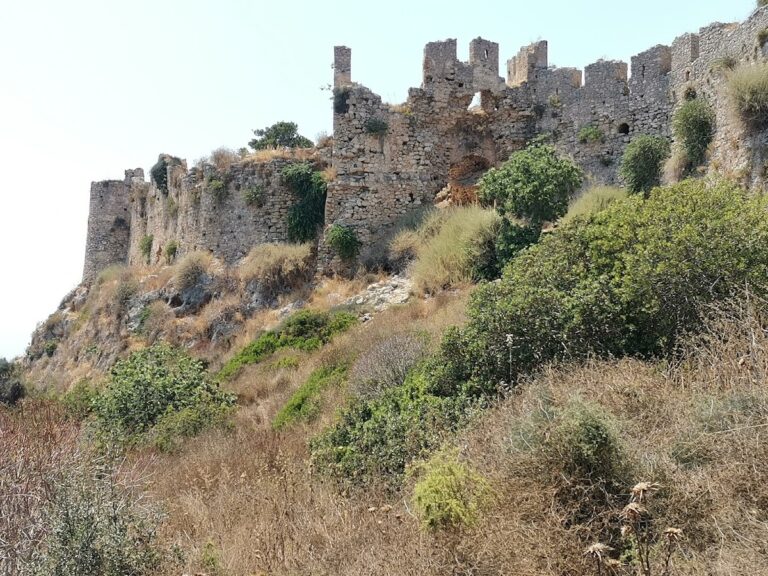
The castle has an almost triangular plan. Its original arrangement consisted of a triangular fortified area and an outer enclosure to the east, with square towers and buildings used for storing gunpowder distributed around the perimeter. The Byzantine fortress occupied the highest point, where the women’s monastery now stands. During the First Venetian period, the eastern enclosure was enlarged, strong walls were built, and a large structure was added on the eastern side.
Walls, Bastions, and Entrance
Sea Defenses
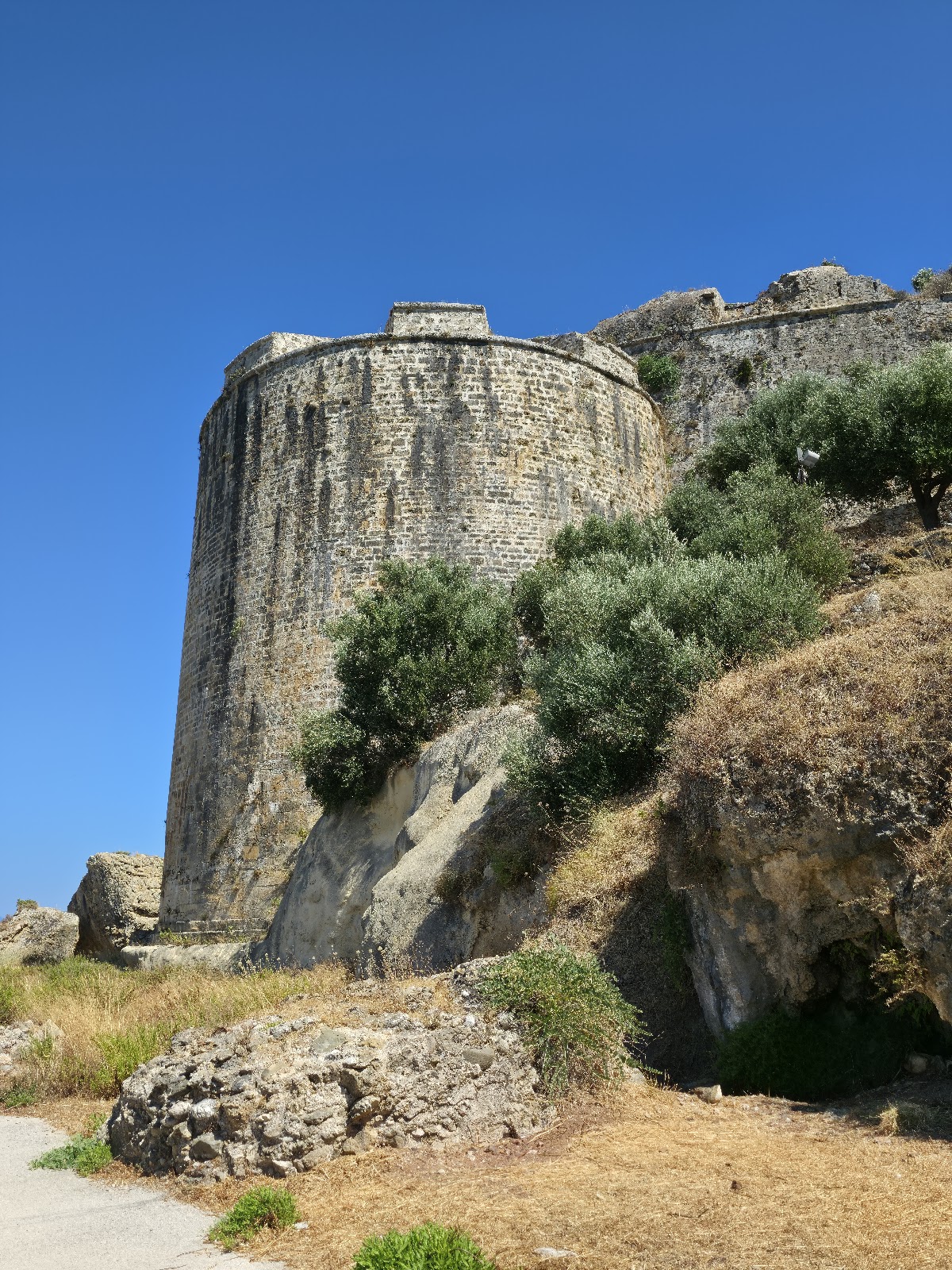
A double semicircular bastion, a projecting fortification designed to provide defensive fire along a wall and against attackers approaching its sides, occupied the northeastern corner and protected the castle from the sea. The southeastern defenses were strengthened during the First Ottoman period with a second defensive line and two circular bastions at its ends. Morosini later blew up this southeastern section in 1685.
Western Bastion
The westernmost end received a Venetian bastion in 1463. It passed through successive building phases, with the latest belonging to the Second Venetian period, from 1685 to 1715.
Main Entrance
The main entrance is contained within a large square fortified structure. Its lower part ends in a pointed arch, while the highest part included a gatehouse room and an arched opening. During the castle’s prosperous period, a propylaeum, or monumental gateway placed before an important enclosed complex, stood in front of the entrance. It survived until the Greek Revolution. A relief of the Lion of Saint Mark was placed above the entrance.
Religious Buildings
Hagia Sophia
The remains of Hagia Sophia form a three-aisled basilica with colonnades, probably dating from the seventh century. The church was built over the ruins of an ancient temple dedicated to Apollo and an Early Christian church. A dome survives among its remains.
Church of Saint Charalambos
The Church of Saint Charalambos is a single-story building with a wooden roof. It was built in 1689 as a Catholic church dedicated to Saint Roch, a Catholic saint traditionally associated with protection against plague and other epidemics. The building later became an Ottoman mosque and in modern times an Orthodox church. Ancient building material was reused in its additions.
Church of Panaghia Eleistria
The single-story Church of Panaghia Eleistria has a wooden roof and is dedicated to the city’s patroness. It dates from 1900. Panaghia is a Greek title for the Virgin Mary.
Monastery of the Forerunner
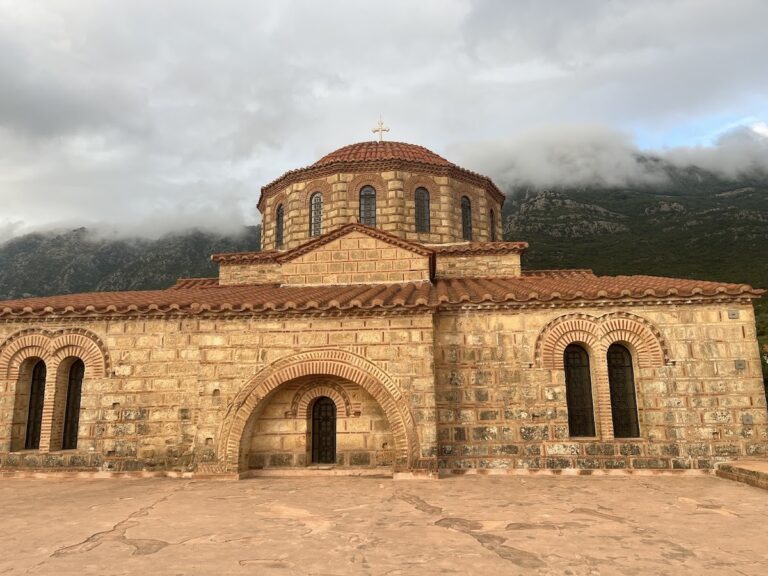
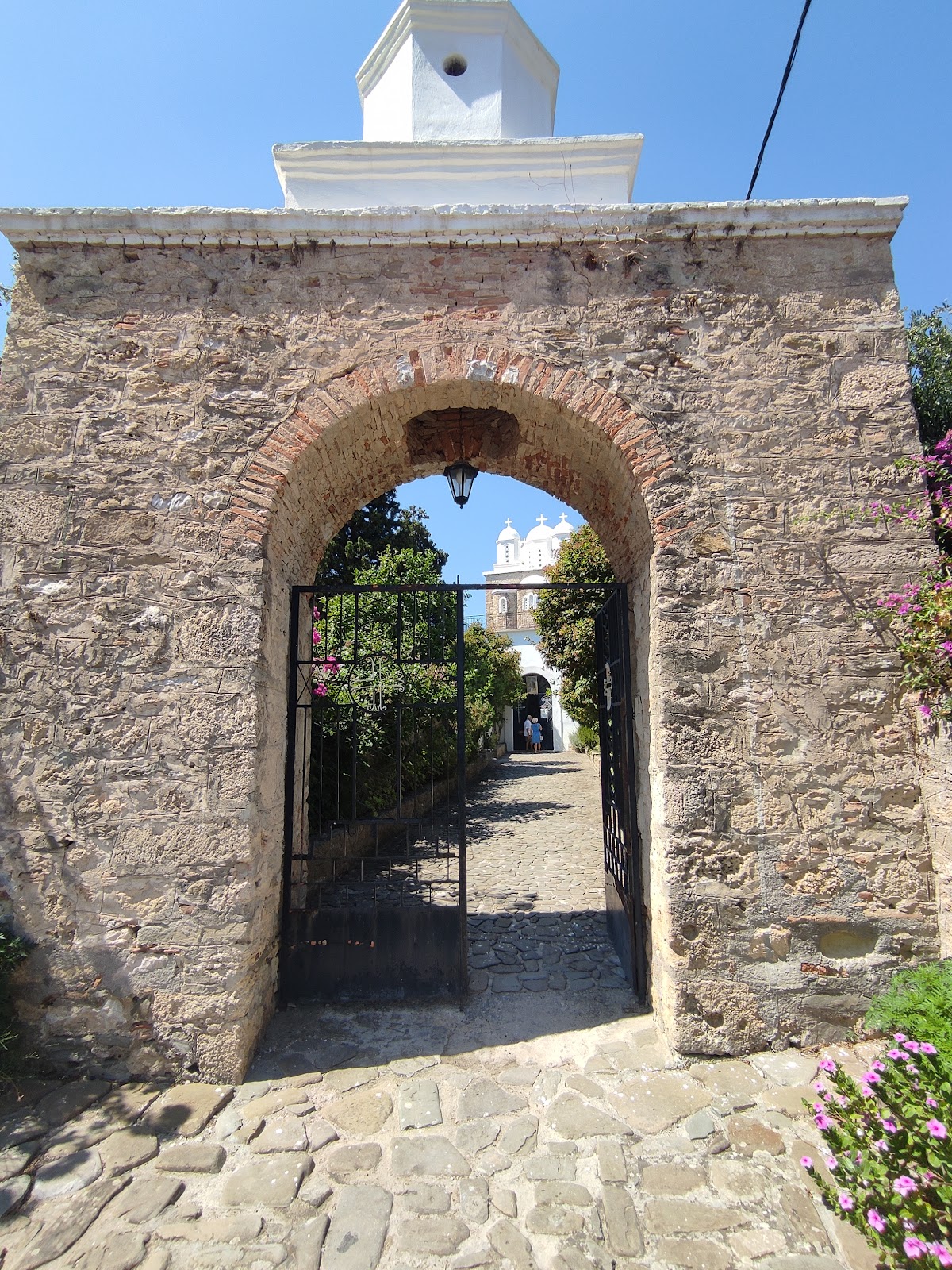
The western end of the castle contains the Monastery of the Forerunner, an Old Calendarist monastery founded at the beginning of the twentieth century. Its community follows the Julian liturgical calendar after rejecting the calendar reform adopted by many Orthodox churches. “The Forerunner” is a traditional Christian title for John the Baptist.
Waterworks and Commemorative Features
Cisterns and Turkish Bath
Venetian cisterns survive within the castle, together with the ruins of a Turkish bath. These features belong to the settlement’s built infrastructure and reflect the continued use of the fortified site through its Venetian and Ottoman periods.
Resalto
Resalto is a marble column commemorating the Greeks killed during the attempt to capture the castle on 28 February 1824. It preserves the memory of an episode from the Greek Revolution within the fortified settlement.
Nearby sites