Ostrožac Castle: Medieval Fortress and National Monument in Bosnia and Herzegovina



Site at a Glance
- Rating
- 4.5
- Popularity
- Medium
- Country
- Bosnia and Herzegovina
- Primary era
- Medieval
- Eras represented
- Medieval, Early Modern, Modern
- Civilizations
- Kingdom of Bosnia, Ottoman
- Site type
- Military
- Remains
- Castle
On this page8 sections
History
Ostrožac Castle is a medieval fortress in Bosnia and Herzegovina, near Cazin, that originated in the thirteenth century under the Croatian Babonić noble family. First mentioned in 1286, it later became an Ottoman stronghold before being remodelled in the Romantic style between 1900 and 1906. Its history reflects successive changes in political authority, administration, military use, and cultural purpose.
Medieval and Ottoman Rule
Ostrožac formed part of the Babonić family’s possessions during the medieval period. In the sixteenth century, control passed among local rulers and the Ottoman Empire, the imperial state that governed much of Bosnia from the late fifteenth century into the nineteenth century. The castle was associated with Antun Bakšić in 1552 and was conquered by the Ottomans in 1592. It was then incorporated into the Ottoman province of Bosnia.
Around 1700, the Ottomans added the southern section of the fortress. By the nineteenth century, the northern and southern parts were known by separate traditional names translated as the National and Divine sections. The fortress contained 28 cannons in 1833, and in 1836 Ostrožac became part of the Bihać kaymakamlık, an Ottoman administrative district governed by a kaymakam.
Nineteenth-Century Political Change
In 1837, Murad Bey Beširević, the last captain of the Beširević family, was expelled from Ostrožac after opposing the reforms of Sultan Mahmud II. Mehmed Bey Beširević later sold the castle to the Austrian Lothar von Berks in 1902. Von Berks, who served as mayor of Bihać, rebuilt the castle between 1900 and 1906 in the Romantic style, a nineteenth-century movement that revived historical forms and evoked the medieval past. The rebuilding was intended as a birthday present for his wife, who belonged to the Habsburg family, the ruling dynasty of the Habsburg Monarchy and later Austria-Hungary.
War, Protection, and Cultural Use
During the Second World War, Ostrožac served for a time as the headquarters of the national-liberation movement. Since 1970, the castle has hosted the Ostrožac Sculptors’ Colony, and the resulting bihacite sculptures are treated as an integral and inalienable part of the protected architectural ensemble.
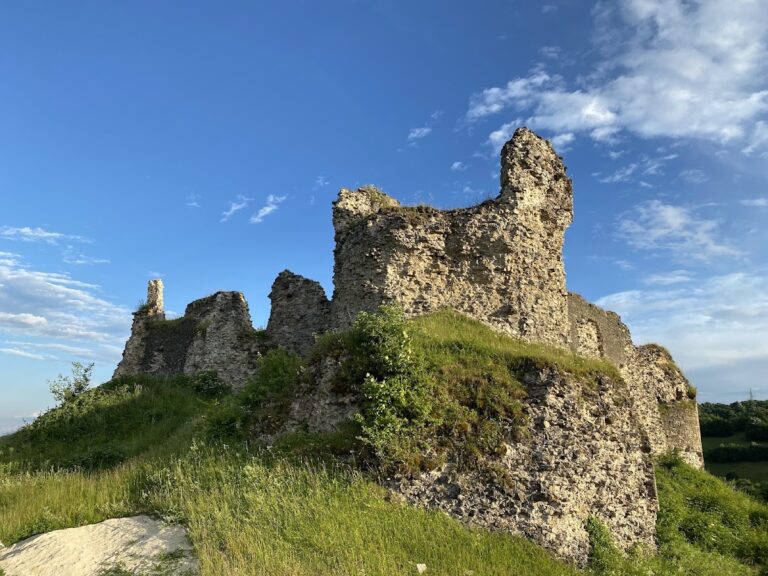
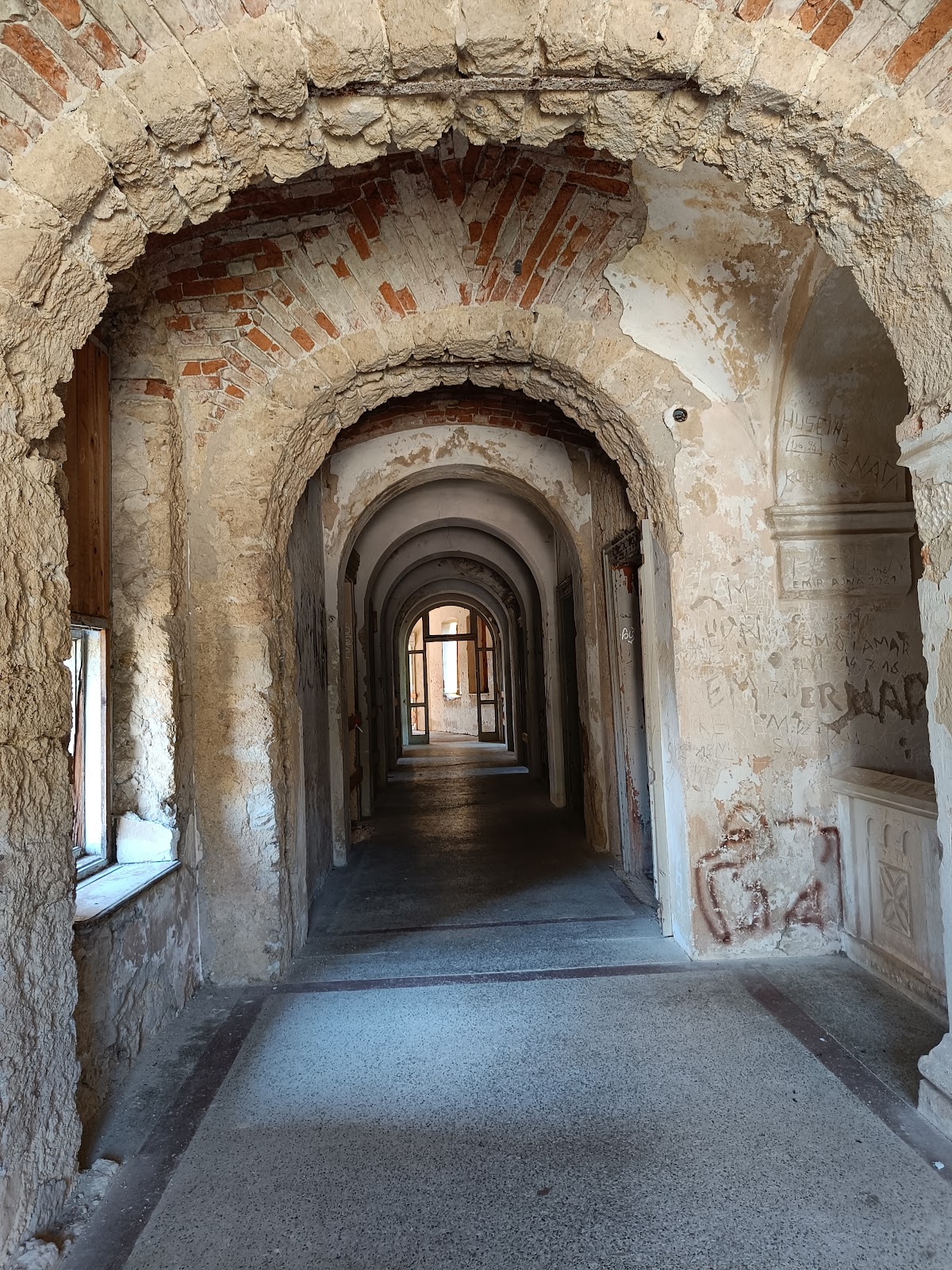
On 7 November 2013, the Commission for the Preservation of National Monuments of Bosnia and Herzegovina designated Ostrožac Castle and its architectural ensemble a National Monument of Bosnia and Herzegovina. The property is classified in Category II as a cultural and historical property. The complex is in poor technical condition. Comprehensive restoration plans exist, but conservation has progressed slowly, with only the most urgent repairs carried out.
Remains
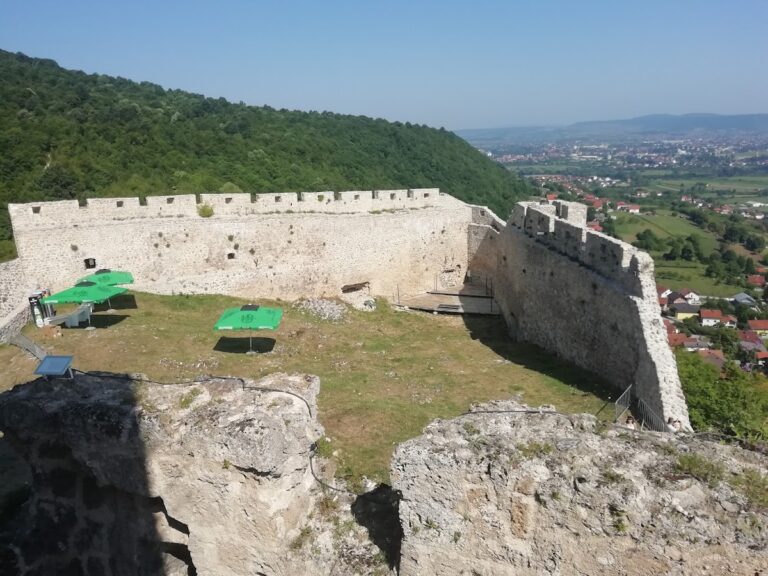
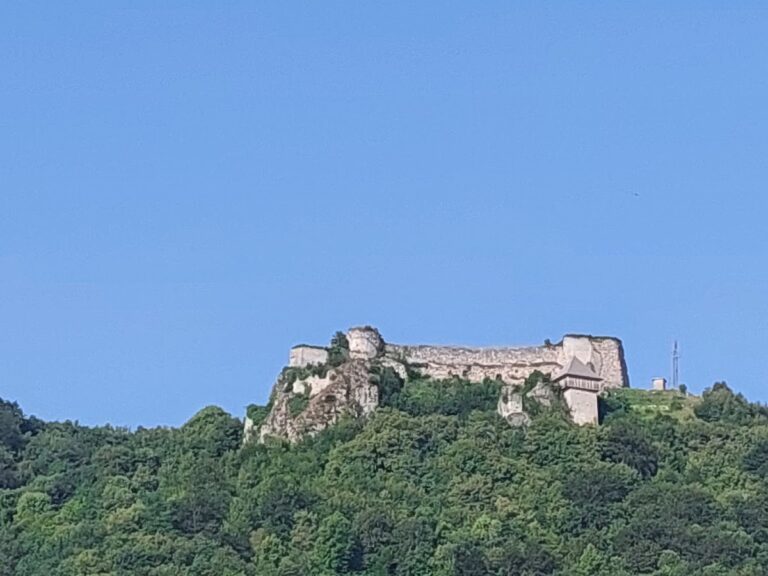
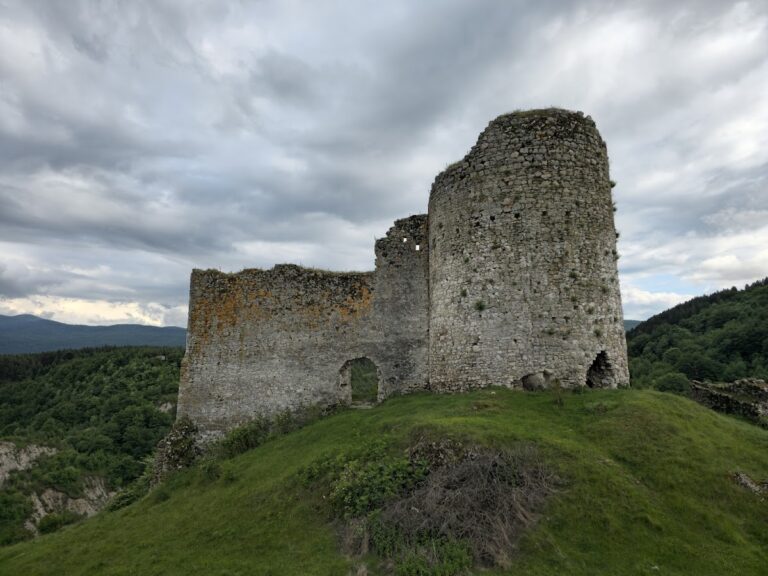
Ostrožac Castle stands on the left bank of the Una River, near the village of Ostrožac on the outskirts of Cazin and approximately 12 kilometres from Bihać. The fortress follows an irregular circular plan. Defensive walls enclose the site, while towers incorporated into the walls provided protection against attack. The northern and southern sections retain distinct historical identities, reflecting the Ottoman construction of the southern part around 1700 and the later remodelling campaign of 1900 to 1906.
Fortress and Romantic Remodelling
The surviving enclosure combines the defensive organization of a medieval fortress with later Ottoman and Romantic-period work. The walls and their integrated towers define the main physical form of the complex, while the southern section represents the Ottoman expansion around 1700. The rebuilding carried out by Lothar von Berks between 1900 and 1906 reshaped the castle in the Romantic style, linking the later residence to architectural references drawn from the medieval past.
Ostrožac Sculpture Park
More than 150 monumental sculptures carved from bihacite, a stone associated with the Bihać region, remain in the castle courtyard. Together they form the open-air Ostrožac Sculpture Park, described as unique in Southeastern Europe. Created through the Ostrožac Sculptors’ Colony, which has operated at the castle since 1970, the works form part of the protected architectural ensemble rather than a separate collection.
Contemporary Cultural Setting
The castle grounds are used for exhibitions, concerts, performances, and other artistic events. These activities occupy a complex whose historic fabric remains in poor technical condition, with conservation work limited largely to urgent repairs.