Château de Duras: A Medieval Fortress and Ducal Residence in France

Site at a Glance
- Rating
- 4.5
- Popularity
- Medium
- Country
- France
- Primary era
- Early Modern
- External website
- Open
- Eras represented
- Medieval, Early Modern
- Civilizations
- English, French
- Site type
- Domestic
- Remains
- Castle
On this page14 sections
History
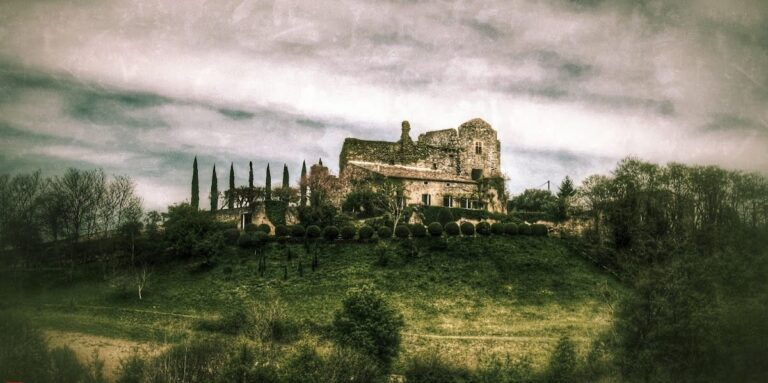
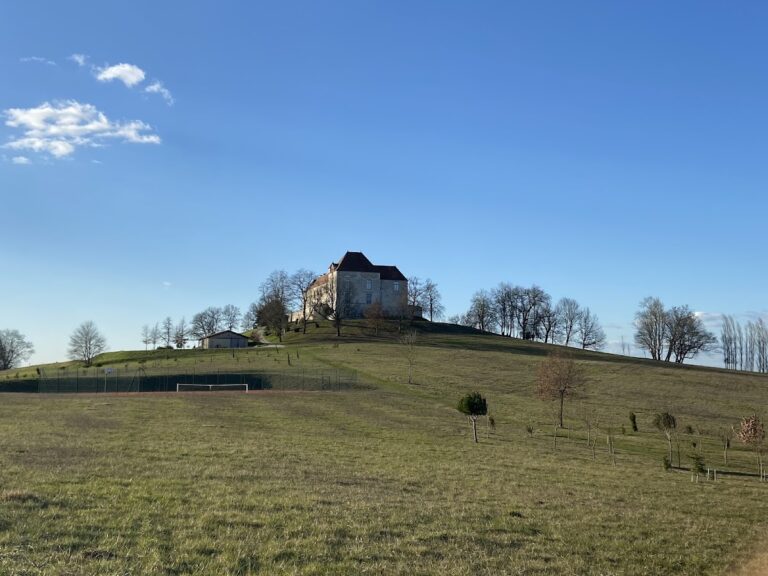
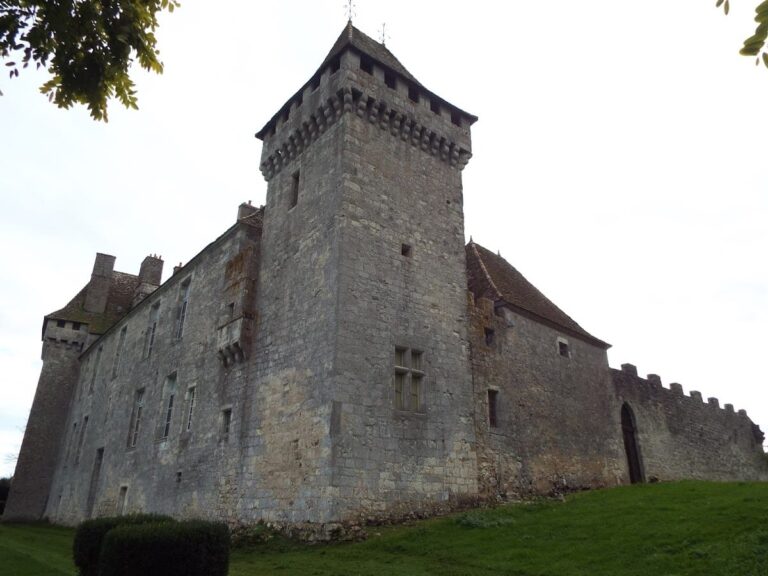
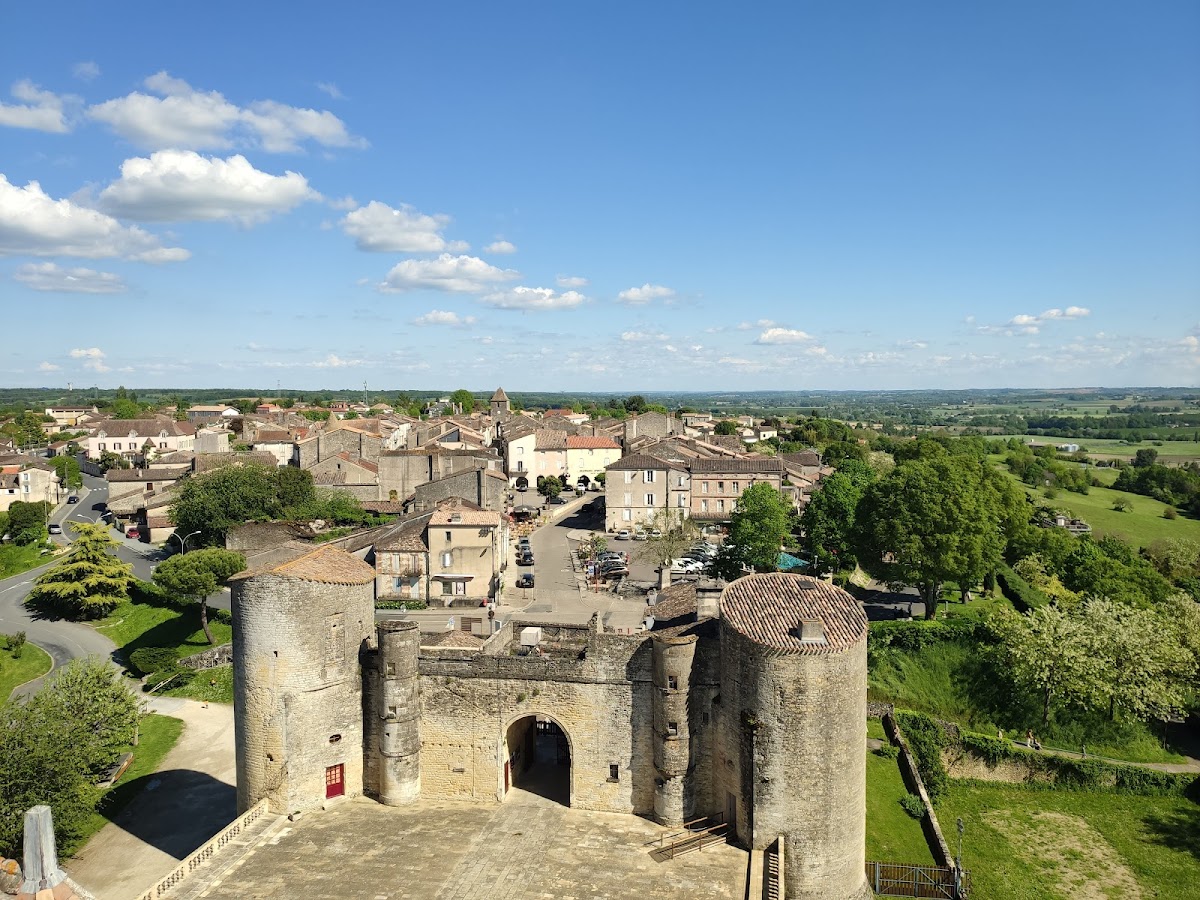
Château de Duras is a historic château in France that began as a fortified residence on a rocky outcrop above the Dropt valley during the twelfth century. Its medieval foundations were later transformed into a ducal pleasure residence, and the site reflects the political conflicts, religious wars, and architectural changes that shaped Gascony and southwestern France.
From Saint-Ayrard to the first château
The earliest known occupation connected with Duras was associated with the church of Saint-Ayrard, about 1,200 metres from the present château. In 977, Gombaud, bishop of Vasconie, and Sanche, duke of Gascony, gave the church to La Réole Abbey. Bertrand de Taillecavat transferred a quarter of it to the same abbey in 1087.
In 1127, the priory or settlement of Saint-Ayrard was destroyed by the Viscount of Besamont, probably the Viscount of Bezaume. A house and chapel were then built on the present site of Duras. A charter issued in 1233 transferred to the prior of La Réole rights over Duras that had previously been attached to Saint-Ayrard.
The first château rose on the rocky site during the twelfth century. A date of 1137 and an association with Guillaume Amanieu, Viscount of Bezaume, Benauges, and Gabardan, are also linked with its early history. The Bouville family held the château until Henry III of England seized the viscounties of Benauges and Bezaume after the Gascon revolt of 1254. He transferred them to his son, the future Edward I.
The Durfort succession and the Hundred Years’ War
In the early fourteenth century, the château came to Gaillard de Got, brother of Pope Clement V, probably through a grant by the English king. The grant appears to have supported the loyalty of the pope’s family. Gaillard’s testament, dated 16 January 1305, provided for the property to pass to his niece Marquèse de Got. Gaillard died at Lyon on 23 November of that year.
Bertrand de Got, Gaillard’s nephew and a relative of Clement V, was recognized as lord of Duras by 1312. He probably financed a rebuilding of the château from 1308. After the death without issue of his daughter Régine de Got in 1325, the succession was disputed. Duras eventually passed to Marquèse de Got and her husband, Arnaud II de Durfort, and then to their son Aymeric I de Durfort. An agreement reached in 1327 allowed the Durfort family to hold Duras and other castles.
Aymeric I de Durfort controlled Duras and several other Gascon lordships while the Hundred Years’ War, the prolonged conflict between the English and French crowns, was beginning. Local lords in the region repeatedly shifted allegiance between the two sides. Aymeric died of wounds during the English campaign and siege of Bergerac in 1345. Duras was probably then occupied by the English, although accounts of its capture are inconsistent.
Gaillard I de Durfort was made baron of Duras and received Blanquefort from the English in 1345. He later returned to the service of the French king and died in 1357. His son, Gaillard II, rendered homage for Duras and Blanquefort in 1364 and 1371.
After Gaillard II broke an oath of loyalty to the French king, the Duke of Anjou besieged Duras from 18 October 1377. The six-day siege ended with the château’s capture and burning. The duke ordered its destruction, but the fortress was not completely demolished and was placed in the custody of Hervé de Lesonencens. Gaillard II lost his lands and remained in exile at Bordeaux until his death, probably around 1395.
Restoration of the lordship and religious conflict
In 1395, Charles VI restored the lordship of Duras to Gaillard III de Durfort. Gaillard served the English crown as seneschal of Guyenne, an important regional administrative and military office, and later became provost of Bayonne and seneschal of the Landes. A claim that the Duke of Bedford seized Duras in 1424 after Gaillard changed allegiance remains unproven.
Gaillard III’s son Jean Gaillard died in 1425, after which Duras passed to Gaillard IV de Durfort. Gaillard IV remained loyal to England during the final phase of the Hundred Years’ War and surrendered after Charles VII captured Bordeaux in 1453. He was permanently banished, and his lands, including Duras, were confiscated. The château was successively held by Antoine de Chastelneuf, Jehan de Segur, and Antoine de Monfaucon before Louis XI restored it to Gaillard IV in 1476.
The Durfort family retained Duras until the French Revolution. During the Wars of Religion, the sixteenth-century conflicts between Catholics and Protestants in France, the château became a Protestant stronghold. Jeanne d’Albret, the Protestant queen of Navarre, temporarily used it as a base. Blaise de Monluc, a leading Catholic commander, besieged Duras on 2 August 1562 after Symphorien de Durfort, a Calvinist captain, had used Duras and other regional strongholds for the Protestant cause. A further attempted seizure by Protestants was reported on 31 October 1579.
The ducal residence
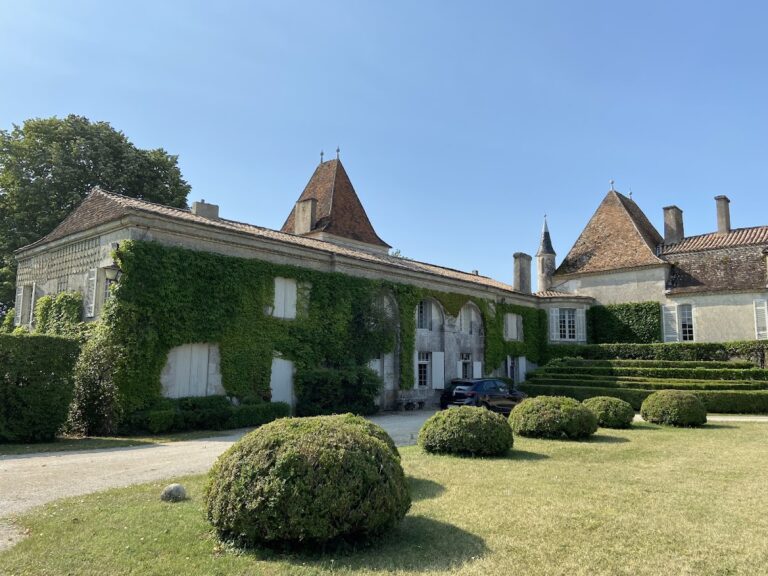
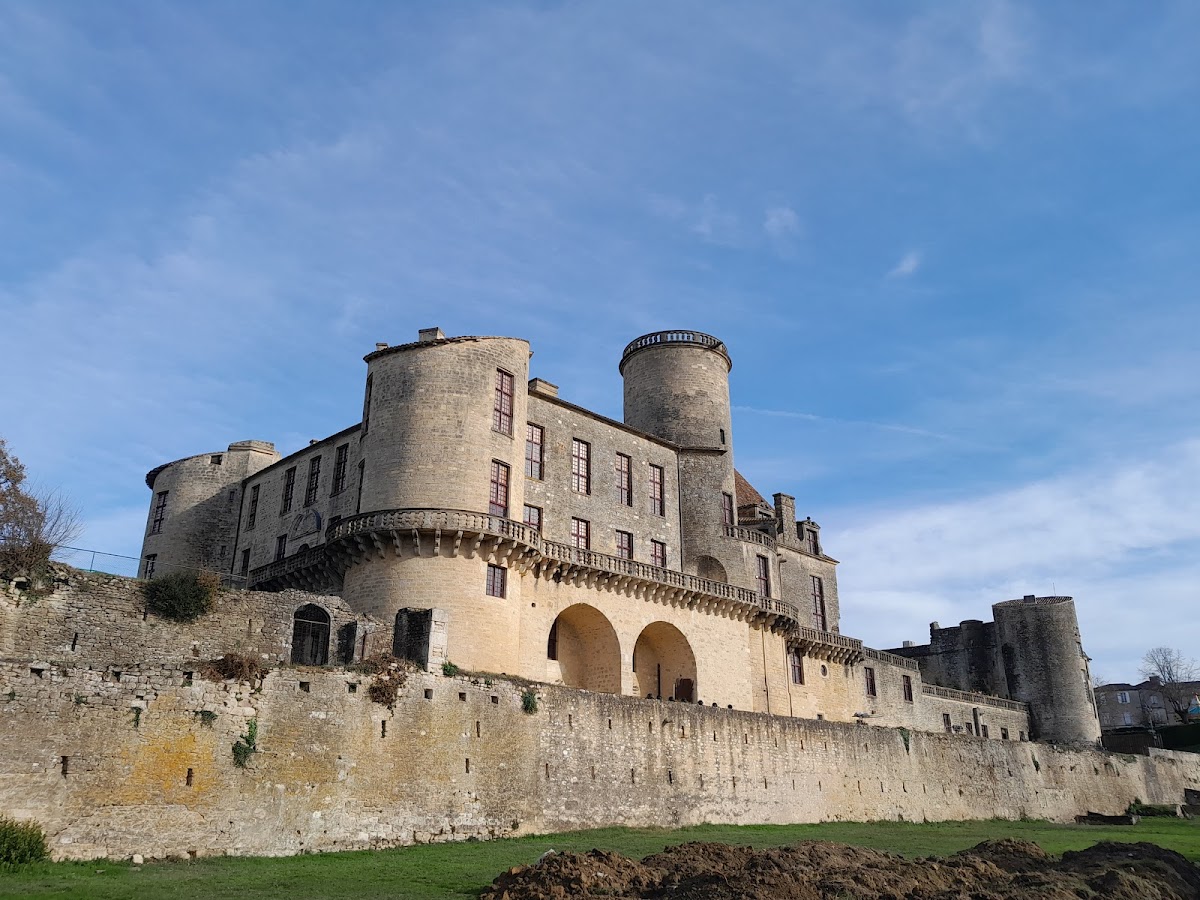
During the seventeenth century, Duras became the residence of the Durfort dukes. The château was transformed from a fortress into a pleasure residence with formal French gardens. Guy Aldonce I de Durfort repaired the building in 1651. During the last quarter of the century, Jacques Henri de Durfort, later the first Duke of Duras, rebuilt all the residential buildings.
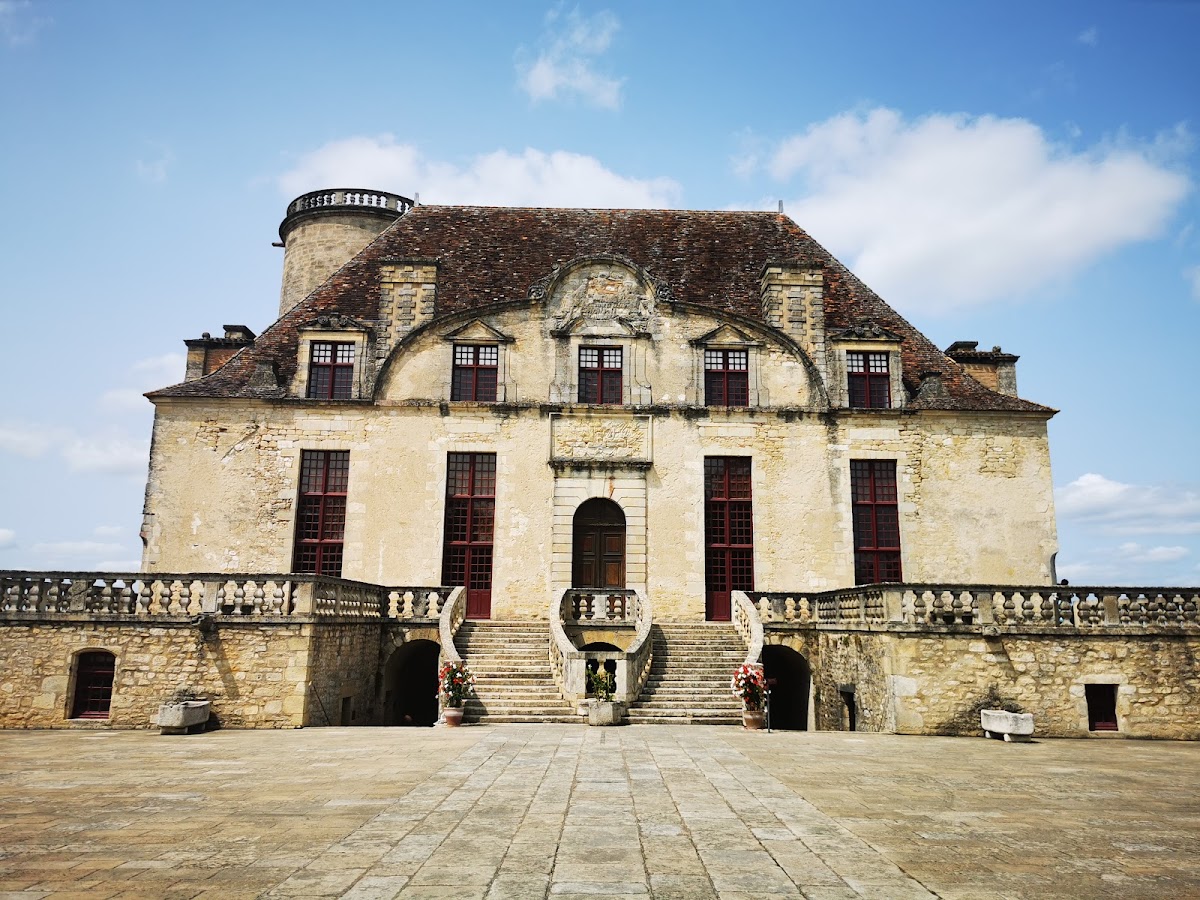
His son, Jean-Baptiste de Durfort, built the entrance residential range known as the Petit Château in the early eighteenth century. Projects by Robert de Cotte, a prominent French architect of the late seventeenth and early eighteenth centuries, show a planned forecourt with an orangery, chapel, and stables, probably arranged during the 1730s. The stables are mentioned in 1734, and a religious ceremony held in the Great Hall in 1738 accommodated 1,300 people. Emmanuel-Félicité de Durfort does not appear to have undertaken major works.
Revolution, private ownership, and restoration
After the fifth Duke of Duras emigrated to Germany during the French Revolution, the château became a national property, meaning an asset confiscated and placed under state ownership. It was forced open and pillaged. Joseph Lakanal, a French revolutionary politician and member of the National Convention, ordered the demolition of the towers so their stone could be reused in locks on the Dropt. Other estate properties were sold in November 1793, while the château remained state property until 1807.
The château was sold on 20 June 1807 and repurchased on 27 June by Amédée-Bretagne-Malo de Durfort, the sixth Duke of Duras, for 4,575 francs. It later passed through marriage to the Chastellux family. Henri Paul César de Chastellux owned it in 1864 and sold it on 20 November 1883 to Jean-Baptiste Joseph François Aureille, parish priest and archpriest of Duras.
Aureille planned to convert the Hall of Marshals into the parish church, establish a presbytery in the former residential range, and create boys’ and girls’ schools there. His death in 1900 halted the project. The château changed hands several times afterward and deteriorated.
The commune of Duras acquired the château in 1969 and began its restoration. The roof of the wing was restored in 1975, while the vaulted basements were restored during the 1980s and 1990s. Since 2016, the commune and the Mobilier national, the French state institution responsible for preserving and furnishing important public and historic interiors, have collaborated on refurnishing the château according to the medieval and seventeenth-century phases represented in its architecture.
The château entered the register of historic monuments on 7 July 1948. It was partly classified on 6 November 1970 and further classified on 14 February 1989. A decree of 3 May 2002 classified the château, its buildings, courtyards, warren, terraces, and retaining walls. It was also designated a major site of Aquitaine in 2002. The commune is the current owner, and the château houses the town hall.
The Durfort connection is also reflected in the motto “Si ell dur, yo fort,” meaning “If it is hard, I am strong.” It derives from a poem by Mosen Jaume Febrer about Raymond de Durfort’s participation in the conquest of Valencia in 1238 and is associated with the Durfort lords of Duras.
Remains
Fortified enclosure and residential ranges
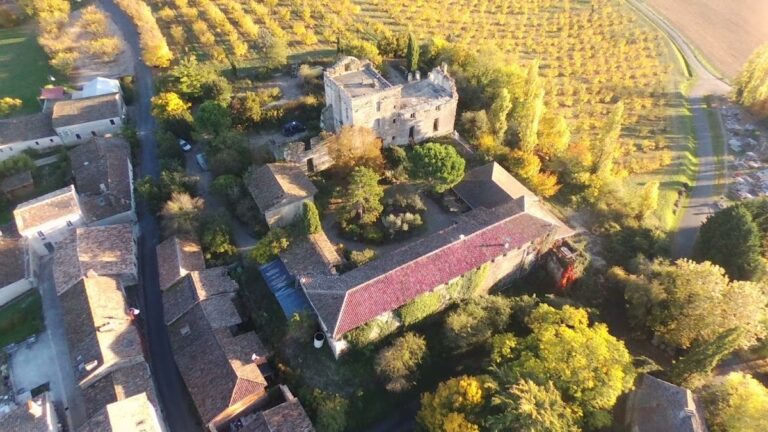
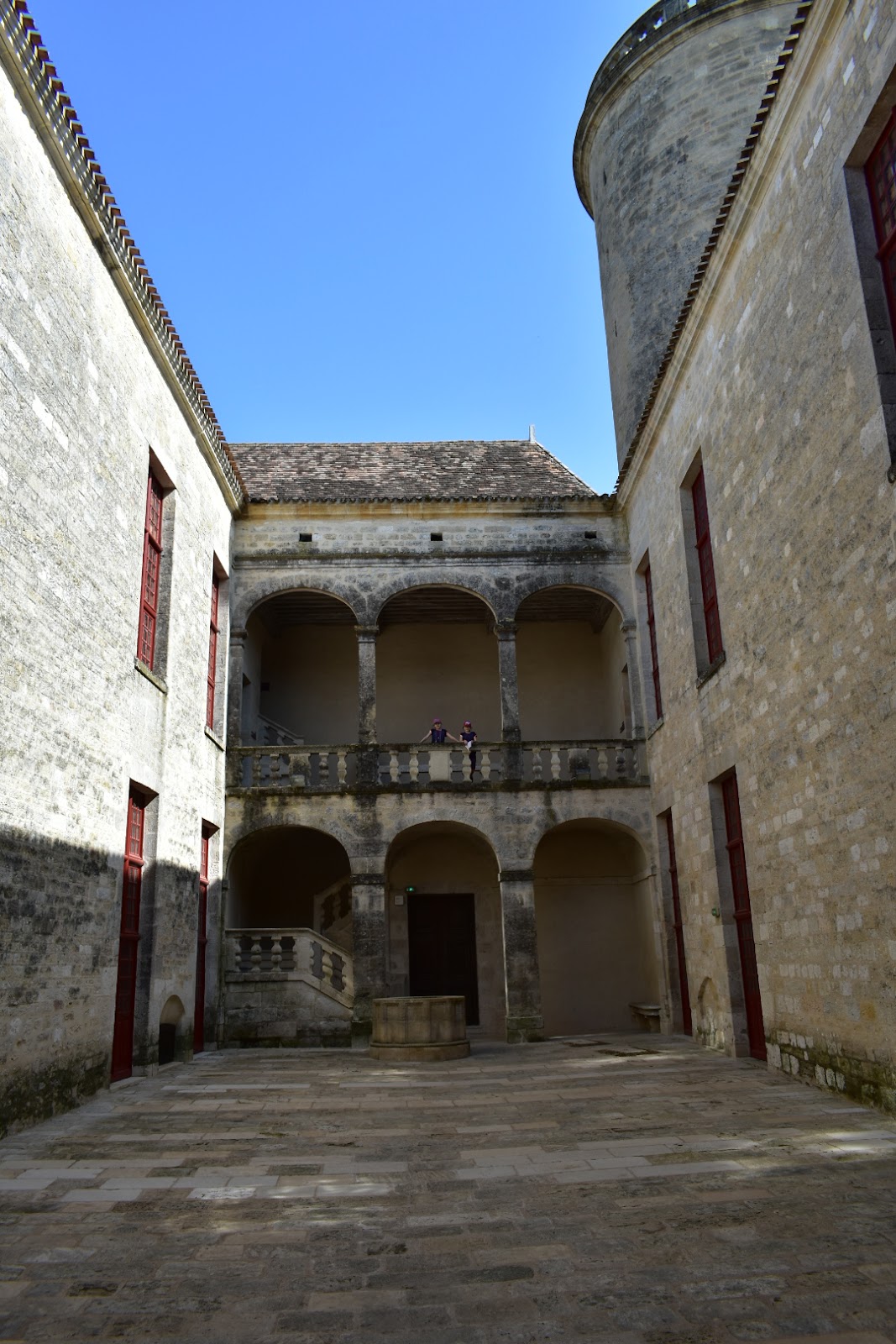
The principal building forms a quadrilateral with four round corner towers. Medieval foundations define the core, but the seventeenth-century rebuilding substantially altered the fortress. Two residential ranges with galleries placed one above the other were constructed along the north and south sides of the inner court. The decoration is restrained, combining mullioned windows, balconies with balusters, and a rusticated doorway. A small Italian-style arcade occupies part of the inner court, which is overlooked by the windows of the former count’s and countess’s apartments.
The lower bailey and oratory
The former fourteenth-century lower bailey, an outer fortified enclosure, adjoins the Petit Château. Its corner tower contains an oratory whose walls are covered with moulded religious stucco panels. The oratory is connected to an apartment in the adjoining building, preserving a physical link between the devotional space and the residential rooms.
The Petit Château
The Petit Château stands south of the forecourt against the curtain wall, the main defensive wall connecting fortified structures. It is beside a corner tower of the former fourteenth-century inner bailey. A symmetrical double staircase leads to a terrace, while the western part contains a seventeenth-century apartment. Two rooms retain richly decorated fireplaces, and the adjoining tower contains the oratory with its religious panels.
Great Hall and service features
The Great Hall of Marshals
The Great Hall of Marshals is the largest room in the château and was intended for official events. Its masonry preserves a column and the beginning of an arcade, identified as traces of alterations made during the sixteenth century. The hall was also the setting for the religious ceremony held in 1738, when it accommodated 1,300 people.
Domestic and defensive features
Other surviving features include an icehouse, kitchen, roof structure, curtain wall, terraces, and retaining walls. A bakery was cut directly into the rock. Together with the towers, galleries, courtyards, and residential ranges, these elements preserve the successive military and domestic functions of the château.
Refurnished interiors
The refurnishing campaign begun in 2016 has furnished the Great Hall of Marshals, Great Dining Room, billiard room, reception room, small dining room, and two ducal bedrooms in neo-Gothic and Louis XIV styles. Neo-Gothic refers to the nineteenth-century revival of medieval Gothic forms, while the Louis XIV style is associated with the formal decorative art of Louis XIV’s reign.
The installation includes a Boulle marquetry clock, an example of elaborate inlay using materials such as wood, metal, and tortoiseshell, together with Louis XIV-style marquetry tables. An eighteenth-century Aubusson verdure, a woven decorative textile associated with Aubusson in France, depicts La Fontaine’s “The Frogs Asking for a King.” Empire- and Restoration-period Aubusson carpets, Abbeville tapestries bearing the arms of France and woven under Charles X, neo-Gothic billiard seats transferred from the Mobilier national, a mahogany ensemble in the Troubadour style, and period-style curtains and door hangings complete the furnished rooms.
The interiors also commemorate the first Marshal of Duras and Claire de Kersaint, Duchess of Duras, who was a friend of François-René de Chateaubriand, a major French Romantic writer and political figure.