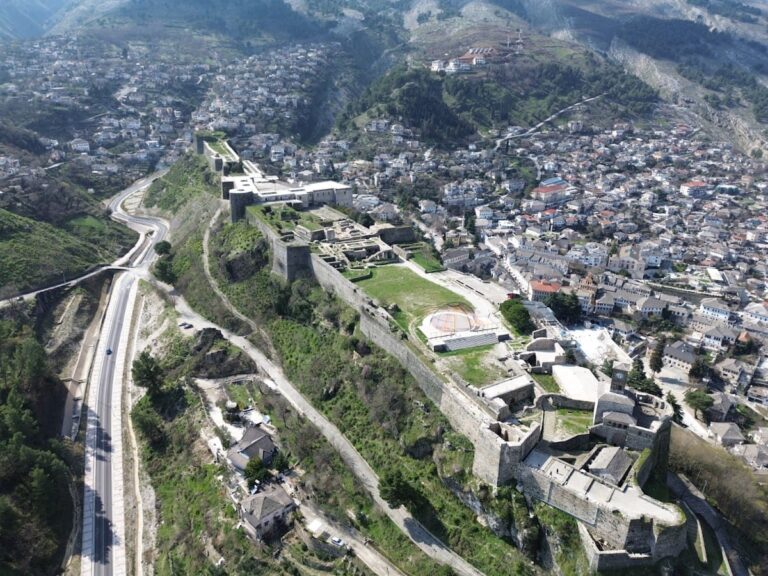
Lëkurësi Fortress: An Ottoman-Era Fortification Above Sarandë


Site at a Glance
- Rating
- 4.3
- Popularity
- Medium
- Country
- Albania
- Primary era
- Early Modern
- Eras represented
- Medieval, Early Modern, Modern
- Civilizations
- Byzantine, Ottoman
- Site type
- Military
- Remains
- Fort
On this page7 sections
History
Lëkurësi Fortress is an Ottoman-era fortification above Sarandë, Albania, built in the late eighteenth century by Ali Tepeleni, a powerful regional ruler who established an autonomous base in Epirus and southern Albania. Its position on a strategic hill above the Lëkurës neighborhood placed it on the southern side of the Gjashtë Pass and gave it control over important coastal and inland approaches.
Earlier settlement and Ottoman strategy
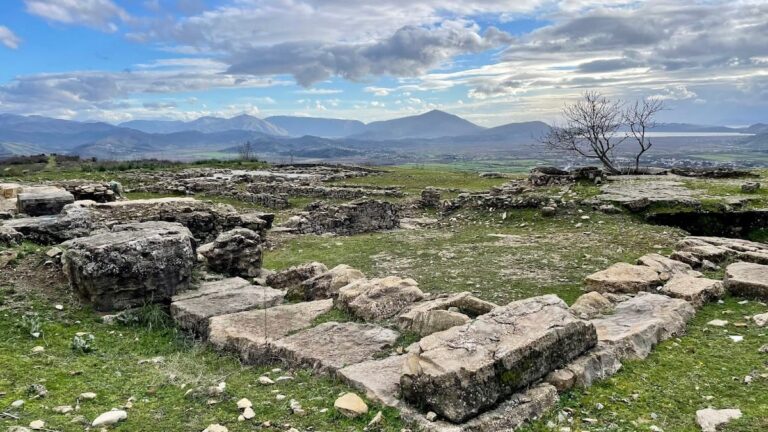
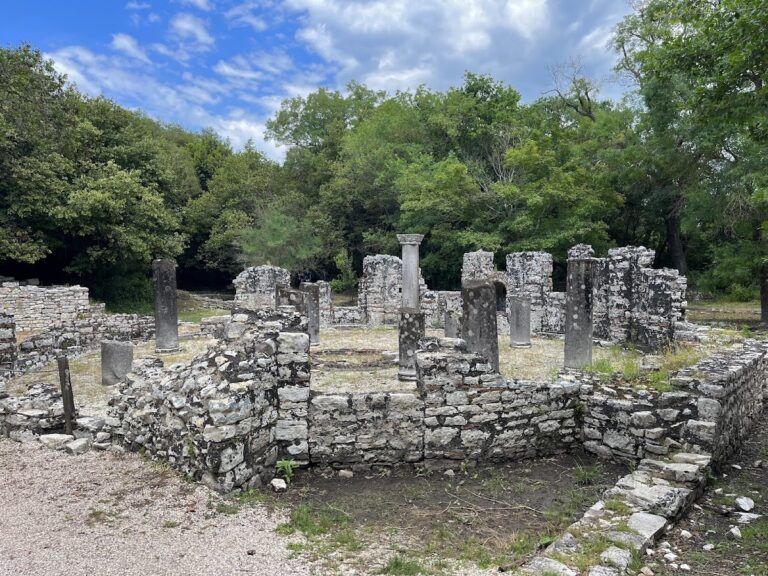
The hilltop had earlier occupation. Archaeological investigations uncovered the foundations of a small medieval settlement with houses and a small church, which may have preceded the fortress. A village on the western slope survived until the nineteenth century and may once have had a larger population than Sarandë. The Lëkurës neighborhood at the foot of the hill developed only during the last third of the nineteenth century.
Historians associate an earlier fortification on the hill with Sultan Suleiman the Magnificent’s 1537 campaign against Venetian-held Corfu. Suleiman ruled the Ottoman Empire from 1520 to 1566 and led major campaigns in southeastern Europe and the Mediterranean. From Lëkurësi, a fortified position could oversee Sarandë Bay and its harbor, Corfu and the Strait of Corfu, Lake Butrint, the road between Butrint and Sarandë, and the islands of Ksamil.
Late-eighteenth-century fortress
A new fortress was constructed over the earlier remains at the end of the eighteenth century. It is associated with Ali Tepeleni, also known as Ali Pasha of Ioannina, who had broken away from the Ottoman government. Other historical descriptions connect the fortress’s attack and the plundering of the surrounding area in the same period with Ali Pasha of Ioannina.
The stronghold served as the base of a garrison numbering approximately 200 to 220 soldiers. It retained a military function until the twentieth century, when Albania’s communist government used it as barracks.
Conflict and later preservation
During the Albanian-Greek conflict of 28 February to 4 March 1878, Greek rebels led by Georgios Stephanou fought Albanian inhabitants in Lëkurës, Sarandë, Karalibej, and Gjashtë. As the rebels withdrew, they took refuge in the fortress and were besieged there. The siege ended in an Albanian victory and the defeat of the Greek revolt.
During the Greek-Turkish War of 1897, the inhabitants of the village around the fortress abandoned it. Albania granted the fortress monument protection in 1970. In 1994 and 1995, parts of the structure were rebuilt and adapted for a restaurant, panoramic terrace, and bar. The site has also hosted concerts and other outdoor programs. It remains owned by Albania.
Remains
Fortress enclosure
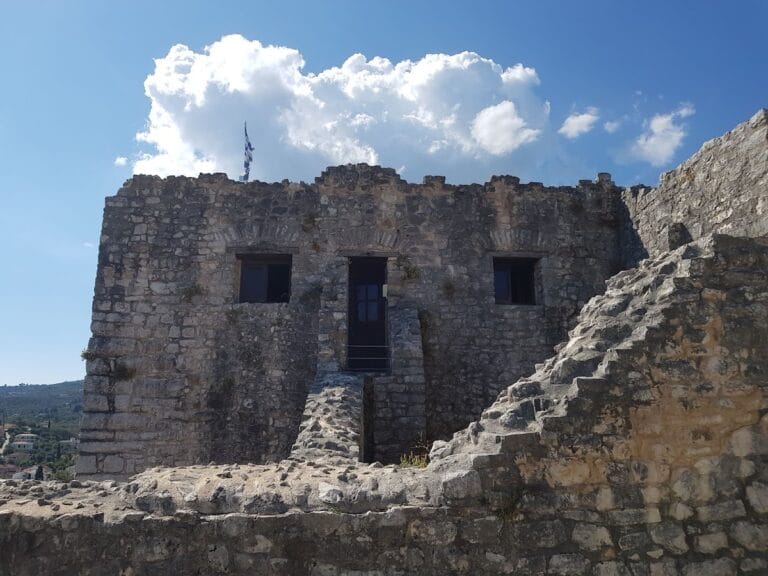
The fortress occupies a hill southeast of central Sarandë, about 1 kilometre from the town, overlooking the town and the surrounding coastal and inland approaches. Its enclosure is approximately square, measuring about 42 by 44 metres on its outer sides when the towers are excluded. Stone walls rise approximately 6.70 to 7 metres high and reach up to 2 metres in thickness.
Two round towers stand at opposite corners and contain loopholes. The original southeastern tower is approximately 7 metres high. The southern and eastern walls, together with the southeastern bastion, a projecting defensive structure designed to strengthen a wall and cover its approaches, retain original fabric. The other two walls were reconstructed, and an unsuitable parapet was added to the northwestern tower.
The entrance opens on the eastern side. During the restoration and modern conversion of the 1990s, the courtyard was substantially altered and paved terraces were built throughout the enclosure. A restaurant was added along the northern side. The fortress therefore presents a partly reconstructed appearance, while its southern and eastern sides and southeastern bastion preserve original structural elements.
Late Byzantine church
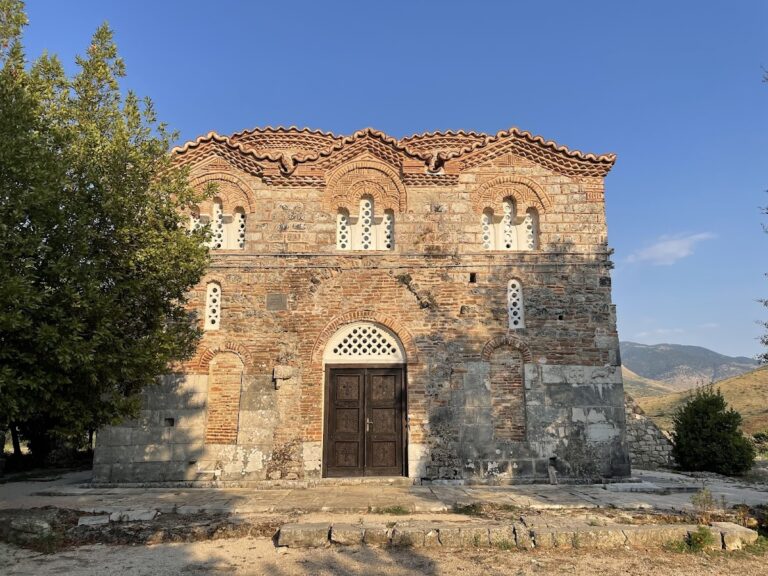
Immediately outside the enclosure, to the right of the entrance gate, excavations uncovered a Late Byzantine church. The term refers to the final centuries of the Byzantine Empire, especially the period from the thirteenth century until its fall in 1453. The church contains frescoes dating from the seventeenth and eighteenth centuries.
The church was probably already in ruins when the fortress was constructed in the eighteenth century. The eastern fortress wall was built across the church’s nave, the main lengthwise space of the building, linking the remains of the religious structure to the later defensive enclosure.