New College in Edinburgh: A Theological College and University Divinity School
Site at a Glance
- Rating
- 4.8
- Popularity
- Medium
- Country
- United Kingdom
- Primary era
- Modern
- Eras represented
- Modern
- Civilizations
- British
- Site type
- Civic
- Remains
- University
On this page11 sections
History
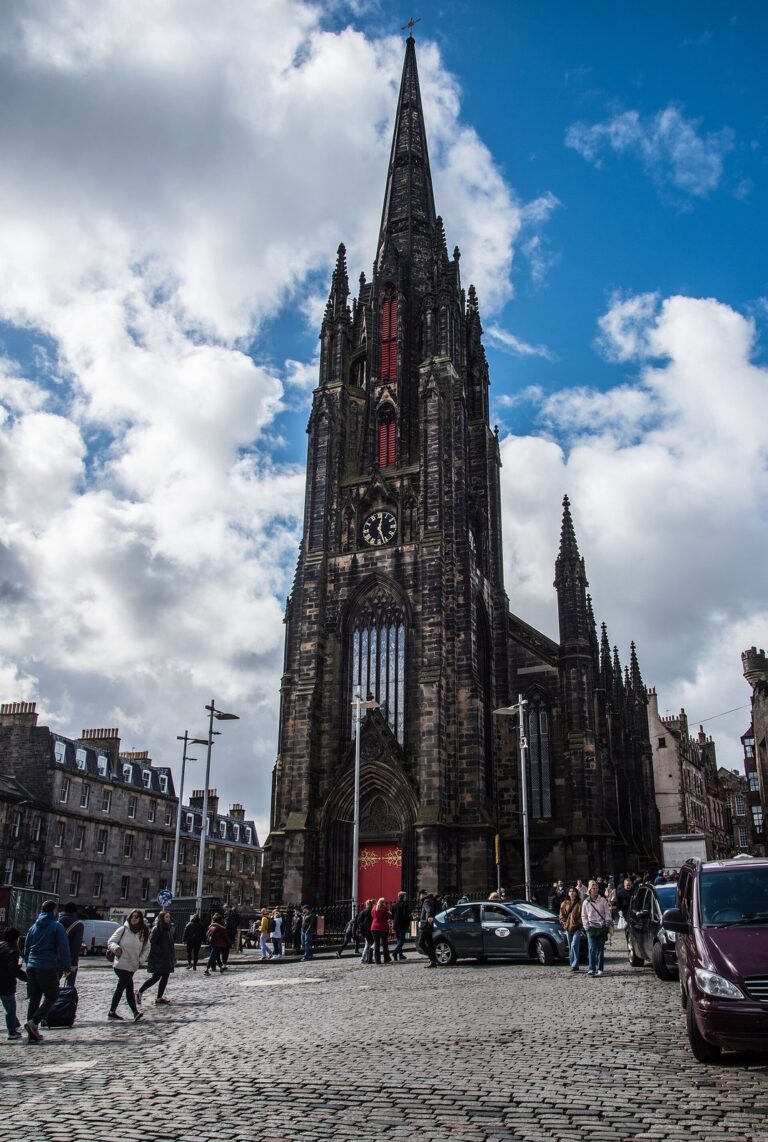
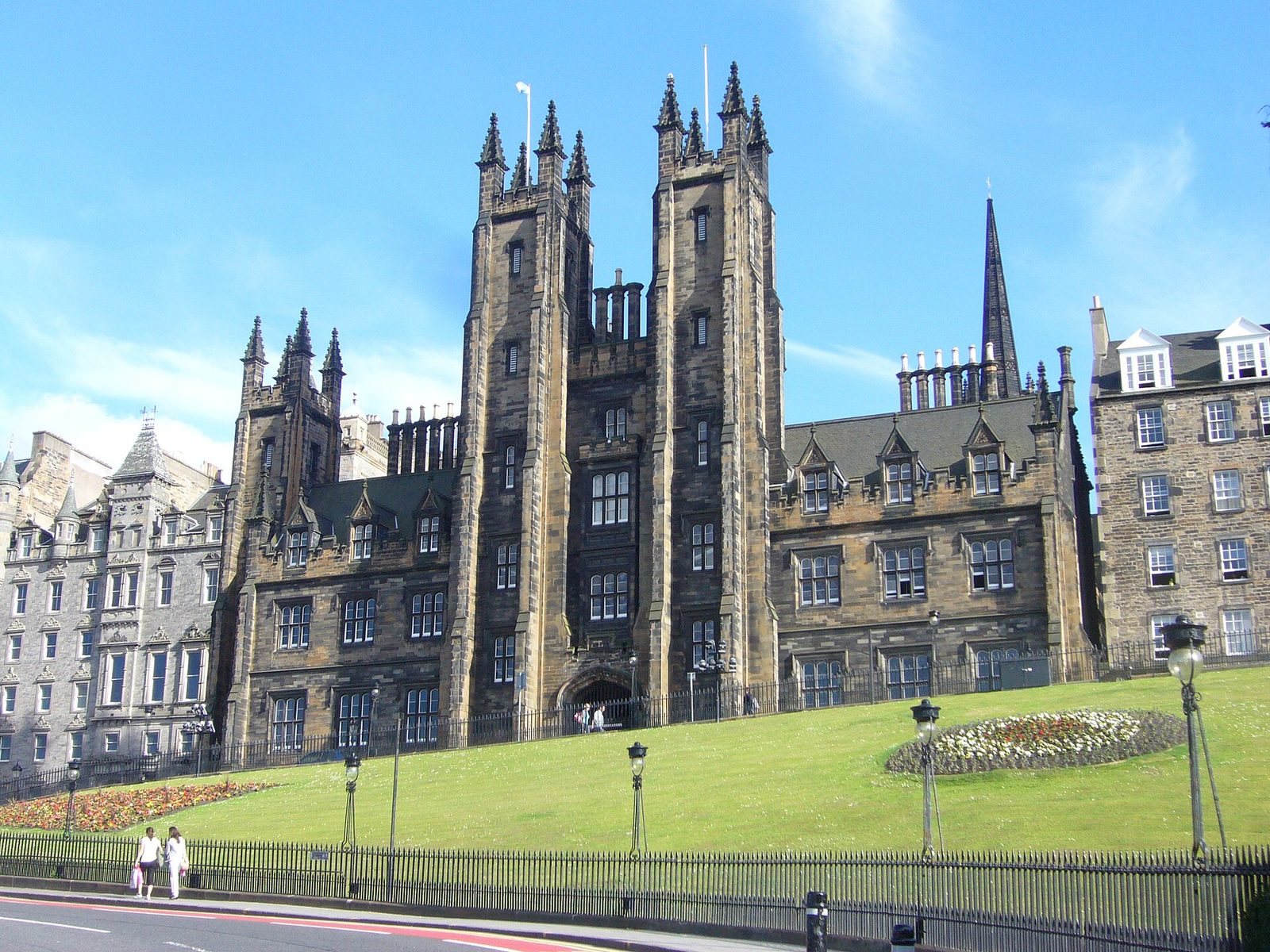
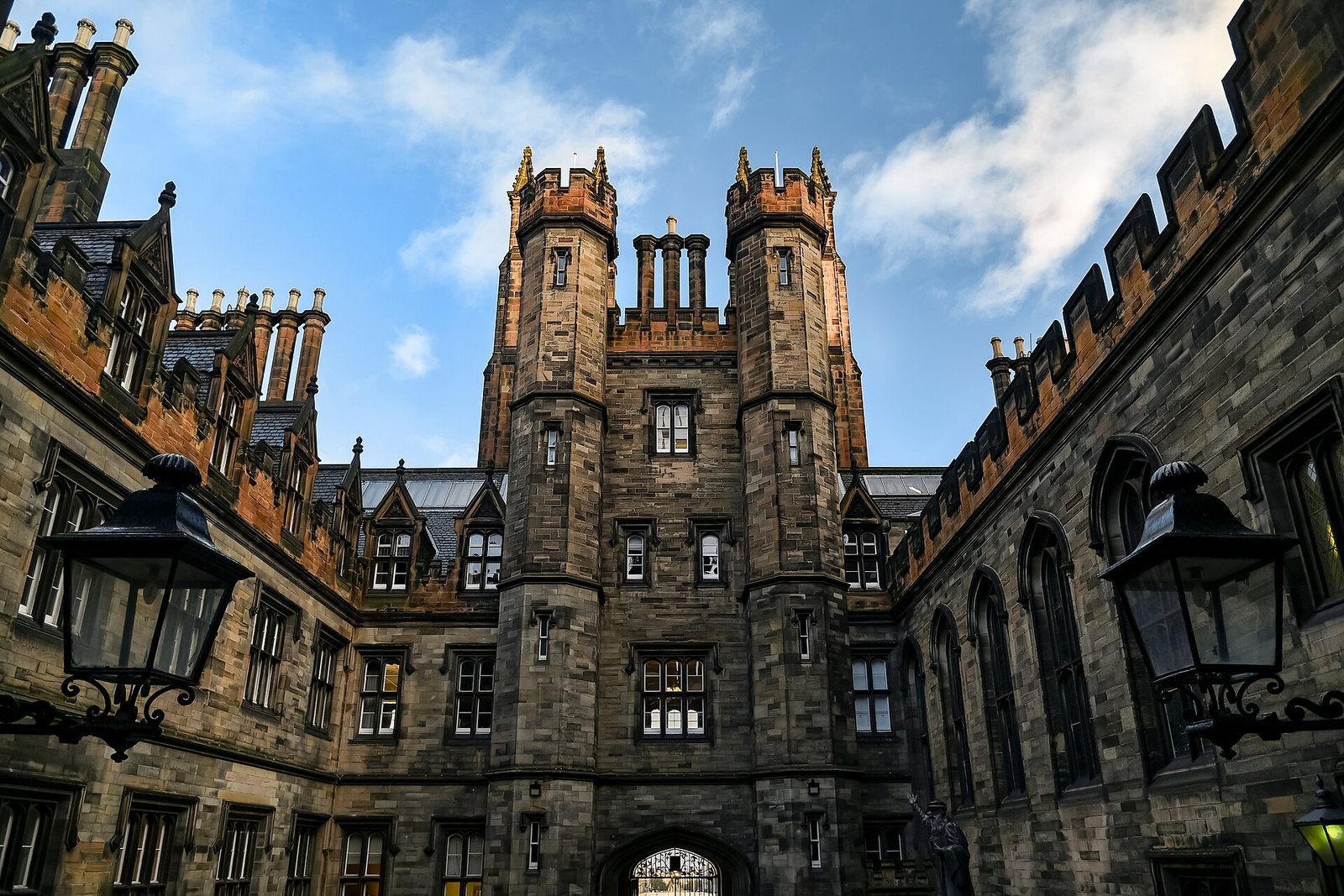
New College is a theological college on The Mound in Edinburgh, Scotland, United Kingdom, founded by the Free Church of Scotland in 1843. Its Neo-Gothic building, a nineteenth-century revival of medieval Gothic forms, was designed by William Henry Playfair and opened in 1850. The college arose from a major split in Scottish Presbyterianism over church and state, and its history reflects both church training and the development of university theology.
The University’s early theology teaching
The University of Edinburgh taught theology from its foundation in 1583. Its first principal, Robert Rollock, also began teaching the subject in 1587. After Rollock died in 1599, Henry Charteris succeeded him as principal and theology teacher. The university later separated those offices. An endowed professorship, the Chair of Divinity, was established in 1620 and held by Andrew Ramsay; it helped bring about the university’s Faculty of Divinity, or theology faculty.
The faculty added a professorship in Hebrew and Oriental Languages in 1642, held by Julius Conradus Otto. A professorship in Ecclesiastical History was created in 1694, with John Cumming taking it up in 1702. David Dickson became the seventh professor of divinity in 1650, after teaching at Glasgow for ten years. A Covenanter, meaning a Scottish Presbyterian opposed to royal interference in church affairs, Dickson lost his ministry at Irvine after resisting the Five Articles of Perth and refusing to appear before the Edinburgh High Court. In 1662 he was removed from his Edinburgh post for refusing to swear allegiance to Charles II after the monarchy’s restoration.
The Disruption and the college’s foundation
New College grew out of the Disruption of 1843, a major division in Scottish Presbyterianism over state influence in church affairs. Led by Thomas Chalmers, about one-third of Scotland’s ministers and half of its church membership left the established Church of Scotland. They formed the Free Church of Scotland, asserting its independence from state control and its submission to Christ’s authority.
At the Free Church’s first General Assembly, its governing meeting, on 20 May 1843, David Welsh was appointed to lead an education committee. Five days later he urged the Assembly to establish a college to educate ministers, and it agreed. Chalmers became the first principal and senior professor of theology. Welsh was appointed professor of ecclesiastical history, John Duncan professor of Hebrew and the Old Testament, and William Cunningham junior professor of theology.
The planned course of study combined the organized study of doctrine, reasoned defences of religious belief, and theology applied to church life and ministry with church history, Hebrew, Old Testament studies, and interpretation of the New Testament. Students were also to study moral philosophy, logic, and natural science. Alongside training ministers, the college aimed to educate people for public life in Scotland.
Classes first met in November 1843 in a building on George Street, which the Free Church had acquired with a lecture room and library. The first intake numbered 168 students. In 1844 the church bought the present site for £10,000. Welsh raised £21,000 from church families before his death from heart disease in early 1845, and Playfair was commissioned to design the new building. Chalmers laid its foundation stone on 3 June 1846.
Opening and changing academic direction
The new building opened in November 1850 with seven professors. William Cunningham, who had succeeded Chalmers as principal, delivered the opening address. The move brought theological teaching from the University’s old college to New College. Chalmers had hoped to develop the institution into a university and expand Christian scholarship, but this ambition was not continued under Cunningham.
Differences over teaching policy strained Cunningham’s relationship with Robert Candlish, who later became the third principal. After Cunningham’s death in 1861, scholars including Andrew Bruce Davidson and Marcus Dods joined the staff, bringing a more open approach to theology. Their arrival marked the end of the college’s first strongly confessional phase in Reformed Protestant theology, a tradition shaped by the Reformation. Candlish held no professorial chair and left much of the college’s administration to its professors.
Church unions and the University of Edinburgh
In 1900 most of the Free Church united with the United Presbyterian Church of Scotland to form the United Free Church of Scotland, which took possession of New College’s buildings. The continuing Free Church established a college in new premises in 1907; that institution was renamed Edinburgh Theological Seminary in 2014. In 1929 the United Free Church joined the Church of Scotland. Before that union, its ministry candidates studied at New College, while Church of Scotland candidates studied in the University’s Faculty of Divinity. The two institutions formally merged in 1935.
New College continues to prepare candidates for ministry in the Church of Scotland, and candidates from other churches also take part in its programmes. From the 1970s, the faculty offered undergraduate degrees in Theology and Religious Studies. Today the School of Divinity is a University of Edinburgh unit with a wider academic remit. Its staff are university employees, and neither staff nor students face a confessional test. The Church of Scotland’s General Assembly appoints the New College principal, who has particular responsibility for the church’s ministry candidates. A university-appointed head of the School oversees its wider academic and financial work.
The School’s research centres focus on World Christianity, Christian Origins, and Theology and Public Issues. Andrew F. Walls established the Centre for the Study of World Christianity, which holds an archive on the history of Christian missions. New College’s General Assembly Hall hosted the 1910 World Missionary Conference and continues to host the Church of Scotland’s annual governing meeting. From 1999 to 2004, while the new Scottish Parliament building at Holyrood was under construction, the hall served as the Parliament’s temporary debating chamber.
In 2018 Susan Hardman Moore became the first woman to serve as New College principal, while Helen Bond became the first woman to head the School of Divinity. Rachel Muers became the first woman to hold the University’s Chair of Divinity in 2022. For the college’s 175th-anniversary celebration, staff and students chose the motto Quaerite et Invenietis, meaning “Seek and You Shall Find.” Joseph Morrow, Scotland’s chief heraldic officer, granted New College a coat of arms.
Remains
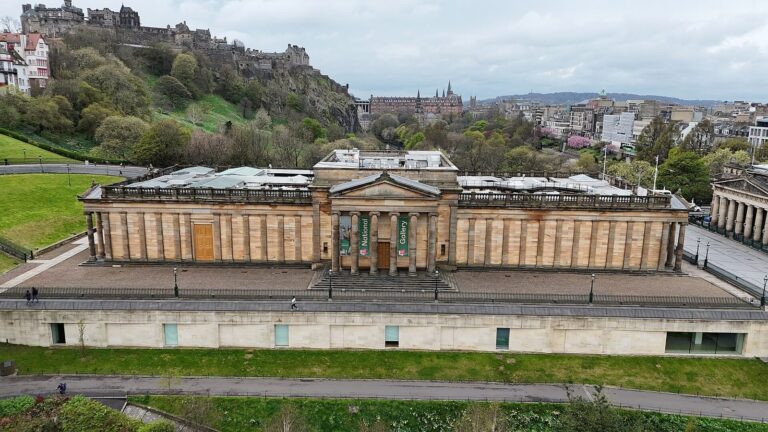
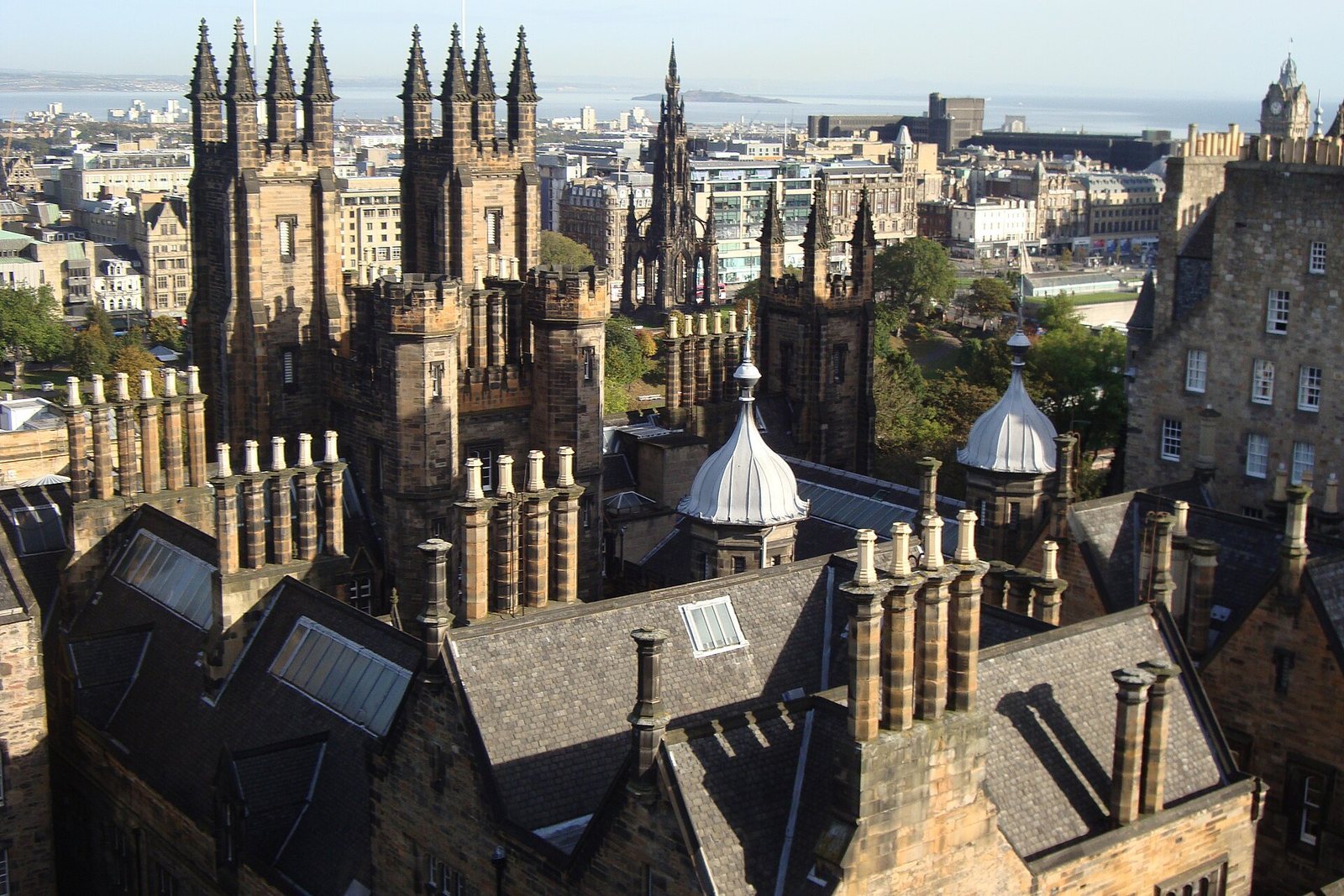
New College occupies a nineteenth-century complex on The Mound, in the north of Edinburgh’s Old Town. Its Neo-Gothic design is set above Princes Street Gardens, the Scottish National Gallery, and Princes Street. The complex includes teaching facilities, a library, and halls with distinct institutional histories.
Library and institutional spaces
Library
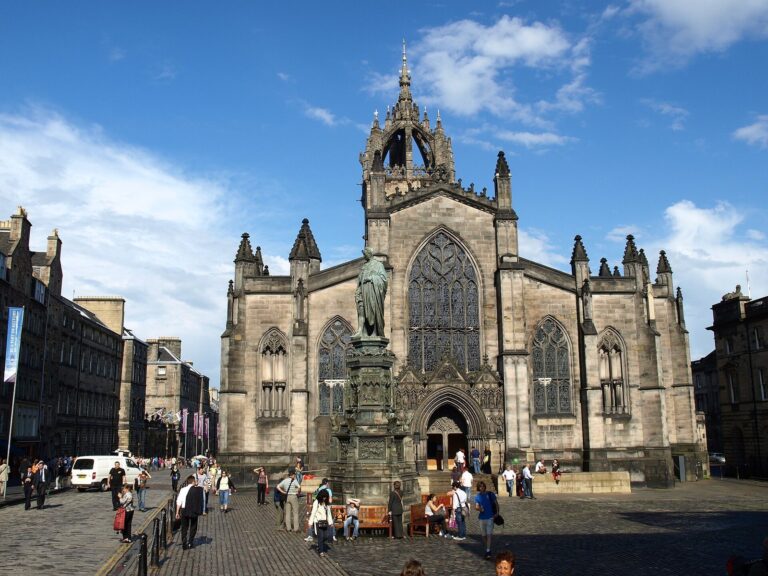
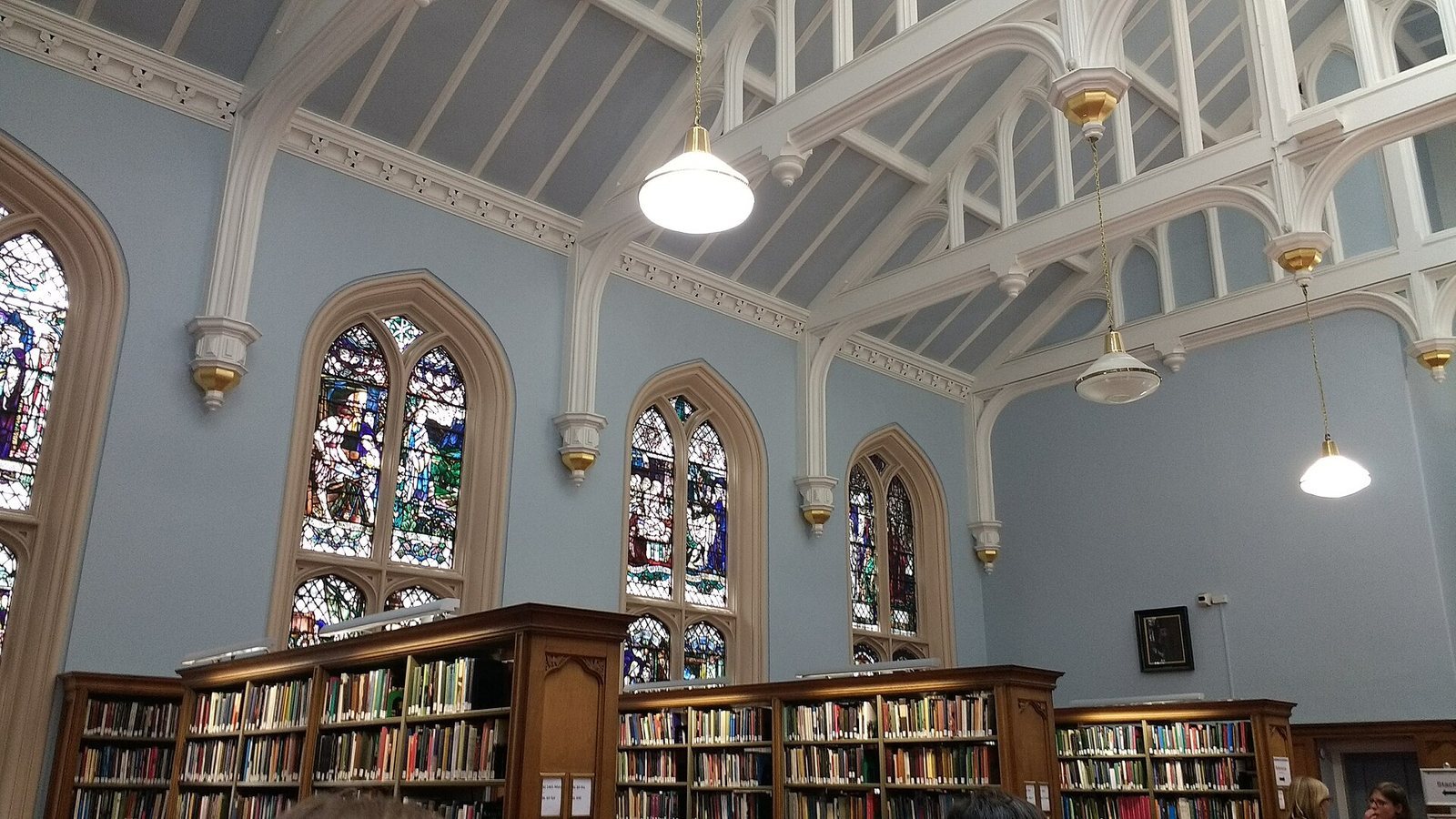
Founded in 1843 as the Free Church College Library, the library occupies the eastern wing of New College. Its reading hall was originally the sanctuary of the Free High Kirk, whose congregation had separated from St Giles’ Cathedral. Architect Lorne Campbell redesigned the room for library use in 1934. The collection now contains more than 250,000 volumes, alongside manuscripts including the papers of Thomas Chalmers, John Baillie, J. H. Oldham, and James S. Stewart.
Rainy Hall
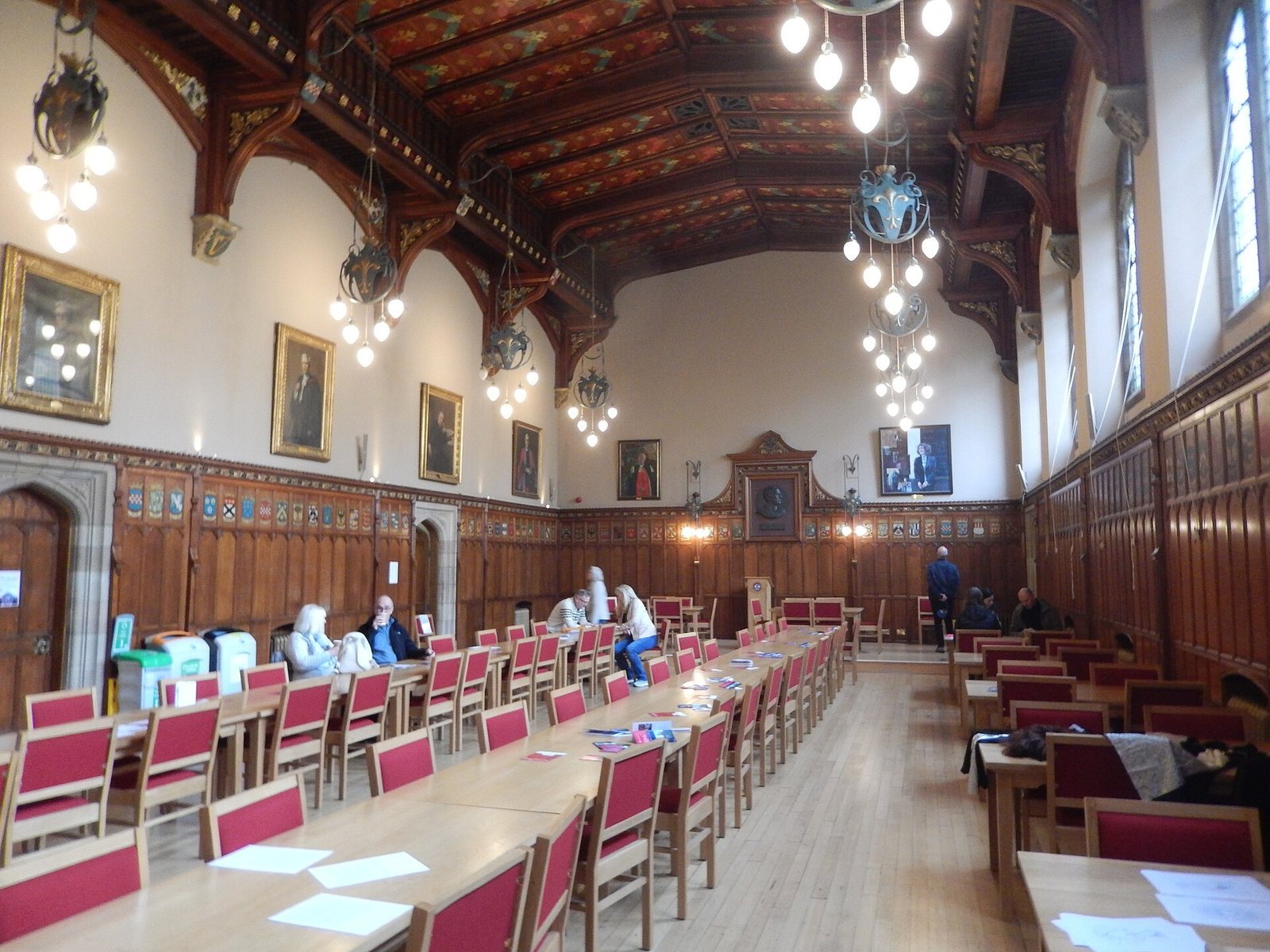
Named after former principal Robert Rainy, Rainy Hall is a Gothic Revival dining hall, a style based on medieval Gothic forms. Heraldic decoration and a hammerbeam roof, a timber structure with projecting beams that support the roof framing, define its interior. Refurbishment in 2018–19 adapted the hall for student reading and study.
General Assembly Hall
The General Assembly Hall forms part of the New College complex and remains the property of the Church of Scotland. It stands alongside the college’s teaching facilities and library.
Teaching rooms
Named teaching spaces within the complex include the Althaus-Reid Room, Baillie Room, Elizabeth Templeton Lecture Room, and Martin Hall.