Tel Yavne: An Archaeological Tell and Crusader Fortress
Site at a Glance
- Rating
- 4.4
- Popularity
- Medium
- Country
- Israel
- Primary era
- Medieval
- Eras represented
- Iron Age, Classical, Medieval
- Civilizations
- Achaemenid, Byzantine, Crusader, Kingdom of Jerusalem, Mamluk
- Site type
- Settlement
- Remains
- City
On this page14 sections
History
Tel Yavne is an archaeological mound in southern Yavne, Israel. It lay beside the Via Maris, or Way of the Sea, an international route along the eastern Mediterranean. A branch near the site led toward Egypt, while farther north the route divided toward Jaffa and Lod.
Early remains and Phoenician connections
Tombs near the mound date to the fourth millennium BCE. The earliest finds from the tell itself date to the beginning of the second millennium BCE, in the Middle Bronze Age. Material from the Early Bronze, Iron, Persian, Byzantine, Arab, and Ottoman periods points to activity at different times, not uninterrupted occupation. In some periods, the tell was used for burials or refuse disposal.
From the Persian through the Hellenistic periods, Yavne traded with Phoenicia and had a Phoenician settlement. Wine presses from the Persian and Byzantine periods have also been found at the site.
Crusader rule
Around 1140–41, Fulk of Anjou, king of Jerusalem, established a fortress on the tell. It formed part of a defensive chain intended to counter Egyptian forces based at Ashkelon. The Crusaders, Latin Christian forces in the eastern Mediterranean during the Crusades, also built a large church on the summit.
The Ibelin family, which had received the city and fortress in custody from Fulk, probably built the church. The family included the knight Balian of Ibelin.
Mamluk period and later events
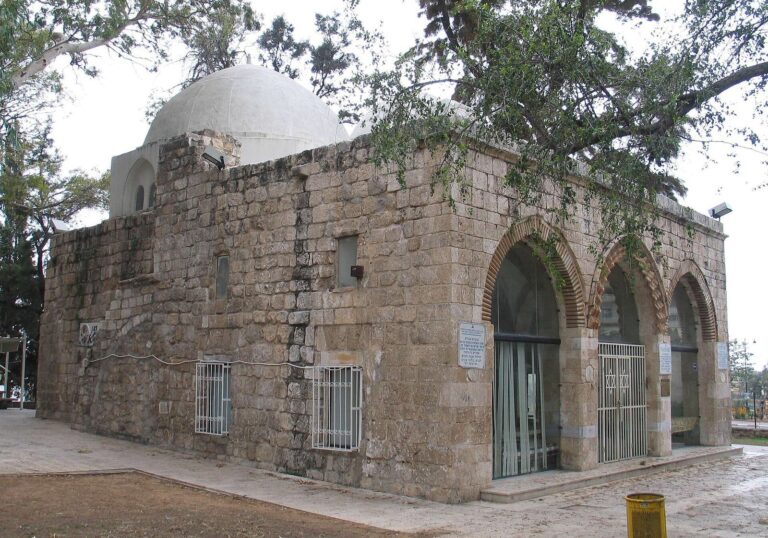
After the Mamluk conquest in 1244, the former Crusader church was converted into a mosque known as the Great Mosque. The Mamluks were a military ruling class whose sultanate governed Egypt and neighboring territories. Later, Moshe Dayan, then commander of Israel’s Southern Command, ordered the mosque blown up.
Remains
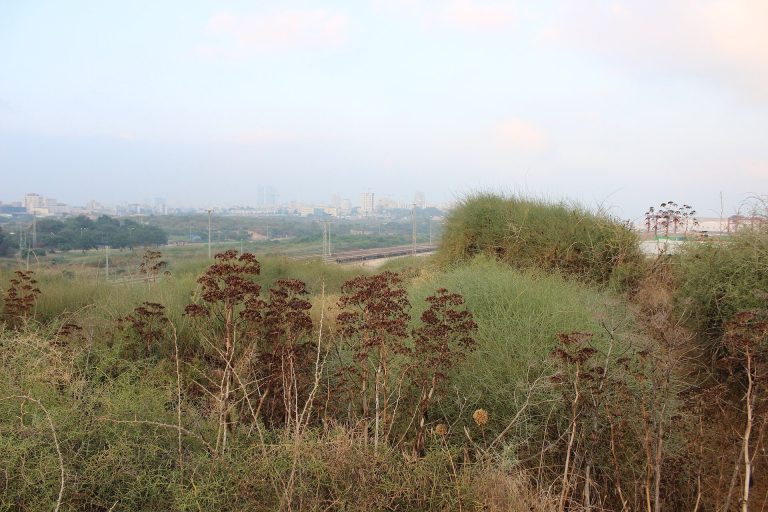
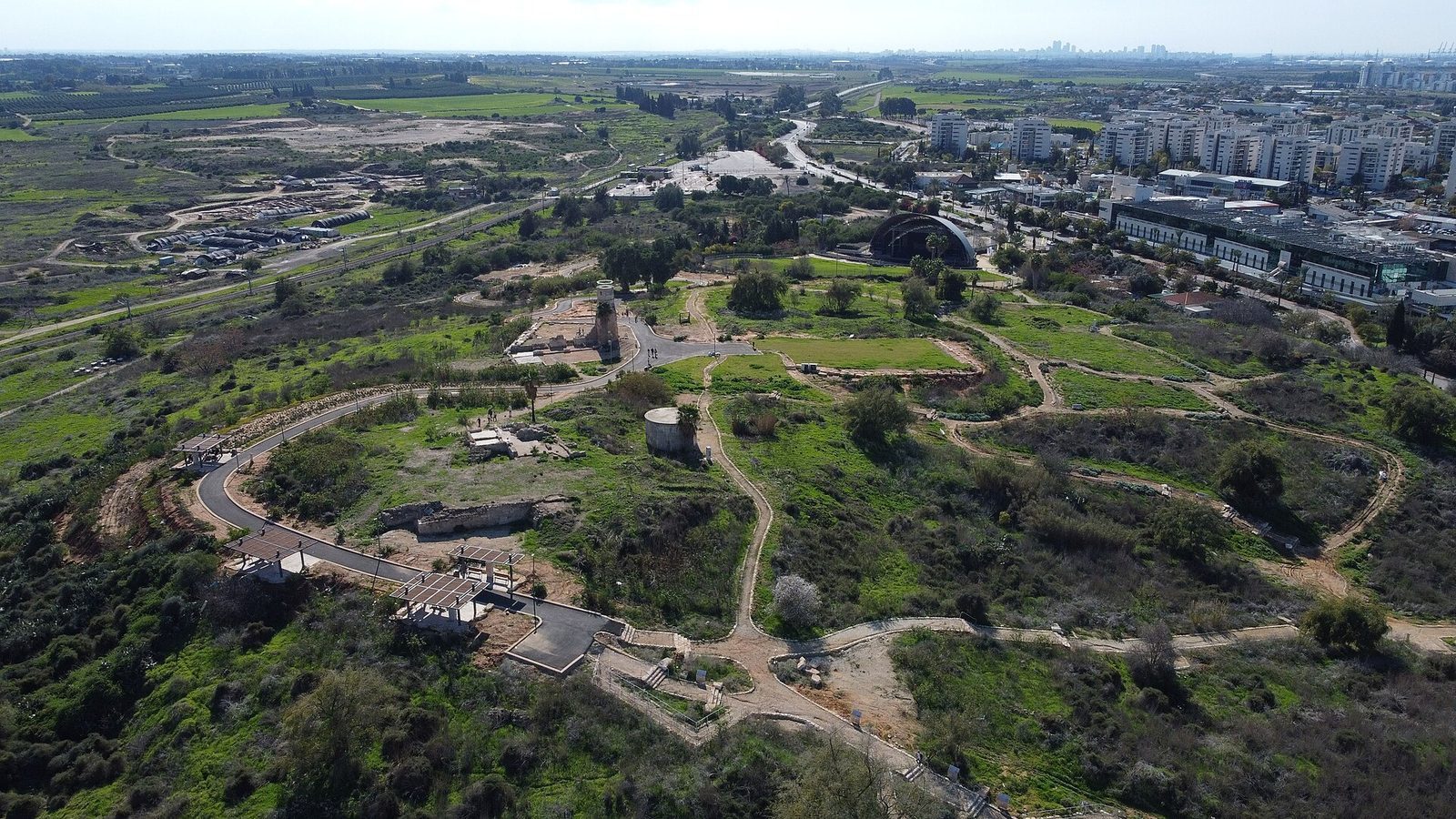
The tell covers about 155 dunams in southern Yavne. Highway 42 borders it to the west, Highway 410 to the north, and the Rehovot-Ashdod railway to the south and east. Its archaeological features extend across the northern slopes and the foot of the mound, while medieval structures stand on the summit.
Excavated remains and wine production
Northern slopes
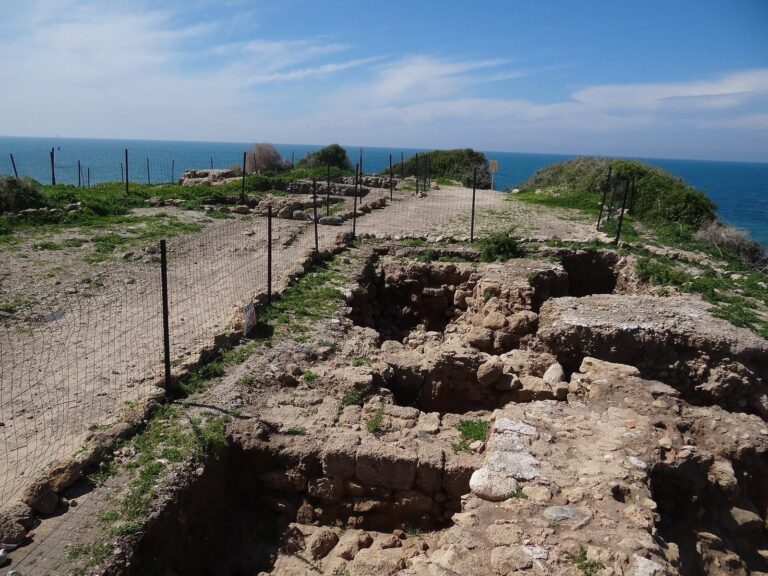
Iron Age burials on the northern slopes include graves set within stone-lined chambers and simpler graves. Byzantine refuse pits in the same area contained jars, cooking pots, animal bones, small mosaic tiles, and bronze coins. Excavations there in 2000 and 2001 identified remains from several periods.
Byzantine winery
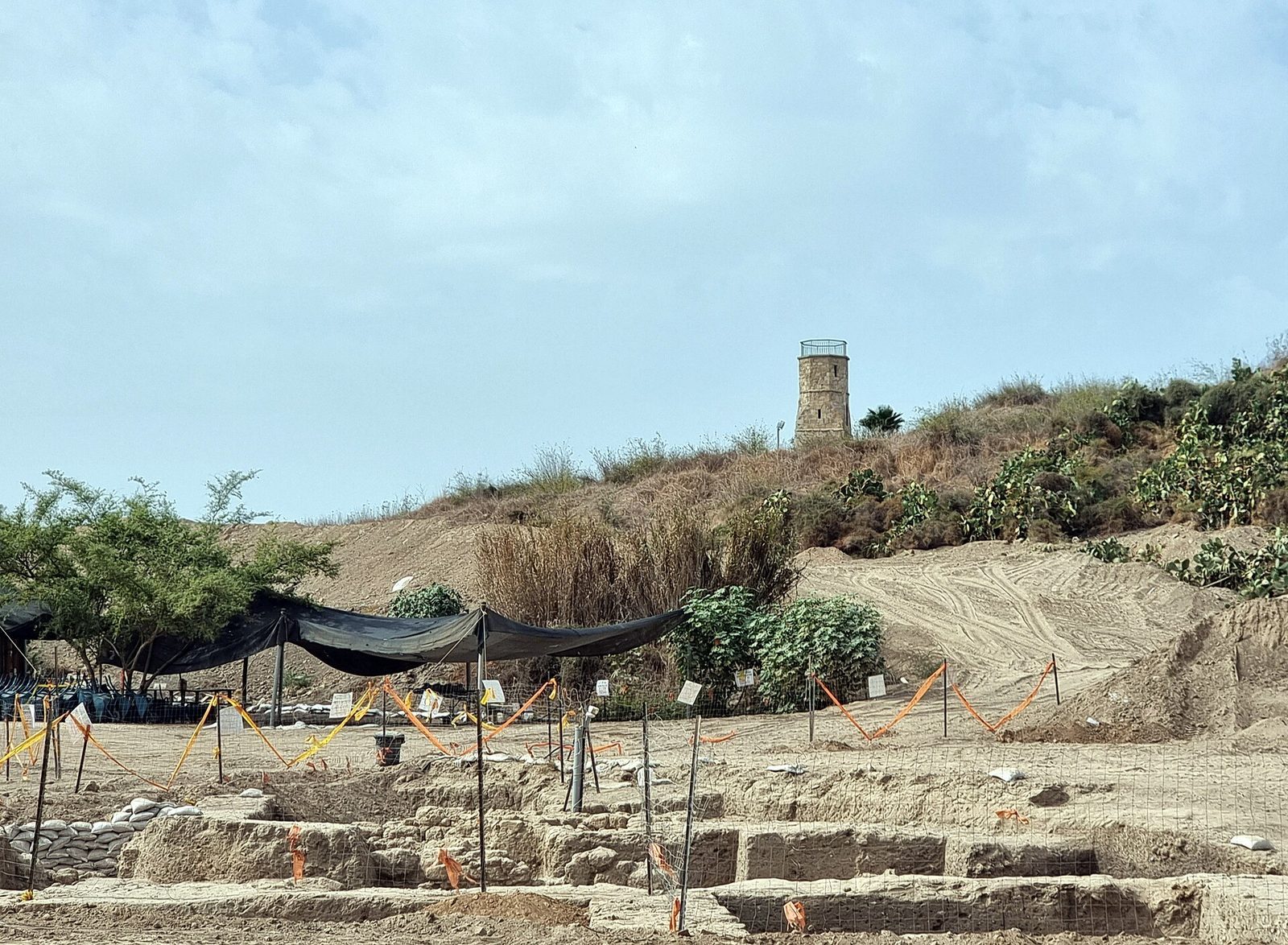
An excavation in 2019, carried out ahead of construction of a new neighborhood at the mound’s foot, uncovered a large Byzantine winery. It included several grape-pressing installations, large storage buildings, and workshops for making storage jars. A rare architectural element is also present at the wine-press site.
Medieval structures and transport
Fortress and mosque
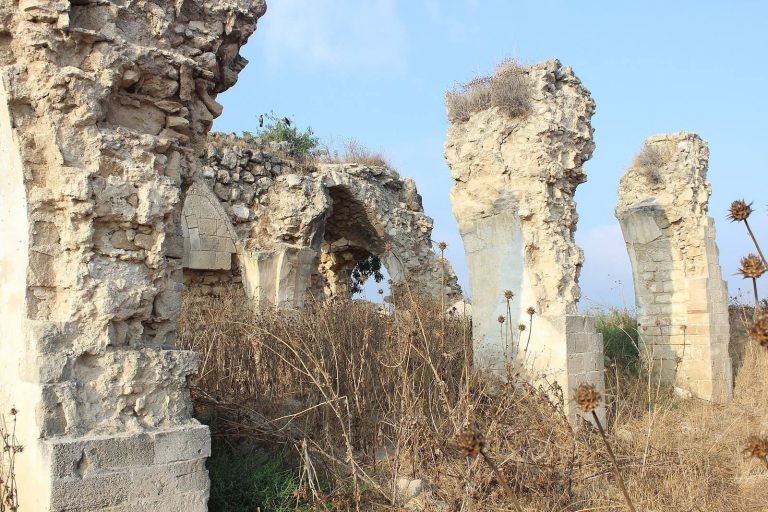
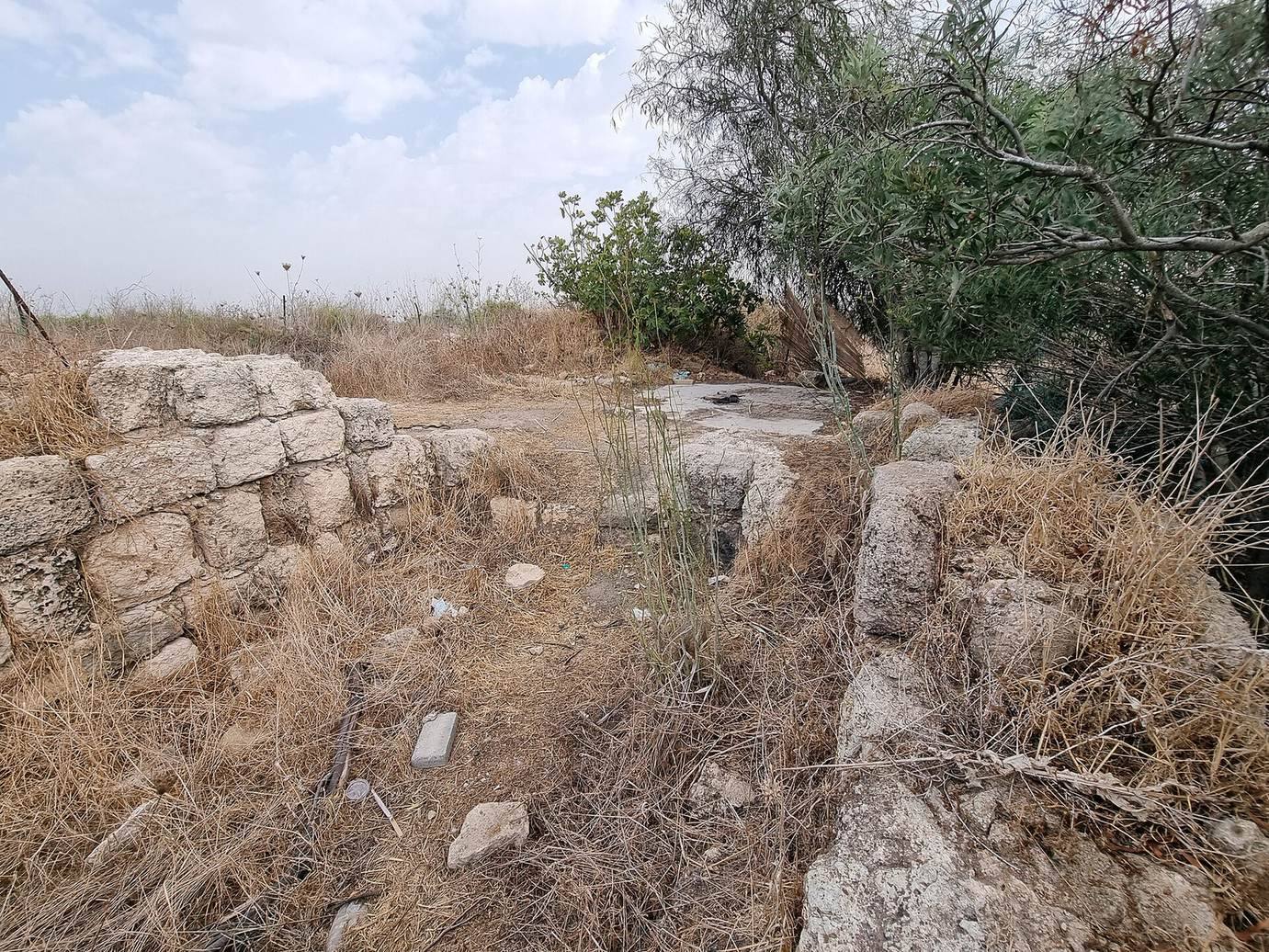
Visible remains of the Crusader fortress, then called Ibelin, lie north of the mosque remains on the summit. The Great Mosque occupies the site of the large church built there during the Crusader period.
Minaret
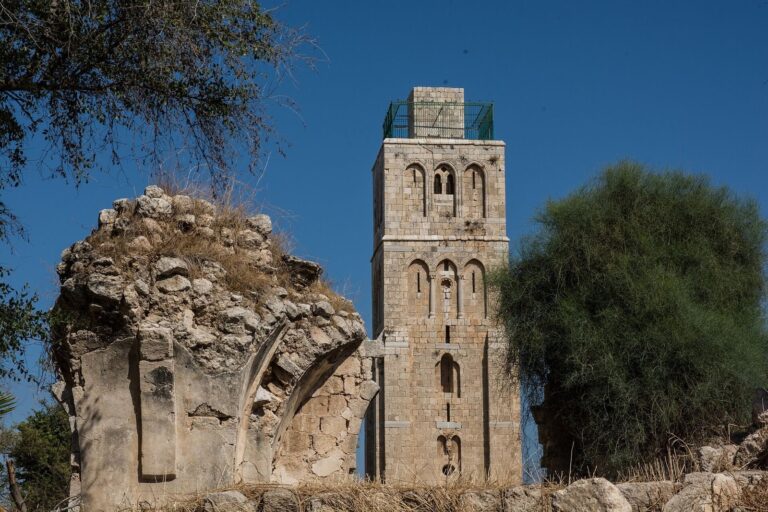
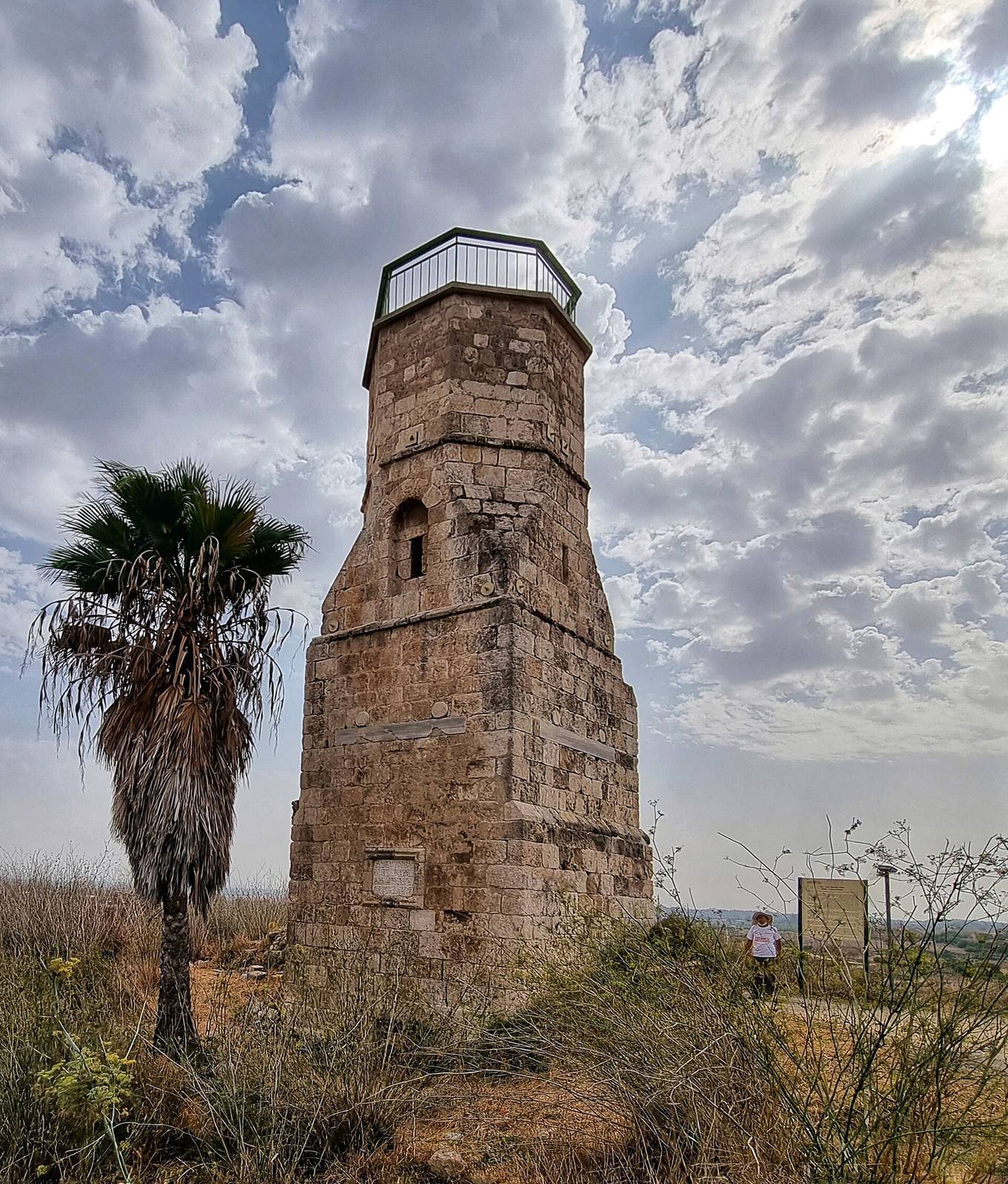
The minaret stands beside the mosque remains and is the tell’s most prominent feature. Its north face bears a dedication inscription dating its construction to 1337 and crediting the work to al-Sayfi Bashtak al-Nasiri. The inscription calls him the learned sultan and great emir. Conservation and engineering stabilization in 2010 replaced missing stones, removed graffiti, and added lighting.
Bridge over the Sorek Stream
A medieval bridge over the Sorek Stream survives parallel to Jindas Bridge. It served the postal road.
Hellenistic object
Lead sling projectile
A lead projectile fired from a sling, found at Tel Yavne, bears a dedication to the victory of Heracles and a second deity identified with Horon, a Canaanite god. The interpretation links Heracles, the Greek hero and god, with Melqart, a major Phoenician god associated with Tyre, and the paired deity with Horon. A similar divine pair appears in an inscription from Delos dedicated by residents of Yavne or Yavne-Yam to their city gods.