Tumuli of Toterfout-Halve Mijl: A Prehistoric Burial Ground in the Netherlands
Site at a Glance
- Rating
- 4.3
- Popularity
- Low
- Country
- Netherlands
- Primary era
- Bronze Age
- Eras represented
- Stone Age, Bronze Age
- Civilizations
- Unclassified
- Site type
- Burial
- Remains
- Necropolis
On this page8 sections
History
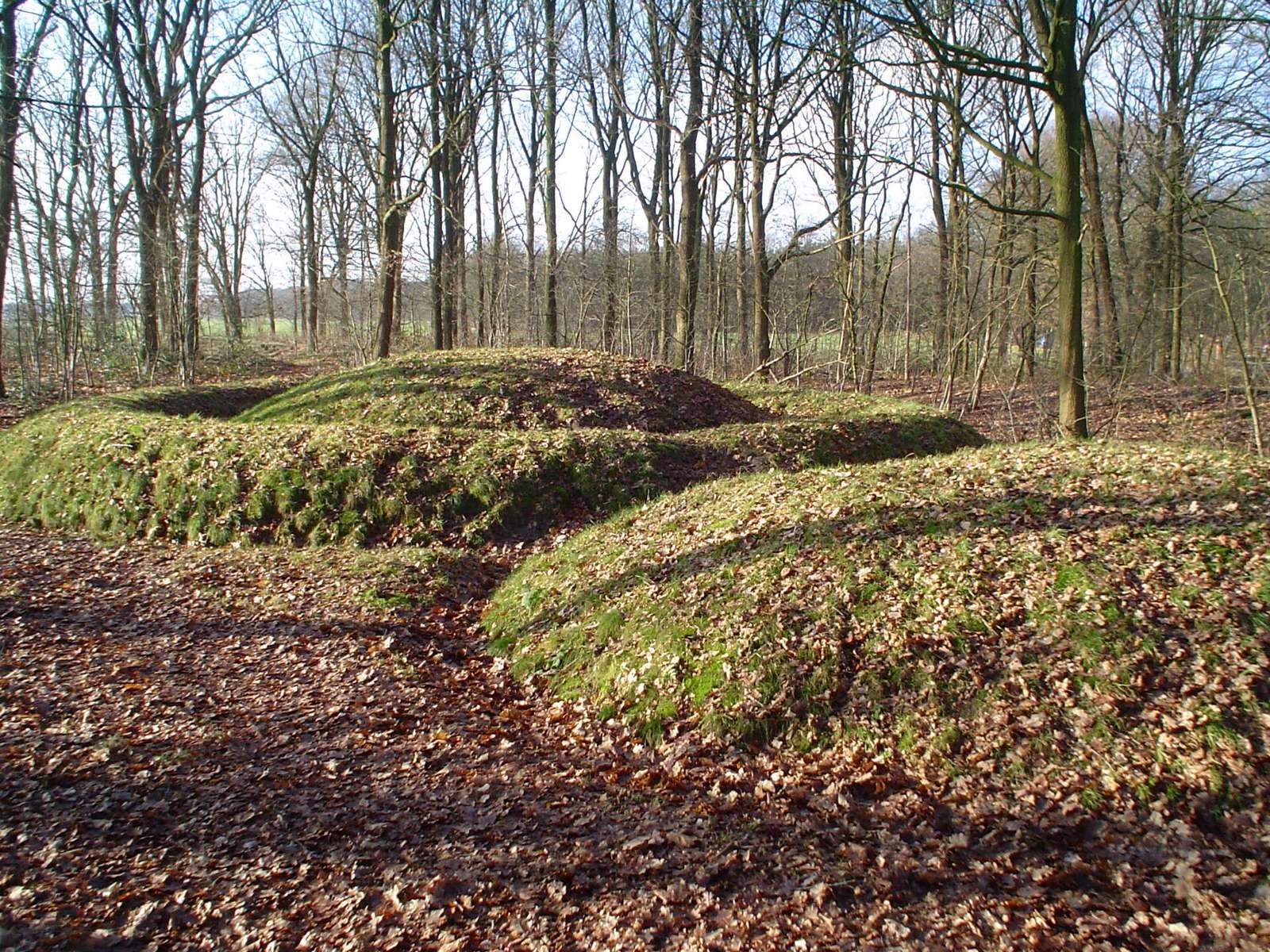
The Tumuli of Toterfout-Halve Mijl are a prehistoric burial-ground of mounds in the Netherlands. Several mounds belong to the Hilversum culture, a prehistoric culture associated with the Netherlands, and date to the Middle Bronze Age (1600–1000 BCE). The cemetery’s evidence also points to agriculture, livestock keeping and contacts with England.
Prehistoric community
Pollen analysis indicates that the builders of mounds 2 and 4 practiced agriculture, while livestock was kept around later mounds. The shapes of some mounds and the resemblance of some urns to pottery associated with the Wessex culture, a prehistoric culture of southern England, suggest that the community had contacts with England.
Descriptions and archaeological investigations
Dutch antiquarian Petrus Panken gave the earliest known description of the mounds in 1845. He noted that visitors were digging into them, causing considerable damage.
Threatened land reclamation on the western side of the area prompted investigations from 1948 to 1951. In 1948, the area contained 31 mounds and a burial ground associated with urns. Some mounds were substantial earthworks, while others were barely recognizable; eight that had disappeared through afforestation and land reclamation were rediscovered. The Biological-Archaeological Institute of the University of Groningen systematically examined 34 mounds under archaeologist Albert van Giffen. Willem Glasbergen directed the day-to-day work and completed a doctorate on the excavations in 1954. Sixteen mounds were restored, while the others were leveled for farmland. The cemetery was added to the Dutch National Monuments list in 1966.
Remains
Landscape and mound forms
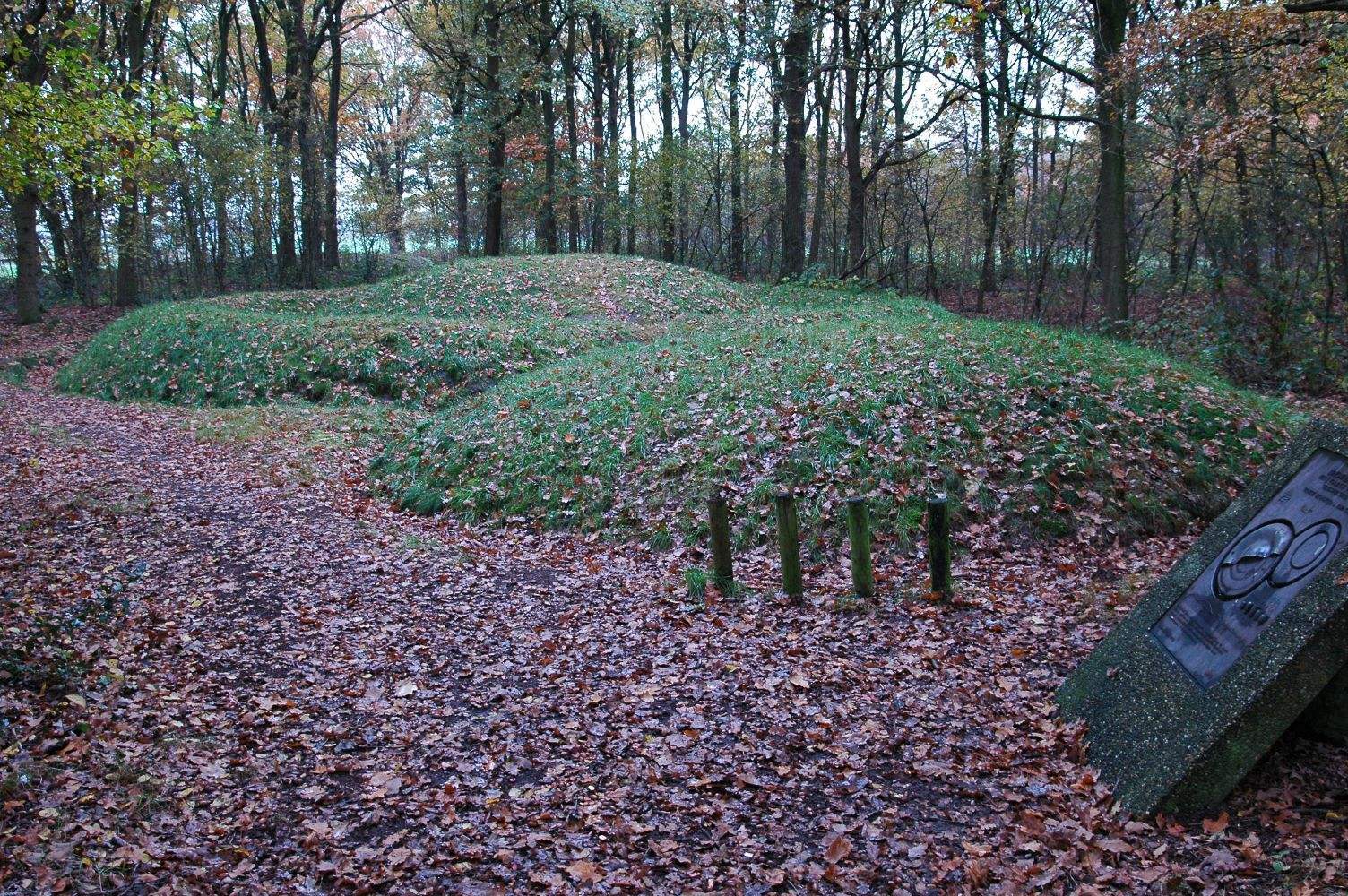
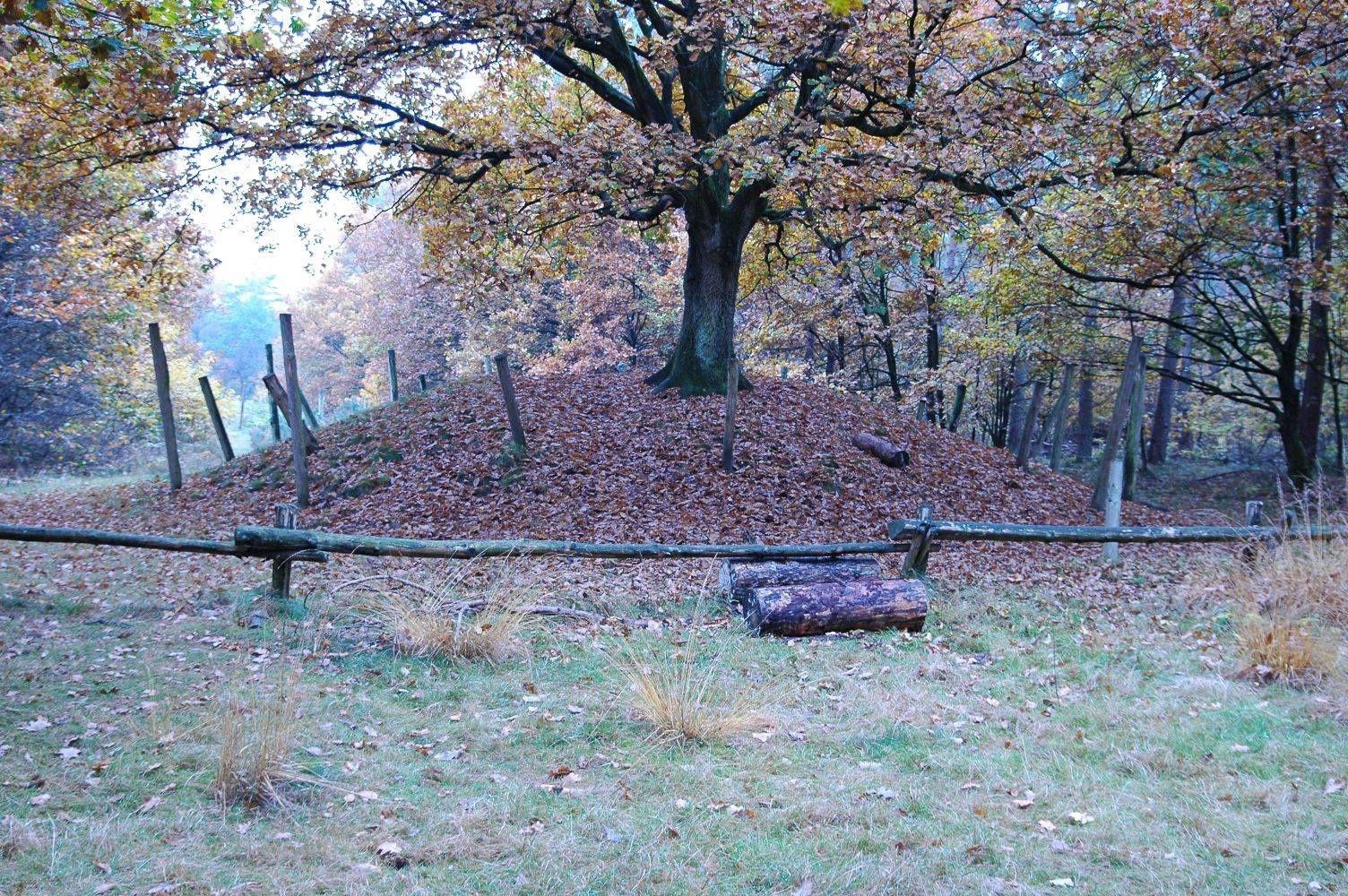
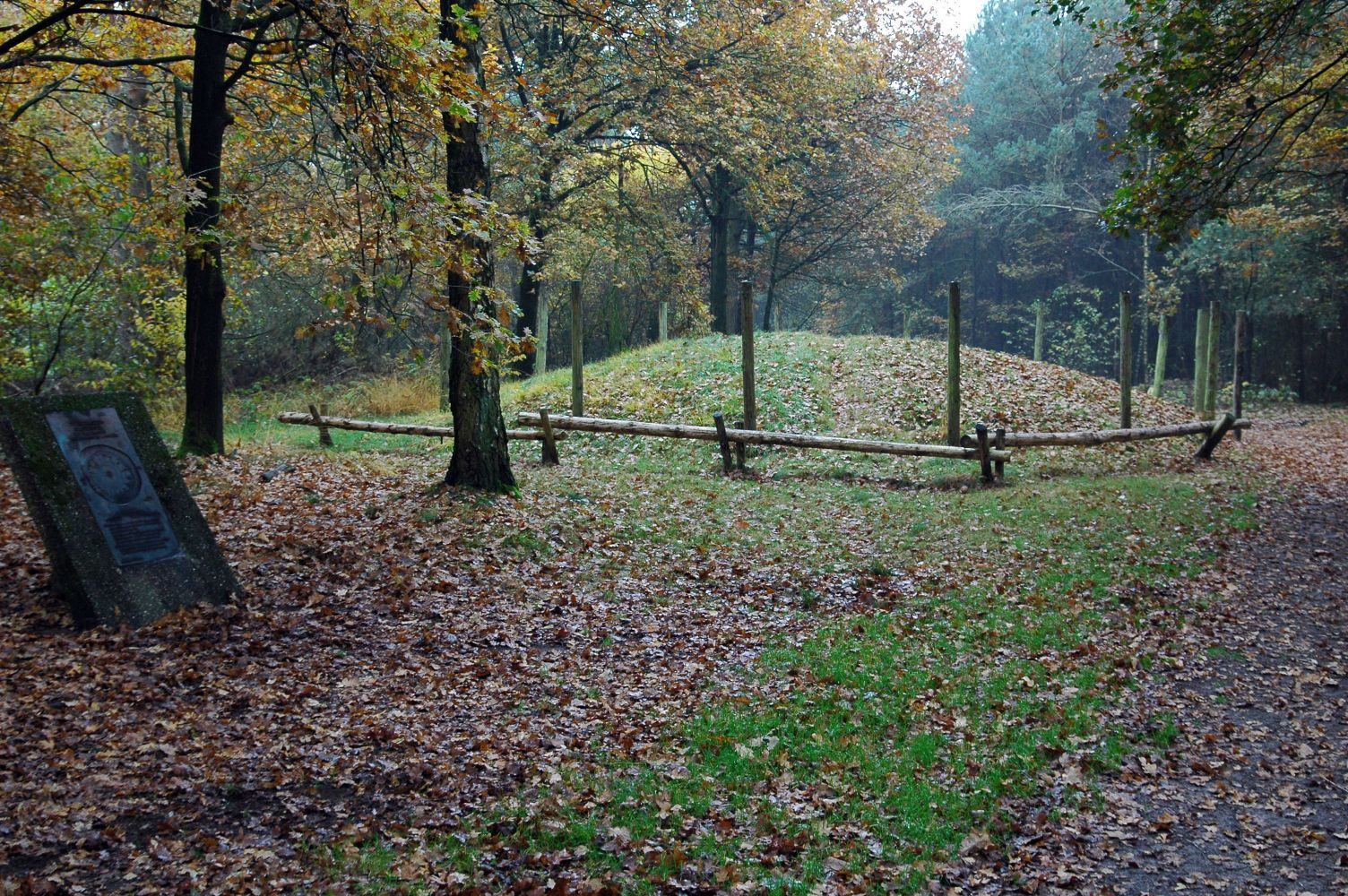
The mounds are scattered through a largely wooded area between the Acht Zaligheden, a group of villages in North Brabant, and the hamlets of Toterfout and Halve Mijl. They vary in size and visibility. Some are surrounded by circular ditches, raised earthen rings, or one or more circles of upright posts. An overview plaque with a site plan stands on the eastern side facing Toterfout. The mounds are numbered, and some have plaques with drawings and descriptions. Bronze panels added in June 1963 explain the mounds’ contents and structure.
Burials and finds
Burial deposits
The mounds cover burials, usually cremated remains placed on the ground or in shallow pits. The buried people included children and adult men and women. Some mounds contain later burials as well; mound 22 holds several.
Named mounds and pottery
Mound 4, also known as Lambertsbergje, is the only surviving mound that is not from the Bronze Age; it dates to the Neolithic. Pottery of the type associated with the Wessex culture was found at mound 1B.