Interamna Lirenas: A Roman Colony and Regional Hub in Italy
Site at a Glance
- Rating
- 5
- Popularity
- Very Low
- Country
- Italy
- Primary era
- Classical
- Eras represented
- Iron Age, Classical, Medieval
- Civilizations
- Roman
- Site type
- Settlement
- Remains
- City
On this page10 sections
History
Interamna Lirenas was a Roman settlement near present-day Pignataro Interamna in Italy, established by Rome in 312 BC as a Latin colony, whose inhabitants held Latin rights rather than full Roman citizenship. It stood in the territory of Casinum beside the Via Latina, a major Roman road, and helped secure this route.
Early settlement and conflict
The area had prehistoric occupation before Interamna became a centre of the Volsci and later the Samnites, ancient peoples of central Italy. The Romans used the colony as a military base during the Samnite Wars, a series of conflicts between Rome and the Samnites. The Samnites destroyed the settlement in 294 BC.
In 212 BC, Hannibal, a Carthaginian general fighting Rome, ravaged the town. Interamna had sided with Carthage, and after Rome defeated Carthage at Zama in 202 BC, the town was made to pay heavy tribute.
Roman civic life and prosperity
Following the Social Wars, a conflict over rights and citizenship between Rome and its Italian allies, Interamna gained the status of a municipium around 90 BC. This was a self-governing Roman community within the citizenship system. Its inhabitants received Roman citizenship and were enrolled in the Teretina, one of Rome’s voting tribes, a civic enrollment group rather than an ethnic community.
In 46 BC, Julius Caesar, the Roman political and military leader, became the town’s patron, a powerful protector and benefactor. Its position by a river and the Via Latina made it an important regional centre and an asset to Caesar during the civil wars. Interamna was one of only four towns known to have received this distinction. Veterans settled there around 40 BC.
Though scarcity of imported pottery once encouraged the view that Interamna was a relative backwater, it remained prosperous into the later third century AD, about three centuries beyond earlier estimates of its decline. The settlement continued to be inhabited through the Roman imperial period, when emperors ruled Rome.
Abandonment and later occupation
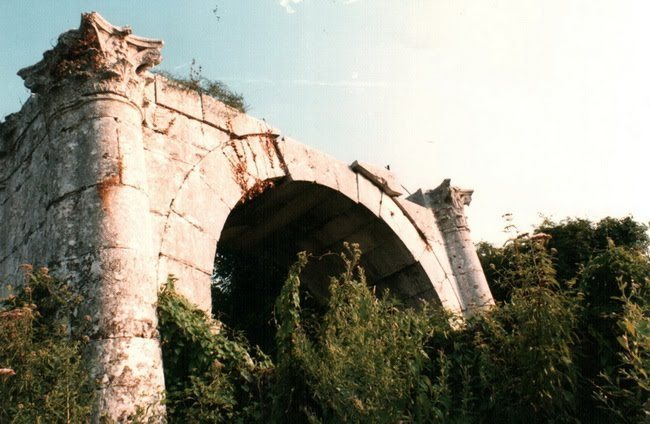
Interamna was abandoned in the sixth century AD, probably after the Lombard invasion. The Lombards were a Germanic people who entered Italy during that century. Later tradition holds that the town’s inhabitants founded Pignataro nearby. In the Middle Ages, a castle called Teramen or Termine occupied the site.
Systematic archaeological investigation began in 2010 under the University of Cambridge. Work included magnetometry, a geophysical survey technique that detects changes in the ground’s magnetic properties to reveal buried features.
Remains
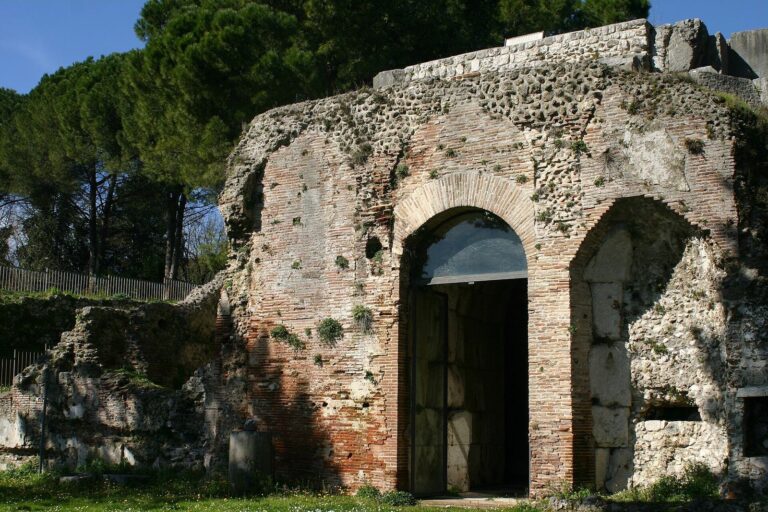
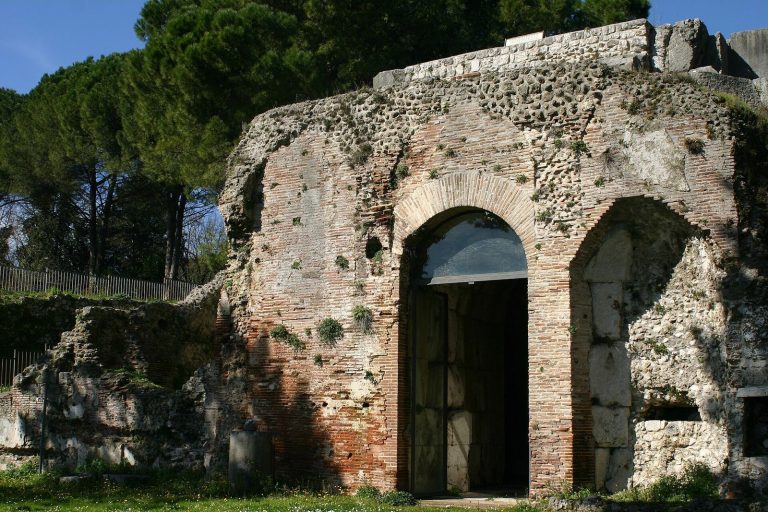
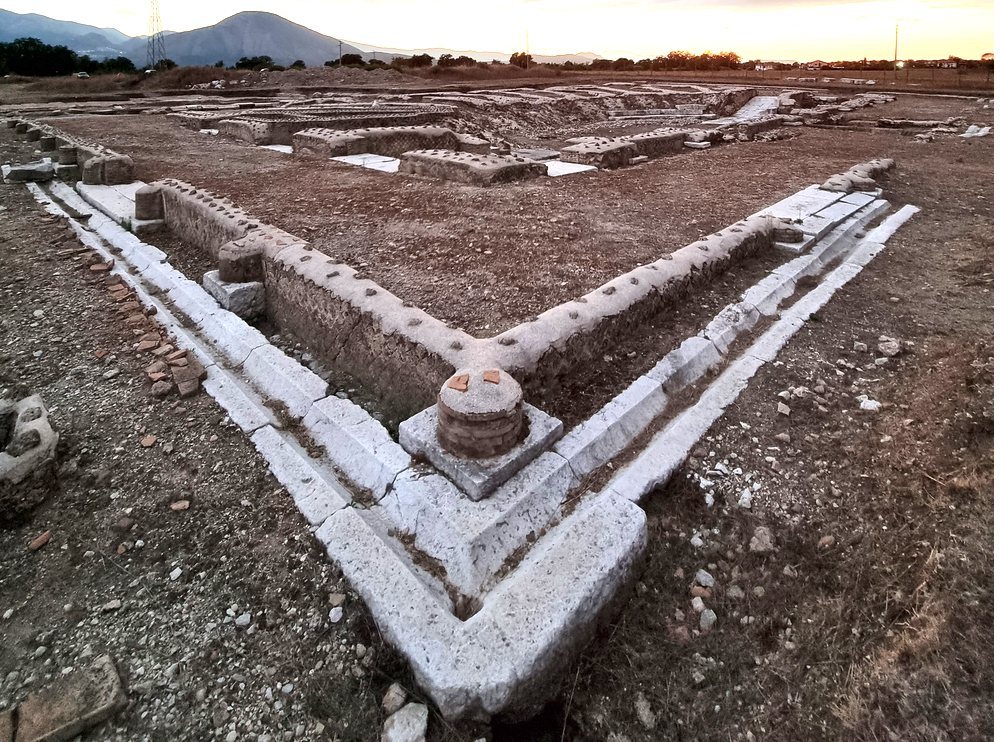
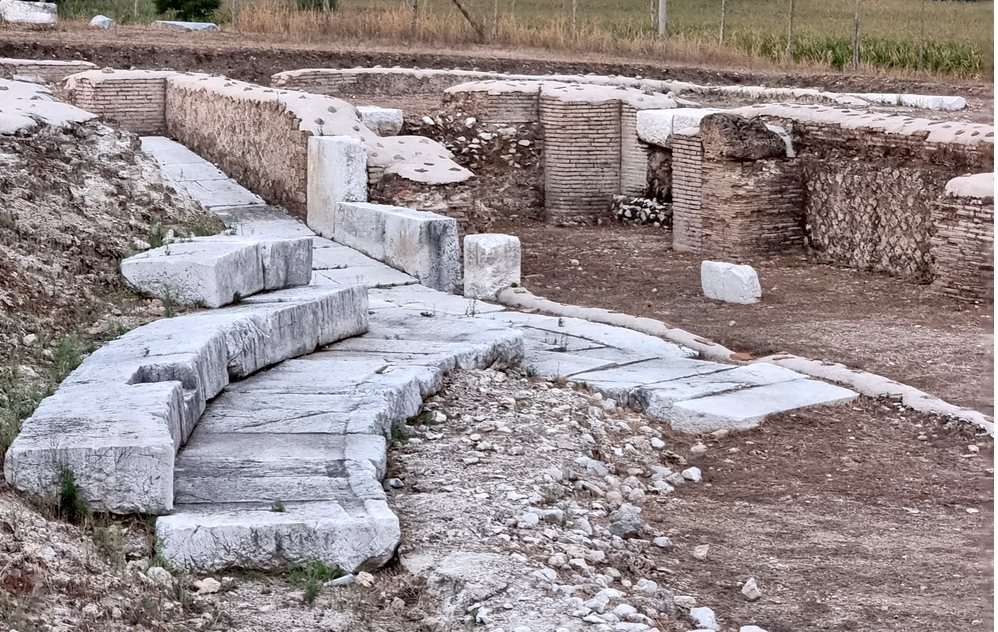
The archaeological site lies at the confluence of the Liri River and Rio Spalla Bassa. Its name, Interamna, means “between the rivers.” Excavated remains reveal an urban settlement with public, commercial, religious and bathing facilities, as well as infrastructure for river transport.
Buildings and infrastructure
Theatre
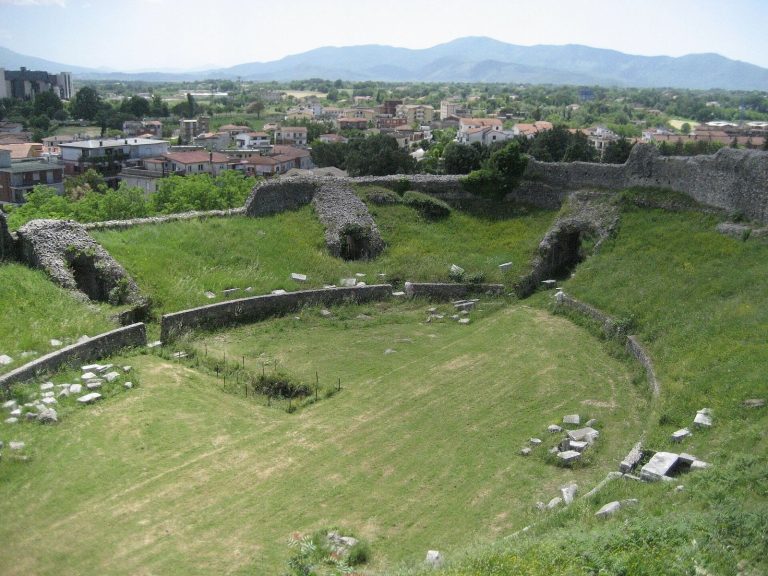
The town had a roofed theatre with a capacity of about 1,500 people. Its exterior was faced with exotic marbles brought from the central and eastern Mediterranean. The structure is among the excavated remains of the site.
Markets, temple and river port
Excavations have identified market areas, warehouses and a temple, along with a port on the Liri. The port and storage buildings supported trade with major centres north of Aquinum and Casinum, and with Minturnae and the Tyrrhenian coast to the southeast.
Bath complexes
Three bath complexes are known. The largest stood near the forum, the town’s civic and commercial centre, and included a large swimming pool enclosed by a column-supported covered walkway. This portico dates to the third and fourth centuries AD.
Inscriptions and sundial
Numerous inscriptions have been recovered at the site. In 2017, an inscribed ancient sundial was found among the theatre ruins. Marcus Novius Tubula donated it after his election as plebeian tribune in Rome, an elected office representing the city’s common citizens.