St Bartholomew’s Church, Wilmslow: An Anglican Parish Church
Site at a Glance
- Rating
- 4.4
- Popularity
- Low
- Country
- United Kingdom
- Primary era
- Early Modern
- Eras represented
- Medieval, Early Modern, Modern
- Civilizations
- British, English
- Site type
- Religious
- Remains
- Church
On this page10 sections
History
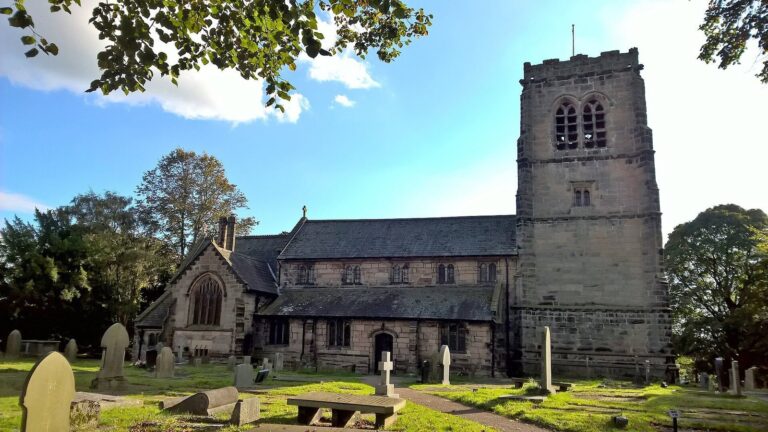
St Bartholomew’s Church is an active Anglican parish in Wilmslow, Cheshire, United Kingdom, dedicated to Saint Bartholomew, traditionally identified as one of Jesus’s twelve apostles. Anglicanism is part of the Christian tradition associated with the Church of England and the wider Anglican Communion. A church on this site is recorded by 1246. The crypt beneath the present church dates to around 1300, while the lower part of the tower may date from the fifteenth century. Most of the present church was built in the early sixteenth century and consecrated during that century.
Sixteenth-century parish and later additions
The church’s parish registers begin in 1558, and its churchwardens’ accounts survive from 1585. In 1700, the Hawthorne Chapel was added on the south side, replacing a chantry established in 1520. A chantry was a chapel or altar associated with prayers or masses for the dead.
Architect W. H. Brakspear restored the church in 1862–63, during which the tomb of George Booth of Dunham Massey and his wife Elizabeth was removed. In 1878, J. S. Crowther added the vestry and south porch. Bodley and Garner added a clerestory to the chancel in 1898; a clerestory is an upper wall with windows above adjoining roofs.
Modern changes and church status
The organ was built by Wadsworth in 1866, rebuilt by Alexander Young in 1897 and Smethurst in 1961, then comprehensively restored and upgraded in 2017. The church belongs to the Diocese of Chester, an area of church administration overseen by a bishop, and to the Archdeaconry of Macclesfield and Deanery of Knutsford, subdivisions within the diocese. It is within the Province of York, one of the Church of England’s two provinces. The church received Grade I listing in 1951, the highest category of listed-building designation in England.
Remains
Church structure and interior
Plan and construction
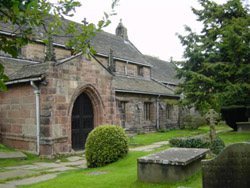
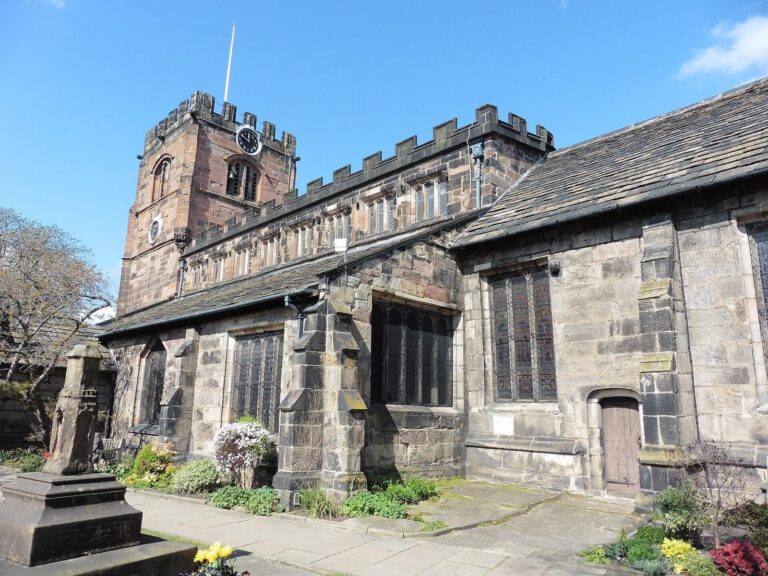
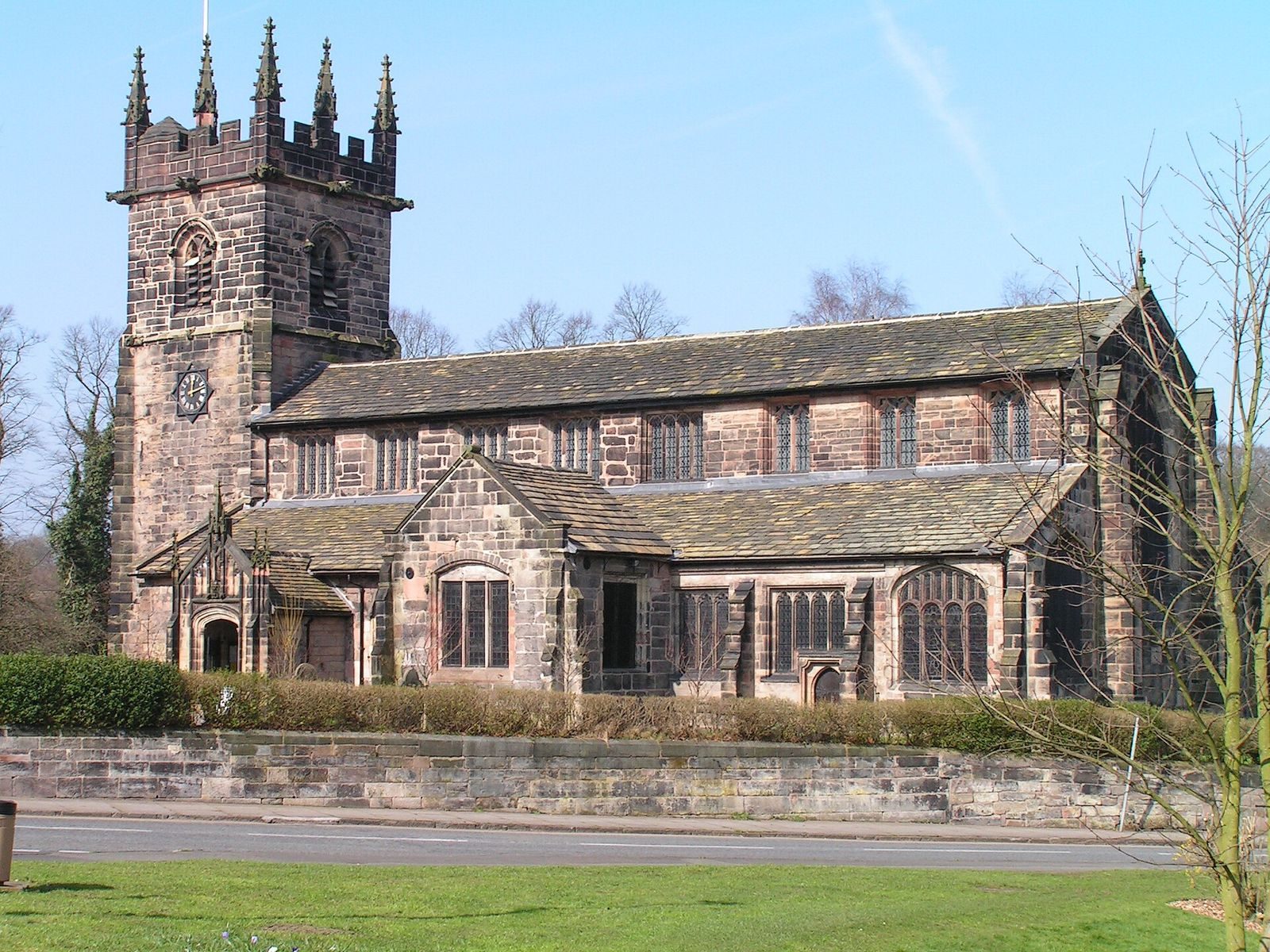
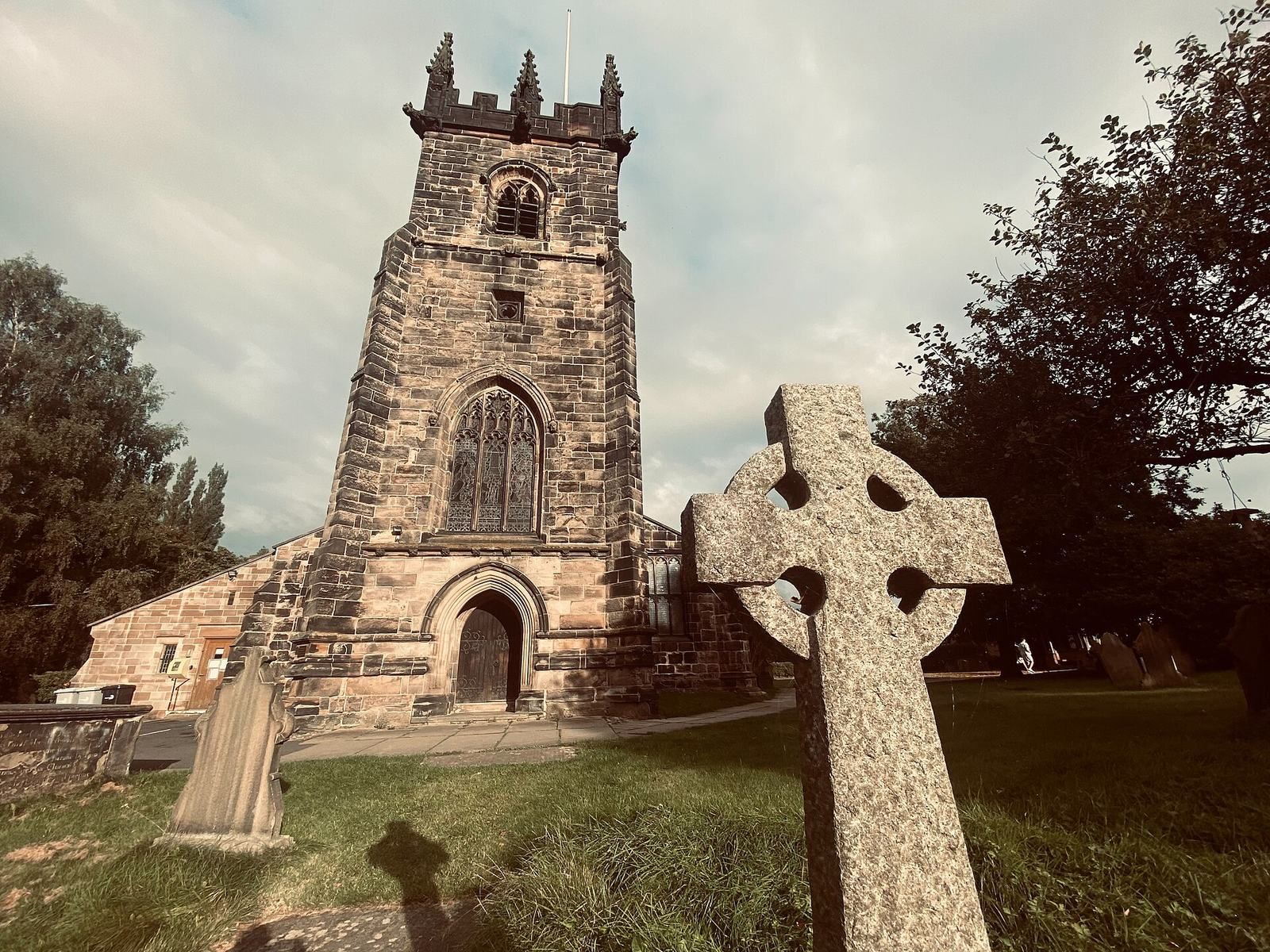
The church is built of buff sandstone laid in regular, dressed blocks and has a roof of Kerridge stone slate. At the west end, the tower opens onto a five-section nave flanked by north and south aisles. The chancel forms the eastern end, with a chapel on either side. A vestry stands north of the north chapel, while the south porch and the projecting Hawthorne Chapel occupy the south side.
Crypt and chapels
A spiral stairway descends from the chancel to the crypt, a chamber beneath the church, which dates to around 1300. Its chapel contains a three-seat sedilia, seating for clergy. A small recess in the north-aisle wall served as an aumbry, or cupboard for sacred objects. The chapel at the east end of that aisle is the Trafford Chapel, formerly called the Jesus Chapel; at the east end of the south aisle is the Booth or Prescott Chapel. The Hawthorne Chapel retains early eighteenth-century panelling and old seating.
Memorials and windows
The Booth Chapel contains a large tomb commemorating Captain John Worrall. In the chancel, the tomb of Henry Trafford, rector of Wilmslow from 1522, bears his effigy in ecclesiastical robes. The chancel floor also holds a memorial brass, an engraved metal floor memorial, dated 1460 and commemorating Sir Robert del Booth and his wife Douce. It is the oldest brass in Cheshire. Two recesses in the chancel’s north wall contain red-sandstone effigies. Ancient stained glass survives in fragments, alongside three windows designed by Dearle and made by Morris and Company in 1920.
Organ and bells
The organ has three manuals, or keyboards, and 42 speaking stops, which control ranks of sounding pipes. The church’s ring comprises six bells cast in 1733 by Abraham Rudhall II.
Churchyard
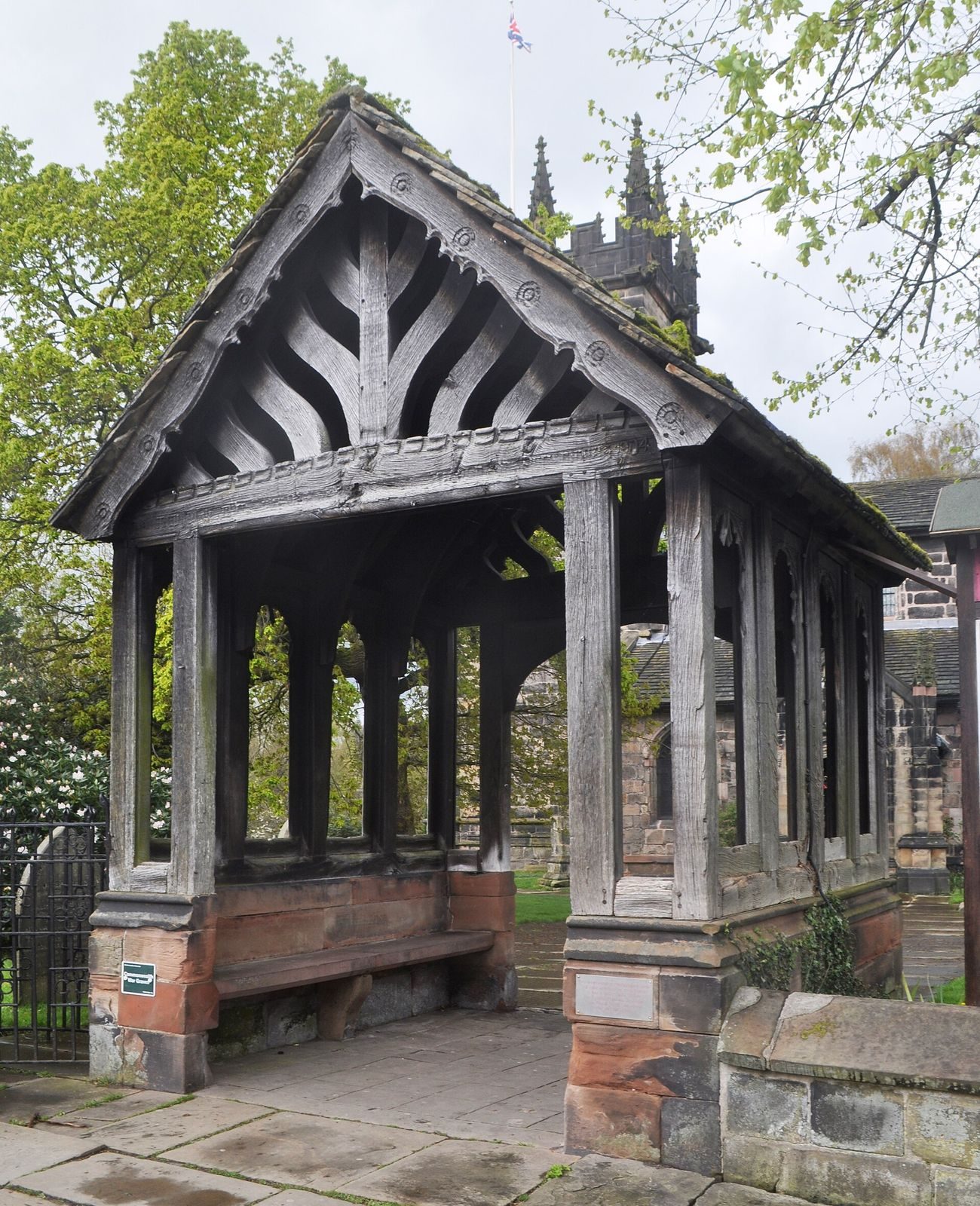
The churchyard contains a medieval buff-sandstone font with an octagonal head, a sundial dating to the late seventeenth century, and a gravestone dated 1596, among the oldest in Cheshire. Its lych gate, a covered gateway, dates to 1904 and has open timber framing on a dressed-stone plinth, a Kerridge stone-slate roof, and stone seats along both sides. The churchyard also holds First World War graves for eight soldiers and one Royal Navy sailor.