Cricova: An Underground Winery in Moldova
Site at a Glance
- Popularity
- High
- Country
- Moldova
- Primary era
- Medieval
- Eras represented
- Medieval, Modern
- Civilizations
- Principality of Moldavia
- Site type
- Economic
- Remains
- Production Complex
On this page16 sections
History
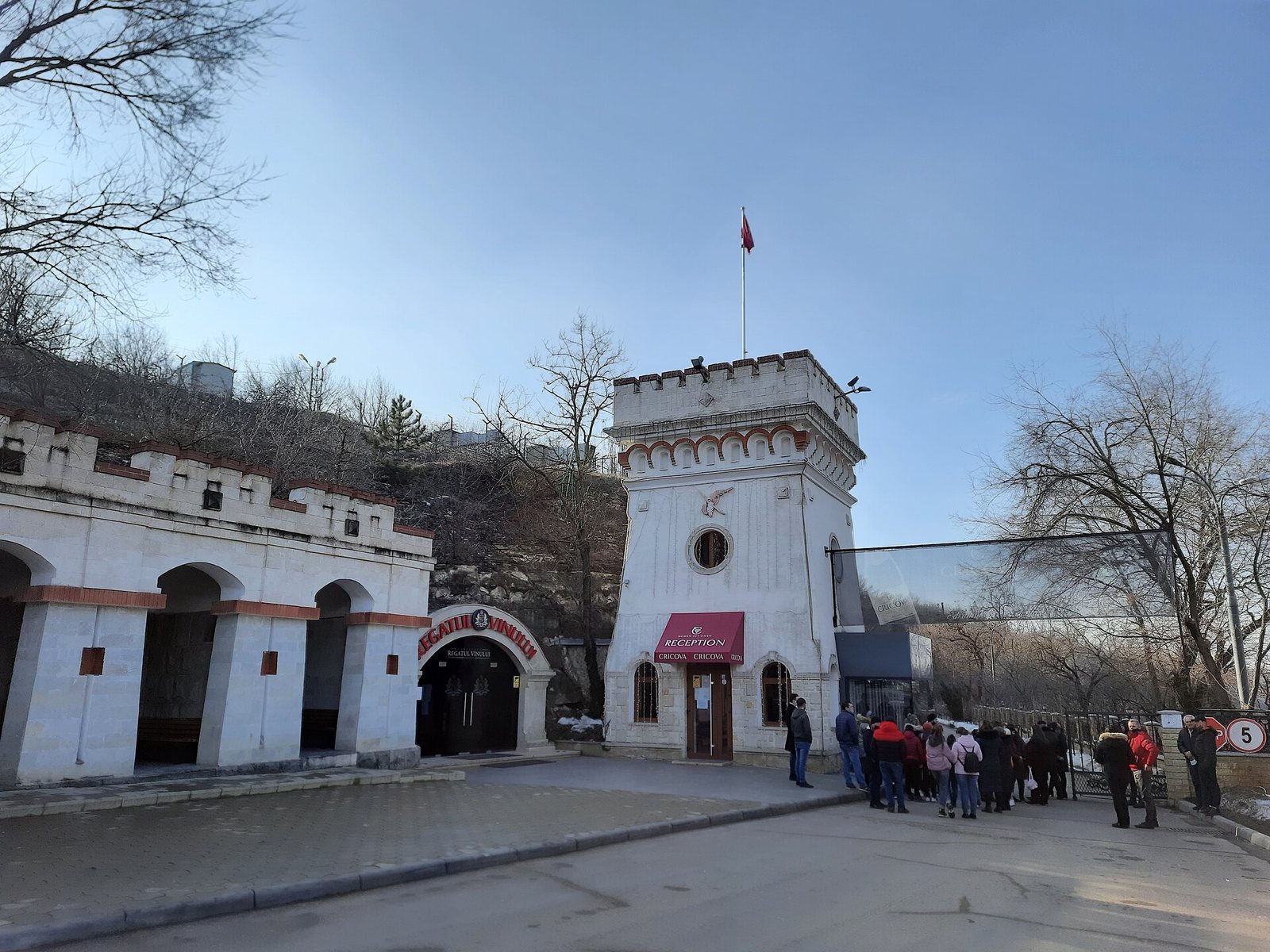
Cricova is an underground winery in its namesake town in Moldova, founded in 1952 in limestone galleries quarried since the fifteenth century. The workings supplied building stone for Chișinău before being adapted for wine storage and aging.
Quarries and the winery’s beginnings
In 1947, Petru Ungureanu began testing winemaking in the quarries, including the production of an early batch of classic sparkling wine. Five years later, Ungureanu and fellow wine-industry figure Nicolae Sobolev proposed turning the galleries into wine stores, and the Cricova winery was established.
A collection formed in 1954 combined Moldovan wines with rare bottles from Hermann Göring, a senior Nazi German official. His wines had passed into Soviet possession after the Second World War, and some eventually became part of Cricova’s collection. The first wines bearing the Cricova name were bottled underground in 1955. Industrial-scale production of classic sparkling wine followed in 1957.
Expansion under Soviet rule
A state-owned agricultural enterprise, or state farm, was created in 1968 to expand production of Cricova wines. A wine association formed in 1970 as vineyards were greatly extended, and a major production facility opened on the farm’s grounds in 1977. Sparkling wine production began in the galleries in 1980. Between 1968 and 1985, the winery increased its output thirty-fivefold. A separate branch for original-style sparkling wines was established in 1986.
Market transition and later development
During the 1990s, Cricova added space for sparkling-wine production and glass packaging, while its bottling line reached full capacity. It made sparkling wines under the names Basarabia, Moldova and Blanc mousseau naturel. By the middle of the decade, around one-fifth of production was exported to about 30 countries, including Russia, Ukraine, other former Soviet states, England, Germany, the United States and Japan.
Moldova’s transition from central planning to a market economy began in 1991. Cricova became a state-owned joint-stock company in 1999 and established its own modern vineyard base in 2001. The winery received an international award in 1992; in 2002, it became the first institution in Moldova to receive the Grand Prize of the Order of the Republic. In 2003, it was designated an object of Moldova’s national cultural heritage and placed under state and UNESCO protection.
The winery adopted ISO 9001, a quality-management standard, in 2008, followed by ISO 22000, a food-safety standard, in 2009. It rebuilt its main grape-processing line in 2011 and its slow-fermentation and sparkling-wine line in 2013.
In 2019, the company’s vineyards covered about 600 hectares, the largest area held by a winery in Moldova. They included 225 hectares in the southern regions of Cahul and Gavanoasa and 330 hectares in the central regions of Criuleni and Cricova. Southern vineyards grow Muscat, Cabernet Sauvignon, Merlot, Pinot Noir and Codru varieties; central vineyards include Pinot, Sauvignon, Rkatsiteli and Aligote. Differences in soil and climate across the growing areas support this range of grapes.
Workers hand-pick the grapes into small containers to preserve their condition. Cricova makes sparkling wine by the traditional French method, with a second fermentation in the bottle and at least three years of aging on horizontal racks. Red wines ferment with their skins, pulp and seeds for two to three weeks. The winery also produces sparkling red wine from Cabernet Sauvignon, marketed with blackcurrant and cherry notes.
Remains
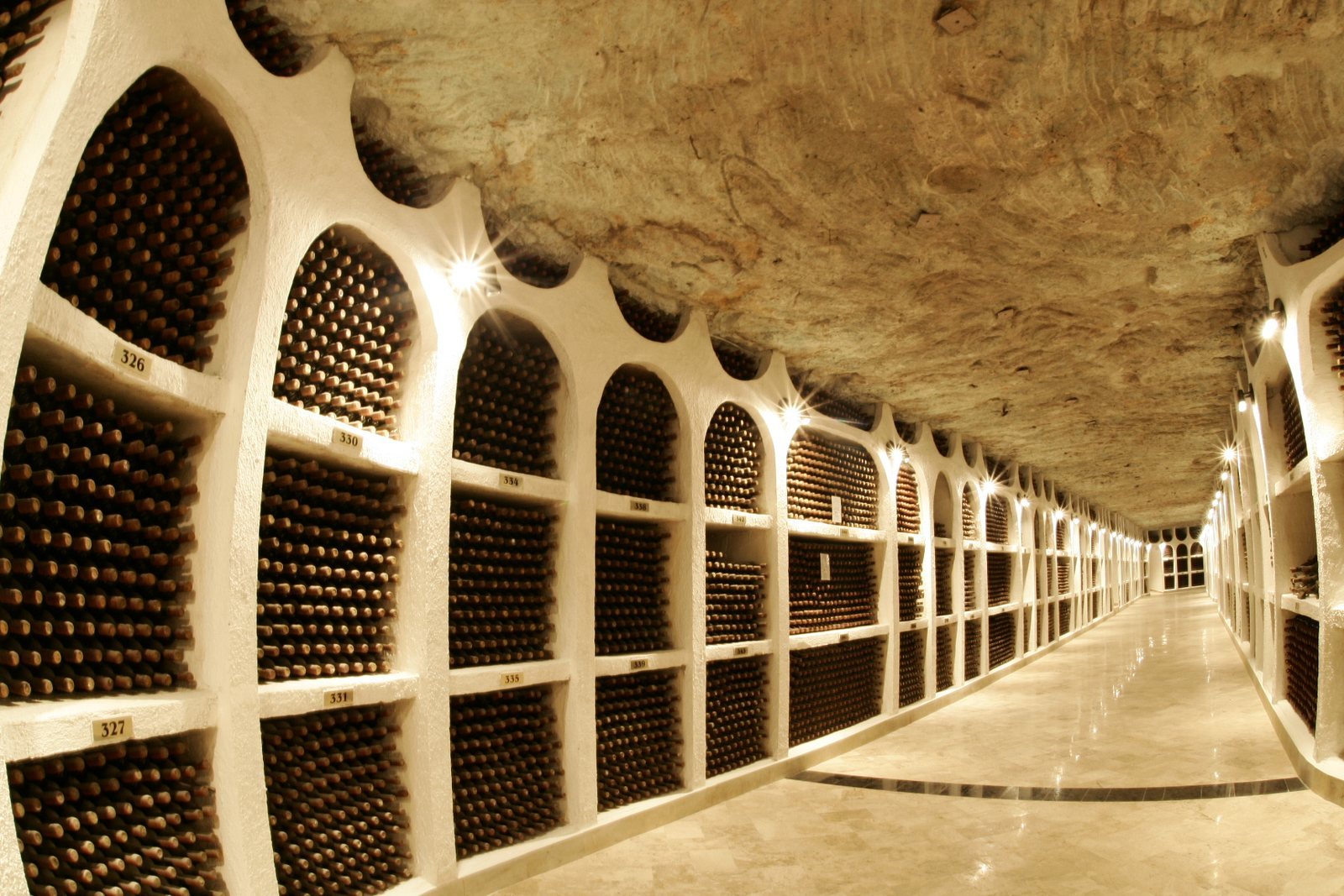
The underground complex combines former limestone workings with production areas, cellars, tasting rooms and other facilities. It covers about 53 hectares and contains roughly 120 kilometres of winding roadways. The galleries are around 6 to 7.5 metres wide and 3 to 3.5 metres high. Their depth follows the terrain, from about 35 metres near the entrance to as much as 100 metres below ground.
Galleries and wine storage
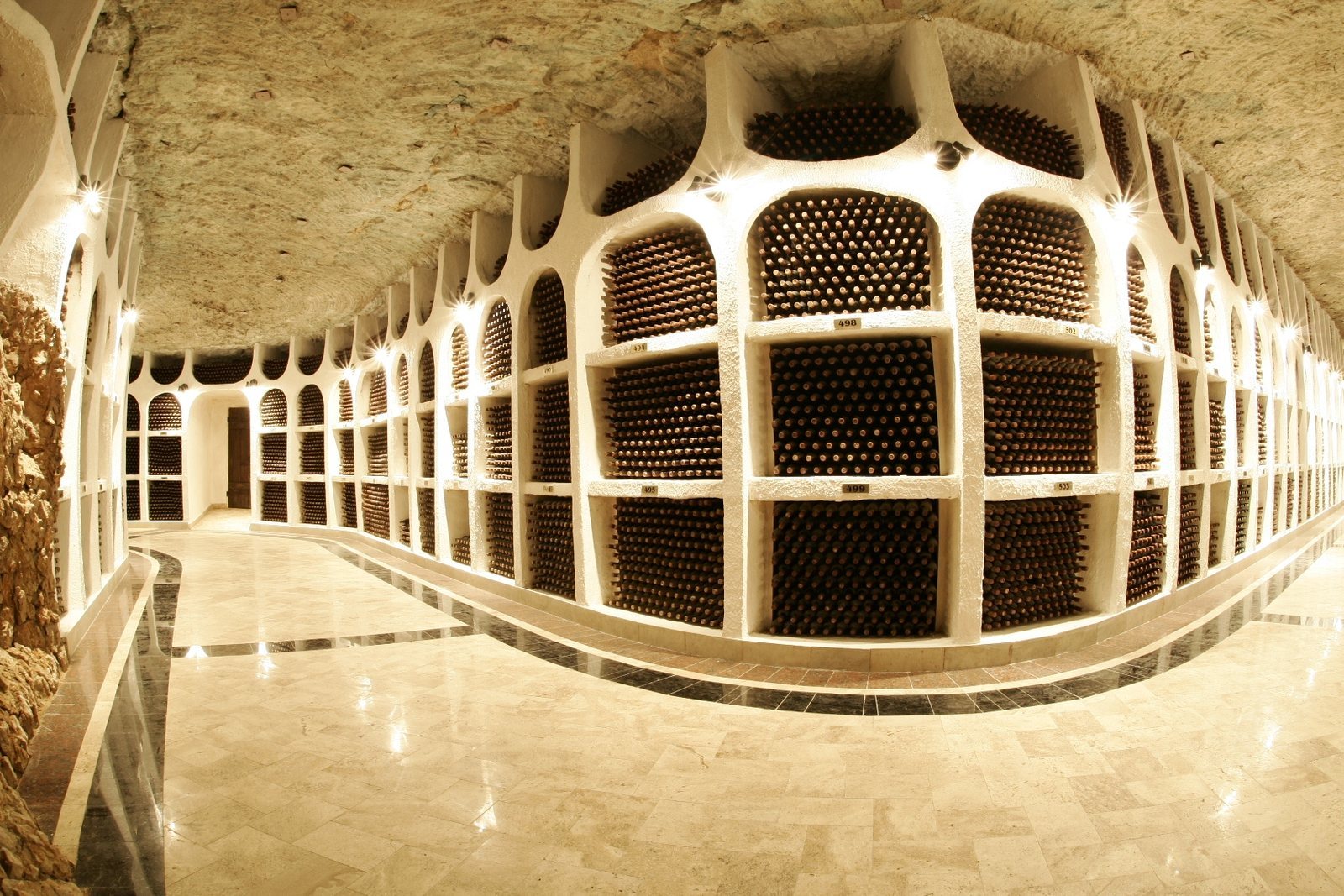
The passages form a network of boulevards, streets and lanes, complete with road signs and traffic lights. About half the routes are used for storing wine, and some are named after the wines kept there. Limestone is still quarried in certain branches, allowing the underground network to continue growing.
Natural conditions keep the galleries at about 10 to 12 degrees Celsius throughout the year, with relative humidity of 97 to 98 percent. The wine-storage areas rely on this underground climate rather than artificial air-conditioning or ventilation to regulate conditions for production and aging.
Cellars and wine collection
Cricova’s cellars are Moldova’s second-largest underground wine cellar complex, after Mileștii Mici, a Moldovan winery known for its extensive subterranean cellars. The collection holds about 1.3 million bottles, including wines from Burgundy, the Moselle, Tokay, the Rhine and Moldova. Some bottles belonged to Göring’s collection, called Oenoticia, which comprised about 2,000 elite wines, including Moselle, Bordeaux, port, Tokay and Chablis vintages from the 1940s.
Among the collection’s older items are a 1902 red dessert wine called “Jerusalem of Easter,” the sole surviving bottle from an original production of 400, and a 1902 Jan Becher liqueur from Czechia. The liqueur is made with 27 medicinal herbs and remains in production.
Tasting halls
The tasting complex, reconstructed in 2007, contains five large halls that bring together classical architectural features and modern decoration. Stained glass, tapestries and wooden sculptures made by Moldovan artisans form part of their interiors.
European Hall
Grapevines appear in the hall’s stained glass, alongside a large glass image of the winery’s vineyards. The room is equipped for conferences, symposia and business meetings.
Sea Floor Hall
This hall recalls the Sarmatian Sea, an ancient sea that covered the region about 12 million years ago. Mirrors reflect its limestone ceiling, while decorative aquariums adorn the walls.
Presidential Hall
Images relating to Moldovan winemaking decorate the hall, whose monumental doors are framed in marble.
Fireplace Hall
A fireplace anchors the room, which has hunting-themed decoration.
Casa Mare
Casa Mare, meaning “big house,” is arranged like a traditionally furnished room in a Moldovan village home. Its furnishings include wooden ceiling beams, decorated furniture, embroidered towels and wool carpets with geometric and floral patterns.
Museum and cinema
Underground museum
The museum holds a grapevine imprint found in a Moldovan village and dated to the fifth century BCE. It is considered evidence of early winemaking in Moldova. The collection also includes wooden presses used in ancient Greece and the Roman Empire, as well as machines for agriculture and winemaking.
Underground cinema
A cinema with 40 seats lies about 80 metres below ground on Lumière Brothers Street. It screens a documentary about the winery and is also used for events.