Holyhead Mountain Prehistoric Village: A Prehistoric Settlement on Anglesey
Site at a Glance
- Rating
- 4.7
- Popularity
- Medium
- Country
- United Kingdom
- Primary era
- Iron Age
- Eras represented
- Iron Age
- Civilizations
- Unclassified
- Site type
- Settlement
- Remains
- Village
On this page7 sections
History
Holyhead Mountain Prehistoric Village is a prehistoric settlement on Holy Island, Anglesey, Wales, United Kingdom. Most of its occupation is considered Iron Age, a period associated with the use of iron, and radiocarbon dating places the settlement at about 1000 BC. Its chronology is uncertain: activity may have begun in the Neolithic, the later part of the Stone Age, and continued into the post-Roman centuries often called the Dark Ages. Different buildings may have been used at different times. The settlement is also known by the Welsh names Tŷ Mawr (“Big House”) and Cytiau’r Gwyddelod (“Irishmen’s Huts”).
An earlier interpretation connected the settlement with Roman rule in Wales, but radiocarbon dating instead places it around 1000 BC.
Excavation and care
William Owen Stanley, a Welsh politician and scholar of antiquities, led excavations of the huts. Augustus Lane Fox, a British army officer and archaeologist, assisted with work in 1862 and 1868. Stanley published his findings in the 1869 volume of Archaeologia Cambrensis, a journal devoted to Welsh archaeology and history. The excavations recorded at least 50 buildings.
The site came under guardianship by 1911. Many huts were restored in the early 20th century, and further excavations followed in 1978 and 1982. Cadw, the Welsh Government’s historic-environment service, now cares for the settlement.
Remains
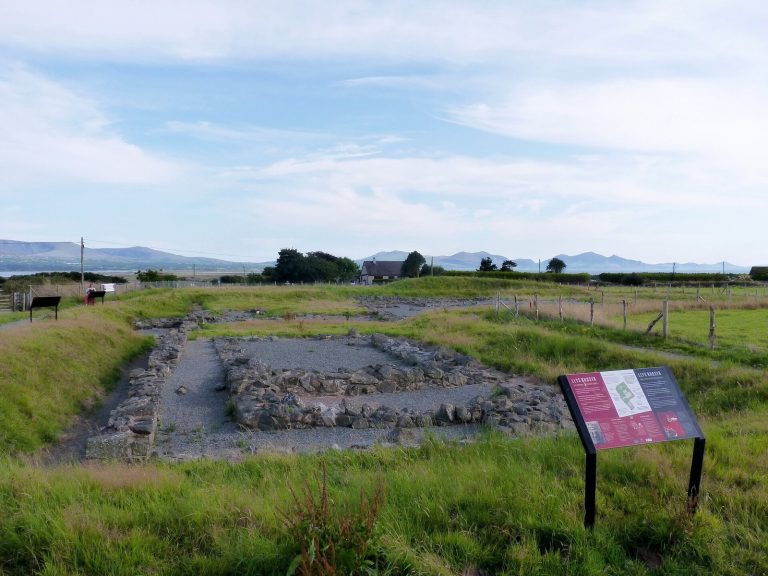
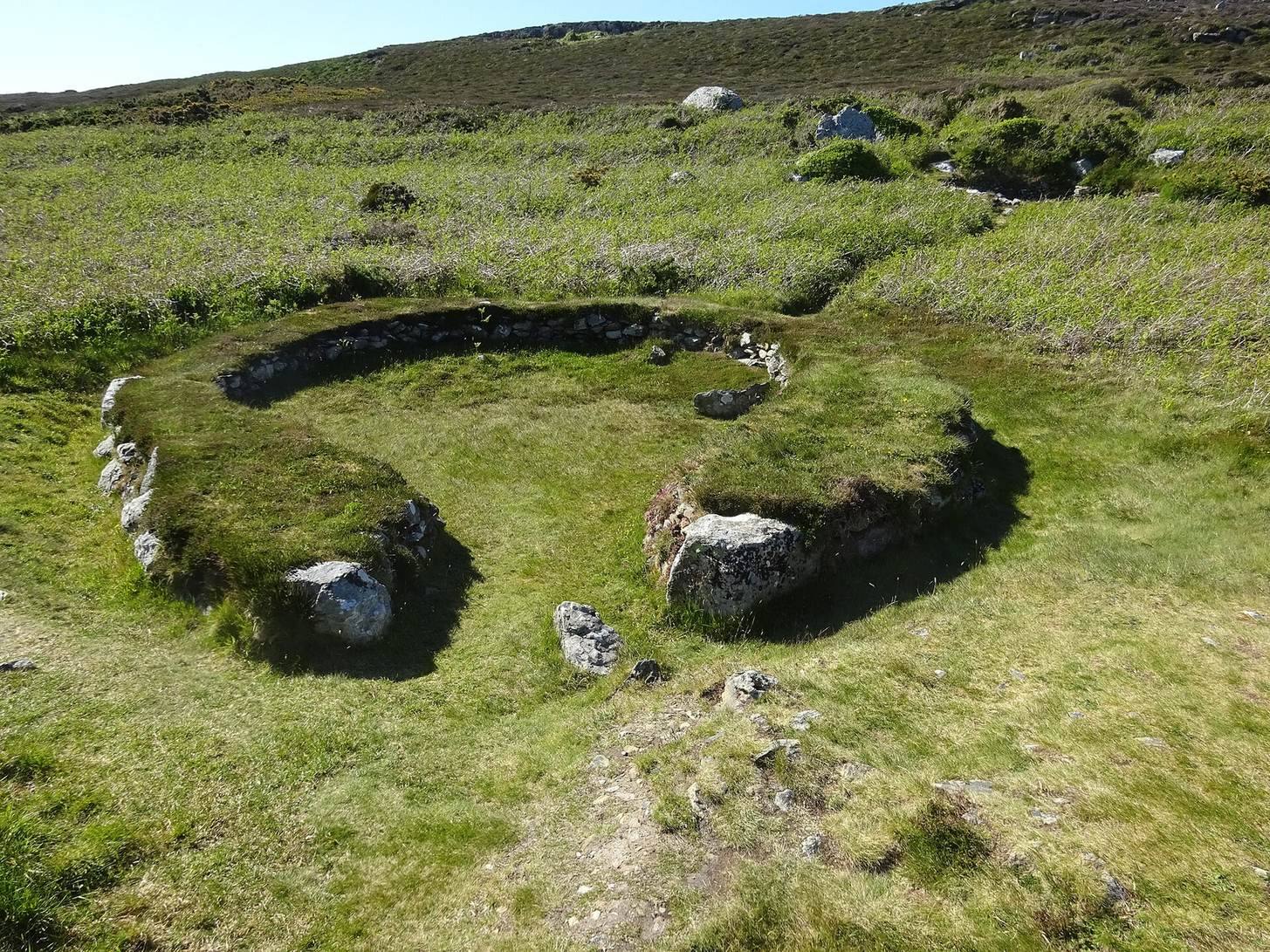
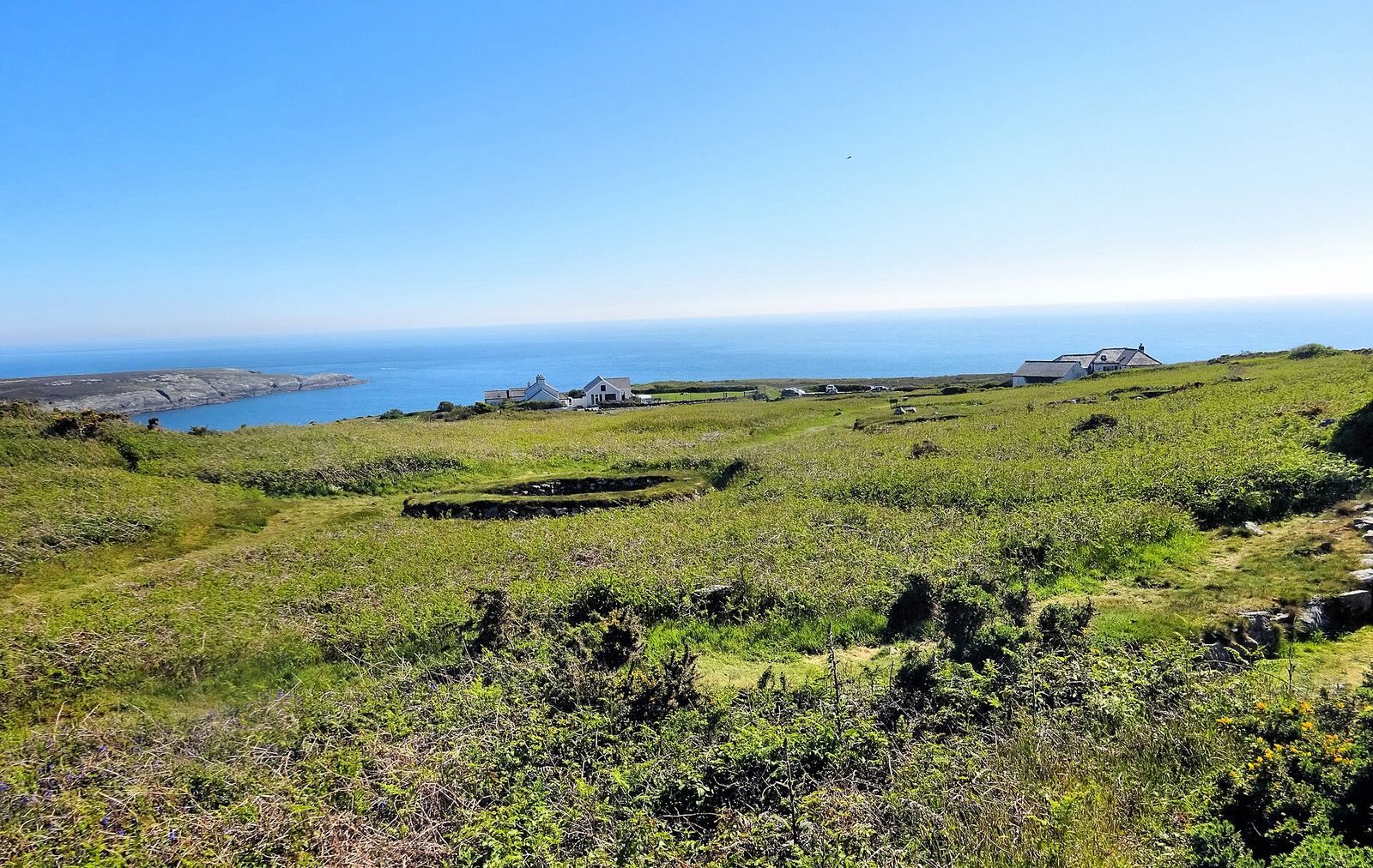
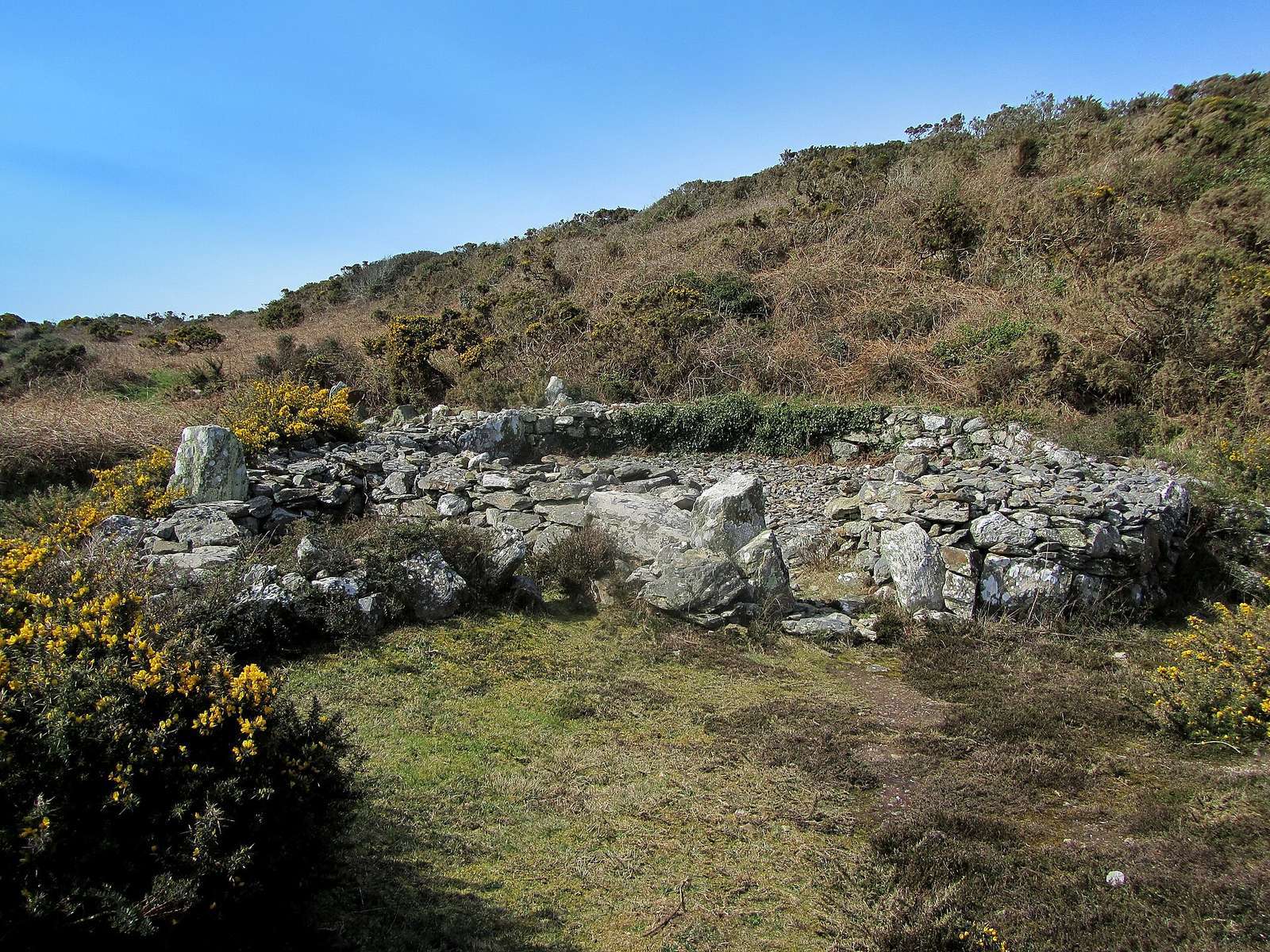
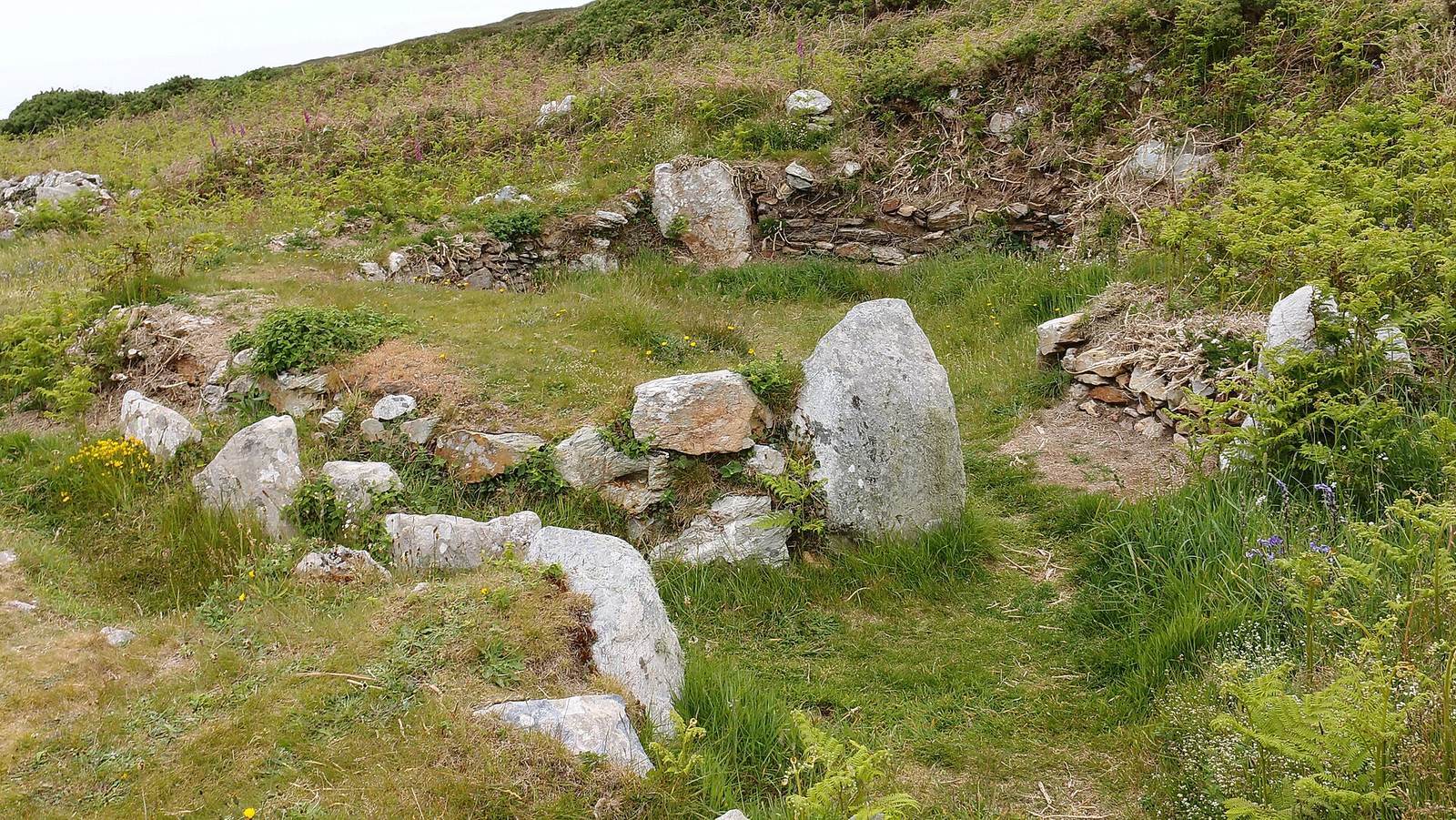
The settlement occupies a level terrace across the southwestern end of Holyhead Mountain, near the South Stack cliffs on Holy Island. Around six huts can be seen at roughly 300 metres above sea level, including huts set toward Holyhead Mountain, also called Mynydd Twr. Stone bases of 20 buildings are visible, with large boulders scattered around the site. At the terrace’s northeastern end, a building adjoins a walled enclosure or paddock. About 20 huts have been reconstructed.
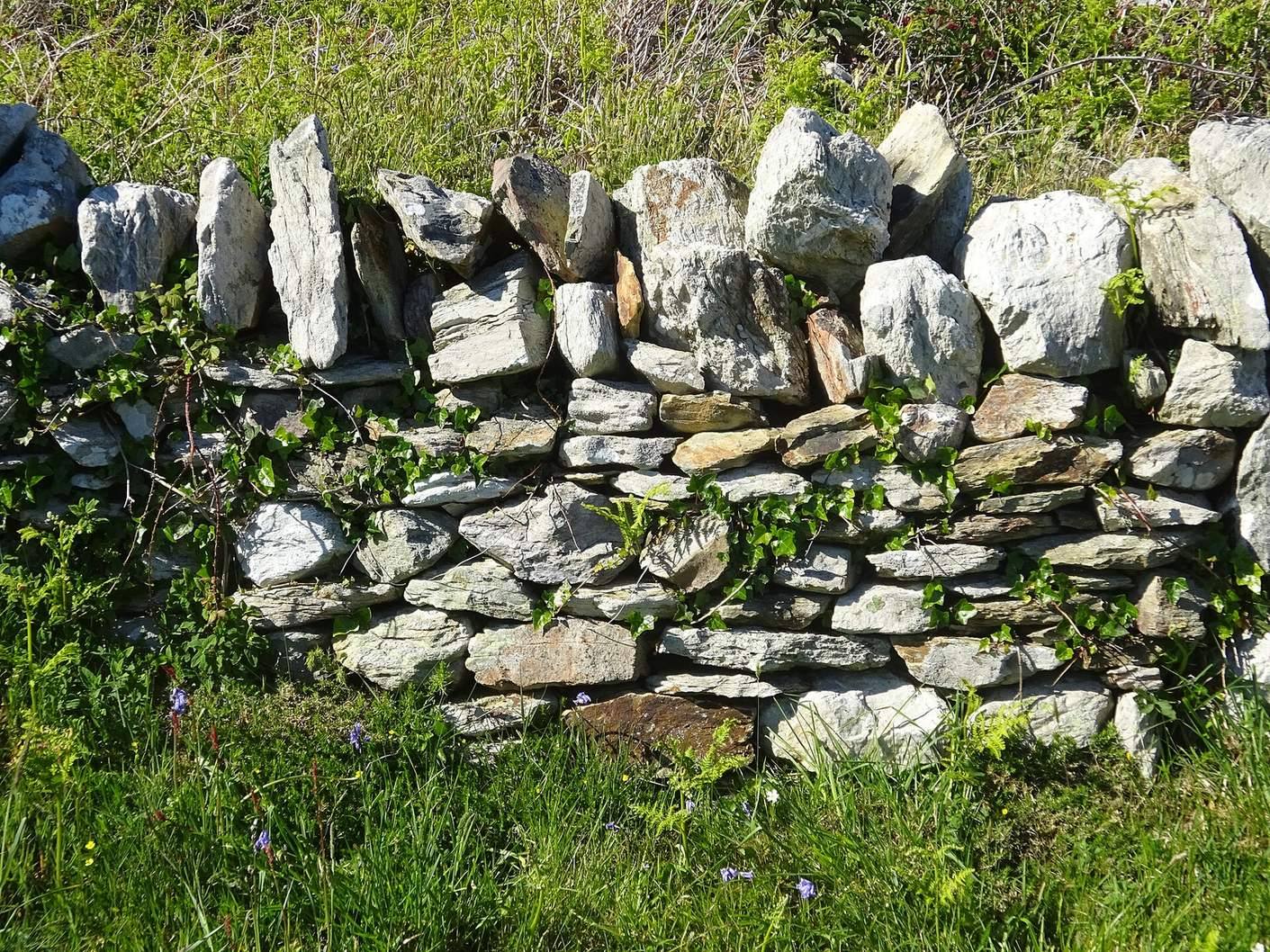
The buildings have thick stone walls that were once considerably higher. Their construction resembles that of the huts at Din Lligwy, another settlement on Anglesey. The huts are thought to have had conical roofs, made with poles resting on low stone walls and covered in turf or thatch. In larger buildings, interior wooden posts supported the upper ends of the roof poles.
Hut types
Circular houses
Many of the mostly circular buildings are interpreted as homesteads. Those identified as houses measure about 6 to 10 metres across. Some contain hearths, alcoves, or a stone trough.
Oval and passage buildings
Other structures are oval and have internal dividing walls. Some are reached through long passages, including one rectangular hut. Smaller buildings may have served as storerooms or workshops.
Finds
Finds include a broken stone axe, flint arrowheads, and pottery fragments dating to the late Neolithic or early Bronze Age, a period associated with bronze use. A small hoard of Roman coins and Roman pottery also came from the settlement.