Church of the Blessed Virgin Mary in Poznań: A Gothic Auxiliary Church
Site at a Glance
- Rating
- 4.7
- Popularity
- Medium
- Country
- Poland
- Primary era
- Medieval
- Eras represented
- Medieval, Early Modern, Modern
- Civilizations
- German, Kingdom of Poland, Kingdom of Prussia, Polish–Lithuanian Commonwealth
- Site type
- Religious
- Remains
- Church
On this page10 sections
History
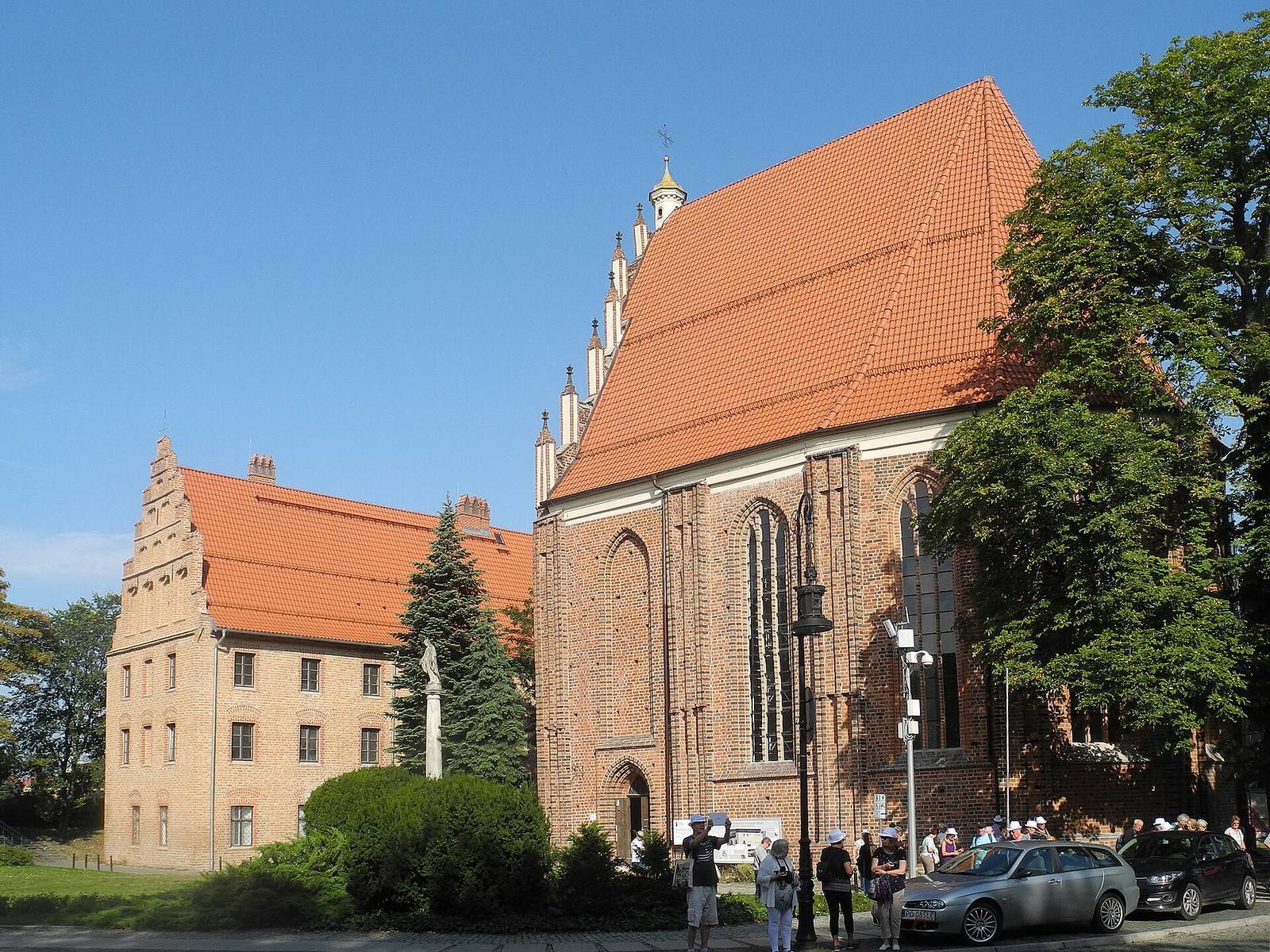
The Church of the Blessed Virgin Mary in Poznań is a Roman Catholic auxiliary church on Ostrów Tumski, Poland’s cathedral island. Its present building was erected between 1430 and 1447 in the Gothic style, a medieval tradition characterized by pointed arches and ribbed vaults. The church also served as a collegiate church, an institution with a chapter of clergy.
Medieval church and chapter
The church’s dedication is first recorded in 1247 as in summo, meaning “on the height.” It served as an auxiliary church belonging to the Church of Saints Peter and Paul in Poznań.
The cathedral chapter in Poznań financed the nave, which was probably built shorter than initially intended. Hanusz Prus of Poznań directed the work in the architectural tradition of Heinrich Brunsberg. Jan Lorek of Kościan constructed the west gable, while Mikołaj of Poznań and his son built the vaults. Bishop Andrzej of Bnin consecrated the church on 2 July 1448.
Its collegiate chapter included a senior clerical post and five canonries, or offices held by clergy. Later bishops added further positions. The church retained its collegiate status until 1 March 1805.
Repairs and renewed use
Repairs took place repeatedly over the centuries. By the early nineteenth century, the church’s poor condition prompted proposals to demolish it, but a major restoration from 1859 to 1862 prevented that outcome. During the Second World War, the building was used to store museum collections.
Wacław Taranczewski led a reconstruction of the interior in 1954–1956, and the façade was repaired in 1976. The church closed in 1988 for work to strengthen its pillars and improve its stability. Archaeological investigations around the building were directed by Hanna Kóčka-Krenz.
A comprehensive restoration and conservation project followed from 2017 to 2021, involving the Archdiocese of Poznań, the city and the Archaeological Museum. The church returned to religious use on 14 April 2021, Poland’s National Day of the Baptism of Poland. Archbishop Stanisław Gądecki consecrated its altar that day.
Remains
The surviving building has three aisles, a single altar and a five-sided chancel with an ambulatory. Its brick structure and vaults combine medieval work with later features, while archaeological remains lie beneath the church and near the chancel.
Church architecture
Brick structure and exterior
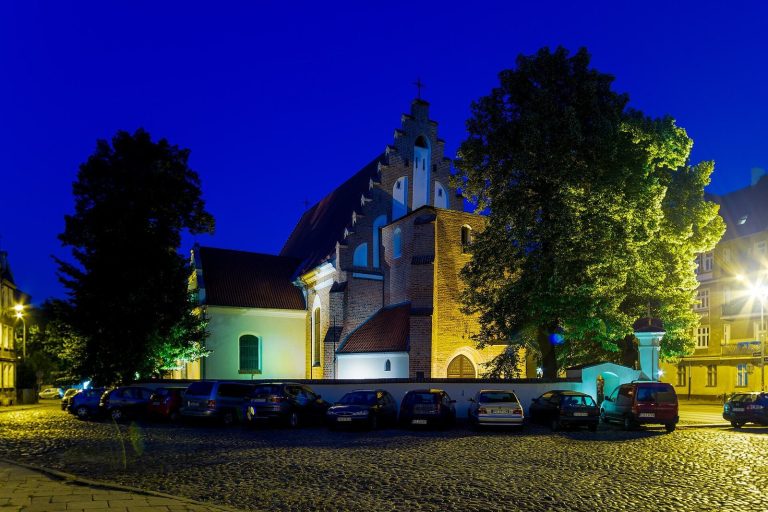
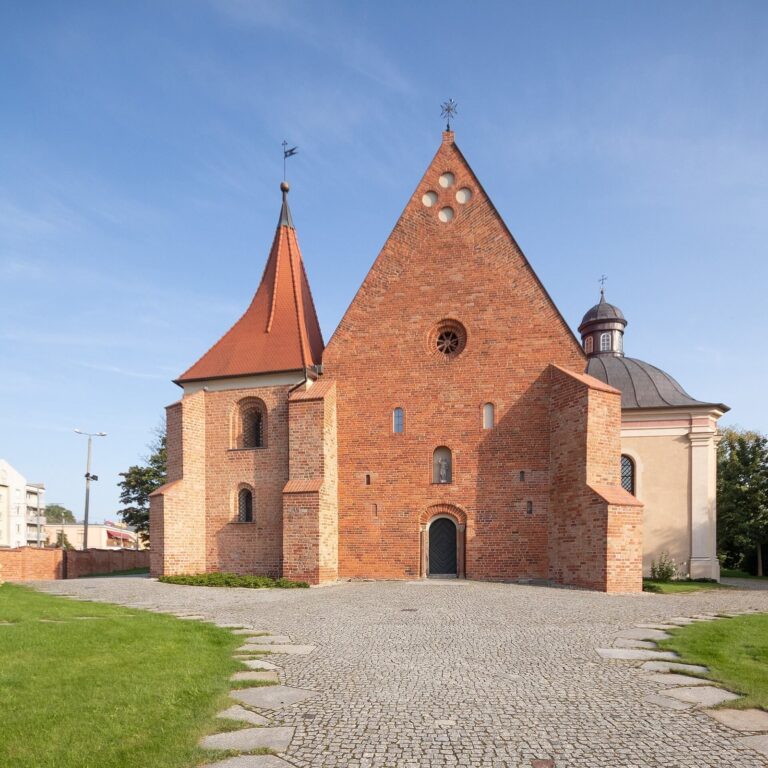
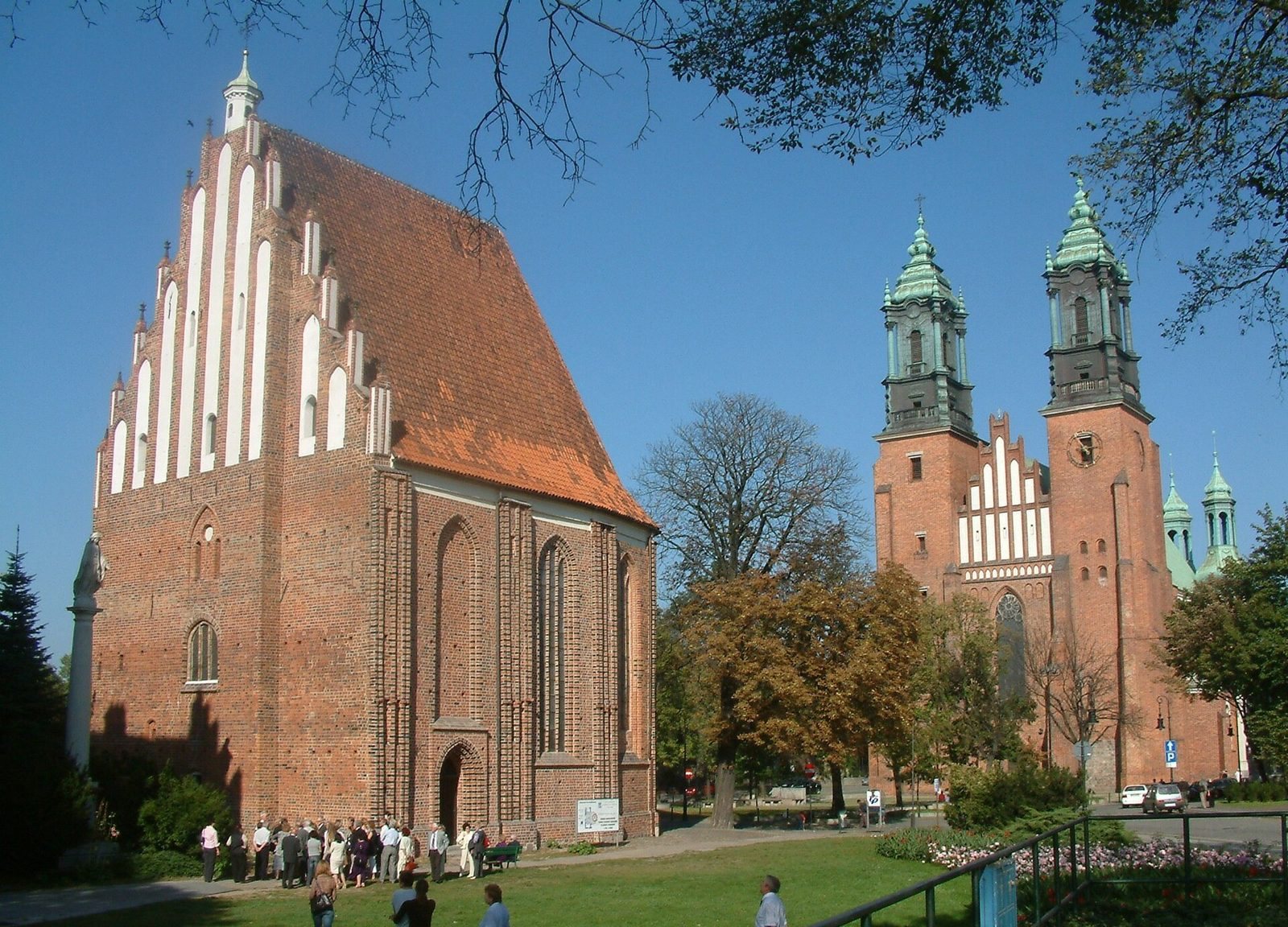
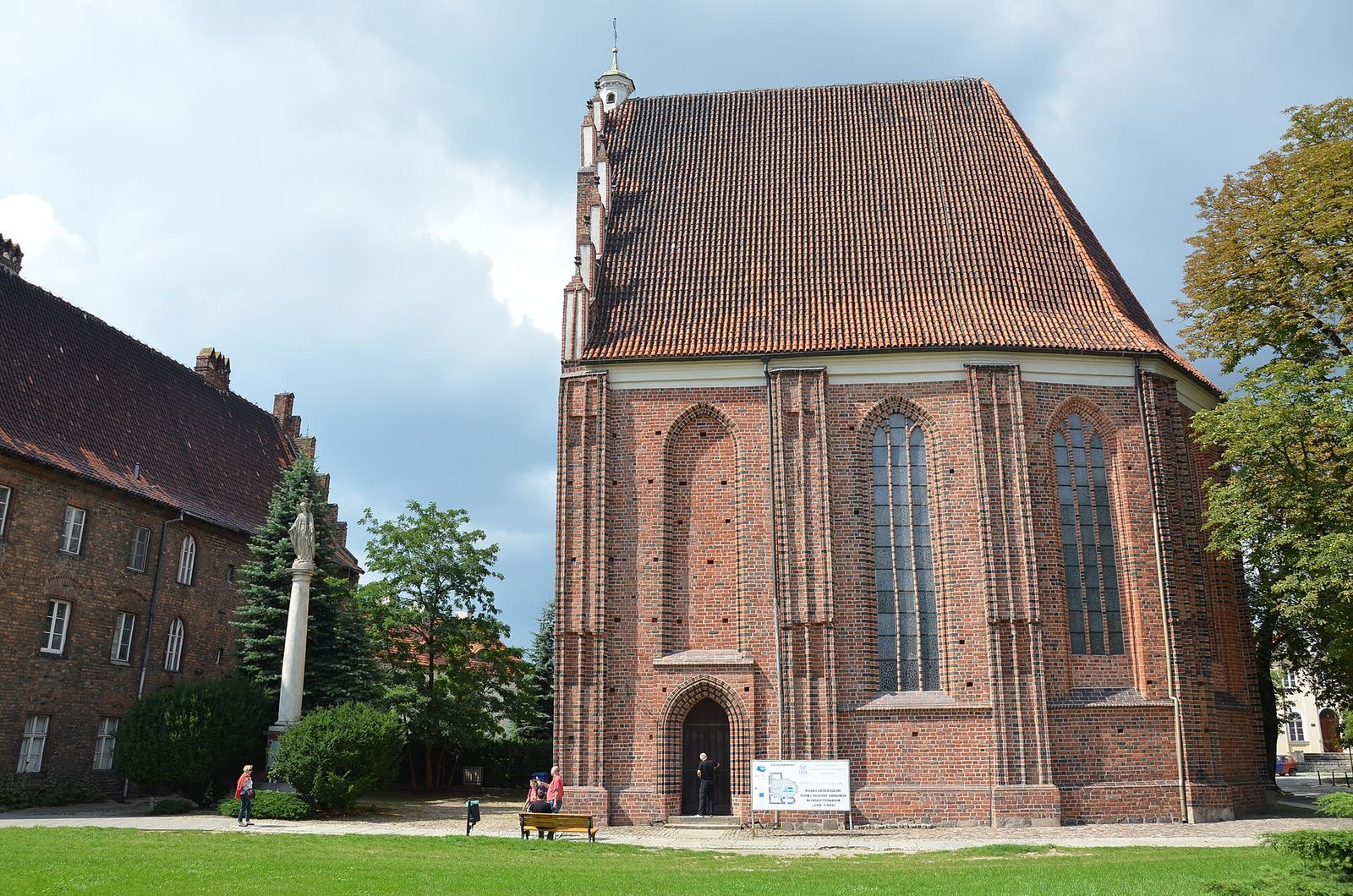
Red brick, interspersed with glazed brick, forms the church’s walls. The gable has recessed panels finished in white plaster and is crowned by a small roof turret and pinnacles with floral ornaments. Buttresses are built into the walls and marked on the exterior by vertical strips. Large pointed-arch windows sit between them; the windows on the north side have been filled with brick.
Vaults and interior
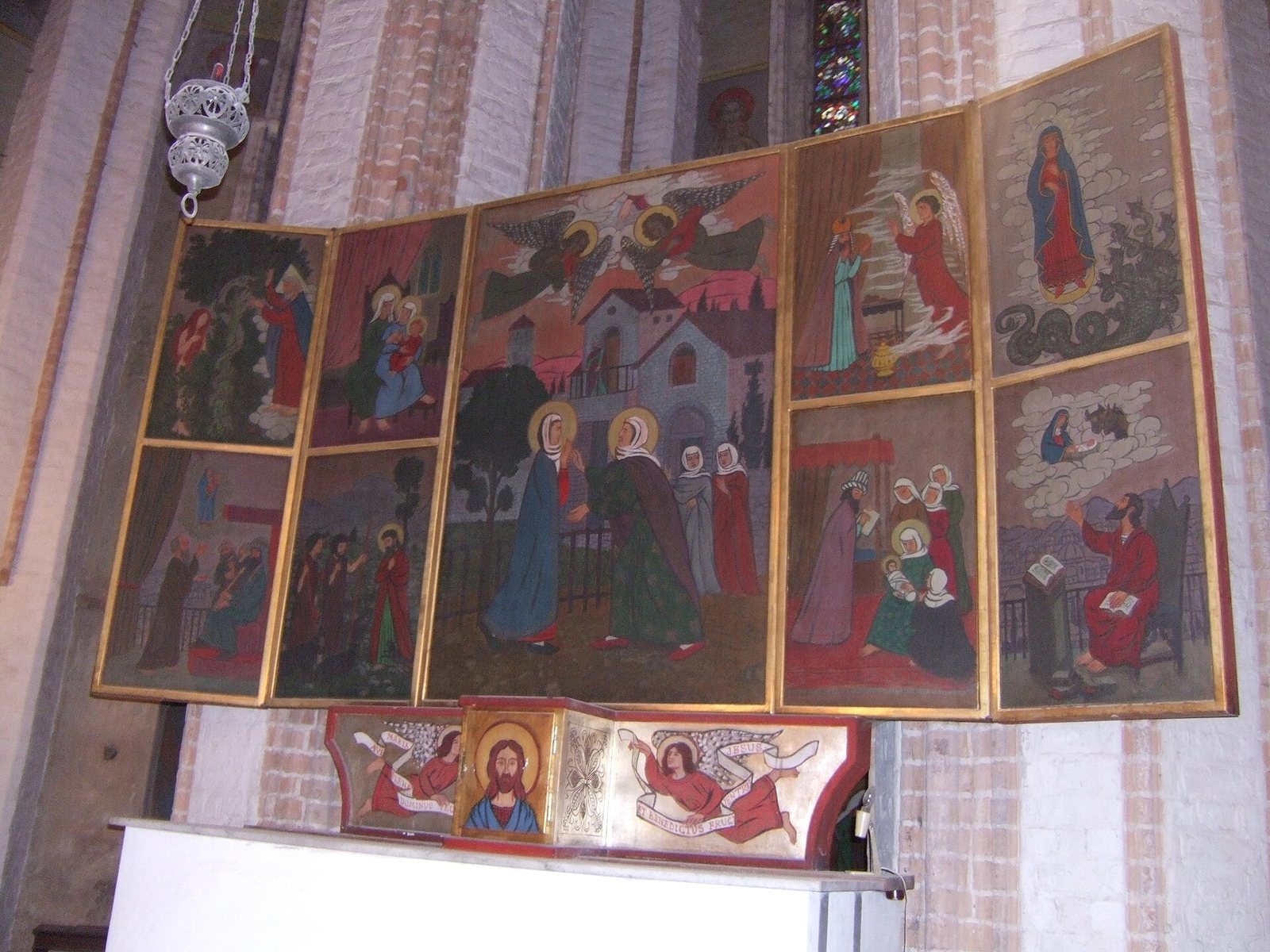
The three aisles have fifteenth-century star vaults, whose ribs form star-like patterns. The five-sided chancel and its ambulatory, a passage around the sanctuary, have sail vaults dated to 1727. Taranczewski’s painted decoration dates to 1954–1955. He also made a multi-panel altarpiece inspired by Gothic art, and designed the stained-glass windows in 1956.
Earlier remains and associated features
Palace and chapel remains
The church stands above the remains of a Piast palatium, or ruler’s palace complex, attributed to Mieszko I, Poland’s first historically documented ruler. Probable foundations of a circular chapel have been found near the chancel. An exhibition presents the palace complex and a chapel associated with Dobrawa, Mieszko I’s Bohemian wife.
Marian column
A column in front of the church supports an 1886 statue of the Immaculate Virgin Mary. The title refers to the Catholic belief that Mary was preserved from original sin from the moment of her conception.