St. Catherine’s Church, Zagreb: A Baroque Catholic Church
Site at a Glance
- Rating
- 4.6
- Popularity
- Medium
- Country
- Croatia
- Primary era
- Early Modern
- Eras represented
- Early Modern, Modern
- Civilizations
- Austria-Hungary, Habsburg, Habsburg Austria
- Site type
- Religious
- Remains
- Church
On this page19 sections
History
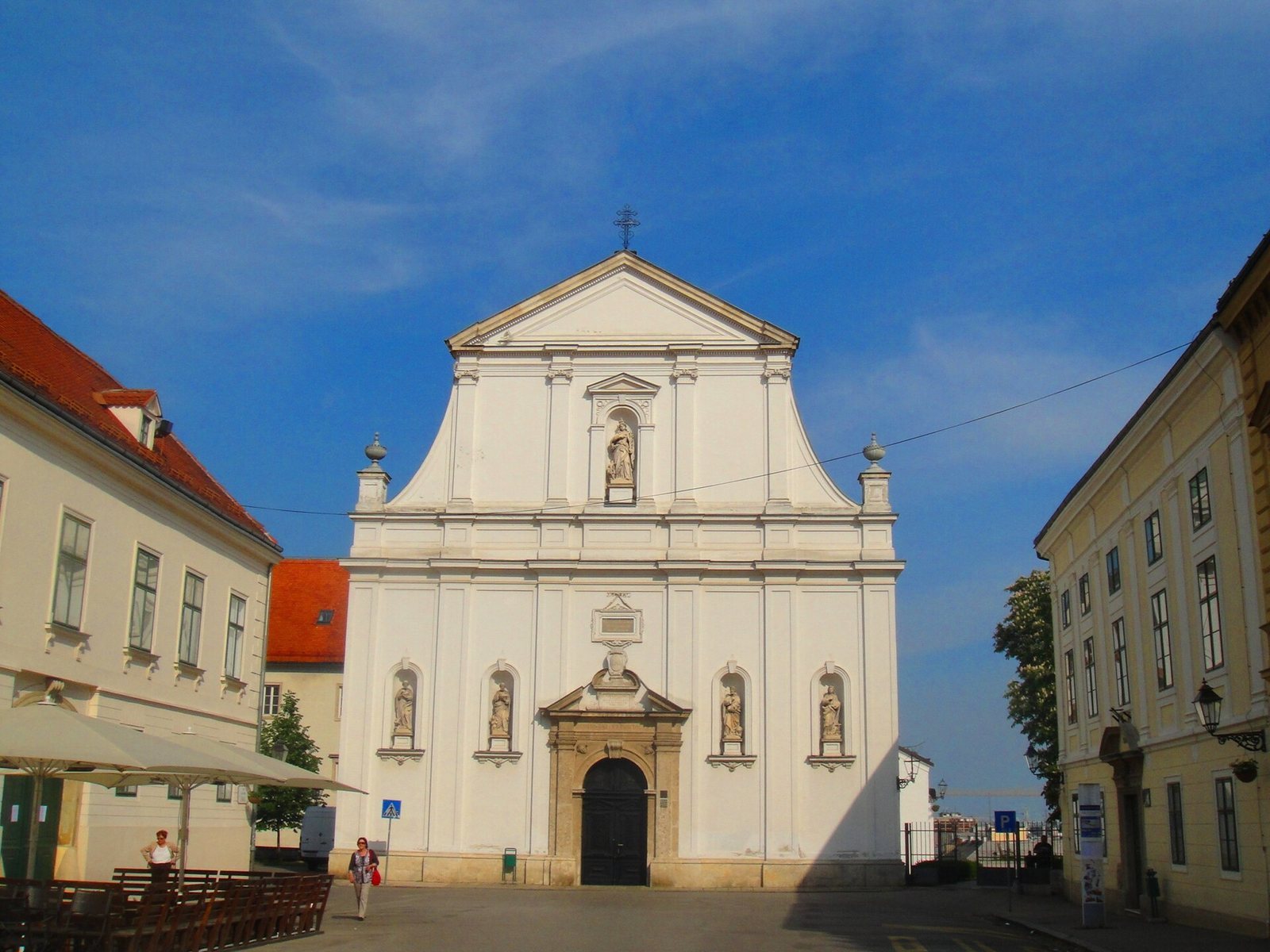
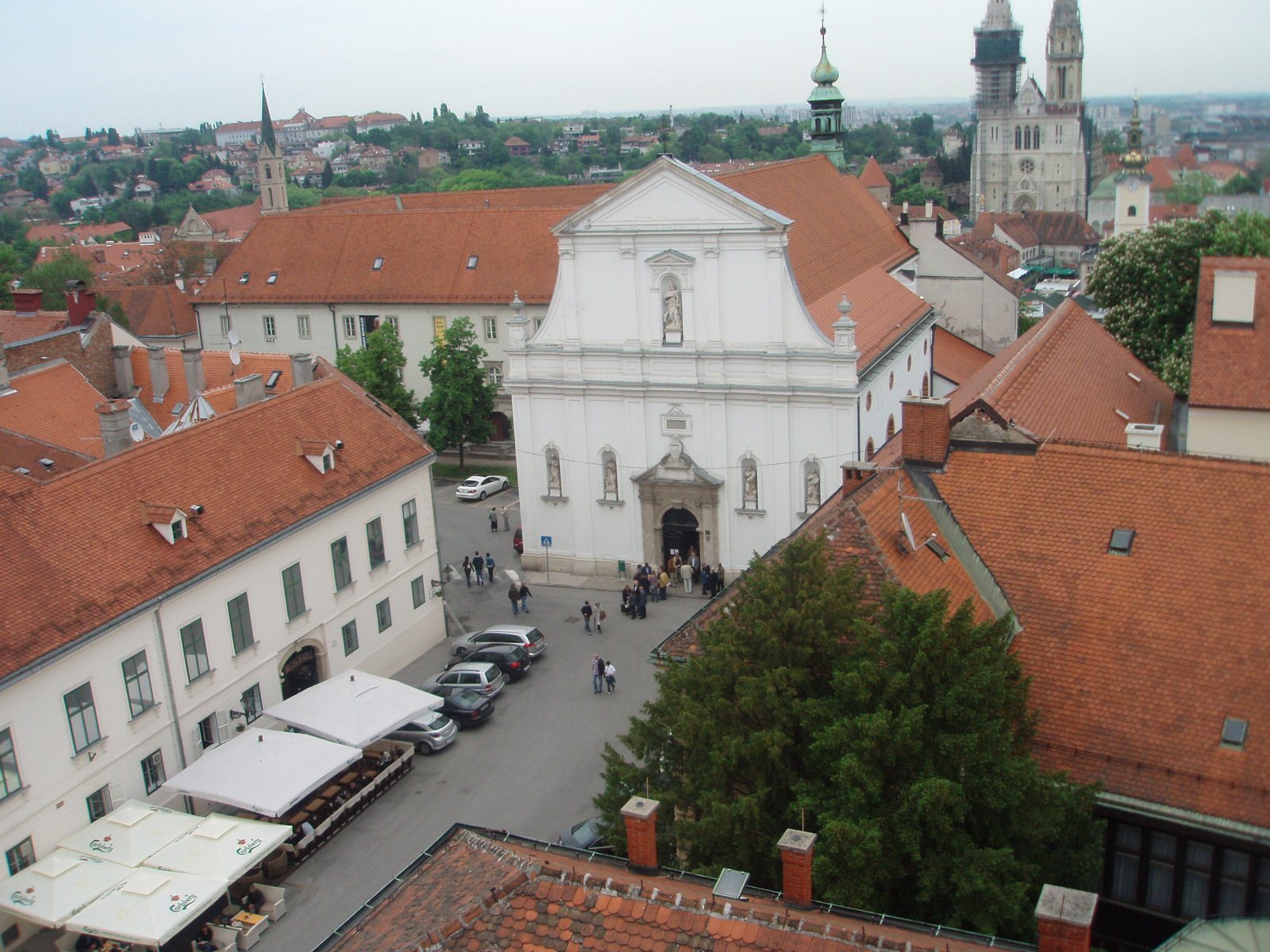
St. Catherine’s Church is a Roman Catholic church dedicated to St. Catherine of Alexandria, a Christian martyr, in Zagreb, Croatia. It belongs to the Archdiocese of Zagreb, a major Catholic jurisdiction headed by an archbishop. Built by the Jesuits between 1620 and 1632, it is a brick Baroque church regarded as a foremost example of Baroque architecture in Zagreb and Croatia’s best-known Baroque church.
From Dominican church to Jesuit rebuilding
A small Dominican church dating from the 14th century stood on the site before the present building. During Ottoman incursions, it was also used as a military storehouse. After the Jesuits, members of the Catholic Society of Jesus, arrived in Zagreb in the first half of the 17th century, the older church came under their administration. They considered it too small and dilapidated, and replaced it with the present church and an adjoining monastery.
Fire and changing use
Fires damaged the church in 1645 and 1674. The later fire destroyed the building and its furnishings. Croatian nobles helped furnish the church anew; in return, they were allowed to display their family coats of arms or be buried inside beneath tombstones.
After the Jesuits were suppressed in 1773, the church passed to the parish of St. Mark in 1783. From 1874, it served as a university church.
Restoration and earthquake damage
The church underwent repeated reconstruction and restoration during the 19th and 20th centuries. An 1880 earthquake severely damaged it, and architect Hermann Bolle directed a thorough restoration. Repairs took six months, and the church was consecrated again in November 1881. Earthquakes in central Croatia in 2020 caused further damage, with the December shock having the more severe impact.
Remains
Plan and interior decoration
Building and layout
The brick church has a single main hall, six side chapels, and an apse, the rounded end of the sanctuary. Its walls and curved ceilings carry richly worked Baroque plaster decoration. Reliefs made of molded plaster are attributed to the Italian artist Antonio Quadrio and date to the 1720s; the broader plaster decoration is dated to 1732.
Painted decoration
Scenes from the life of St. Catherine, attributed to Giulio Quaglia, decorate the curved ceilings above the main hall. Behind the low main altar is a large painting of St. Catherine among philosophers and writers from Alexandria. The work is attributed to Kristof Andrej Jelovšek and dated to 1762.
Side chapels and altars
The six chapels contain five wooden Baroque altars from the 17th century and one marble altar, dated 1729, in the Chapel of St. Ignatius of Loyola.
Chapels of St. Apollonia and St. Barbara
The Chapel of St. Apollonia is traditionally dated to 1670, and its altarpiece, an artwork behind an altar, depicts the saint. The church also has a Chapel of St. Barbara.
Chapel of St. Dionysius
An altarpiece by Croatian painter Bernard Bobić, active in the second half of the 17th century, depicts St. Dionysius with the martyrs Rusticus and Eleutherius.
Chapel of the Holy Spirit
This chapel dates to 1670. Bishop Andrija Gerličić paid for its renovation in 1721, and its altar was made in 1675 by Jakov Altenbach, a sculptor from Varaždin. The altarpiece depicts the apostles receiving the Holy Spirit at Pentecost, the Christian feast commemorating that event.
Chapel of St. Ignatius of Loyola
The chapel’s marble altar was made by Francesco Robba and dates to 1729. Its altarpiece of St. Ignatius is by the Slovenian Baroque painter Valentin Metzinger. A statue to the left represents Francis Xavier, an early Jesuit missionary whom Ignatius made a member of the order and sent to India and Japan.
Chapel of St. Francis Borgia
The chapel dates to 1680 and was donated by the Croatian nobleman Baron Ratkay of Veliki Tabor. Its altar, also dated to 1680, was made by Ivan Kommesteiner. The central painting shows St. Francis Borgia praying.
Pulpit, organ, and monastery
Pulpit
Zagreb Bishop Aleksandar Mikulić donated the Baroque pulpit, dated to 1690. A statue of Pope Leo the Great, a fifth-century pope, stands above its canopy. Other figures include Augustine and Ambrose, early Christian bishops and theologians, Charles, and St. Monica, Augustine’s mother, as well as Christ and the four Evangelists: Matthew, Mark, Luke, and John.
Organ
Ferdo Heferer built the organ in 1890. It has mechanical action, in which keys operate pipes through physical linkages, slider chests that direct air to the pipes, and couplers that link keyboard sections. The couplers are marked I-P and II-I.
Adjoining monastery
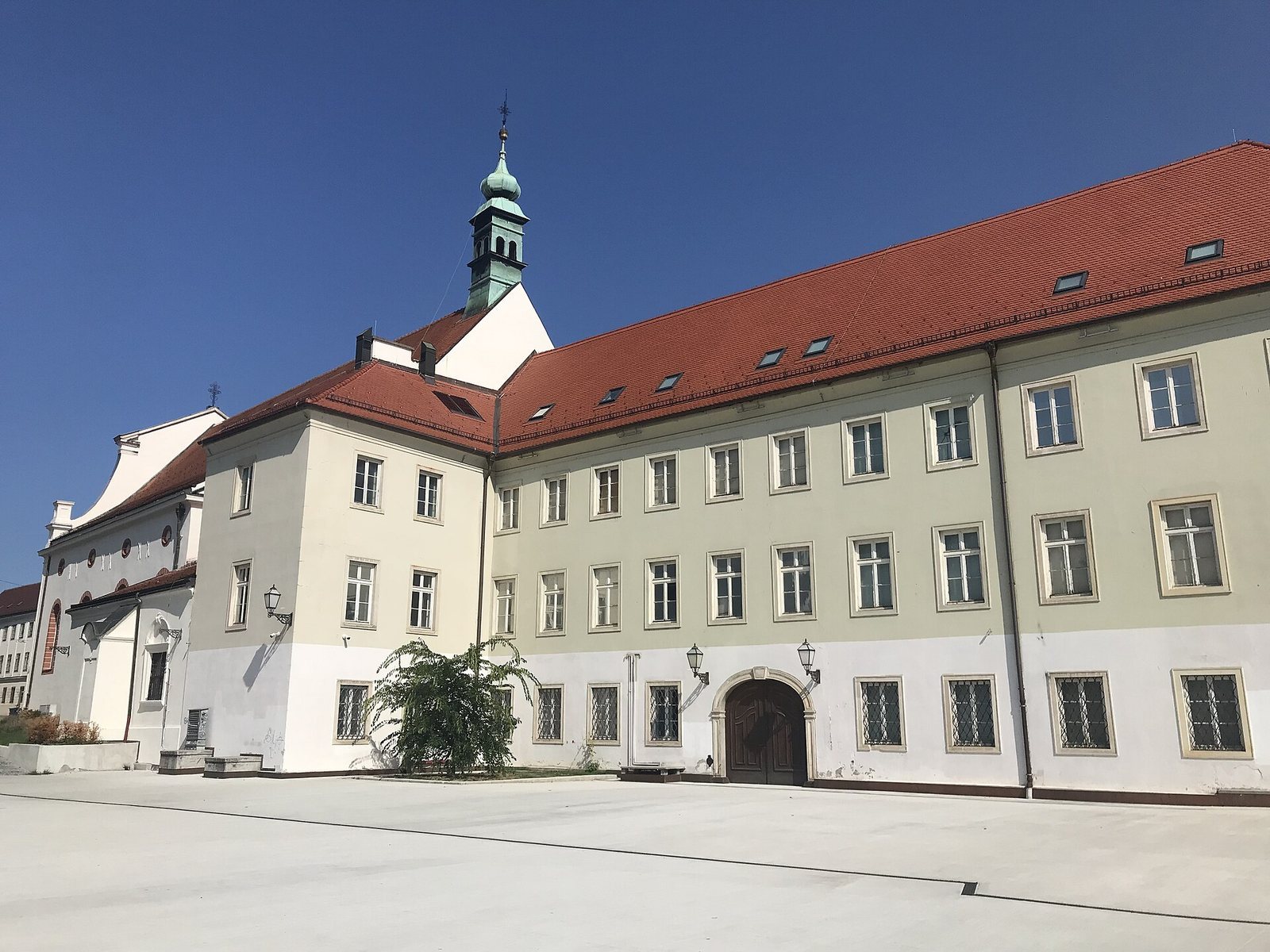
The monastery was built alongside the church. It now houses the Klovićevi Dvori Gallery.
Earthquake damage
On 22 March 2020, plaster and decorative plasterwork fell from the curved ceilings onto the choir area, main hall, and sanctuary, damaging the large wooden benches. Some ceiling sections sagged, and arches supporting the roof cracked. The marble altar in the Chapel of St. Ignatius was badly damaged; a statue of St. Francis Regis fell from it and broke. On 29 December, the ceiling above the sanctuary almost entirely collapsed onto and damaged the altar used for Mass. A chandelier fell, and the benches sustained further damage.