Psacha Monastery: A 14th-Century Orthodox Monastic Complex in North Macedonia
Site at a Glance
- Rating
- 4.9
- Popularity
- Low
- Country
- North Macedonia
- Primary era
- Medieval
- Eras represented
- Medieval
- Civilizations
- Serbian
- Site type
- Religious
- Remains
- Monastery
On this page6 sections
History
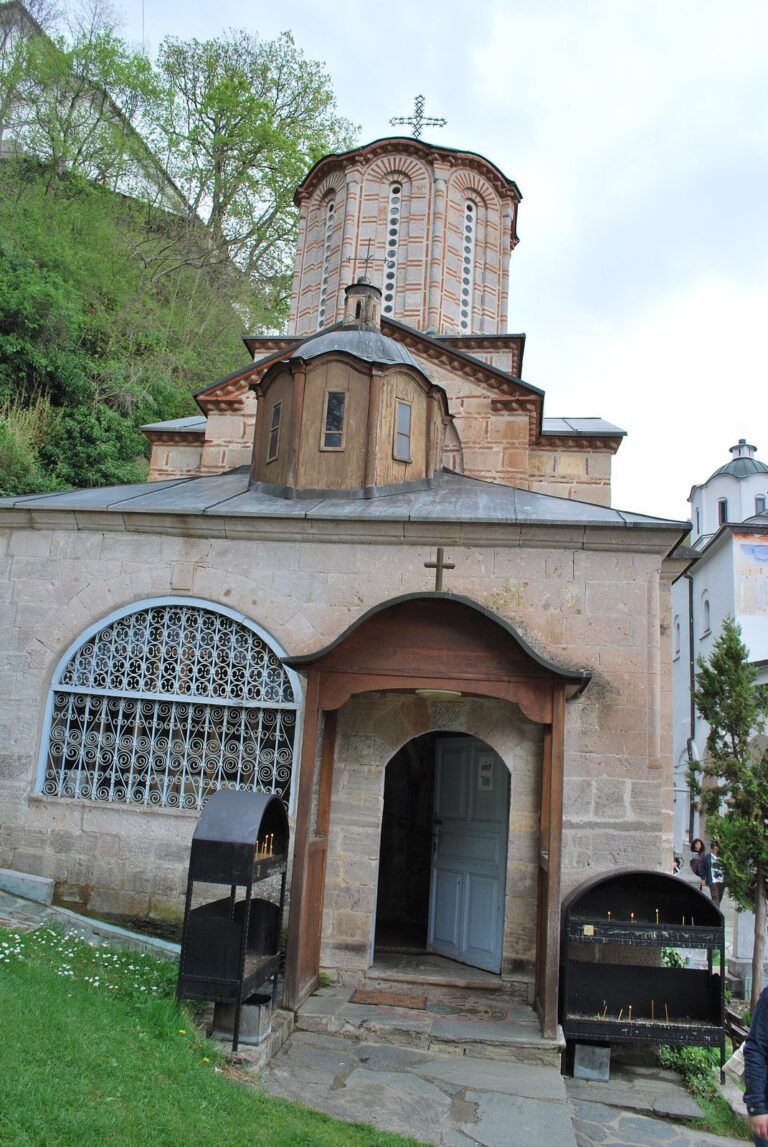
Psacha Monastery is an Orthodox monastic complex in the village of Psacha, North Macedonia. Its church was built around 1354 by Serbian noble Prince Paskach and his son Vlatko, during the Serbian Empire, a medieval Serbian state that existed from 1346 to 1371. The church is dedicated to Saint Nicholas the Wonderworker. The monastery belongs to the Macedonian Orthodox Church–Ohrid Archbishopric and is associated with the Kumanovo–Osogovo Diocese and the Fourth Kriva Palanka parish.
Founders and endowment
Paskach was lord of the Stracin region, which included Psacha. Vlatko held the rank of sebastokrator, a high court title in the Serbian Empire. His marriage to Vladislava, a member of the prominent Mrnjavčević ruling family, is linked to his rise to that rank. A charter dated 25 March 1358 named the church and its founders and authorized its donation to Hilandar Monastery, a Serbian Orthodox monastery on Mount Athos.
Frescoes and later history
The church’s painted rulers reflected political relationships in the Serbian Empire. Emperor Uroš, also known as Stefan Uroš V, and King Vukašin appear as co-rulers, with Vukašin positioned to Uroš’s right in a composition that conveys their hierarchy. During the Serbian–Ottoman War of 1876, an inscription above the western entrance that named the rulers was destroyed, and their names were erased from paintings on the north wall.
In June 1914, Serbian philologist and historian Ljubomir Stojanović and a group of scholars studied and photographed the monastery’s frescoes. In 1927, copies of paintings from Psacha, including images of Vukašin and his son Marko, a medieval Serbian prince, decorated the ceremonial hall of a university in Belgrade during a congress of Byzantine studies.
Remains
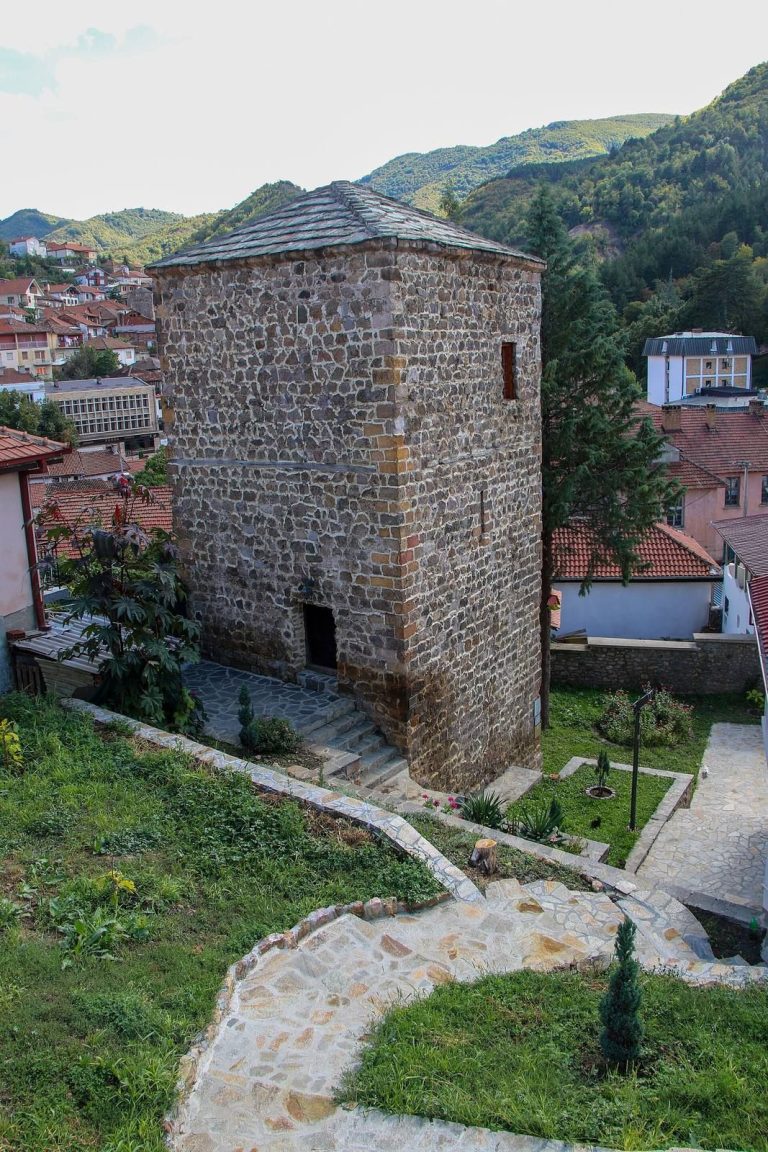
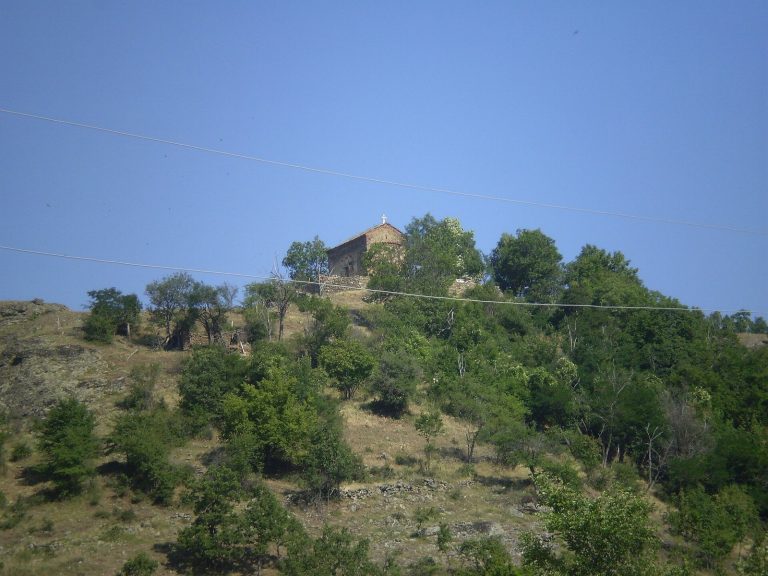
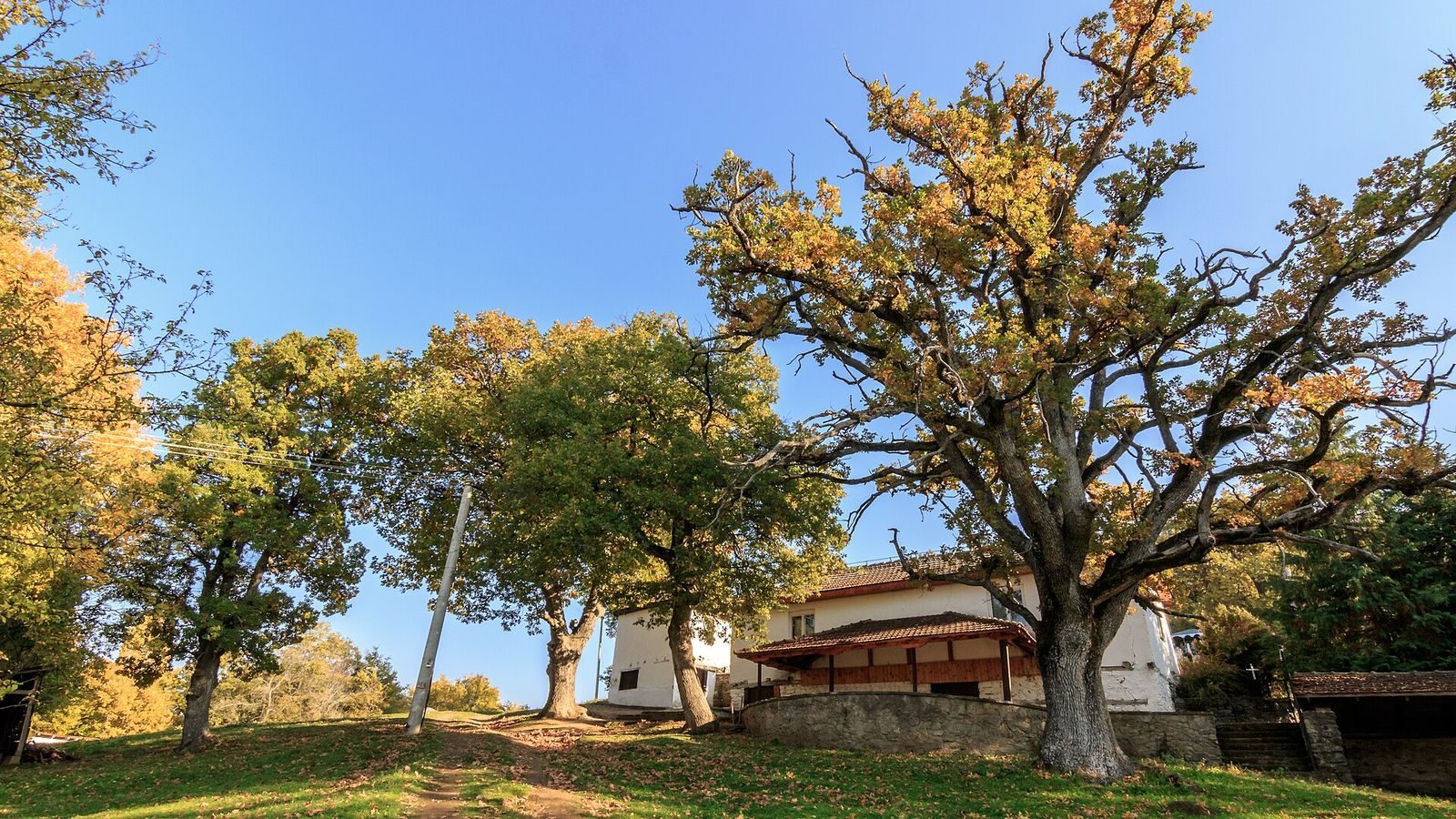
The monastery stands on a wooded rise above Psacha, overlooking Slavishko Field. Its surviving complex includes the church, monks’ quarters, a refectory, a bell tower, a courtyard and a cemetery. Old oak trees also stand in the courtyard.
Church architecture
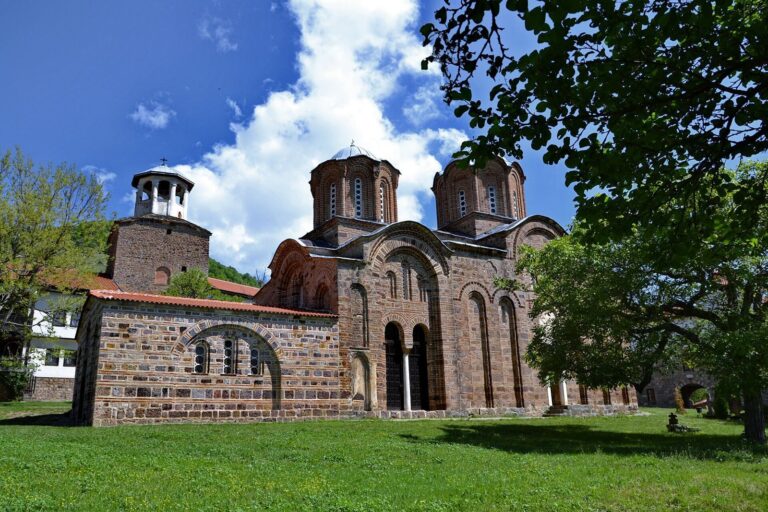
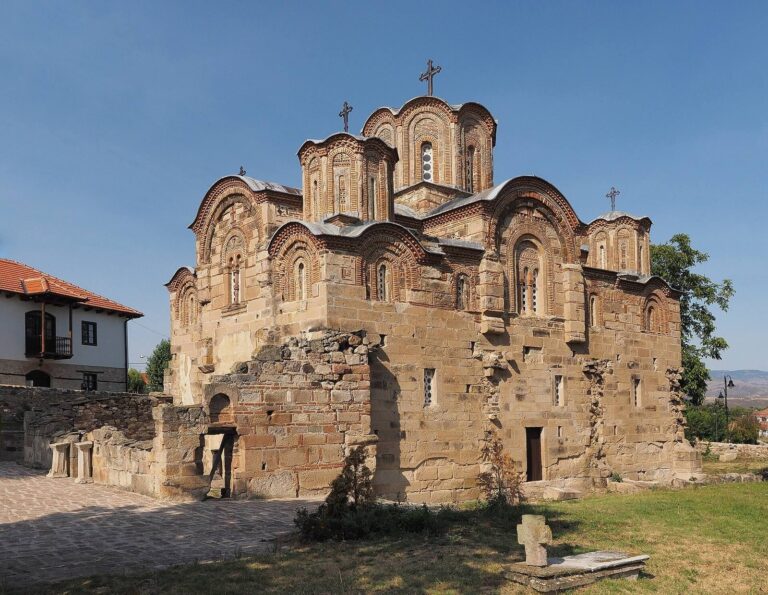
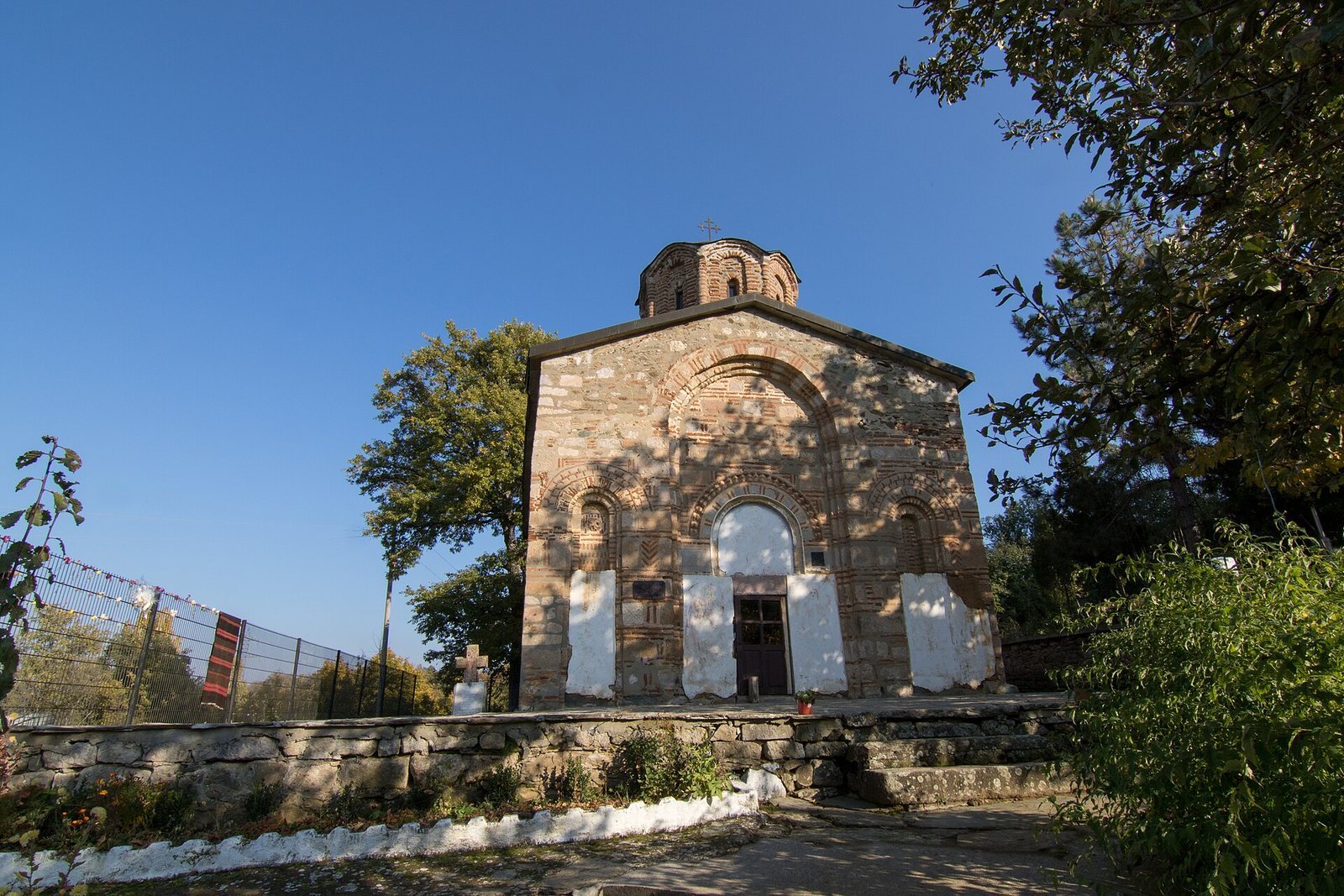
The church has an elongated inscribed-cross plan, with the arms of the cross set within a rectangular outline. Its original design included a central dome supported by four pillars and another dome above the narthex, the entrance vestibule. One dome was later removed, and the church now resembles a building with three aisles. At the east end, a three-sided apse projects from the structure. The walls combine stone and brick, and the roof is made of stone slabs. Elements of the church’s original architecture and painted decoration survive.
Frescoes
Painted between 1365 and 1371, the frescoes are noted for their fine detail, lifelike compositions and portraits. A donor portrait on the south wall shows Paskach and Princess Ozra, Vlatko and Vladislava, and their three sons, Stefan, Uroš and Uglješa. The north wall preserves portraits of Emperor Uroš and King Vukašin. Other paintings include scenes from the life of Saint Nicholas, the Dormition of the Theotokos, depicting Mary’s death, and the Communion of the Apostles, showing the apostles receiving communion. Figures include Saints Joachim of Osogovo, Mercurius, Clement of Ohrid, Achillius and Dionysius, as well as Constantine and Helena.