Reading Minster: The Historic Church of St Mary the Virgin
Site at a Glance
- Rating
- 4.7
- Popularity
- Medium
- Country
- United Kingdom
- Primary era
- Medieval
- Eras represented
- Medieval, Early Modern, Modern
- Civilizations
- Anglo-Saxon, British, English, Norman
- Site type
- Religious
- Remains
- Church
On this page14 sections
History
Reading Minster, also known as the Minster Church of St Mary the Virgin, is a church in Reading, United Kingdom, and the town’s oldest ecclesiastical foundation. A minster is a church with historical or regional importance, not a cathedral. The church has a Gothic design, and its principal body is dated to the late 11th century.
Early churches and the royal nunnery
The beginnings of worship at the site are uncertain. An unverified tradition connects a small chapel there with St Birinus, a 7th-century Christian missionary and bishop. A small church is also dated to the 8th or 9th century. In 979, Queen Ælfthryth founded a royal nunnery at the site as an act of repentance for the murder of her stepson, King Edward the Martyr.
During the 9th century, Reading was a place of conflict between the Danes and the West Saxon kings Ethelred and Alfred. At this time the town was supplanting Silchester as the local centre of importance. Silver coins from the 9th century found in the churchyard belong to this period.
Reading Abbey and the medieval church
The Danes sacked Reading in the 11th century and destroyed the nunnery. By the time the Domesday Book, a survey of English landholding and resources commissioned by William the Conqueror in 1085–86, was compiled, William had granted the church to Battle Abbey. The church’s principal body is dated to the late 11th century. In 1179, the vicar William de Lincoln likely initiated work associated with the present church.
In 1121, Henry I founded Reading Abbey, which grew into a major religious and political centre. For about four centuries the abbey held ecclesiastical authority in the town, and its abbot also served as rector, the cleric responsible for St Mary’s parish. In 1371, Edward III established a chantry for the chapel, an endowment supporting prayers and religious services for the dead. Reading’s mayor administered it.
Dissolution and later restoration
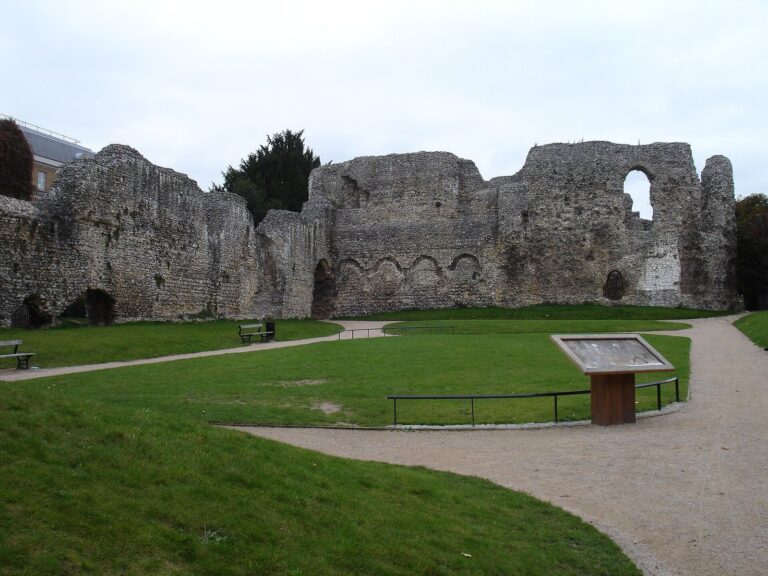
Henry VIII ordered the dissolution of Reading Abbey in 1539. During the English Reformation, the 16th-century transformation that established the Church of England’s independence from papal authority, St Mary’s lost its altar, statues and stained glass. By 1550 it needed extensive repairs. From 1551 to 1555, it was extensively restored with masonry and timber taken from the abbey ruins, including material from the abbey church’s choir and nave roof. After the abbey’s dissolution, St Mary’s became a parish church and later regained its standing in Reading following the abbey’s destruction.
Further restoration took place in 1863, when a new choir aisle was added, and in 1872, 1935 and 1997–2003. St Edwards Chapel, a war memorial chapel, was added in 1918. Reading Minster is now an active Church of England parish in the Diocese of Oxford and the Archdeaconry of Berkshire. It is a Grade I listed building, the highest category of listed-building protection in England, reserved for buildings of exceptional interest. An organ restoration project began in the early 21st century.
Remains
Church plan and fabric
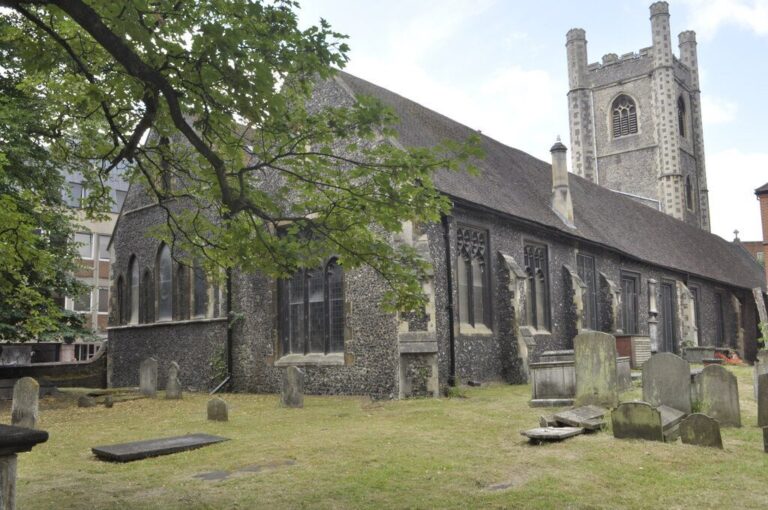
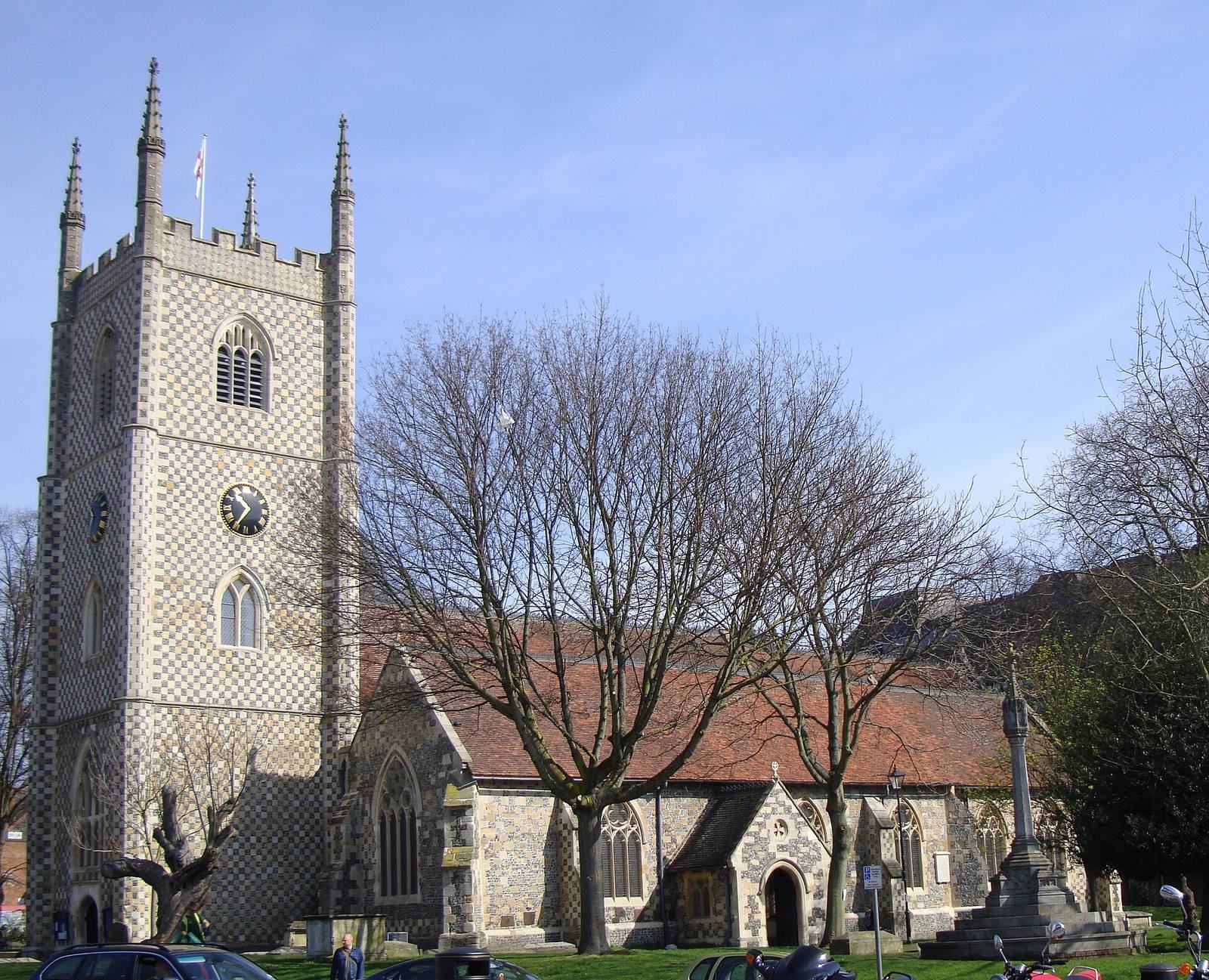
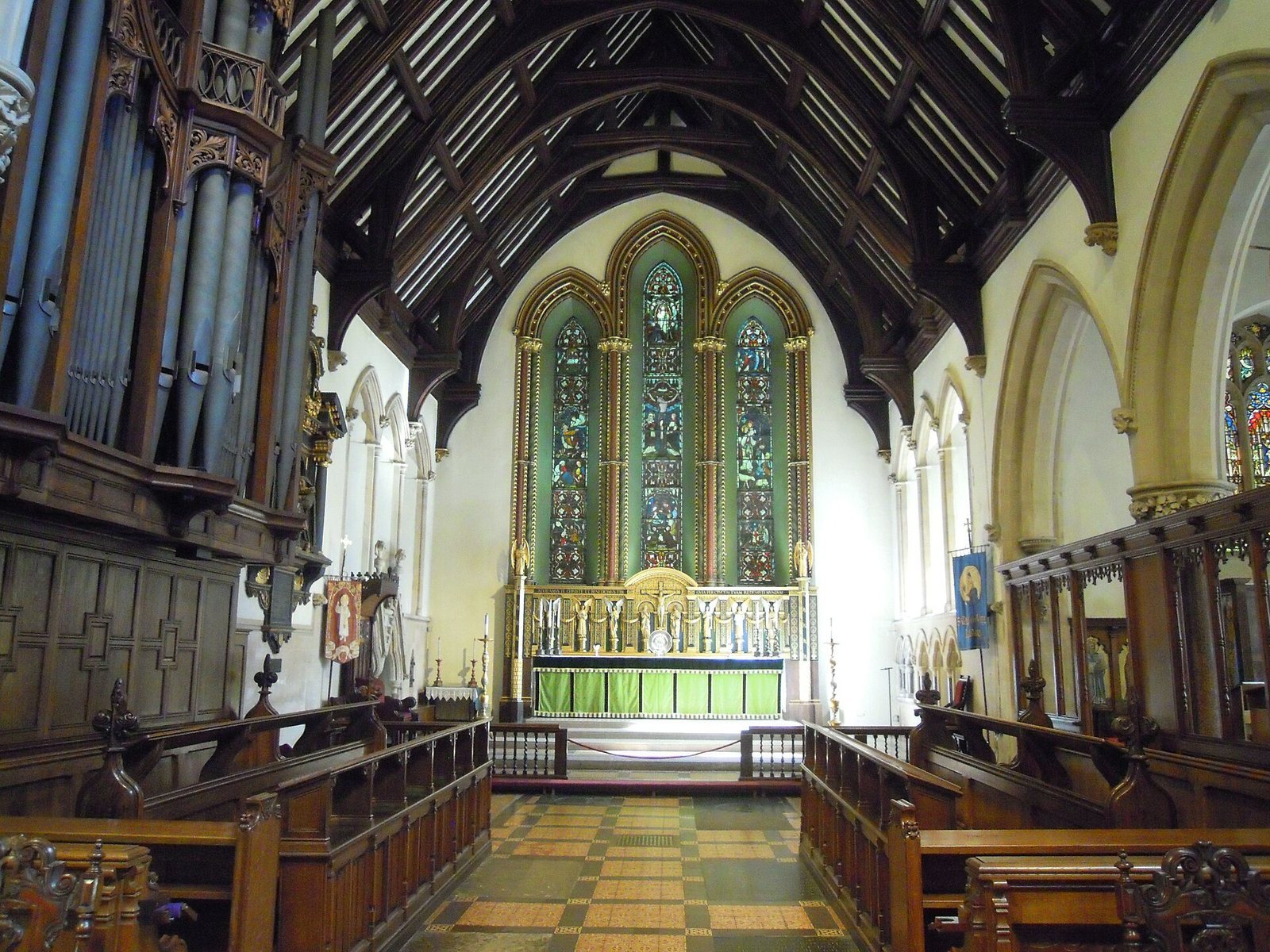
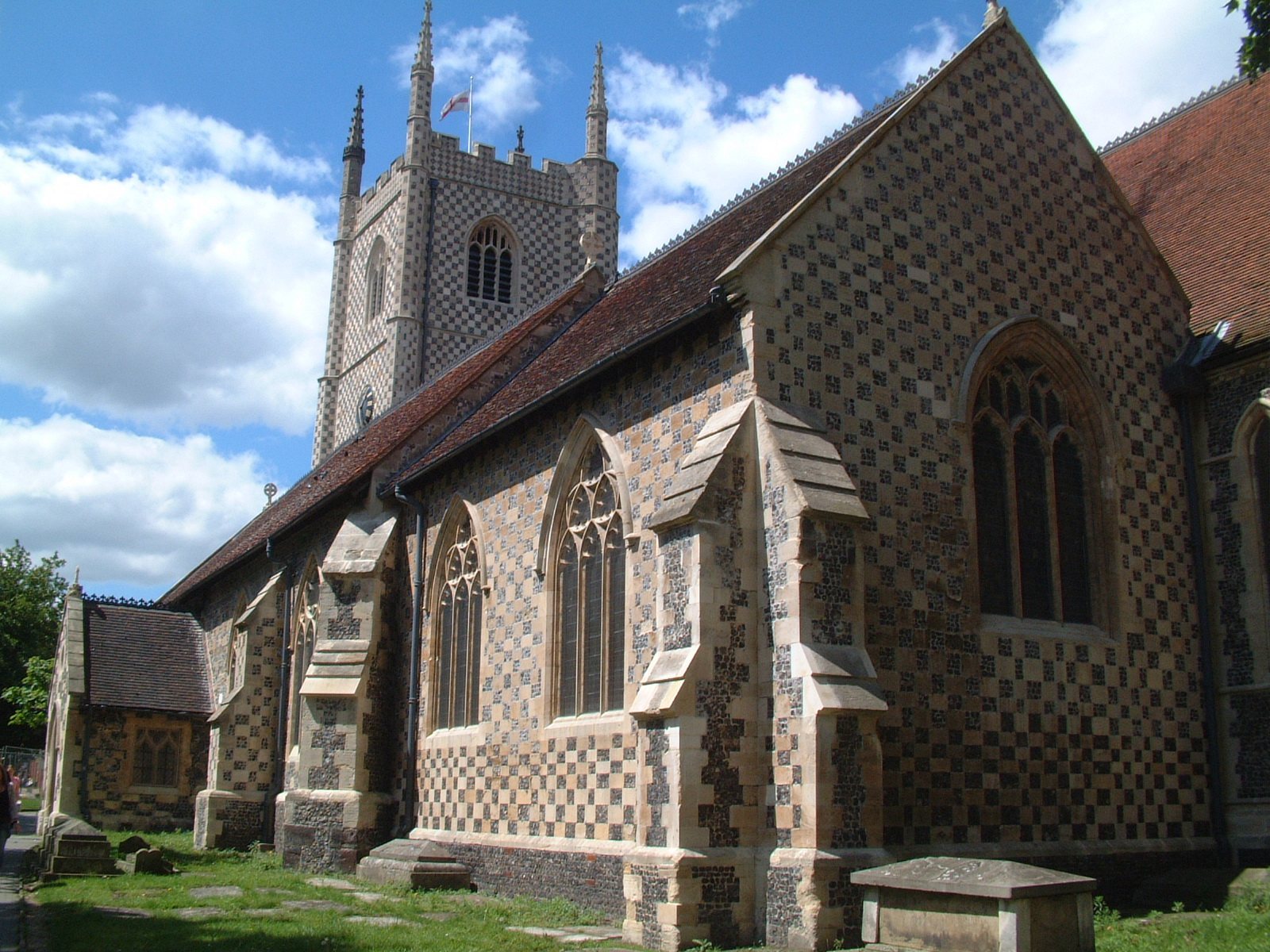
The Gothic church has a single nave, the main central space, with two aisles running alongside it. The aisles and bell tower were added in the 16th century. Timber structures span the nave and aisles, while the chancel, the area around the altar, has a flat end. A checkerboard pattern, probably dating from the 16th century, appears on the tower and exterior walls; the tower’s pattern combines flint and stone.
A rounded doorway from the Anglo-Saxon period survives from the nunnery and is thought to have been used by the nuns to attend church services. St Edwards Chapel is entered through it. Pillars separating the south aisle from the nave are believed to have come from Reading Abbey.
Interior furnishings and commemorations
Baptismal font
The octagonal font dates to 1616 and was donated by the Vachell family. It stands on the base of an earlier font and bears the arms of the Vachell, Knollys and Reades families, who intermarried. Some of its carved shields show Tudor roses, an emblem combining red and white roses, and were originally painted in heraldic colours used in coats of arms.
Kendricke monument
A black-and-gold monument dated 1635 stands on the north wall of the chancel. It commemorates William Kendricke, a churchwarden at the Minster from 1607 to 1610 and a substantial benefactor, and his wife.
Bells and clock
The present peal, a set of bells arranged for ringing, comprises seven bells: three dated 1640, two dated 1740 and two dated 1743. The tower’s first clock was installed in 1611.
Organ
Father Willis built the organ for the 1862 International Exhibition, and the same firm rebuilt it in 1936. By the early 21st century its pipes were corroded, its bellows damaged and its soundboards warped. The restoration project aimed to replace its air-supply system, electronics and keyboards.
Churchyard and Jubilee Cross
Churchyard
The churchyard extends south and east of the church. St Mary’s Butts, Gun Street, Chain Street and a footpath running between St Mary’s Butts and Chain Street along the rear of buildings facing Broad Street bound it. Other paths cross the grounds. The churchyard also contains notable trees, including an Indian bean tree estimated to be about 150 years old. Thought unlikely to survive in 2007, it later produced new growth.
Jubilee Cross
Erected in 1887 to mark Queen Victoria’s Golden Jubilee, the Jubilee Cross is made of Portland stone and designed in a 15th-century style. Its tapering octagonal shaft supports a cross. A few feet away, the Jubilee Drinking Fountain stands in the centre of St Mary’s Butts. The cross’s design may have responded to the nearby fountain, whose design was described as secular.