Achabal Gardens: A Mughal Garden in Kashmir
Site at a Glance
- Rating
- 4.4
- Popularity
- High
- Country
- India
- Primary era
- Early Modern
- Eras represented
- Early Modern, Modern
- Civilizations
- British, Mughal
- Site type
- Domestic
- Remains
- Park
On this page4 sections
History
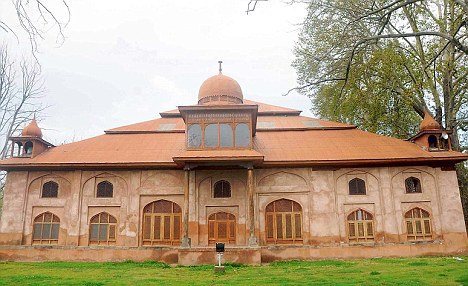
Achabal Gardens is a Mughal garden in Achabal, Anantnag district, India, built around 1620 by Nur Jahan, wife of Emperor Jahangir and a prominent figure at the Mughal court. The Mughal Empire was a South Asian empire ruled by a Muslim dynasty. The site may have been a Hindu sacred place before the garden was established.
Jahanara, a Mughal princess and daughter of Emperor Shah Jahan, remodeled the garden between 1634 and 1640. After a period of decay, Gulab Singh, Maharaja of Jammu and Kashmir, rebuilt it. Achabal Gardens is now a public garden.
A tradition links the garden’s spring to the Bringhi River. The river is said to disappear beneath a hill near Wani Divalgam, in Brang Pargana, a territorial division, and to emerge again at the spring. In a reputed test, chaff cast into the river where it vanished was said to appear at the spring.
Remains
Garden plan
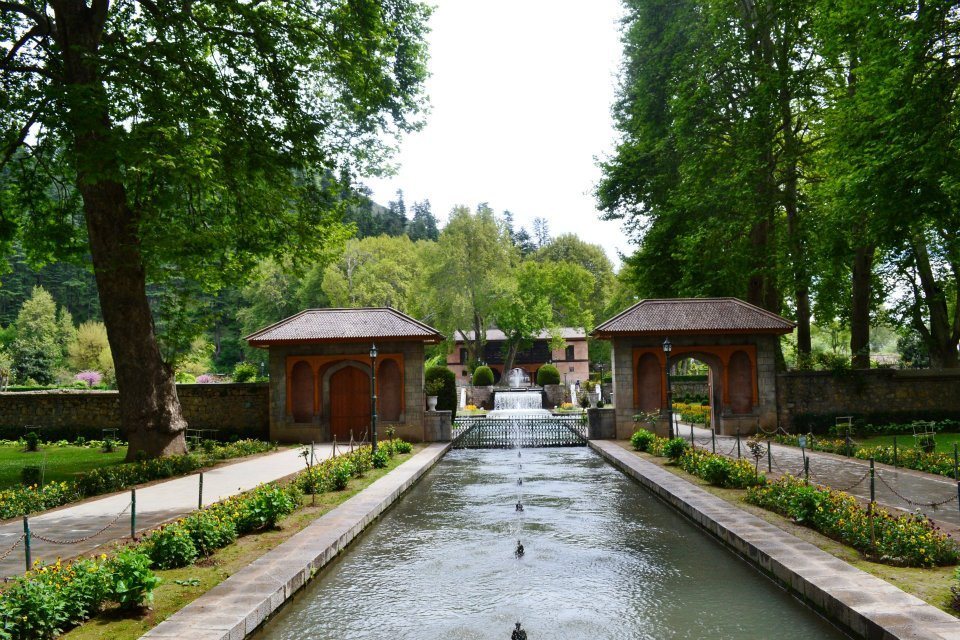
Achabal Gardens lies at the southeastern end of the Kashmir Valley, near the Himalayan Mountains. Its name is glossed as “the places of the princes.” The present garden measures 142 metres long and 14 metres wide, covering 1,952.4 square metres, and is slightly smaller than its original extent.
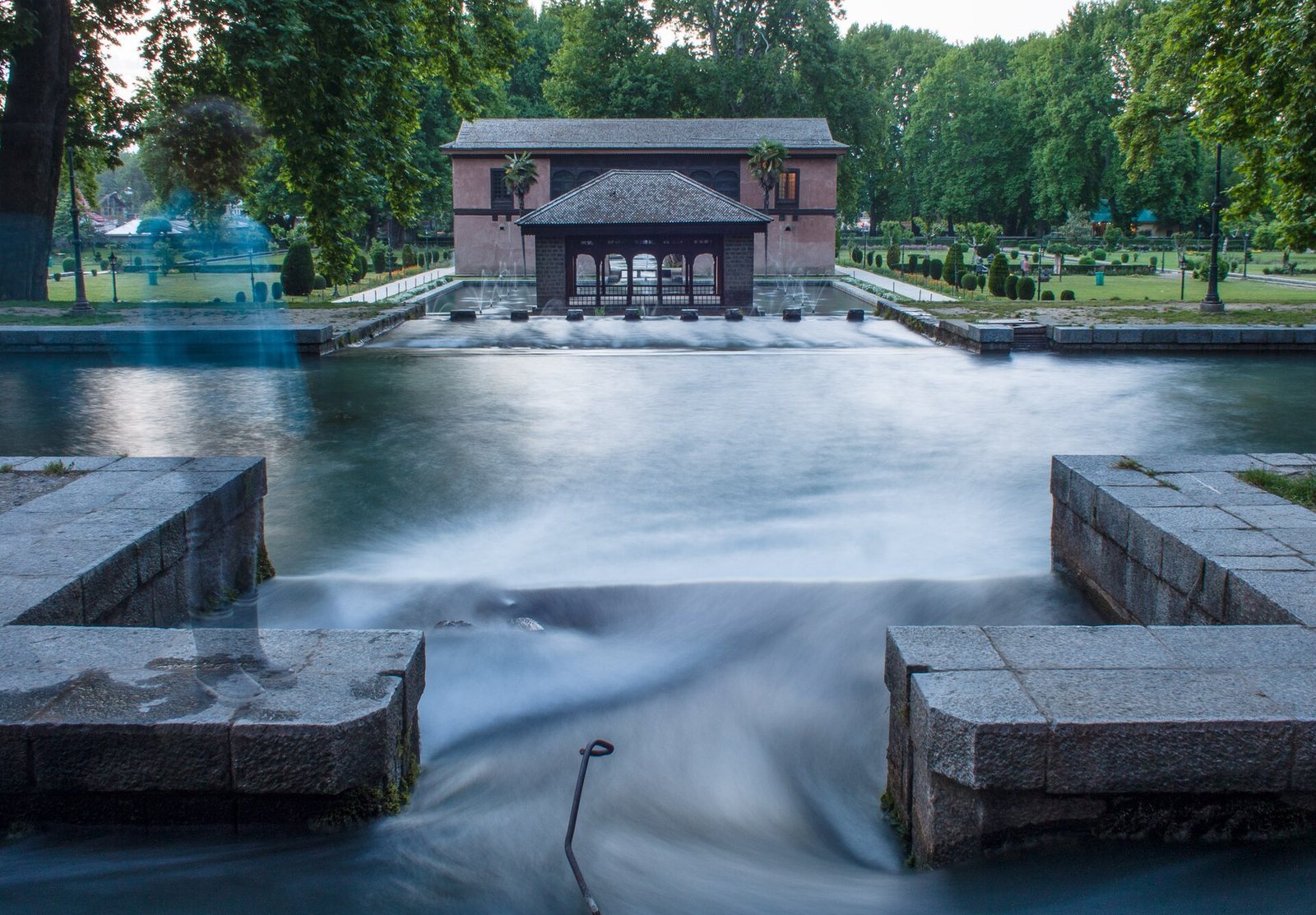
The design adapts the Persian charbagh (a garden divided into four parts) to sloping ground. Rather than placing the water source at the centre of a square plan, it locates it at the highest point. A central stream supplies the main watercourse, while other channels are reduced or omitted. In a conventional charbagh, four streams divide the garden, echoing Quranic descriptions of paradise with rivers of water, milk, honey and wine.
Spring and watercourse
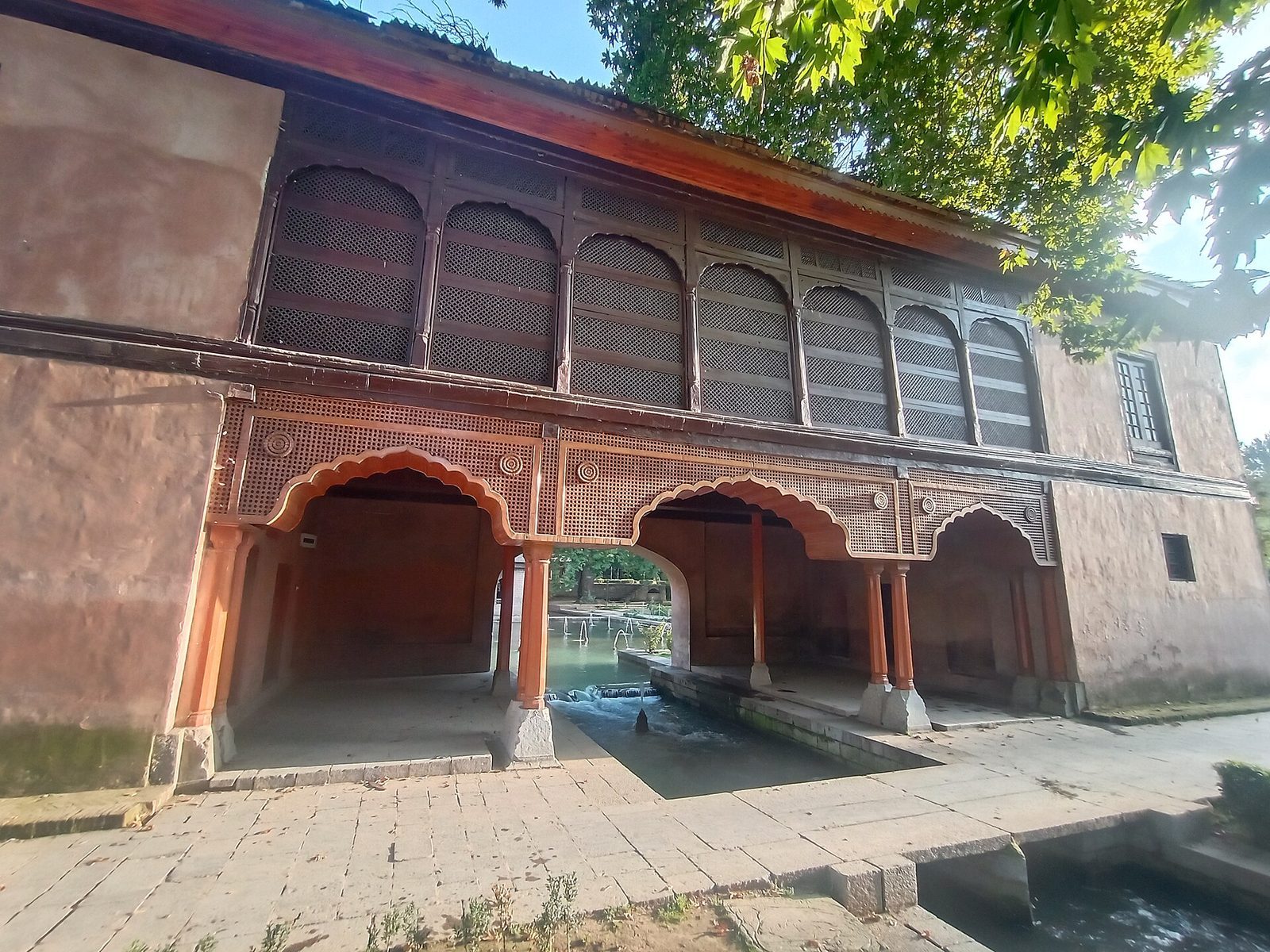
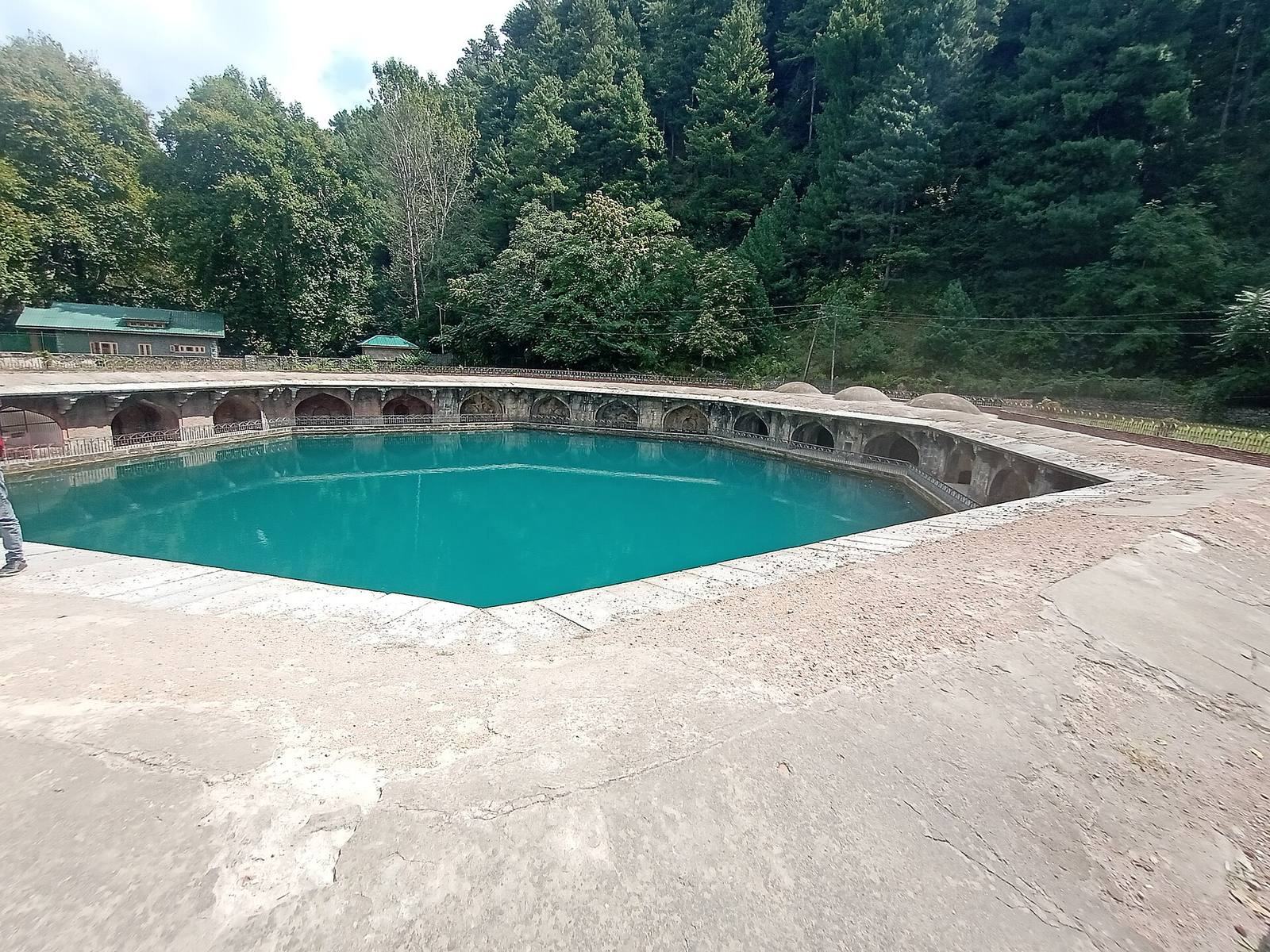
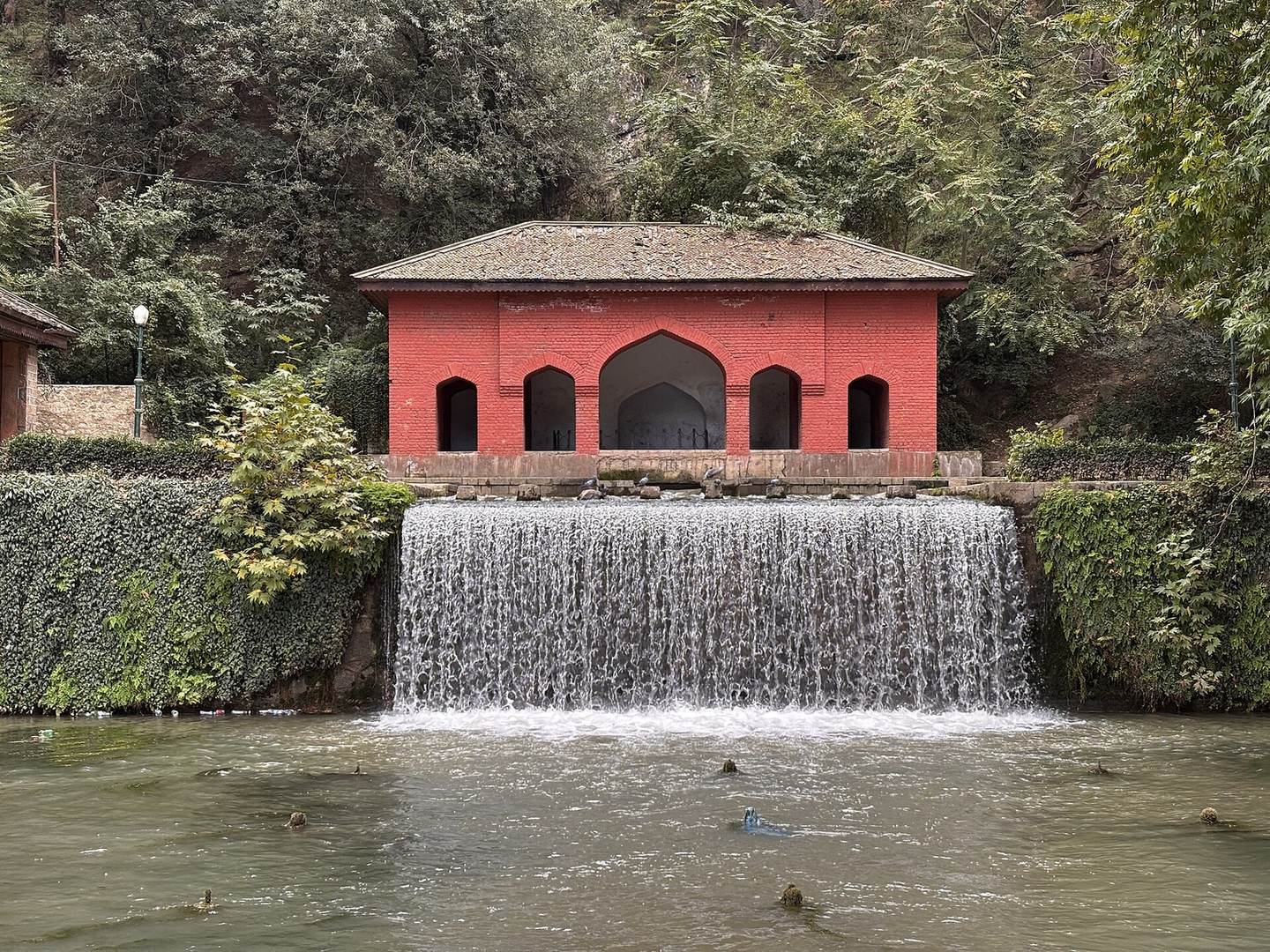
Water emerges at several points near the foot of a low spur densely covered with deodar, a cedar native to the Himalayan region. At one outlet, it gushes through an angled fissure large enough for a person to enter, forming an outflow about 18 inches high and 12 inches in diameter. A waterfall also feeds a pool within the garden.