St George in the East: An Anglican Parish Church in Wapping
Site at a Glance
- Rating
- 4.7
- Popularity
- Medium
- Country
- United Kingdom
- Primary era
- Early Modern
- Eras represented
- Early Modern, Modern
- Civilizations
- British
- Site type
- Religious
- Remains
- Church
On this page8 sections
History
Construction and parish foundations
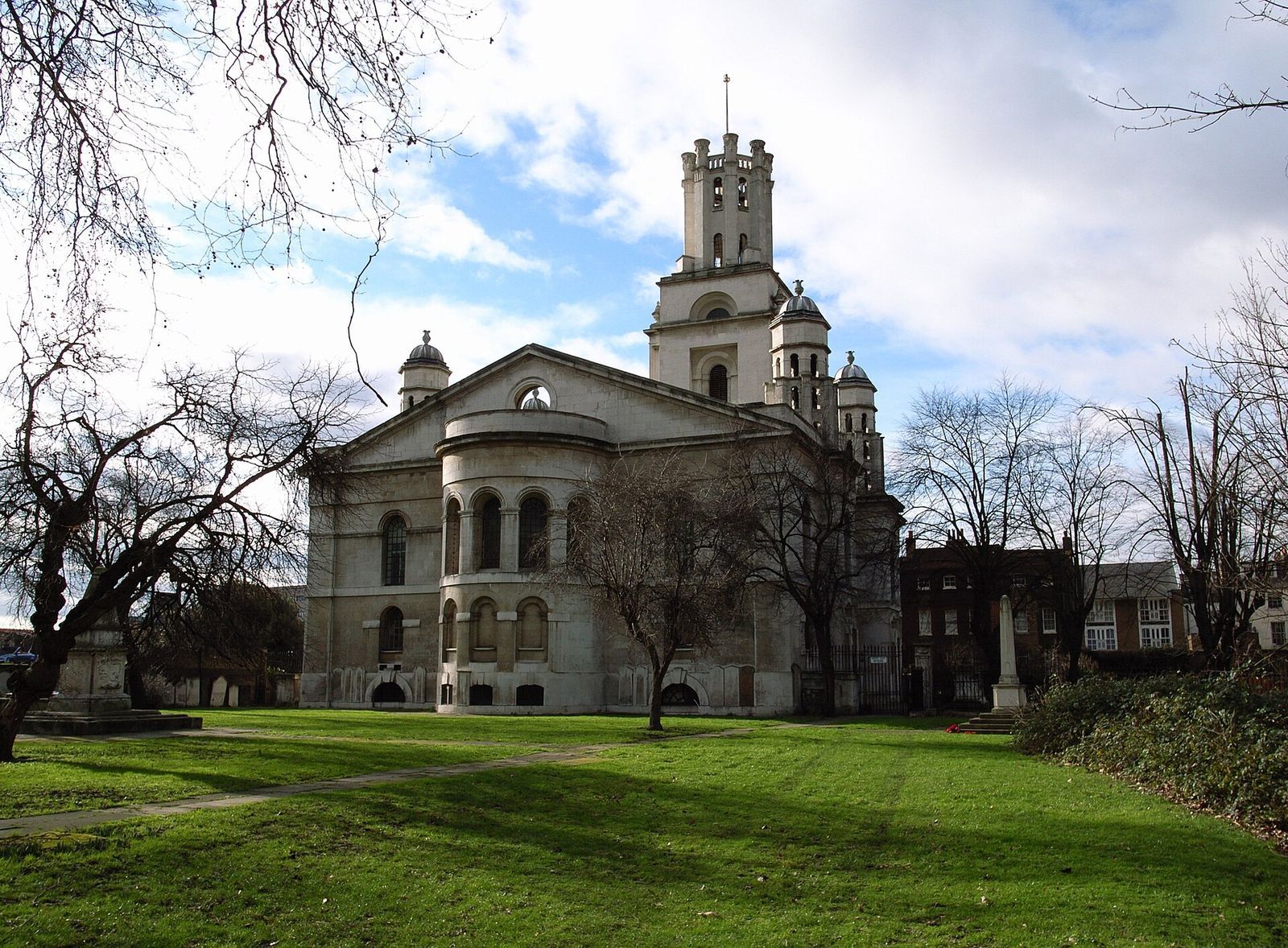
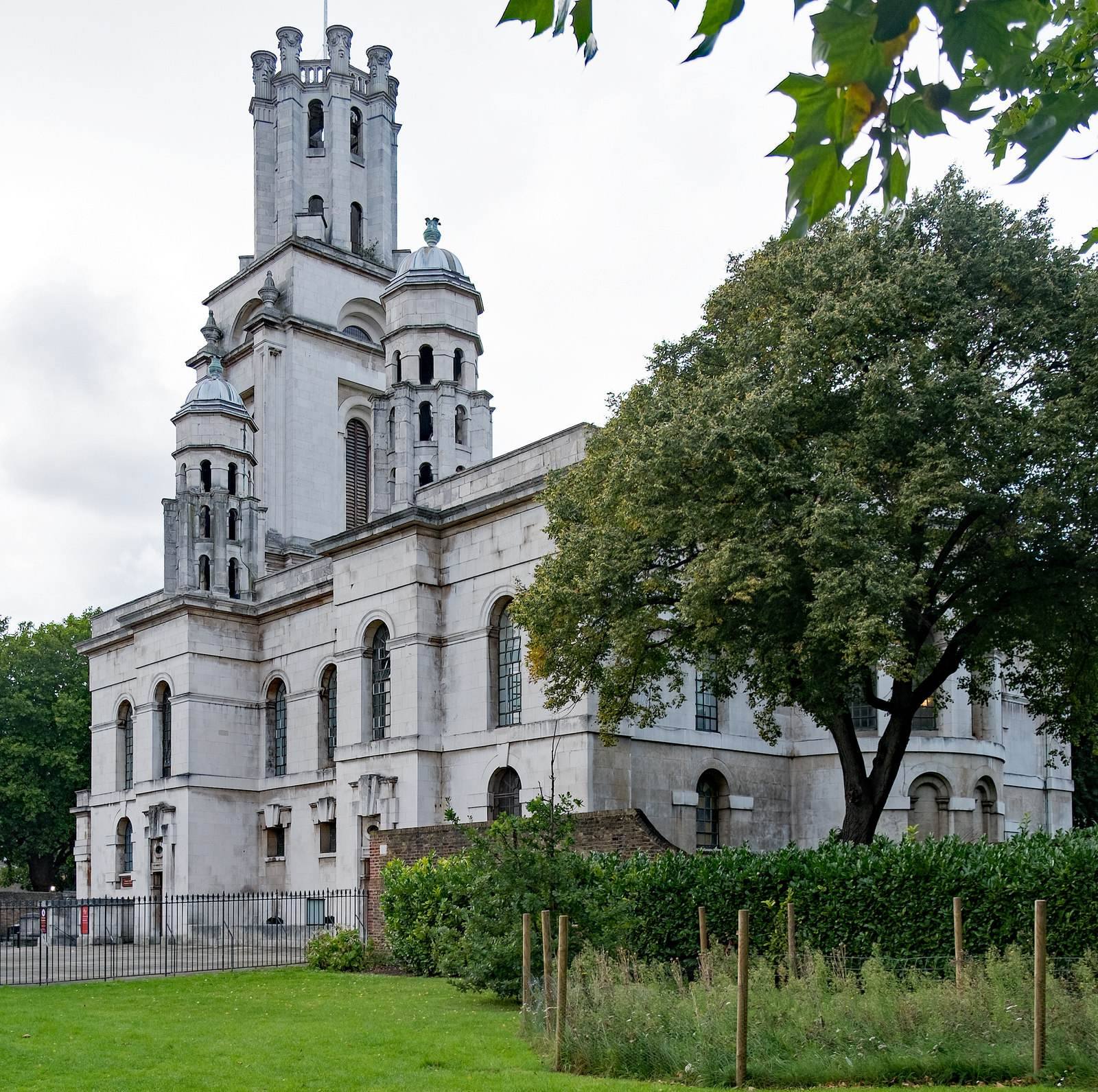
St George in the East is an Anglican Church of England parish church in Wapping, London, United Kingdom. Dedicated to Saint George, a Christian martyr venerated as a saint, it was built from 1714 to 1729 in the English Baroque style. The church formed part of a parliamentary programme established by the 1711 Act to build 50 new churches, and is one of six London churches designed by English architect Nicholas Hawksmoor. Its tradition is Anglo-Catholic, emphasizing Catholic heritage, liturgy, and sacramental practice within Anglicanism.
The church’s name was also used for an ecclesiastical parish and a civil parish, whose boundaries originally matched. The area had earlier been known as Wapping-Stepney, distinguishing it from Wapping-Whitechapel, which later became the parish of St John of Wapping. In 1836, the civil parish became a Poor Law parish, a local unit responsible for administering poor relief, under the Poor Law Amendment Act of 1834. As its responsibilities passed to the Metropolitan Borough of Stepney, the civil parish was abolished in 1927; the ecclesiastical parish continues.
Clergy and congregational life
William Simpson became the first rector in 1729, followed by Herbert Mayo in 1764. Mayo took a particular interest in local settled and transient seafaring Black and mixed-race communities. He baptized many people from these communities, and their attachment to him was noted.
In the 1850s, Archibald Campbell Tait, then Bishop of London, appointed a lecturer associated with Low Church Anglicanism, which placed less emphasis on Catholic tradition. The appointment opposed the High Church outlook of the rector, curate, and congregation, which gave greater weight to that tradition. Protests included catcalls and horn-blowing; some men attended with pipes, hats, and barking dogs, and refuse was thrown onto the altar. The church closed for a time in 1859. Because the rector was in poor health, author Thomas Hughes persuaded him to hand his duties to a temporary substitute clergyman.
Wartime damage and later changes
In May 1941, during the Blitz, the German bombing campaign against London, a bomb struck the church amid attacks on the city’s docklands. The resulting fire destroyed the original interior. The church received Grade I listed-building status in 1950, England’s highest category of listed-building protection.
A partnership with the ecumenical Centre for Theology and Community began in 2015. Its Anglican clergy serve the parish, while the Community of St George, a group of lay Christians, assists with worship and the church’s mission.
Remains
The church’s surviving fabric combines an English Baroque design with Classical, Palladian forms adapted from the work of Andrea Palladio, and Byzantine elements associated with the Eastern Roman Empire. Its exterior has a cubic mass, shaped by prominent projections.
Towers and exterior
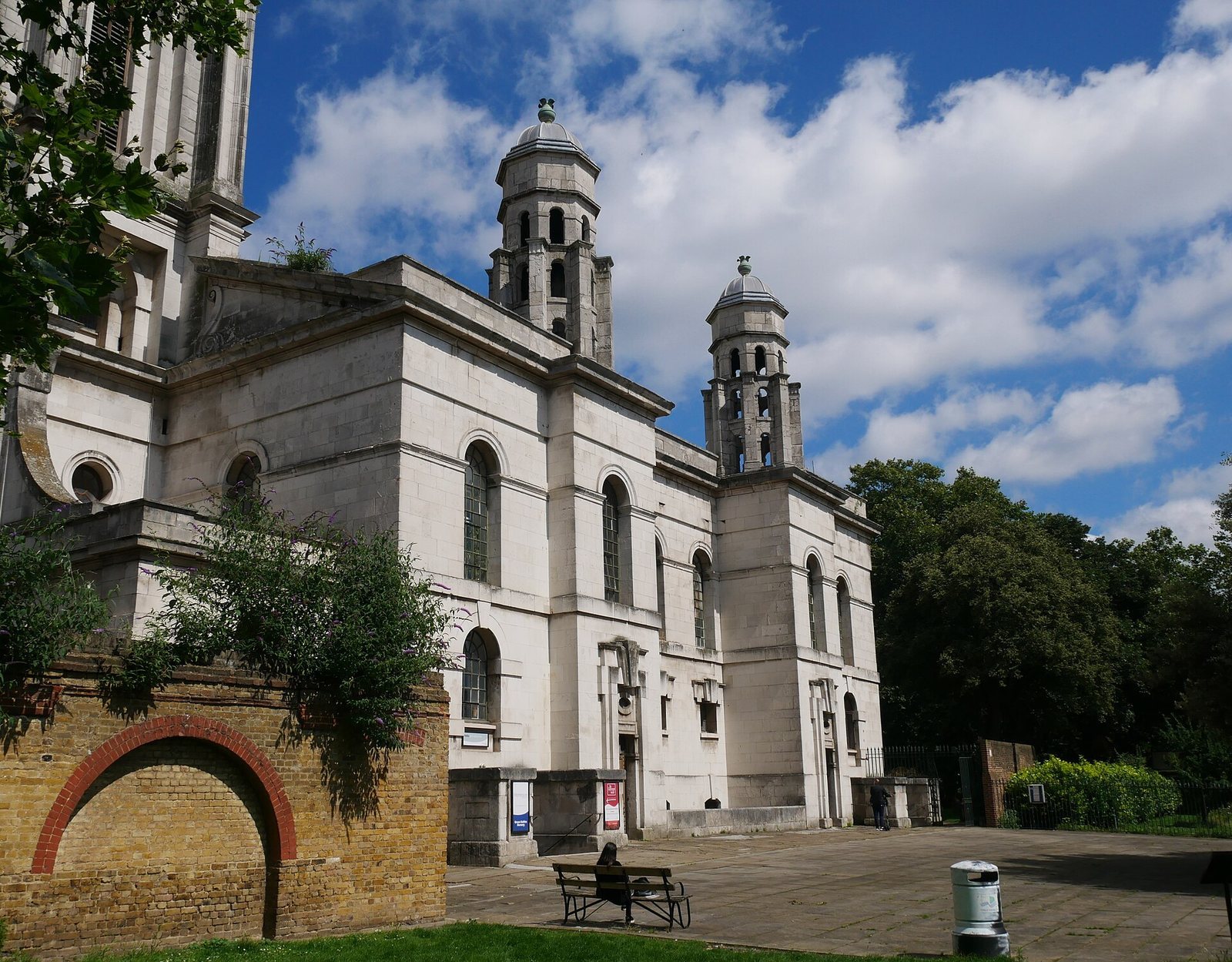
A large tower at the west end rises to an octagonal upper stage formed by buttresses. Its design draws on the Gothic upper level of Ely Cathedral, a major medieval English cathedral. Four stair towers give access to the galleries; their upper portions echo the main tower’s design and are capped with domes. These towers, described as “pepper-pot” towers, survived the 1941 bombing and fire, along with the church walls.
Interior and bells
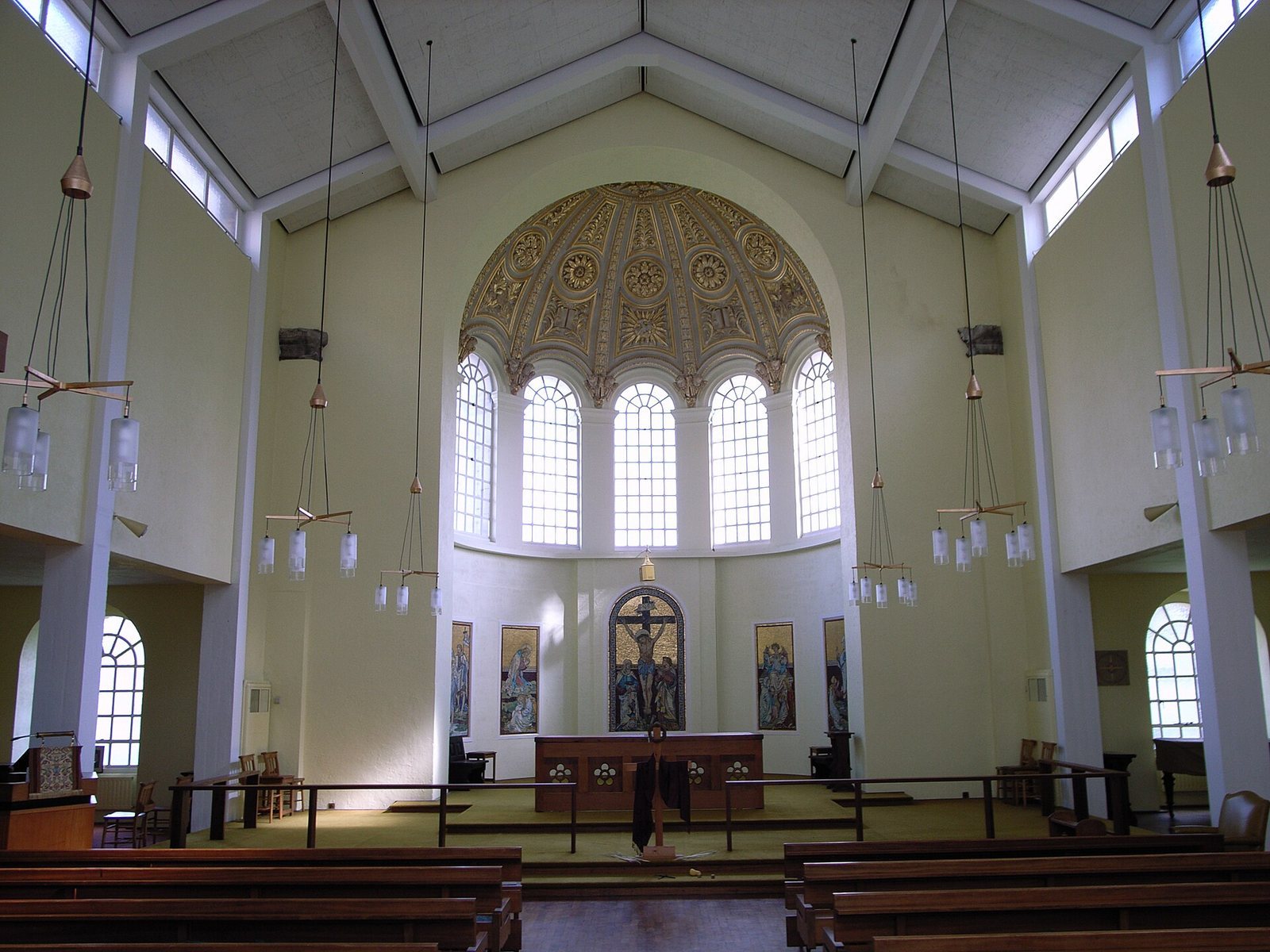
The original interior was arranged as a cross-shaped central space supported by four columns. A modern interior was built within the surviving walls in 1964, with a flat beneath each corner tower. That year, a set of eight replacement bells cast at the Whitechapel Bell Foundry was installed.
Crypt and upper floor
The East Crypt, a chamber beneath the church, is used by the Centre for Theology and Community. The Community of St George occupies the second floor.