Hunsdon House: A Tudor Royal Residence in Hertfordshire
Site at a Glance
- Popularity
- High
- Country
- United Kingdom
- Primary era
- Modern
- Eras represented
- Medieval, Early Modern, Modern
- Civilizations
- British, English
- Site type
- Domestic
- Remains
- Elite Residence
On this page5 sections
History
Foundation and dynastic conflict
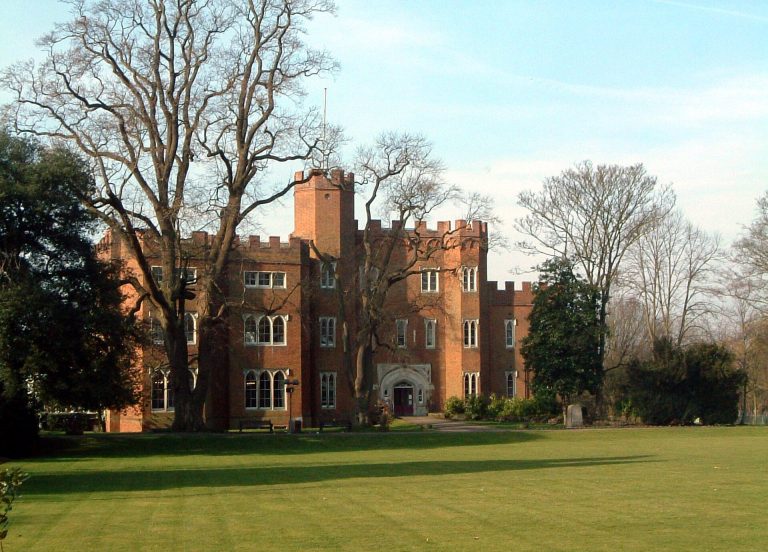
Hunsdon House is a historic residence in Hunsdon, Hertfordshire, United Kingdom, begun as a brick tower by Sir William Oldhall in 1447 and later expanded into a Tudor royal residence. Oldhall supported the House of York during the Wars of the Roses, a dynastic conflict between the Houses of York and Lancaster. Lancastrian king Henry VI took the property from him, but the Oldhall family recovered the land in 1471, when Yorkist king Edward IV returned to the throne.
John Oldhall died at the Battle of Bosworth, which marked the Lancastrian return to power. Henry VII, England’s first Tudor king, took control of the estate and in 1503 exchanged it with his mother, Margaret Beaufort, for Old Soar Manor in Kent. Margaret held Hunsdon until her death in 1509. In 1514, Henry VIII granted the property to Thomas Howard, 2nd Duke of Norfolk.
A Tudor royal residence
In 1524, Thomas Howard, 3rd Duke of Norfolk, lowered the tower for safety. Henry VIII resumed possession in 1525, after the death of the 2nd Duke, and greatly enlarged the house. It became a royal residence for the king’s children, particularly Mary. Henry also visited Hunsdon frequently and hunted in its deer park.
After Henry VIII died in 1547, Mary inherited the house and lived there often until she became queen in 1553. She kept it until her death. Edward, later Edward VI, also spent much time at Hunsdon. A portrait painted in 1546 shows him with the house behind him.
Carey ownership and later changes
In 1559, Elizabeth I granted Hunsdon to her cousin Henry Carey and made him the first Baron Hunsdon. The grant ended the house’s period as a royal residence. It remained in the Carey family for more than a century before passing first to the Bluck family and then to the Calvert family.
Much of Henry VIII’s expansion was demolished in the early 17th century, and the moat was filled during the 18th. The house was rebuilt at the beginning of the 19th century. In 1860, Nicolson Calvert’s renovations substantially changed its architecture in an Elizabethan style. Hunsdon House has been a Grade I listed building since 1951, the highest category in England’s heritage system, reserved for buildings of exceptional interest.
Remains
The house began as a brick tower and grew under Henry VIII into a much larger complex with royal apartments, a moat, and a deer park. Its present size is less than one-quarter of its Tudor-period size, reflecting the reduction of the earlier estate through demolition and rebuilding.
A renovation in 1983 revealed some of the house’s 15th-century brickwork, providing physical evidence of Oldhall’s original building within the repeatedly altered structure.