Benedictine Church of Villingen: A Baroque Monastery Church
Site at a Glance
- Rating
- 4.5
- Popularity
- Low
- Country
- Germany
- Primary era
- Early Modern
- Eras represented
- Early Modern, Modern
- Civilizations
- German, Habsburg, Habsburg Austria, Holy Roman Empire
- Site type
- Religious
- Remains
- Church
On this page6 sections
History
Foundation and planning
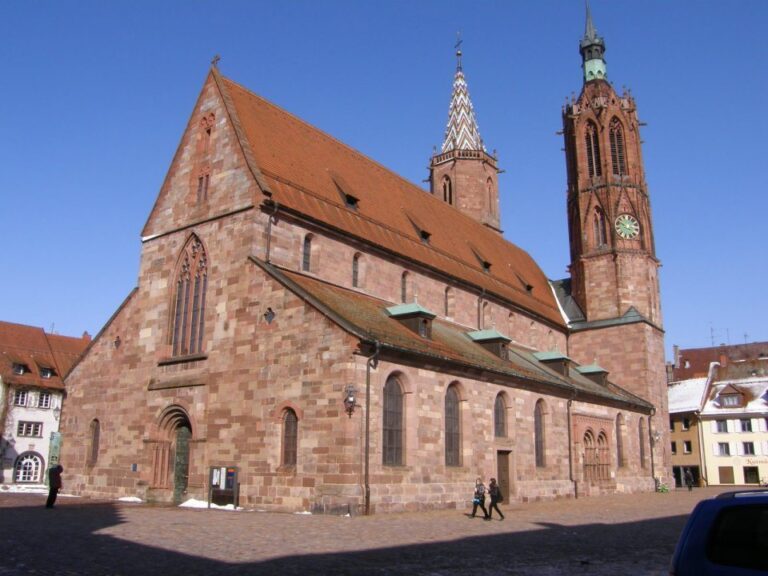
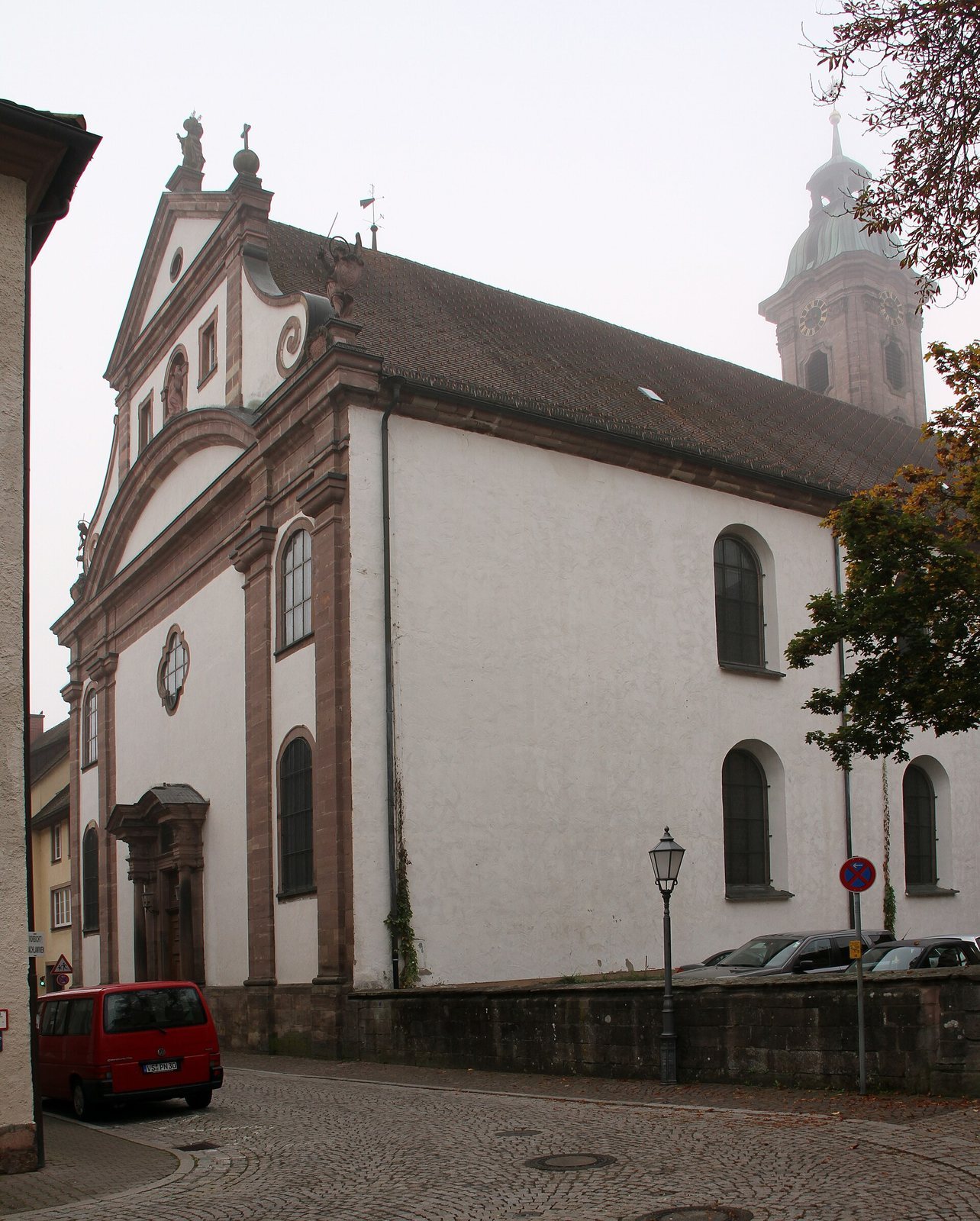
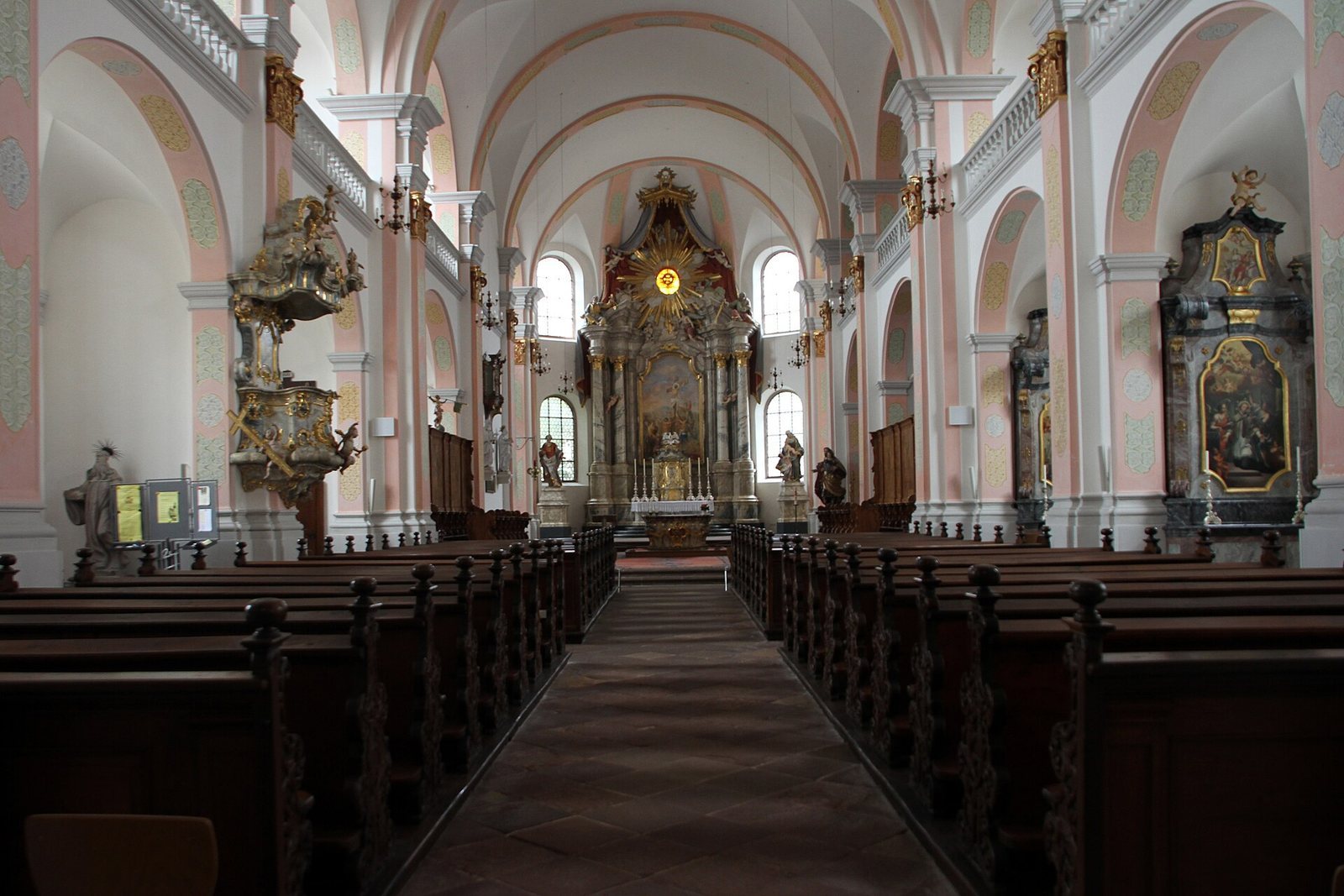
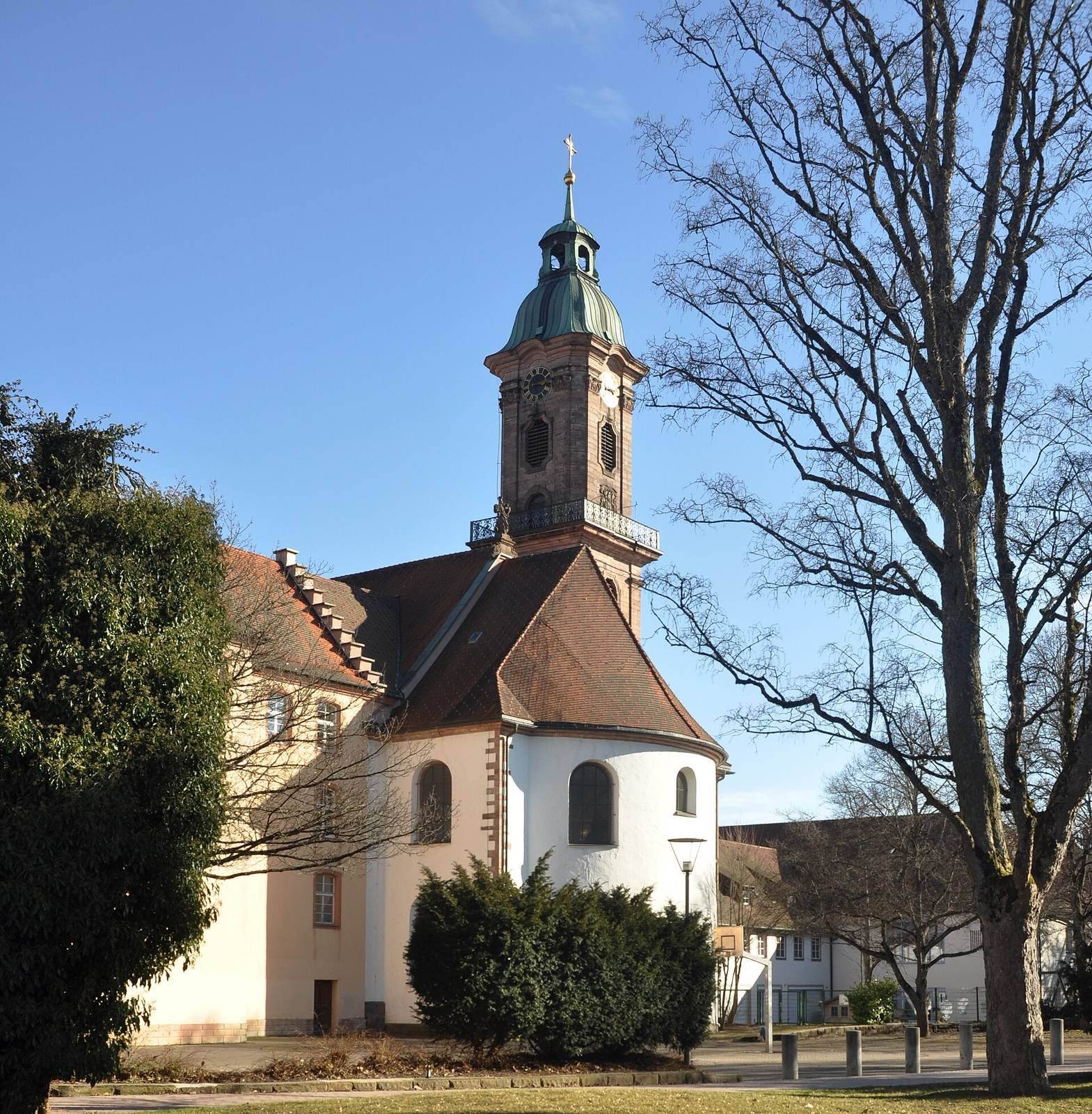
The Benedictine Church, known locally as the Benediktinerkirche, is a Catholic church in Villingen, within Villingen-Schwenningen, Germany. Built in the Baroque style, a European artistic and architectural style prominent in the seventeenth and eighteenth centuries, it served the town’s Benedictine monastery and was dedicated to St. George, a Christian martyr venerated as a saint. Construction began in 1688, and the church was consecrated in 1725.
The monastery and church were established after monks moved from St. Georgen Monastery in the Black Forest in response to the Reformation, a European religious movement that led to Protestant churches and major changes in religious institutions. The monks belonged to the Benedictine order, a Catholic monastic tradition whose communities follow the Rule of St. Benedict. They established their church on the site of an earlier monastic administrative estate.
In 1685, Abbot Georg III Gaißer, the monastery’s head, began by arranging repairs to the convent building. He engaged Kilian Stauffer, a lay brother whose role in the community was distinct from that of choir monks, to prepare an initial drawing. The following year, Gaißer chose a larger plan for a new monastic complex that included a church.
The monastery sought advice from Columban Summerberger, a master builder at Zwiefalten, who appears to have referred the community to an architect. The architect visited in June 1687 and advised on the design. Sculptor Johann Pöllandt brought in another architect, whom Gaißer apparently appointed construction manager. Franciscus Demer, recommended from St. Peter’s Monastery in the Black Forest, also advised on the project. Work on the foundations began on 5 May 1688, and Abbot Romanus Vogler laid the foundation stone on 16 May. In 1690, master carpenter Conrad Handtmann received the contract for the roof framing.
Completion and later use
War-related disruption delayed completion and interior work until 1719. Auxiliary Bishop Franz Johann Anton von Syrgenstein, an assistant to a diocesan bishop rather than the head of the diocese, consecrated the church on 24 October 1725.
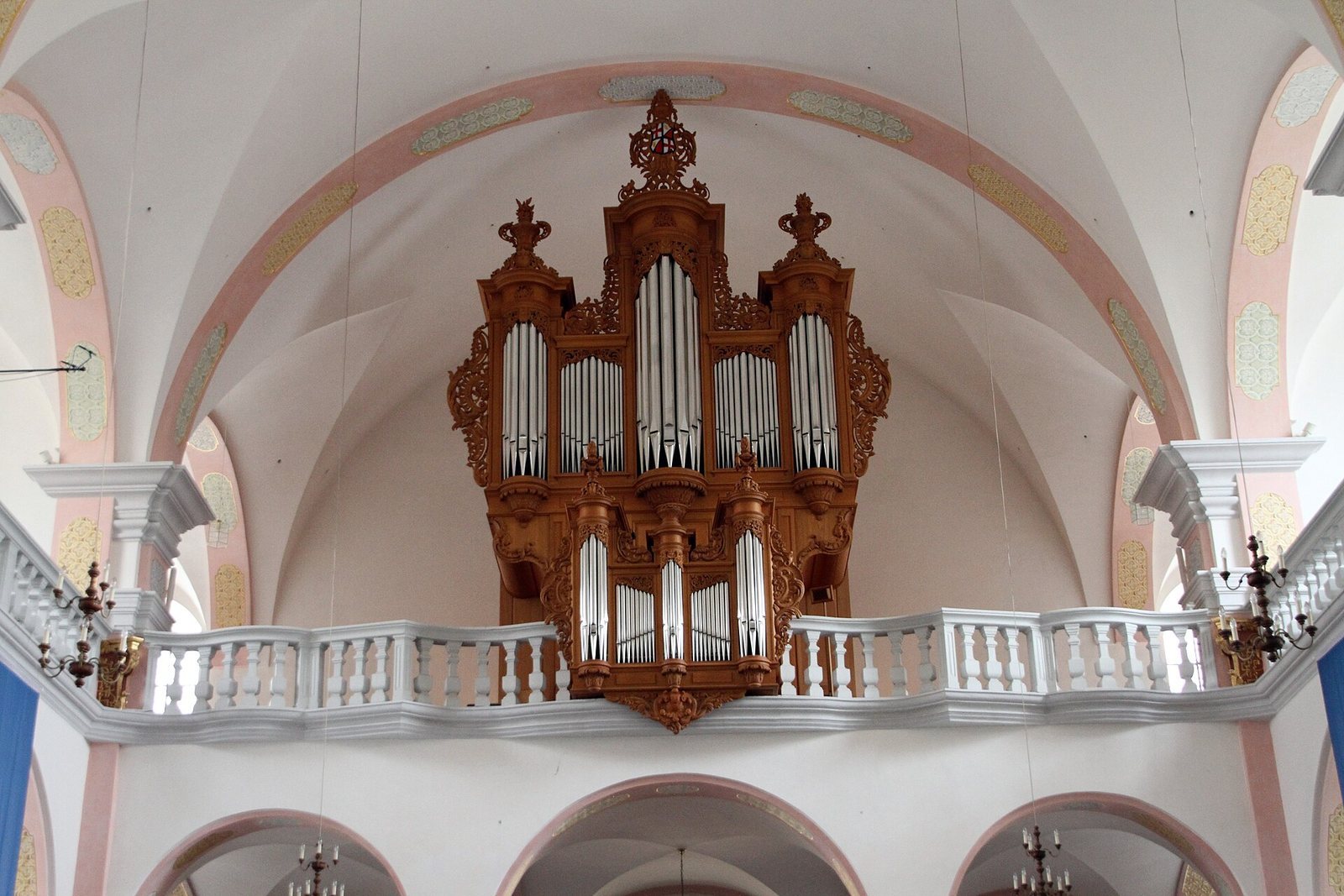
Johann Andreas Silbermann and Johann Daniel Silbermann built an organ for the church in 1752, and the Grüninger bell foundry supplied bells in 1767. After the monastery was dissolved, the church was used mainly for storage; nearly all its fittings and its bells were removed. Worship resumed in 1902, and Friedrich Wilhelm Schilling supplied five new bells in 1958. In 2002, organ builder Gaston Kern made a reconstruction of the 1752 Silbermann organ using its earlier design.
Remains
Church and tower
The church is a Baroque building with a tower that was first carried only to the height of the church roof. The tower was raised and completed in 1755–1756. It is capped by an onion dome, a bulbous, tapering roof form, with a lantern, a small structure above a dome that can admit light. A finial, or decorative top-piece, and a tower knob also form part of its upper structure.
Organ
The reconstructed organ has 35 stops, which control groups of pipes, across three hand-played keyboards called manuals and a pedal division played with the feet. Its third manual, the Echo division, is a quieter section used for echo effects and is split into bass and treble ranges, C to B0 and C1 to D3. The instrument uses a slider chest, a windchest where sliding strips direct air to selected pipes. Its key and stop actions are mechanical, and three wedge bellows, each with seven folds, supply wind. The organ is tuned in equal temperament, which divides an octave into equal semitones, at A1 = 415 Hz. A sliding coupler links manuals I and II, while another connects manual II to the pedal division.