Çengel Han: An Ottoman Commercial Inn in Ankara
Site at a Glance
- Rating
- 5
- Popularity
- Very Low
- Country
- Turkey
- Primary era
- Early Modern
- Eras represented
- Early Modern
- Civilizations
- Ottoman
- Site type
- Economic
- Remains
- Caravanserai
On this page6 sections
History
Foundation and Ottoman trade
Çengel Han is a classical Ottoman commercial inn in Ankara, Turkey, built in 1522–1523 by Rüstem Pasha, an Ottoman statesman and husband of Princess Mihrimah Sultan. The han is identified as having been named for Rüstem Pasha. During the Ottoman period, it served as an important trading center on the Silk Road, a network of routes linking East Asia with western Asia and the Mediterranean world. Anatolian caravans frequented the building.
Its sturdy walls made the han suitable for storage. It was used for a long period to store mohair, and later 18–20 tenants, including members of Ankara’s Kınacı and Bulgurlu families, stored food such as rice there. A local story says that thieves and murderers caught in Atpazarı or Hergelen Square were hanged from a hook in the courtyard, and that this practice made the building famous.
Ownership and reuse
In the 1980s, the High Council for the Protection of Cultural and Natural Assets, a Turkish heritage-protection body, recognized the han as an old monument requiring protection. Raife Kocabeyoğlu-Öngen owned it until it was expropriated. After her death in 1990, ownership passed to her children, Reşadet Öngen-Ceyhan and Reşat Öngen.
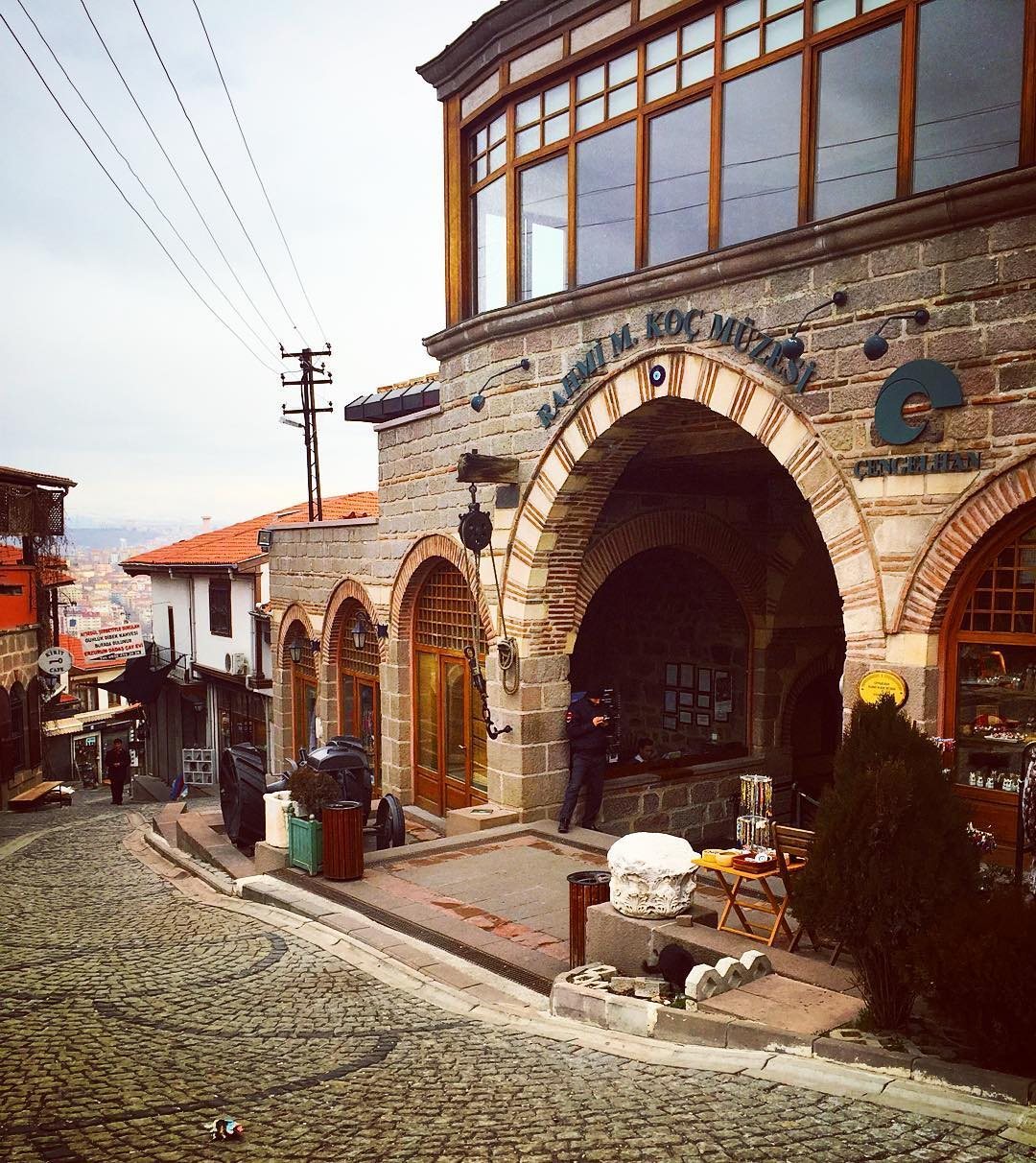
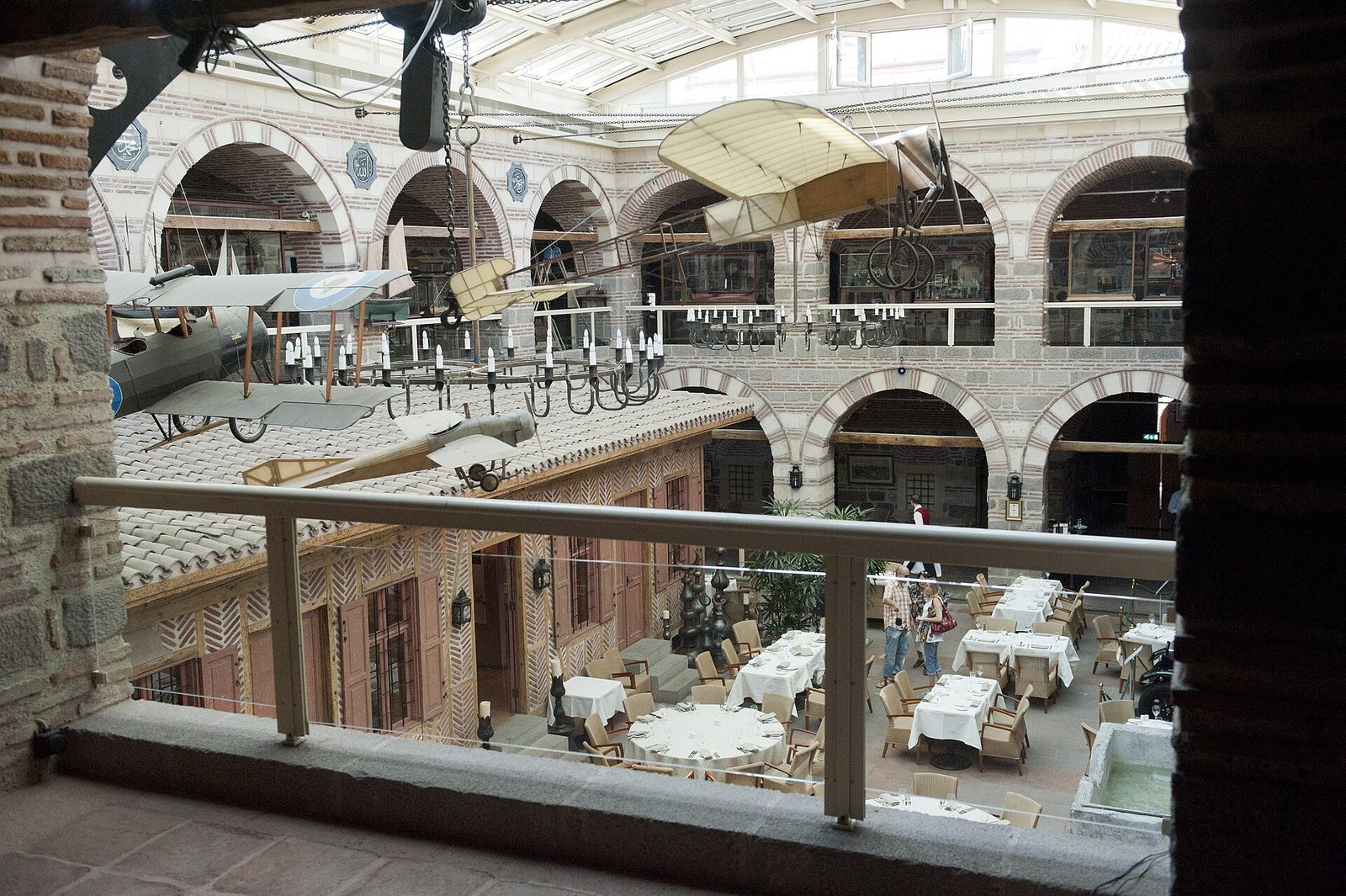
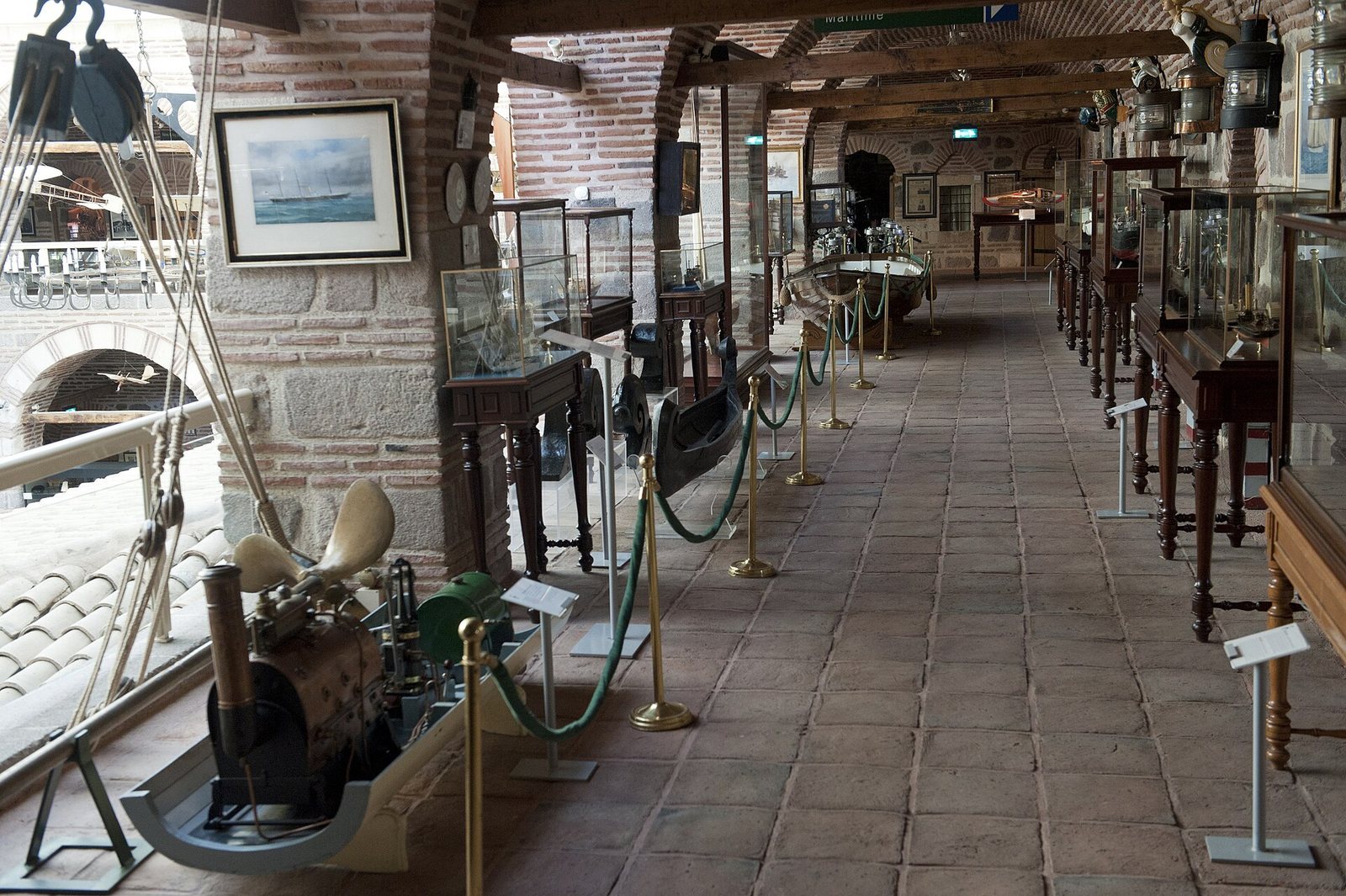
Ankara Municipality expropriated the building in 1991 for use as a municipal building, but the proposed project did not proceed. After a long period of vacancy, the han was transferred to the General Directorate of Foundations, the Turkish public institution responsible for administering foundation properties. Koç Holding leased it in 2005 and arranged its restoration. It now houses the Çengelhan Rahmi Koç Museum.
Remains
Plan and construction
The han has a near-square rectangular plan arranged around a central courtyard. Its northeast façade has single-storey shops, while the shops on the entrance side occupy two floors. The southwest façade rises to three storeys because the ground slopes. The walls are built with sturdy Khorasan mortar, a traditional lime mortar commonly made with crushed brick or tile. The building survives in good condition, attributed to its robust construction.
Entrance inscription
A framed inscription in two lines sits above the entrance. Written in Turkish in thuluth, a style of Arabic calligraphy used for prominent inscriptions, it praises the completed han as “the palace of the caravan.” The second line gives the completion date as 1522 and includes the phrase “Melih’il-hayır.”