Great Mosque of Sofia: An Ottoman Mosque and Archaeological Museum
Site at a Glance
- Rating
- 4.6
- Popularity
- Very High
- Country
- Bulgaria
- Primary era
- Medieval
- Eras represented
- Medieval, Modern
- Civilizations
- Bulgarian, Ottoman
- Site type
- Religious
- Remains
- Mosque
On this page16 sections
History
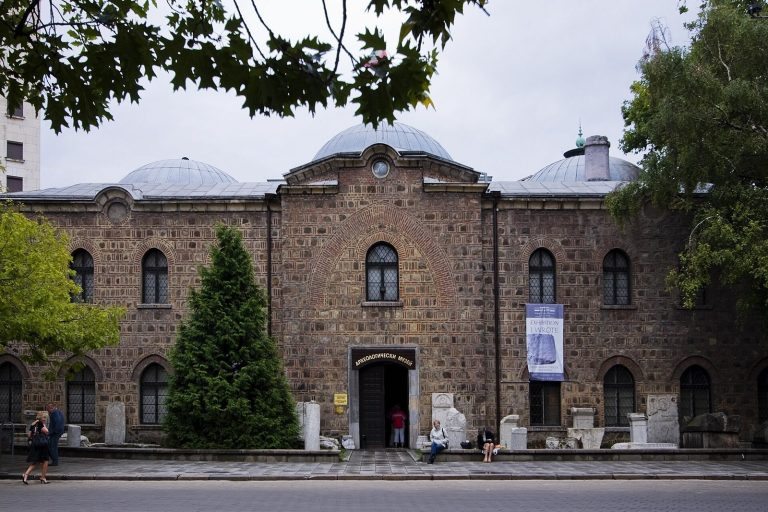
The Great Mosque of Sofia is an Ottoman mosque in central Sofia, Bulgaria, whose construction began in 1451 and was completed in 1494. It follows the Seljuk architectural tradition, associated with the medieval Seljuk Turks, and is the oldest building of its type in Sofia.
Ottoman construction and early use
Veli Mahmud Pasha, an Ottoman grand vizier (chief minister), initiated the project. In 1451 he was appointed governor-general, a senior provincial official, of Rumelia, the Ottoman region covering its European territories, and had his seat in Sofia. The mosque was completed during the rule of Mehmed II, the Ottoman sultan also known as Mehmed the Conqueror.
Its original name was Koca Mahmut Pasha Mosque. The adjoining district later took its name from the mosque, while the street in front was called Büyük Cami sokağı until the late nineteenth century; it is now Lege Street. The mosque belonged to a larger complex of religious and service buildings. In the seventeenth century, Ottoman travel writer Evliya Çelebi described it as Sofia’s largest Muslim place of worship.
Damage and changing use
Earthquakes damaged the mosque in 1818 and 1858. By the end of the nineteenth century, its minaret and entrance structure were in ruins. During the Russo-Ottoman War of 1877–1878, the abandoned building served as a military hospital. After the war, Sofia’s new role as Bulgaria’s capital and a shortage of suitable cultural buildings prompted proposals for its reuse. A plan to turn it into a theatre was rejected.
National cultural institutions
At the suggestion of Balkan historian Constantin Jireček, the Ministry of National Education transferred the building to the newly founded National Library at the end of 1879, for use as an antiquities museum. The library opened to the public on 2 March 1880 and remained there until spring 1885. The State Printing Press also used the mosque and temporary annexes before moving to its own premises in 1887.
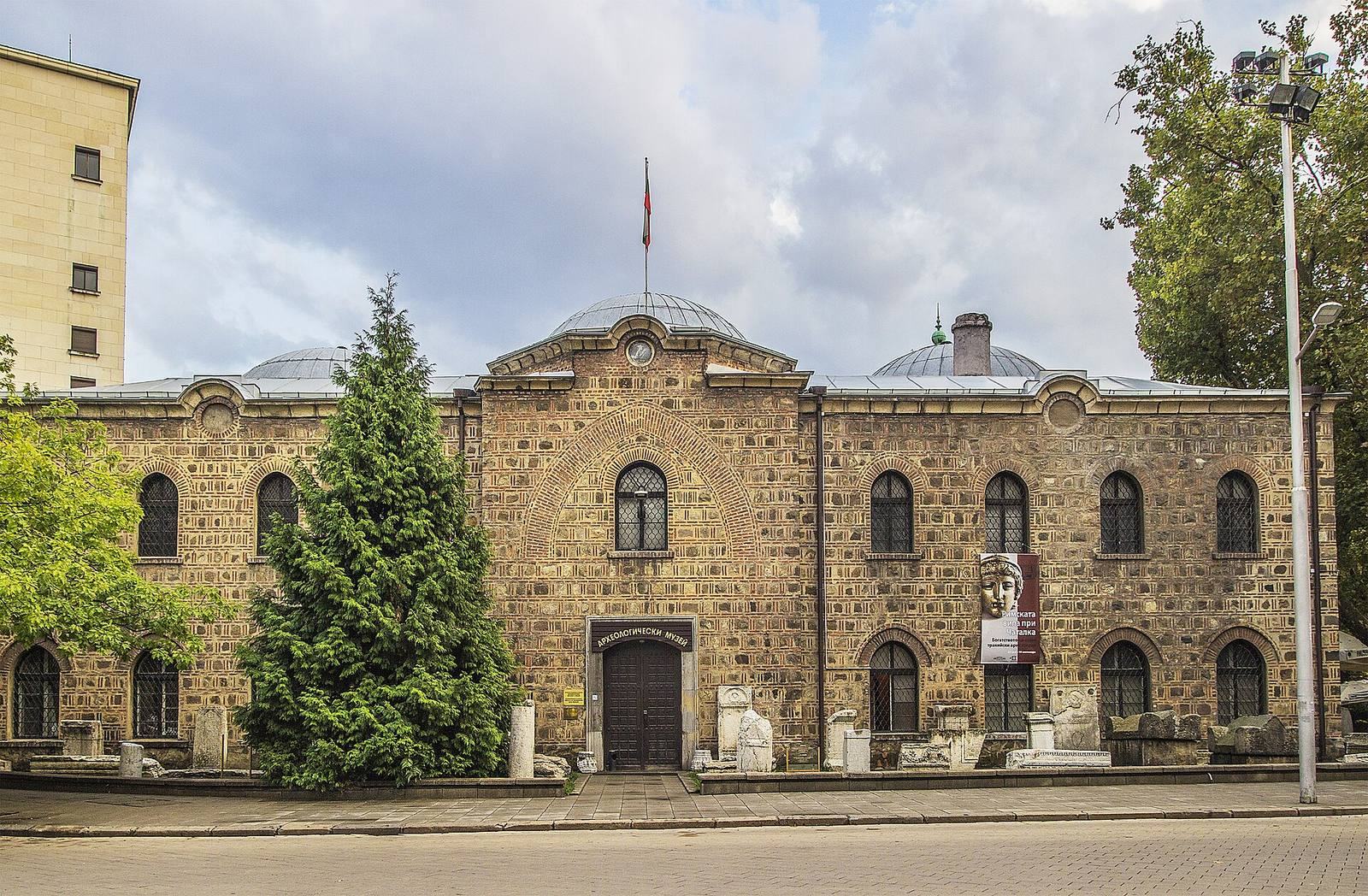
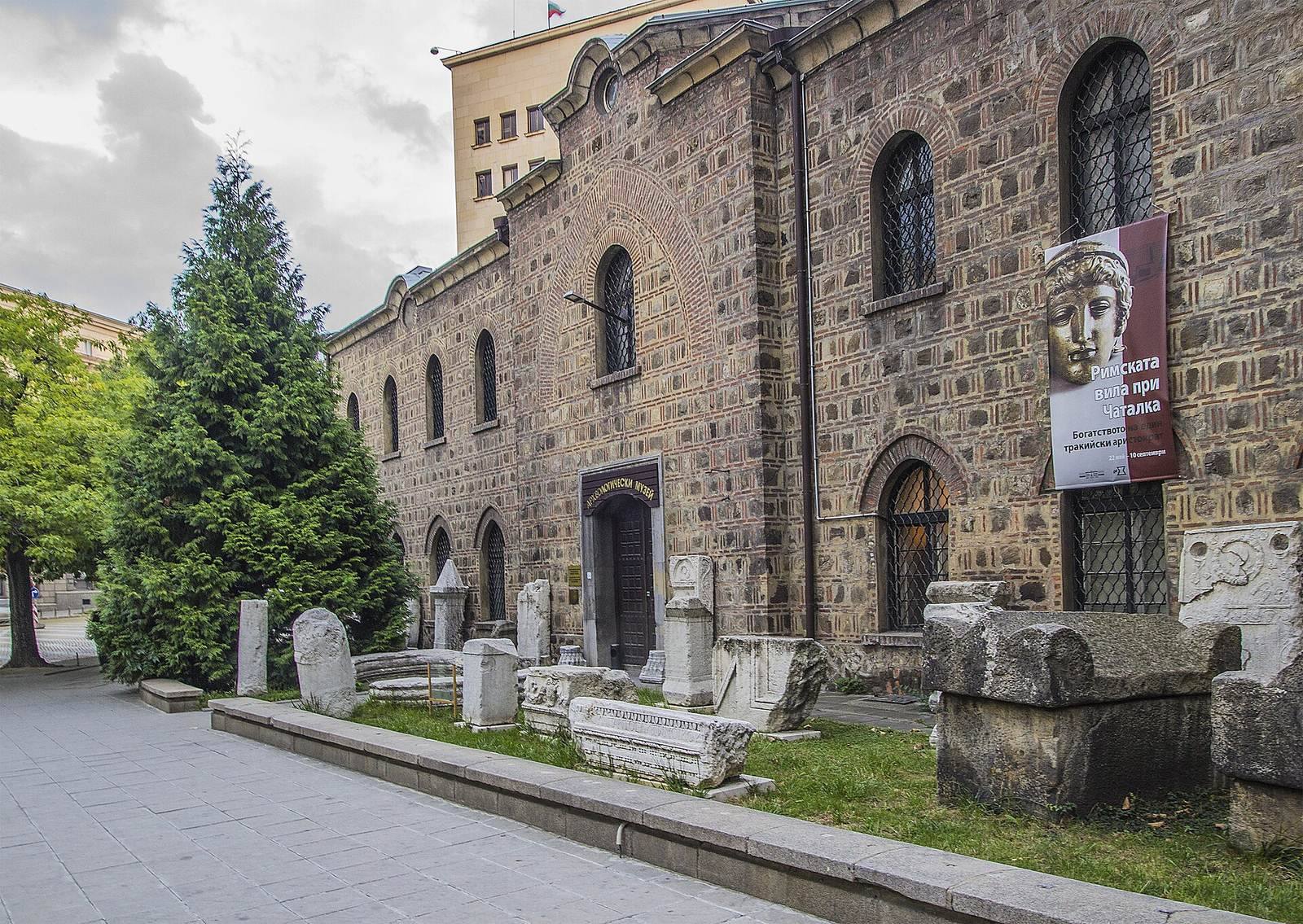
The building began serving as the National Archaeological Museum in 1892, and the museum opened to the public in 1905. It remains the home of the National Archaeological Museum, also known as the National Archaeological Institute with Museum of the Bulgarian Academy of Sciences.
Damage and repair
A bomb struck the building on 30 March 1944, causing severe damage. Repairs followed in 1946–1948. The mosque had been renovated in 1938–1940, and further work took place in 1982, 1993–1994, and 2003–2005.
Remains
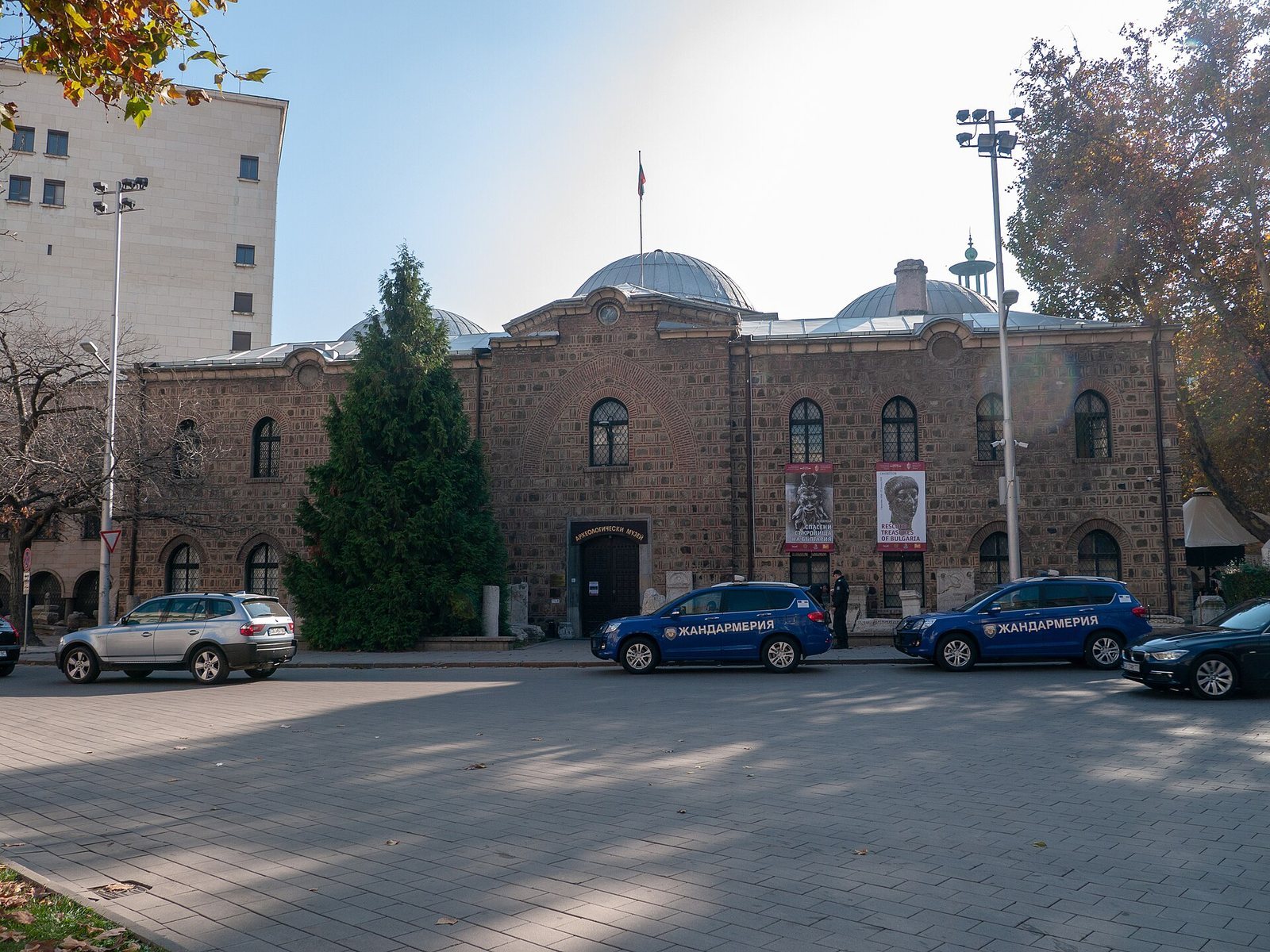
The mosque stands near the junction of Lege and Saborna streets, within an area bounded by Lege, Tsar Osvoboditel, Saborna, and Knyaz Aleksandar I streets. Its square, stone-and-brick structure encloses a regularly arranged interior beneath a group of domes.
The mosque building
Plan and domes
The building measures 36.6 metres on each side and is aligned approximately with the cardinal directions. Four columns and associated pilasters (shallow, column-like wall projections) divide the interior into nine equal square bays, or sections. Each bay has a dome, arranged in three rows. The domes have equal diameters and rest on pointed arches; those toward the mihrab, the niche indicating the direction of prayer, rise above the others. Lead sheets cover the domes.
Walls and entrance structures
Small stone blocks set in mortar form the walls, with brick framing the stonework, a construction method associated with Ottoman buildings. A five-domed, arcaded porch probably stood at the mosque during its early centuries. The oldest surviving image shows a columned entrance structure with a sloping roof and a minaret to the right of the main building. The entrance structure was probably built in the nineteenth century, after the 1818 or 1858 earthquake, to replace a porch that had deteriorated or been damaged. Windows may have been added to the central dome during the 1938 renovation to bring more light inside.
The wider complex and archaeological remains
Associated buildings
The wider complex included an inn for travelers and merchants, a religious school, a water reservoir, and a fountain. Archaeologists found the footprint of a building running parallel to the mosque, thought likely to belong to the former inn.
Masonry beneath the southern wing
Excavations below the southern wing exposed masonry made from oval river stones, alongside a band of five rows of flat bricks. Its construction differs in both period and form from the mosque’s main fabric. Finds there included a statue of Artemis, the Greek goddess associated with hunting and the natural world.
Garden and administration-area excavations
Investigations in 1998 covered about 120 square metres in the garden before the mosque and around the museum’s administration building. The finds included evidence associated with a prehistoric settlement beneath nearby Alexander Battenberg Square, and Early Iron Age material from the eighth and seventh centuries BCE. The Early Iron Age was an early phase in the wider use of iron. Two Roman-period building layers relate to a time when the area formed part of Sofia’s agora, an ancient Greek public marketplace and civic space. Finds from the eleventh and twelfth centuries were also recovered.
Museum collections
Antiquities and medieval objects
The museum displays Greek and Roman antiquities and objects from the Thracians, ancient peoples of southeastern Europe. Its collections include sculptures, reliefs, and objects from graves, alongside medieval everyday items, jewelry, and weapons. Coins represent Bulgarian, Thracian, and Greek traditions, as well as Byzantine culture, that of the eastern Roman Empire. Notable objects include a third-century bronze bust of Emperor Gordian, a carved stone slab showing gladiators fighting in Sofia’s ancient arena, and a fourth-century mosaic transferred from the apse (the semicircular sanctuary end) of the Church of St. Sofia.
Finds from Shipka and church art
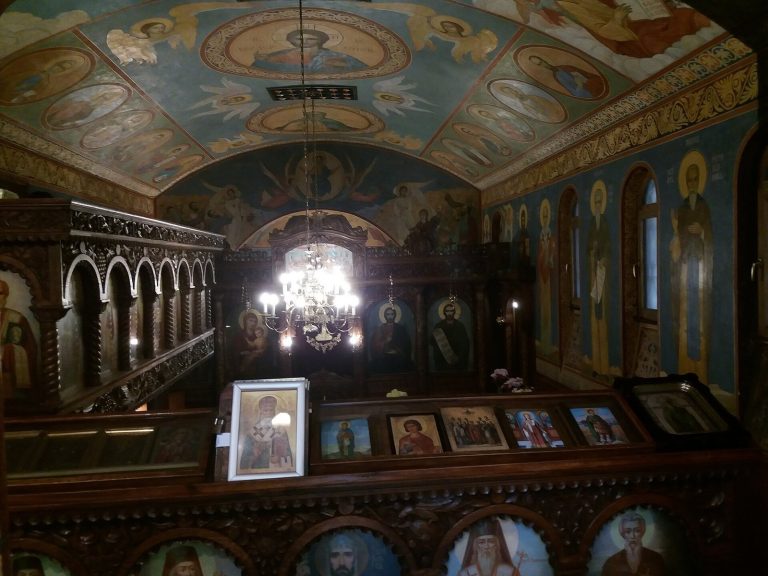
Objects excavated near Shipka in 2004 include a fourth-century BCE bronze funerary mask of a Thracian king and a bronze head with colored-glass eyes and copper eyelashes. The museum’s gallery also contains icons and frescoes collected from churches across Bulgaria.