Hopetoun House: A Historic Country House in Scotland
Site at a Glance
- Rating
- 4.6
- Popularity
- High
- Country
- United Kingdom
- Primary era
- Early Modern
- Eras represented
- Medieval, Early Modern
- Civilizations
- British, Kingdom of Scotland
- Site type
- Domestic
- Remains
- Elite Residence
On this page11 sections
History
Hopetoun House is a country house near South Queensferry in West Lothian, United Kingdom, begun in 1699 for the Hope family under Scottish architect Sir William Bruce. Its first building was completed by 1701, and later enlargement shaped the family’s prestigious ancestral residence.
The Hope estate and construction
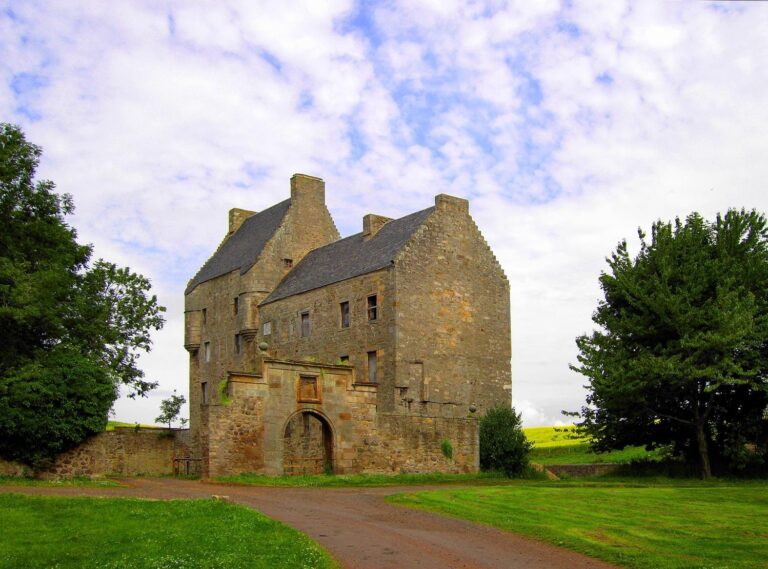
The Hope family acquired land around Hopetoun during the seventeenth century and built wealth through lead mining. Their estate also included Midhope Castle, an older stone building about two kilometres west of the present house. In 1698, Lady Margaret Hope contracted Bruce to build a new residence for her son Charles, then aged 16 and later the 1st Earl of Hopetoun. The family named the house after their surname.
Bruce’s master mason, Tobias Bauchop, supervised the building work and prepared drawings with help from his apprentice Alexander Edward. John Forster of Berwick handled plumbing and glazing, including the water supply and large windows. The first house soon seemed too small for the family’s ambitions. William Adam began a major enlargement in 1721 and continued until his death in 1748; his sons John and Robert completed the interiors. Work concluded in 1752, when the entrance hall opened to guests.
Bruce also designed a plan for a landscape park around the house. William Adam laid out an English-style park around 1725.
Royal visit and preservation
During King George IV’s Scottish visit, the house hosted the knighting of Captain Adam Ferguson and portrait painter Henry Raeburn on 29 August 1822. Hundreds of members of the Scottish nobility gathered there, and the king departed from Hopetoun that day.
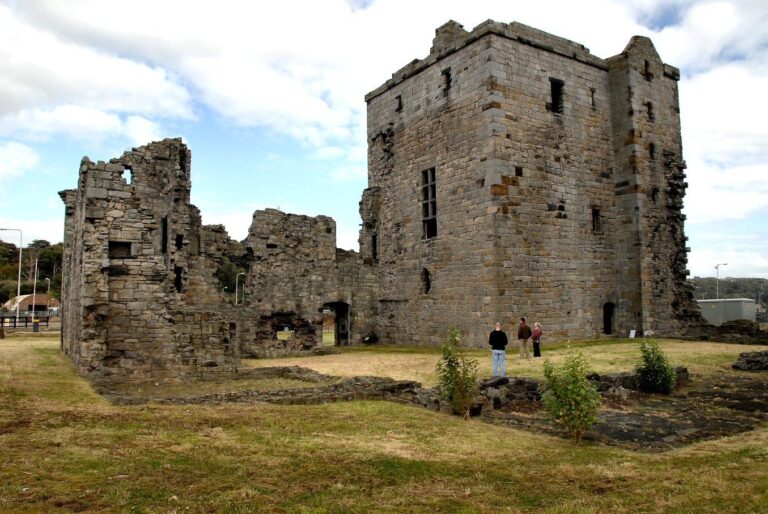
In 1963, excavation of a mound in the grounds revealed remains thought to belong to the fifteenth-century Abercorn Castle. Charles Hope, 3rd Marquess of Linlithgow, established the Hopetoun House Preservation Trust in 1974 to protect the house and grounds, along with associated furniture, paintings, manuscripts, and other historically important objects. The house is a Category A listed building, Scotland’s highest listed-building category, from 1971. The grounds entered the national Inventory of Gardens and Designed Landscapes in 1987. The south wing remains a residence for the family of Adrian Hope, 4th Marquess of Linlithgow.
Remains
The surviving estate brings together a large, symmetrical house, enclosed service courts, and a designed park. Excavated remains of an earlier castle add another layer to the grounds.
House and service buildings
Central block and principal wings
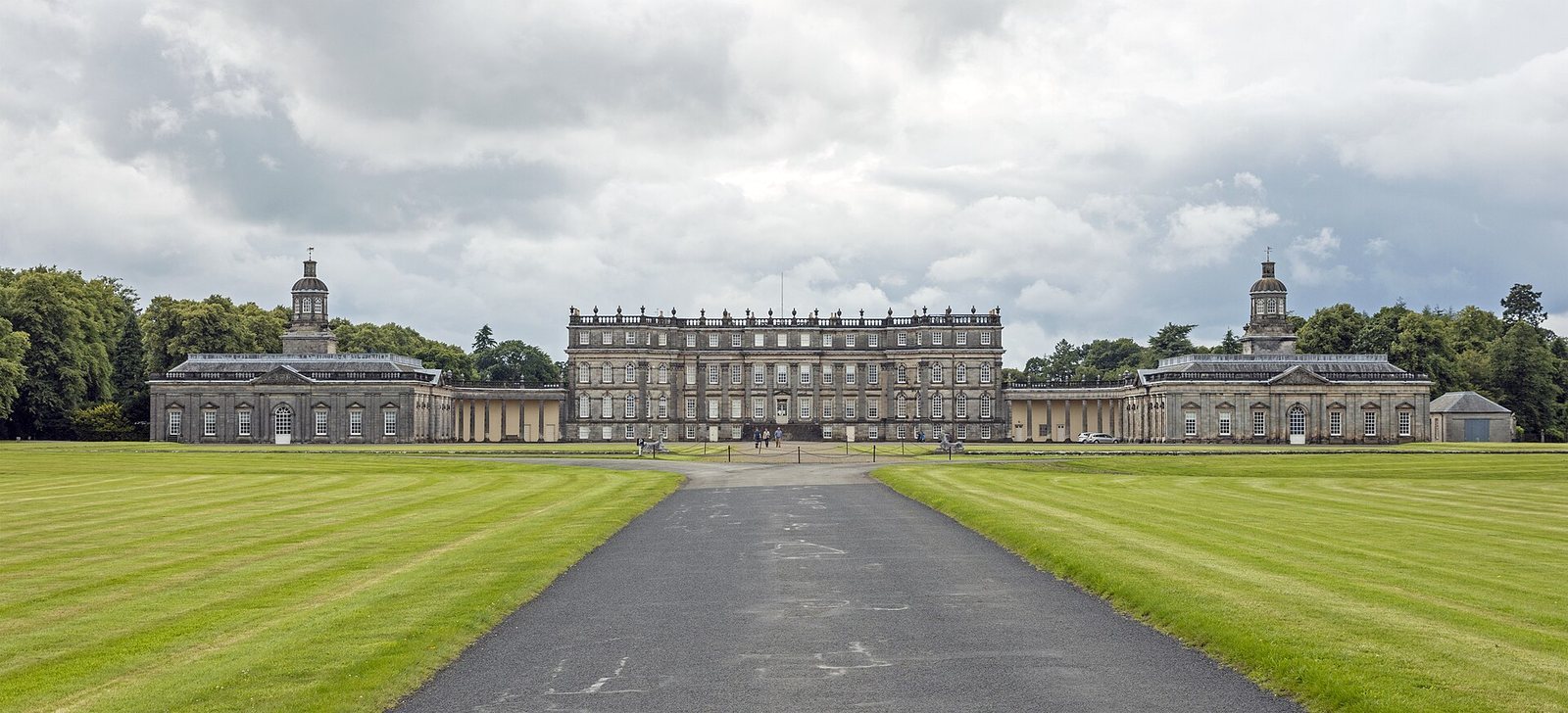
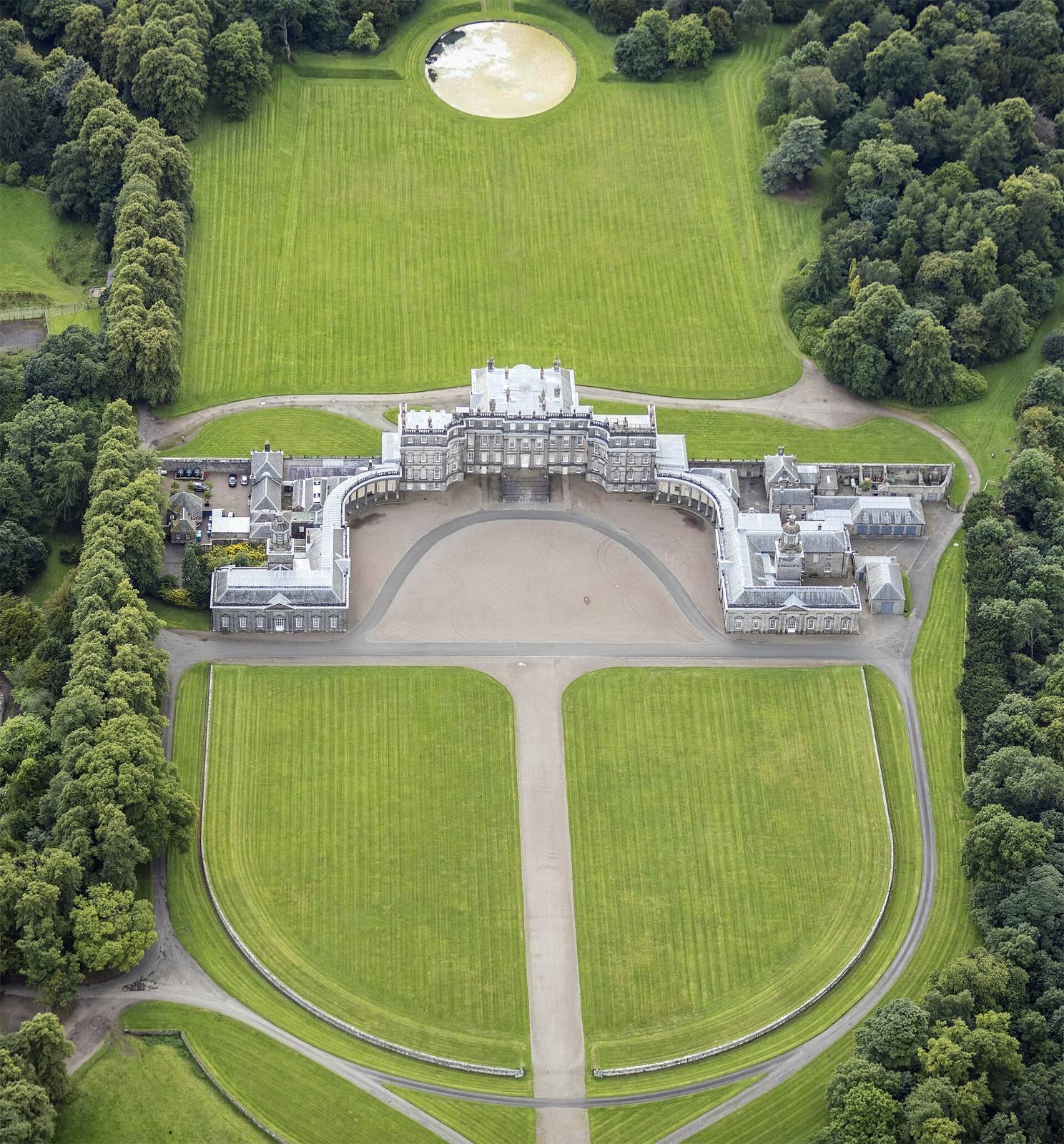
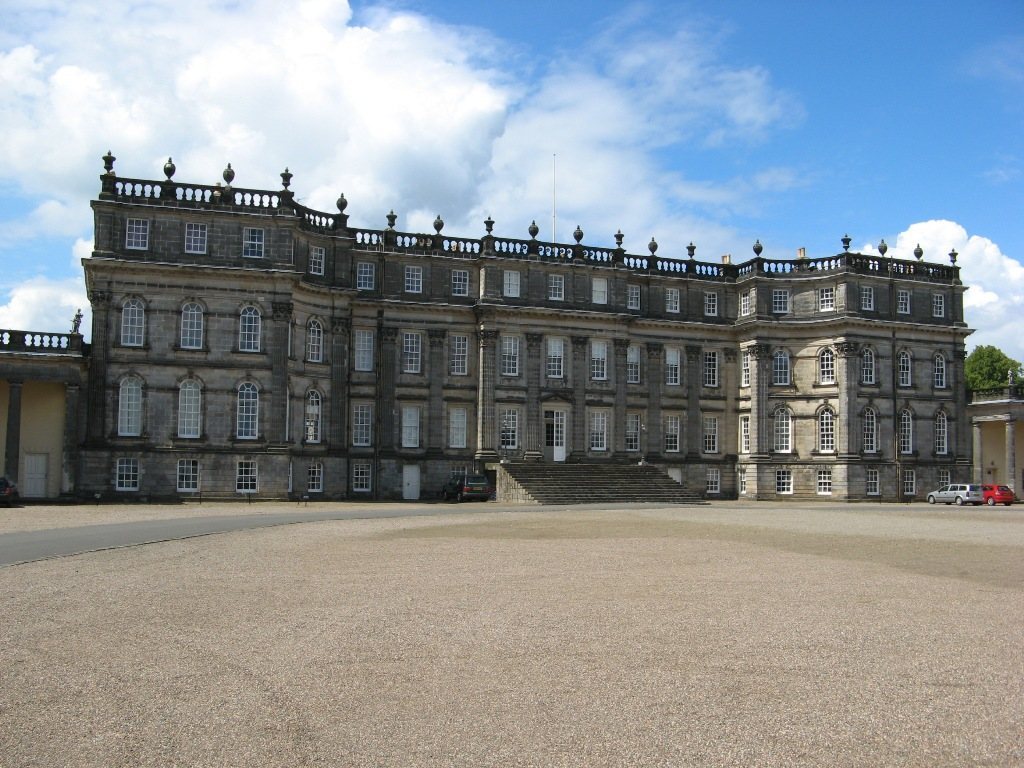
The main house has a rectangular central block of four storeys, with its principal entrance in the east façade. Matching four-storey wings project forward from the north and south sides of the central block.
Galleries and lower wings
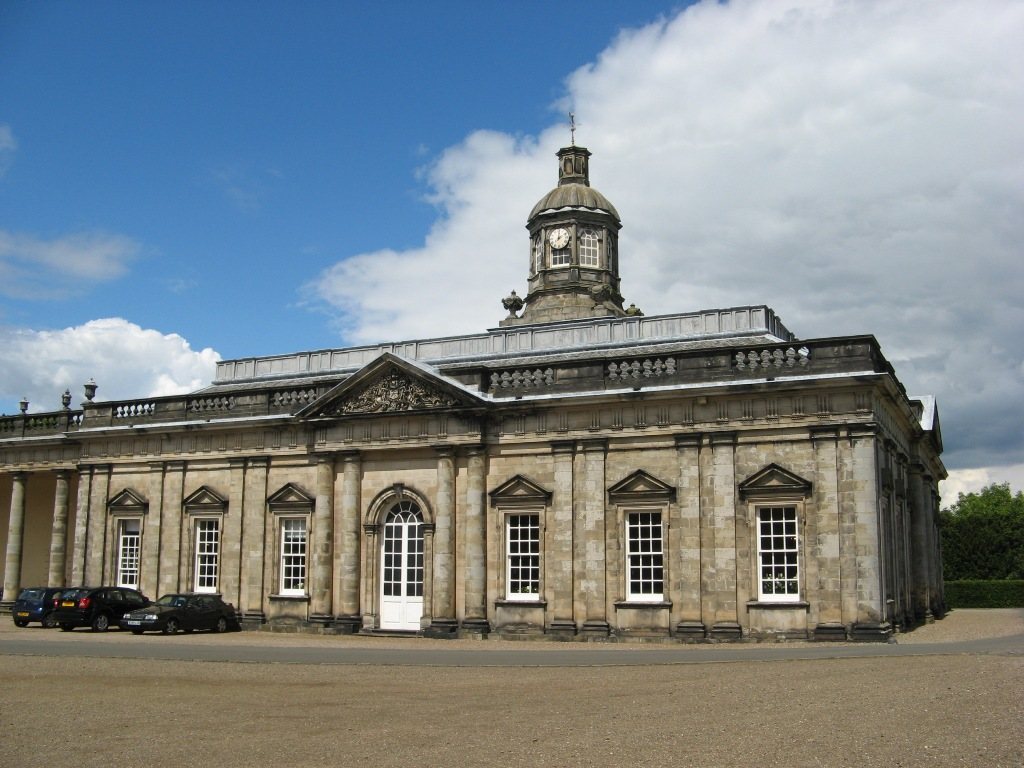
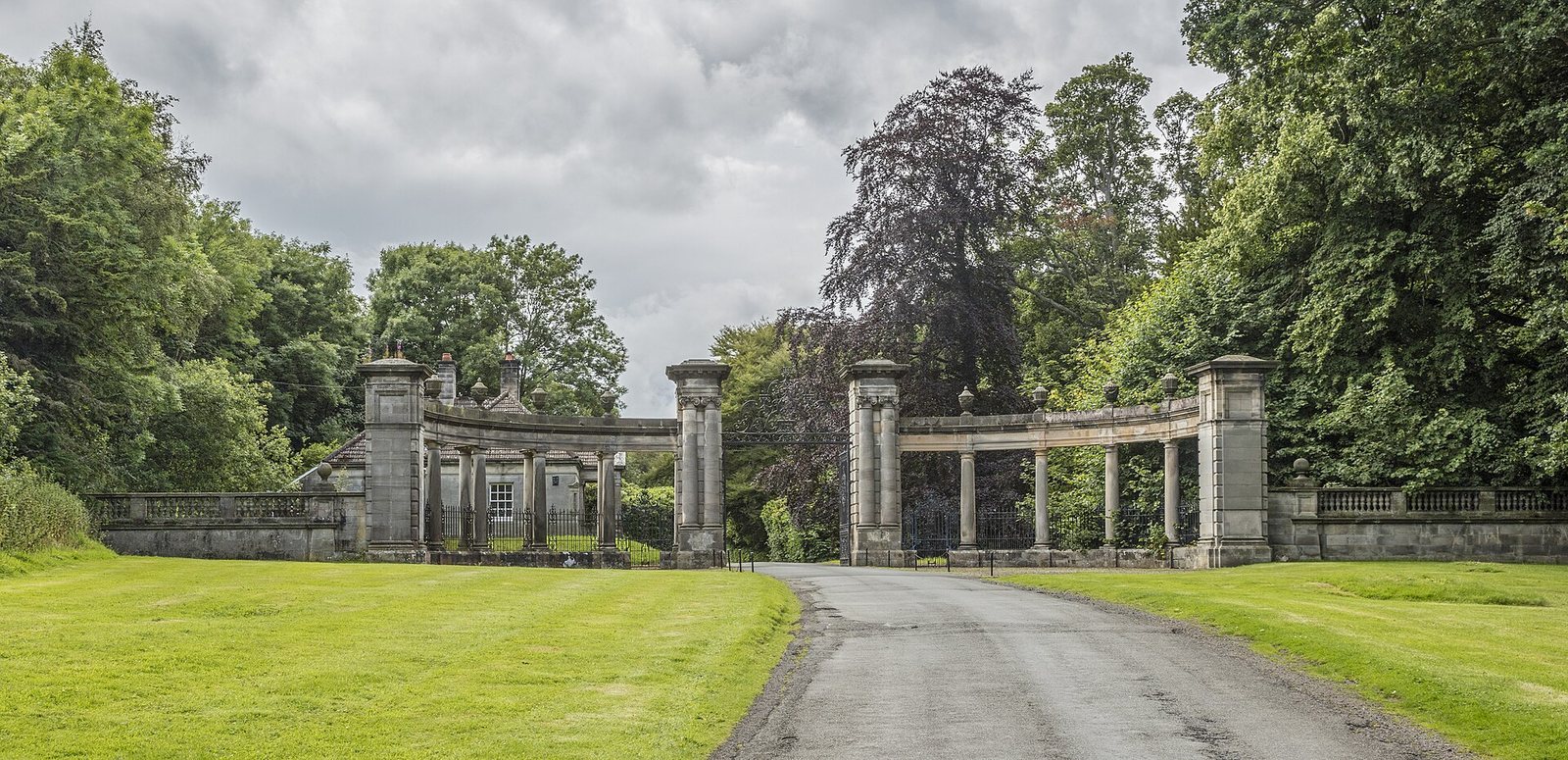
Two semicircular galleries with columns connect the house to one-storey wings on the south and west. Each of these lower wings has a turret at its centre.
Service courts
Service buildings and servants’ cottages stand west of the wings. An enclosing wall surrounds them and creates small courtyards.
Grounds and earlier remains
Park and walled garden
The English-style park includes open, level lawns in front of the east and west façades and an oval pond a short distance west of the house. The east front is centred on distant views of Inchgarvie and North Berwick Law. A walled garden in the grounds dates to the late eighteenth century.
Mound and castle remains
The mound excavated in 1963 dates to the eighteenth century. Excavation exposed foundations or other remains attributed, probably, to the fifteenth-century Abercorn Castle.