Sarajevo Old Orthodox Church: A Serbian Orthodox Church in Bosnia and Herzegovina
Site at a Glance
- Rating
- 4.8
- Popularity
- High
- Country
- Bosnia and Herzegovina
- Primary era
- Medieval
- Eras represented
- Medieval, Early Modern, Modern
- Civilizations
- Austria-Hungary, Habsburg, Ottoman
- Site type
- Religious
- Remains
- Church
On this page8 sections
History
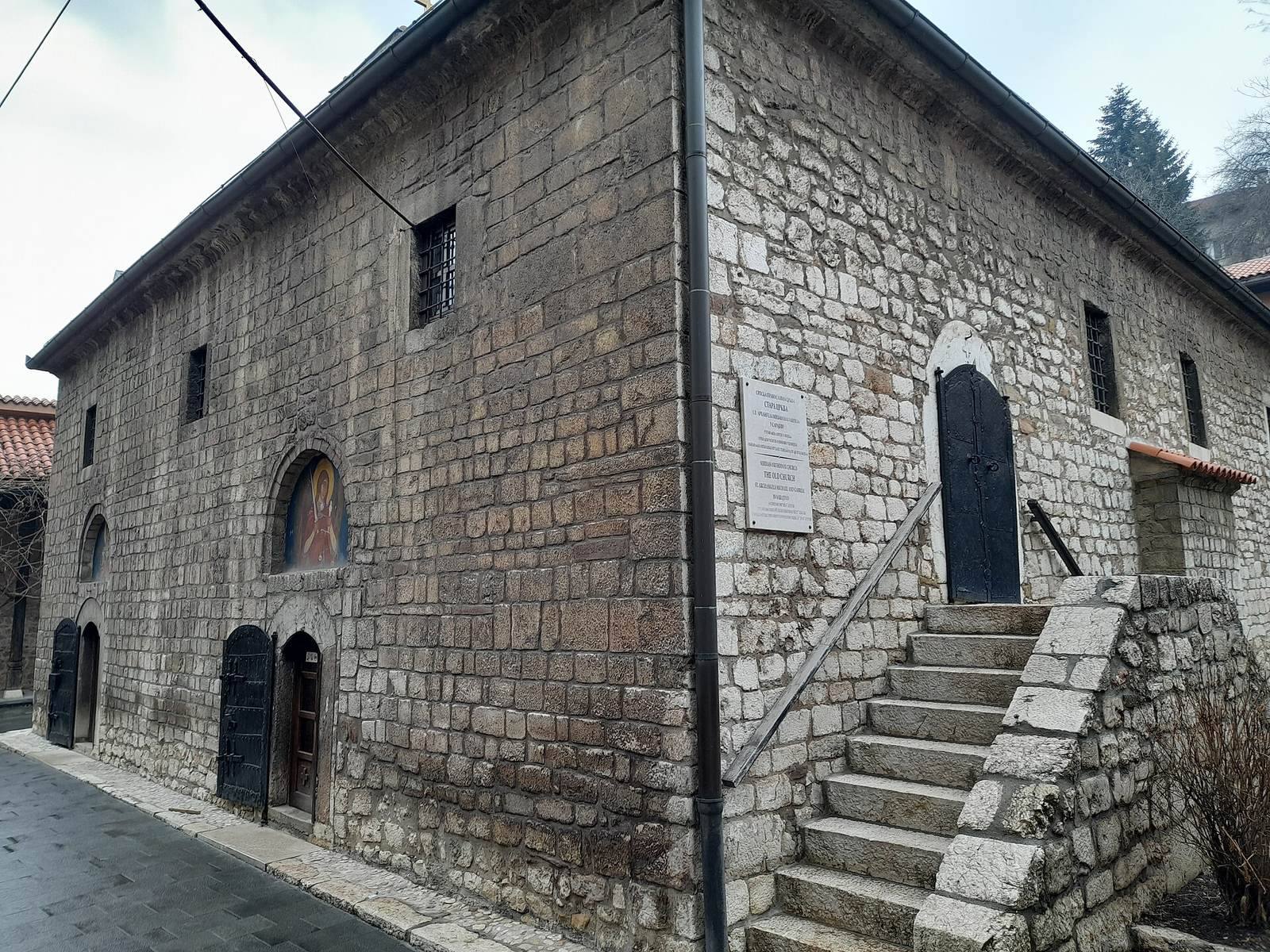
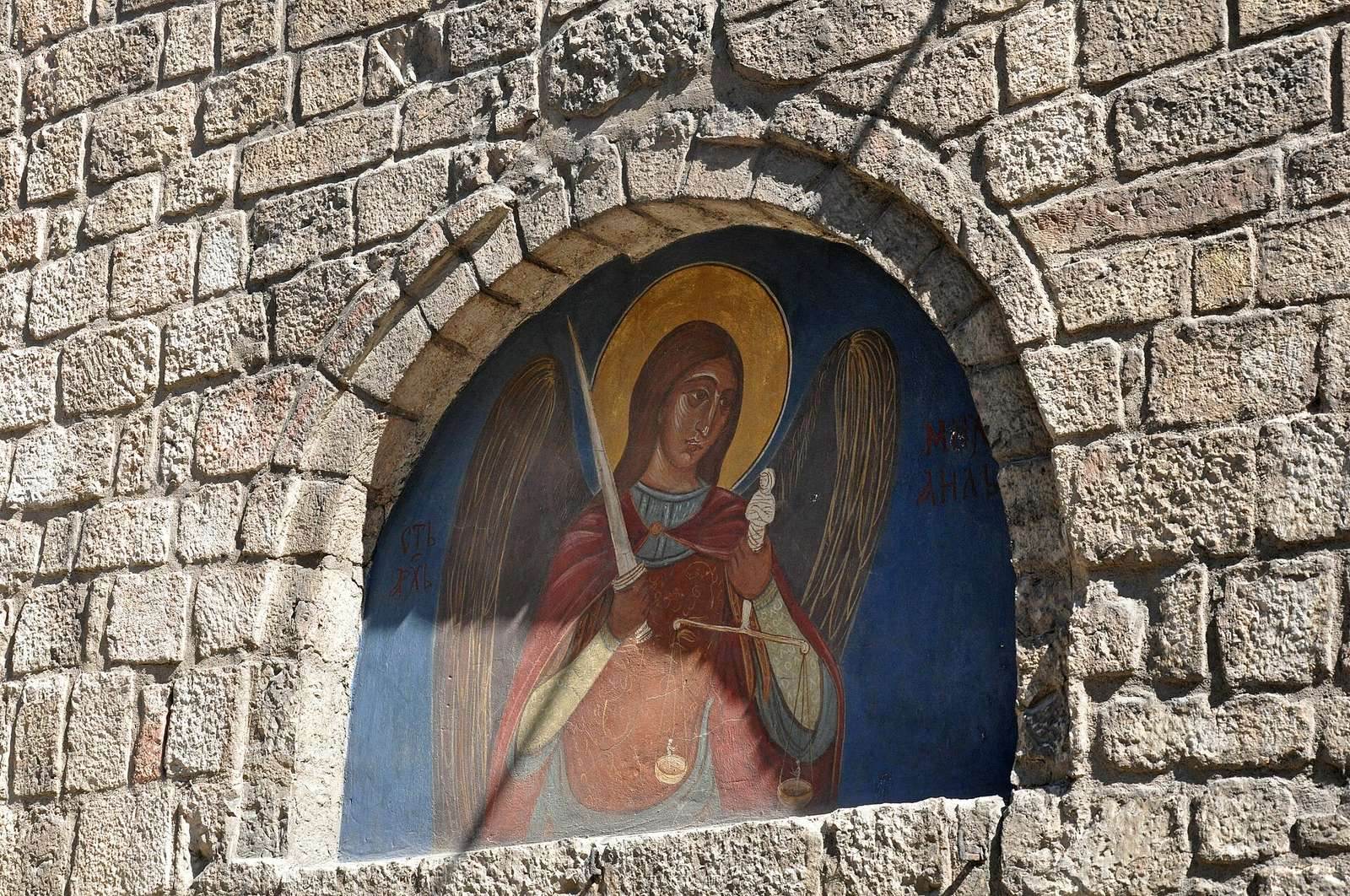
Sarajevo Old Orthodox Church is a Serbian Orthodox church in Sarajevo, Bosnia and Herzegovina, dedicated to Michael and Gabriel, archangels associated with divine service and messages. Serbian Orthodoxy is part of the Eastern Orthodox Christian tradition. The church’s exact construction date is unknown: it is sometimes dated to the 14th century, while archaeological dating points to the 15th, and it may stand on the foundations of an earlier church. Its medieval Serbian-Byzantine style and long history make it Sarajevo’s oldest church and one of its oldest buildings and most valued cultural-historical monuments. It belongs to the Metropolitanate of Dabar and Bosnia, a senior regional church jurisdiction.
Medieval origins and early records
Tradition credits the church’s foundation to Andrijaš, described as the brother of Marko Kraljević, a medieval Serbian prince celebrated in South Slavic epic tradition. An Ottoman administrative register from 1468 lists 42 Muslim households, 103 Christian households, and eight households from Dubrovnik. The Christian population suggests that the city likely had a place of worship. A document from 1489 names Đuro as a priest’s son, indicating that a priest lived in Sarajevo and that the Christian community probably had a church.
The church’s earliest surviving written mention dates to 1539. This is a record of its existence, not a confirmed date of construction.
Fires, repairs, and plunder
Three fires damaged the church during the 17th century, the last in 1656. Repairs followed that fire. Late in the century, the church was plundered during an incursion into Bosnia led by Prince Eugene of Savoy, a Habsburg military commander and statesman.
Further fires struck in 1724 and 1788. The church was restored in 1730 after the first, while the 1788 fire destroyed its roof. The roof was repaired in 1793.
Later changes and modern history
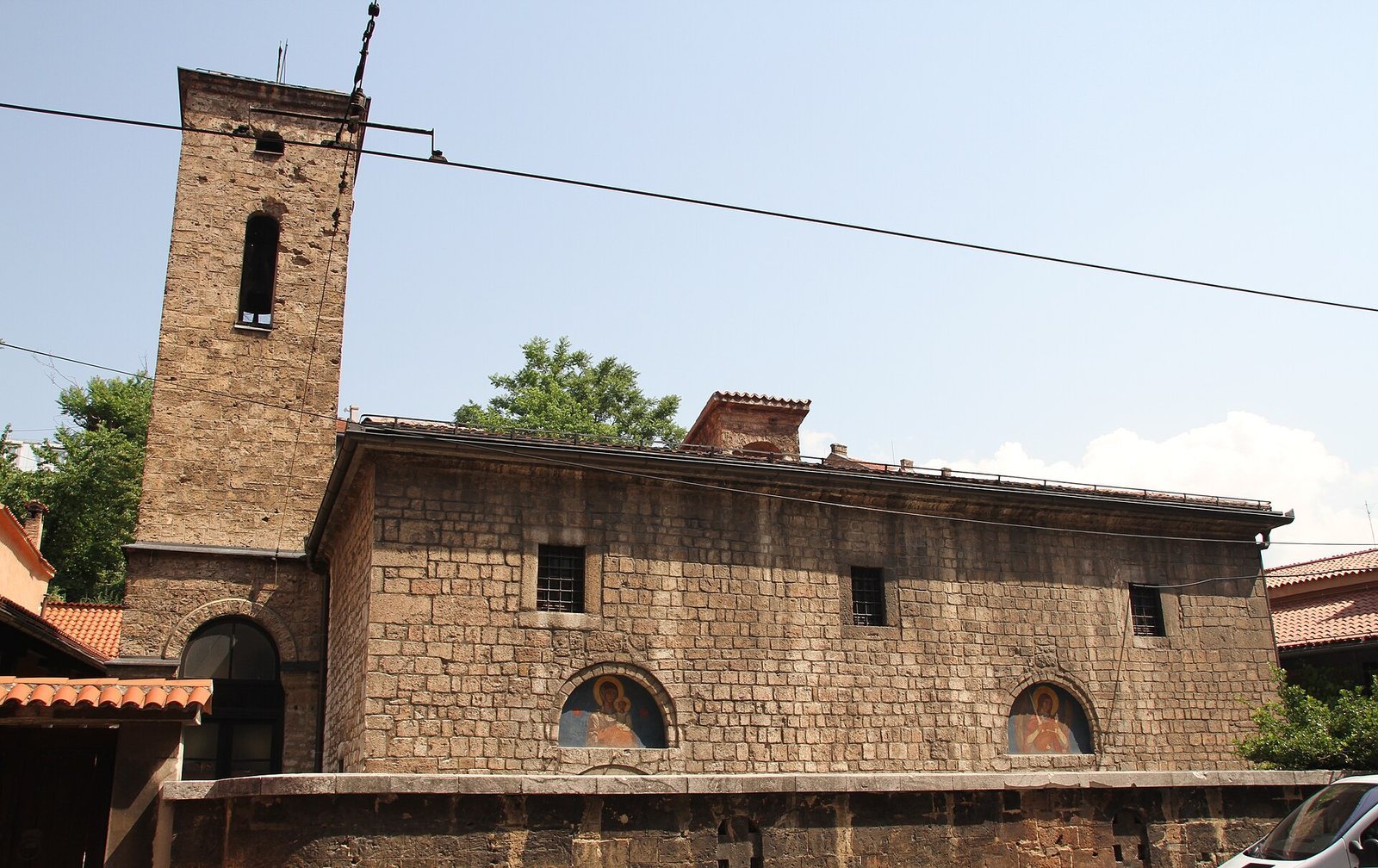
After Ottoman rule ended, a bell tower was added in 1883 and reconstructed in 1960. A museum at the church opened in 1890. The church was declared a National Monument of Bosnia and Herzegovina in 2006.
On 1 March 1992, a killing outside the church during a Serbian wedding marked the beginning of the Bosnian War, the 1992–1995 conflict in Bosnia and Herzegovina.
Remains
Church building
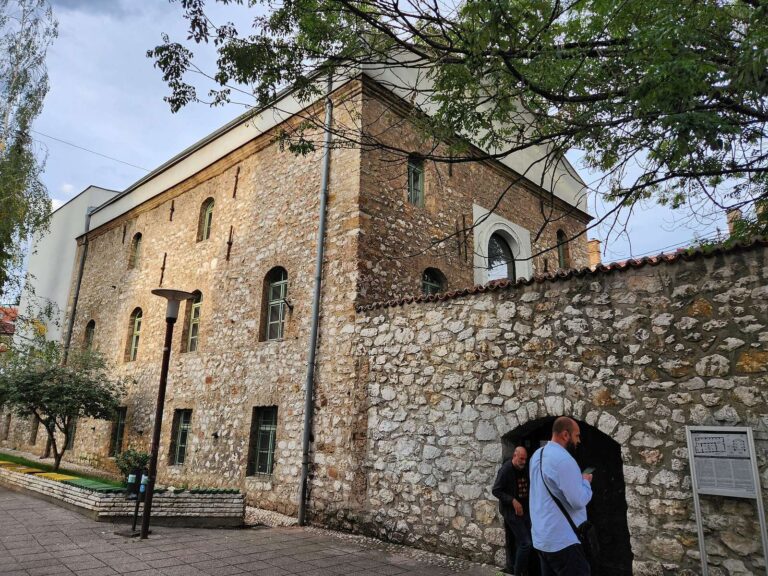
The church has a rectangular plan, measuring 14.5 metres long, 16 metres wide, and 8 metres high. A substantial portion lies below ground level, and its limestone walls are more than a metre thick. The building has no apse, the semicircular sanctuary end found in many churches. Its central space is surrounded by arches and a gallery, and a second level intended for women was added during a restoration. A brick bell tower stands on the western side.
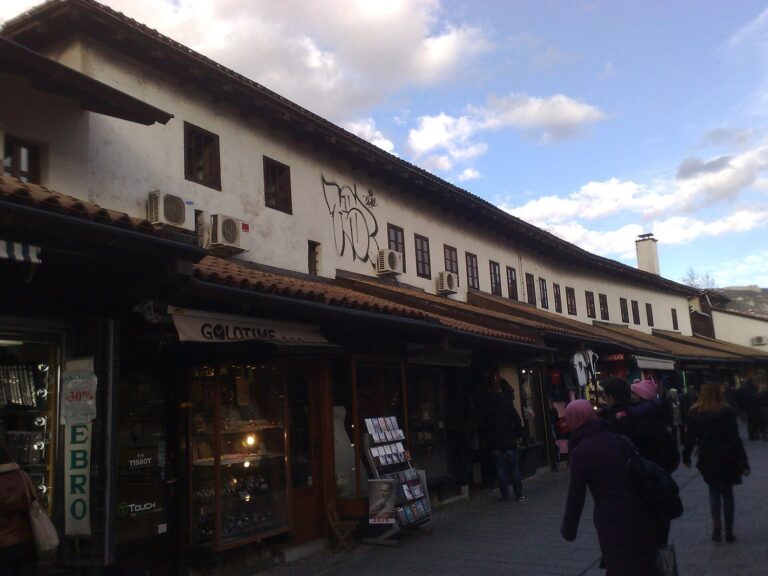
The church is near Baščaršija, Sarajevo’s historic bazaar and cultural centre, in an older part of the bazaar district. The area was urbanized under Austria-Hungary, the dual monarchy that governed Bosnia in the late 19th and early 20th centuries, during work to alter the course of the Miljacka River.
Interior furnishings
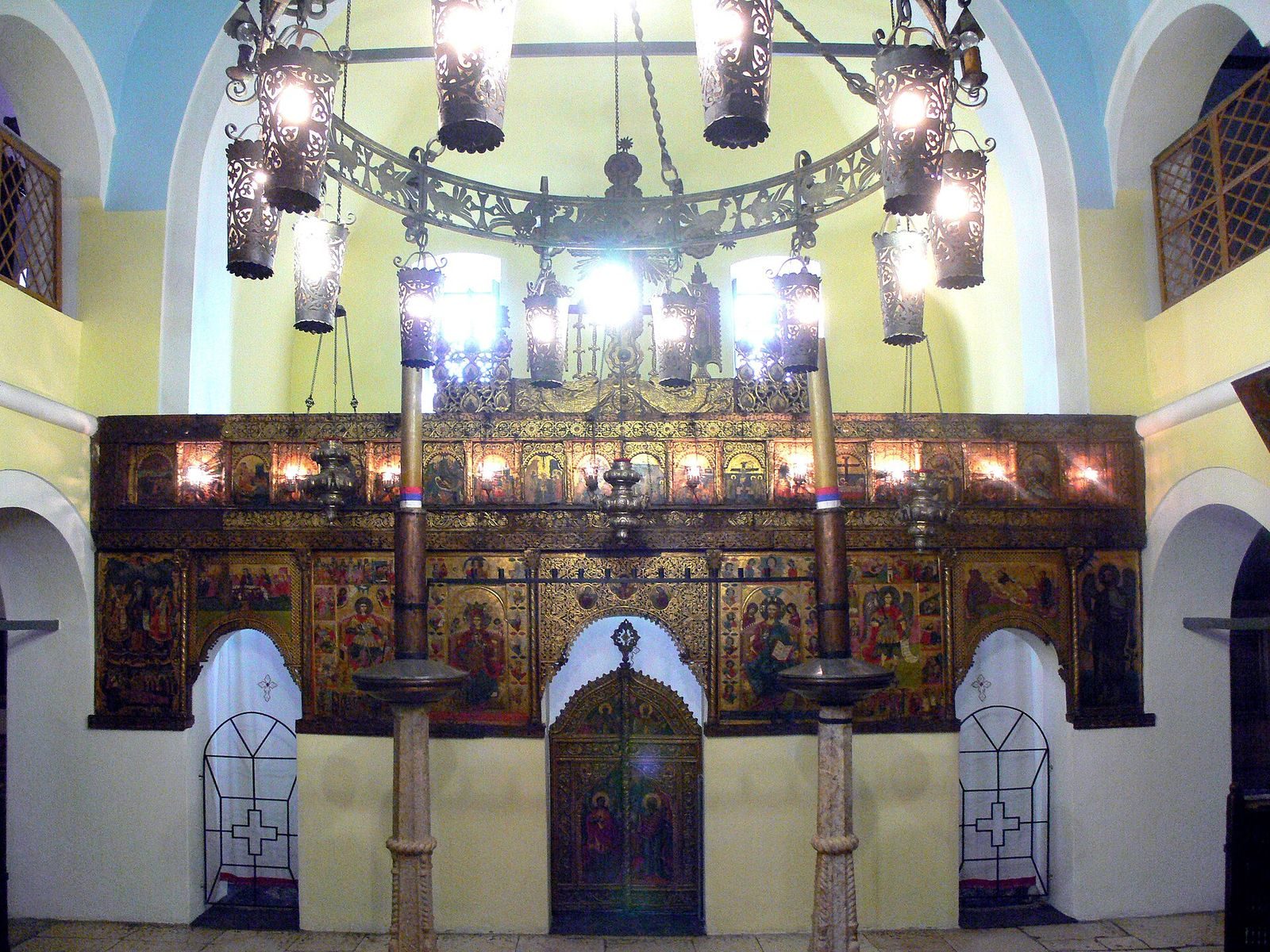
Following repairs after the 1656 fire, the church received a chandelier, two stone candlesticks placed before the altar, and a newly carved wooden screen of icons separating the sanctuary from the main worship space. The lower part of the screen was repaired in 1734.
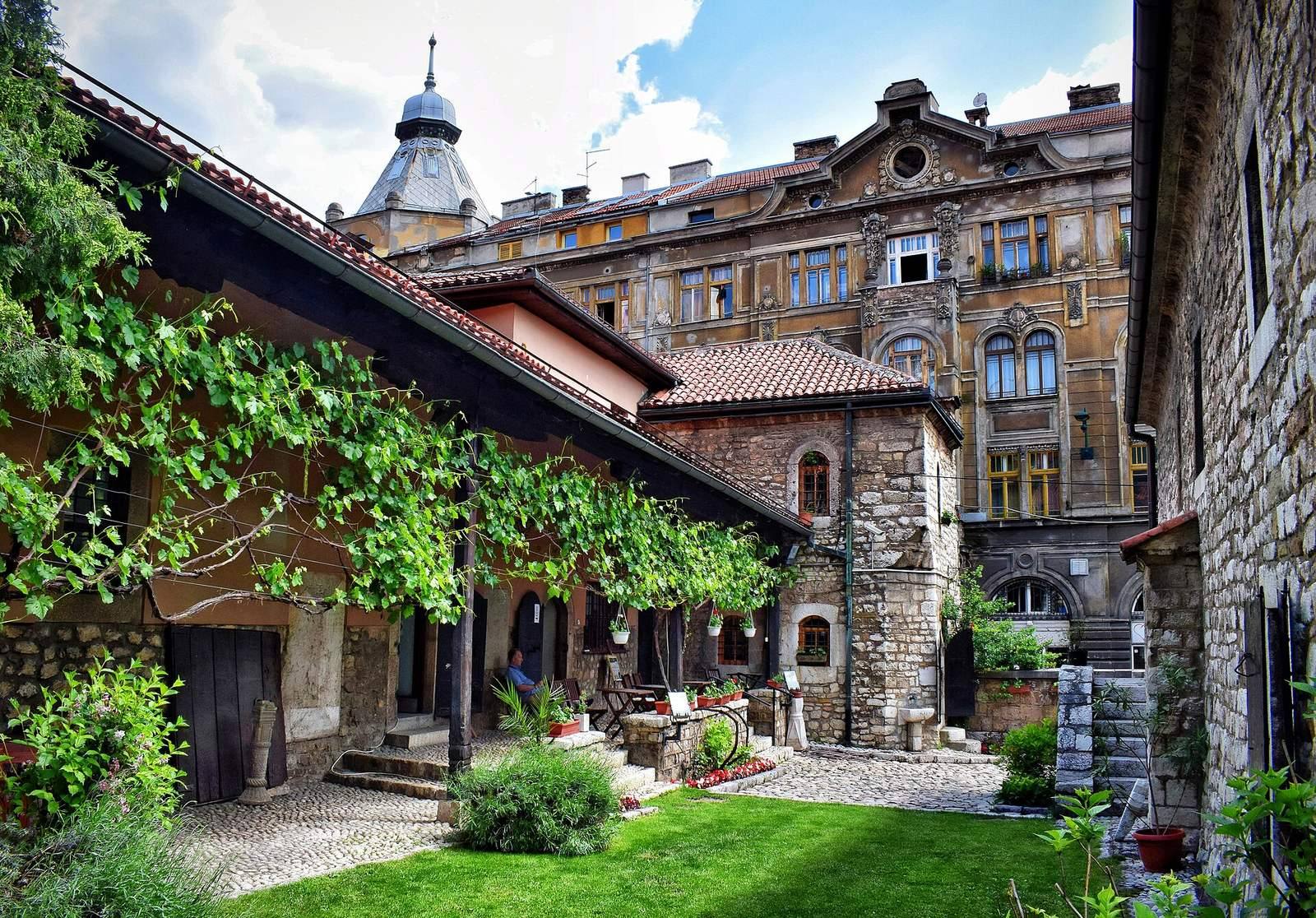
Museum collection
The museum occupies the inner courtyard and contains about 700 items. Its collection includes icons dating from the 13th to the 19th centuries, manuscripts and books, liturgical objects and vestments, artworks, and decrees issued by Ottoman sultans.