Church of St Lawrence, Little Stanmore: A Baroque Parish Church
Site at a Glance
- Rating
- 4.7
- Popularity
- Medium
- Country
- United Kingdom
- Primary era
- Early Modern
- Eras represented
- Medieval, Early Modern
- Civilizations
- British, English
- Site type
- Religious
- Remains
- Church
On this page11 sections
History
Rebuilding for James Brydges
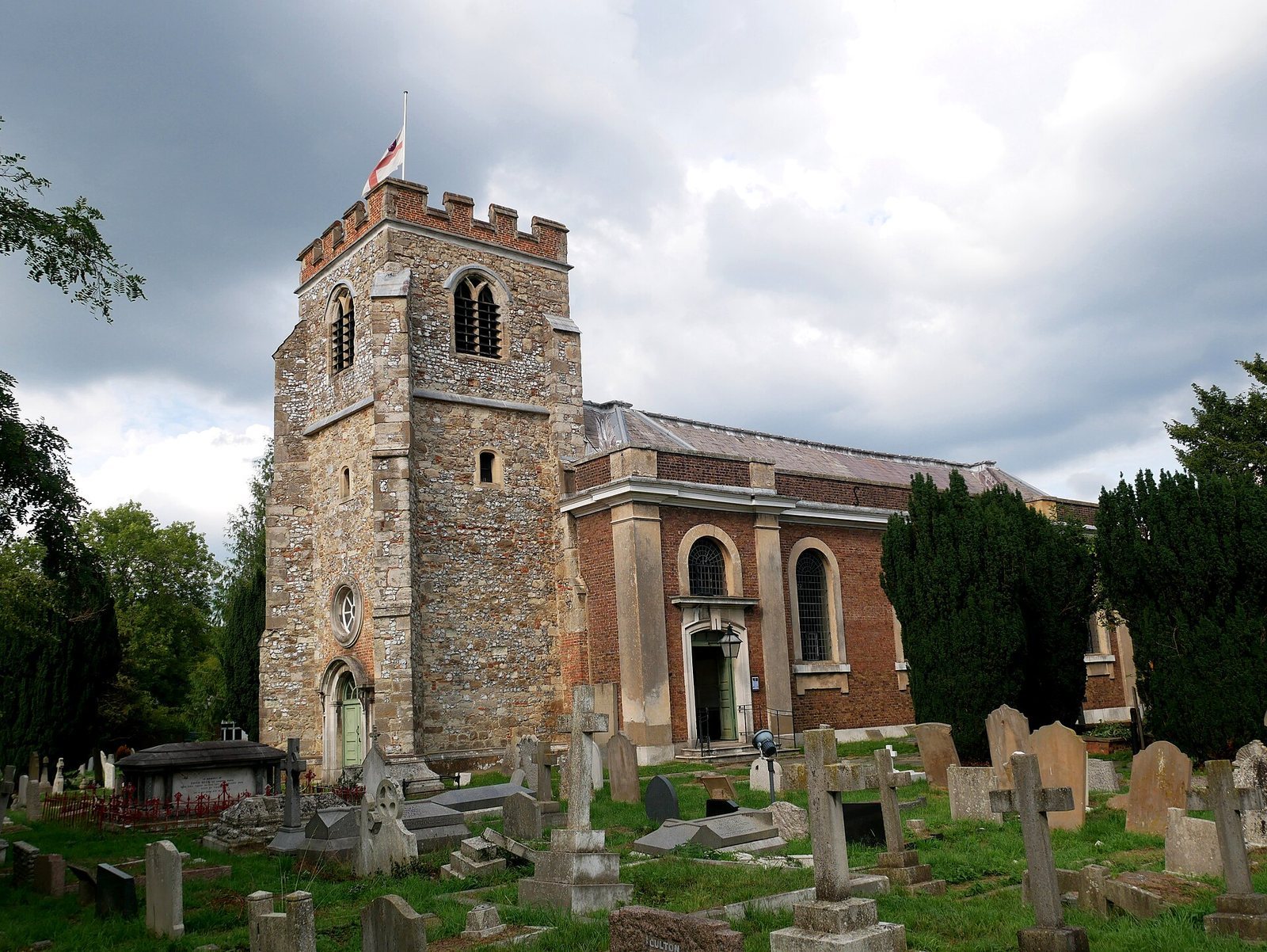
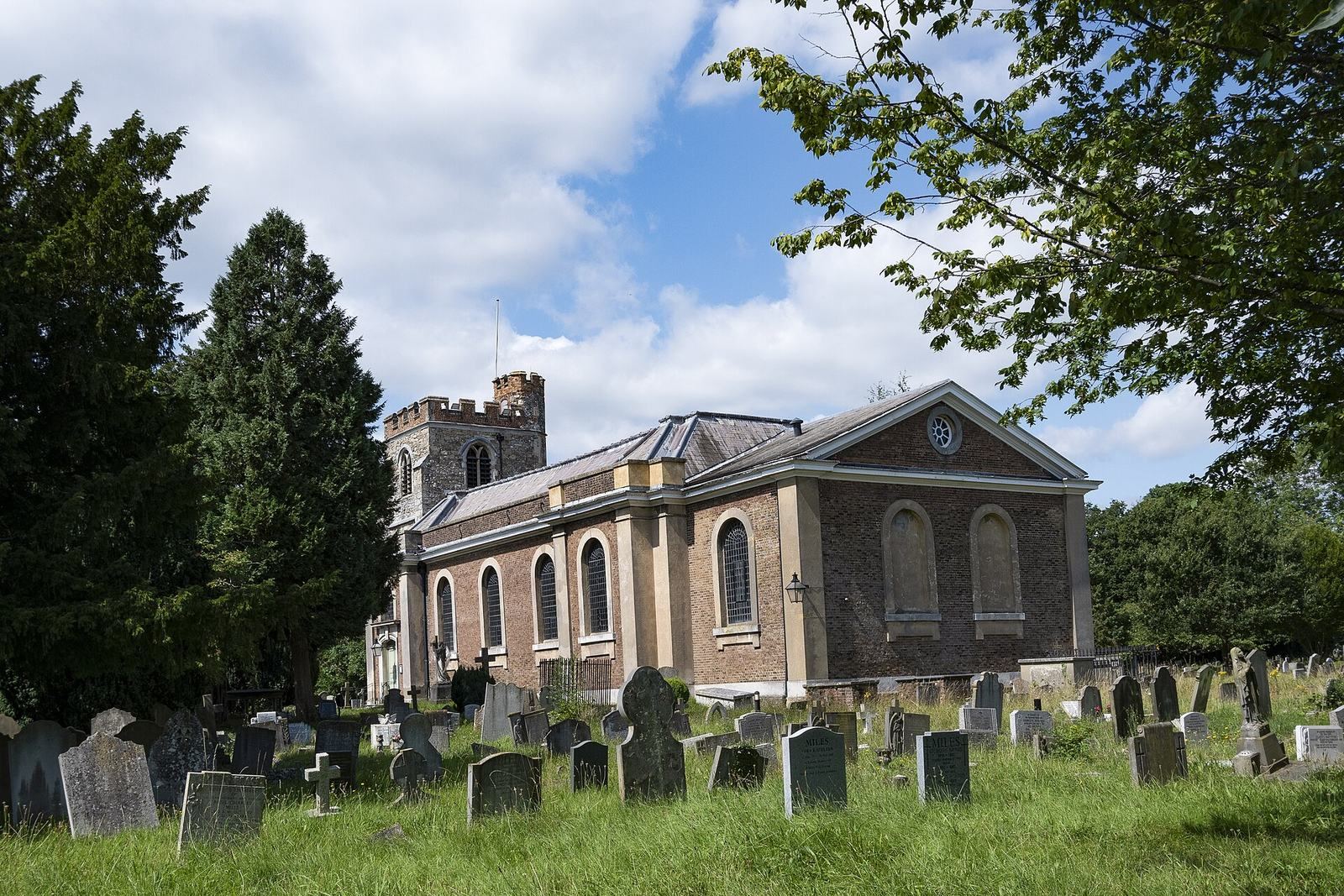
The Church of St Lawrence, Little Stanmore, is a Church of England parish church in the United Kingdom. Its medieval church was rebuilt from about 1714 for James Brydges, with the main body reconstructed in 1715 in Continental Baroque, the ornate Baroque style developed on the European continent. Brydges became the ninth Baron Chandos in 1714 and later the first Duke of Chandos.
Architect John James worked on the rebuilding. In 1715 James Gibbs replaced him as architect for Brydges’s nearby country house, Cannons, and may also have helped finish the church before it reopened in 1716.
Brydges continued to take a personal interest in the church after establishing a private chapel at Cannons. He reserved a gallery at St Lawrence for himself and his entourage, and held the right to nominate its vicar. He chose John Theophilus Desaguliers, an Anglican clergyman and natural philosopher, who served as his chaplain and engineering consultant.
Music, burial, and later parish history
George Frideric Handel, a German-born composer who worked in Britain, served Brydges as composer-in-residence in 1717–18. Handel’s Chandos Anthems, choral settings of psalm texts for Anglican worship, are believed to have been performed first at the church.
In 1735, a mausoleum, a building for burials, was built for Brydges, by then having lost much of his wealth. Those buried there include the first Duke of Chandos and James Brydges, the third Duke.
William Carter served as the church’s organist from 1850 to 1854. The church is Grade I listed, the highest category for listed buildings in England.
Remains
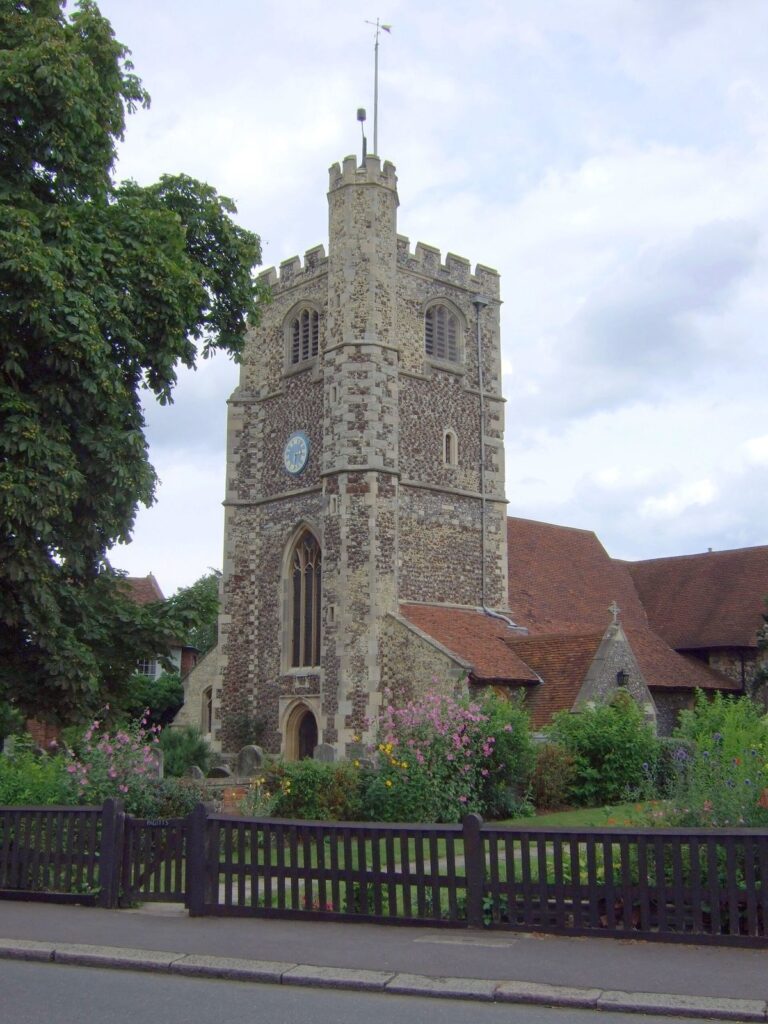
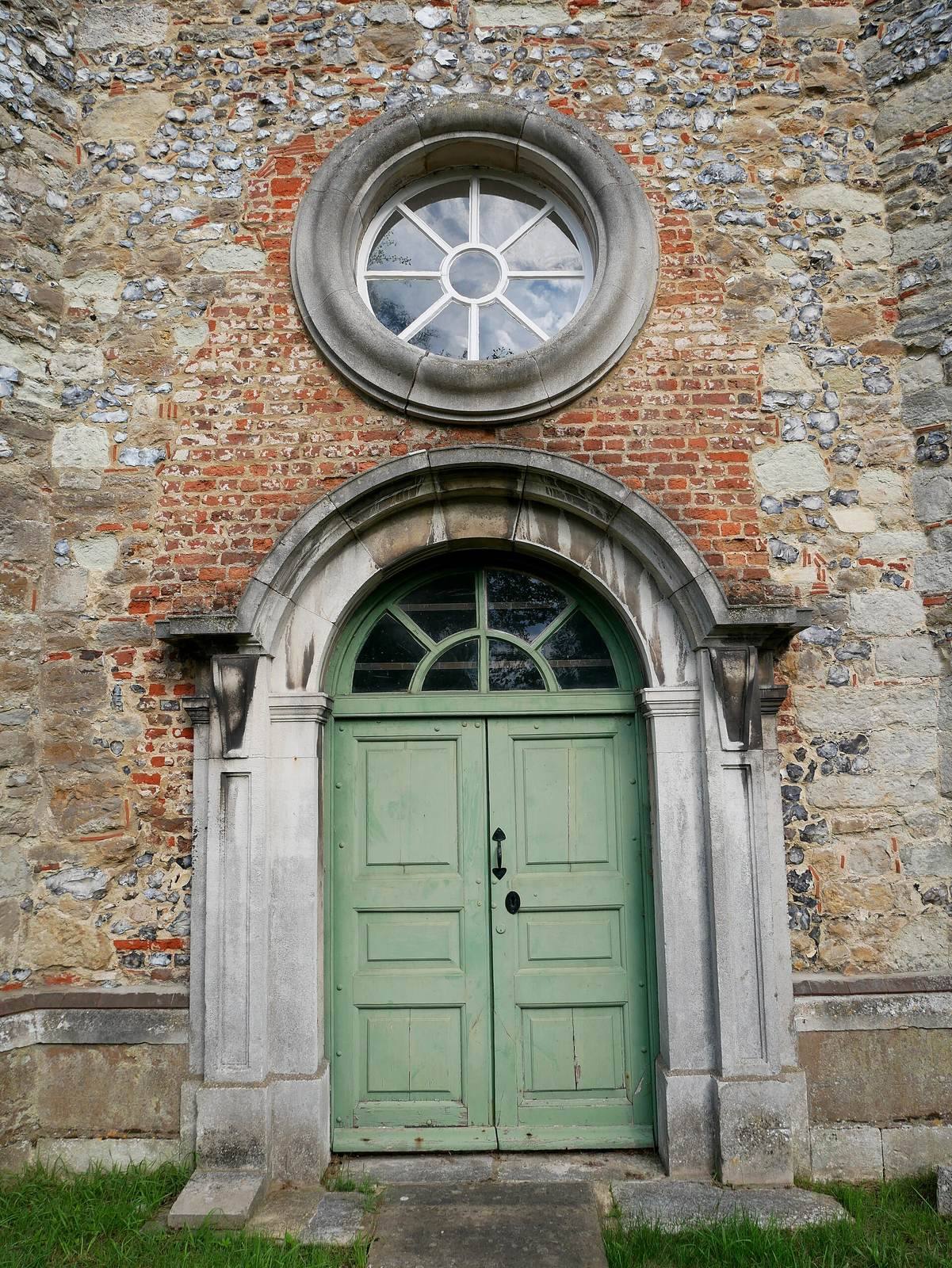
The surviving church combines a medieval stone tower with a Baroque main body. The Chandos Mausoleum is attached to the east end, where the organ is also situated.
Church architecture
Medieval tower
The church retains a stone tower dating to the 14th century. It stands alongside the main body rebuilt in the 18th century.
Baroque body and interior
The main body is in the Continental Baroque style. Its richly decorated interior is described as unusual in England. Louis Laguerre and other painters worked on both the church and Cannons.
Organ
The organ stands at the east end and is recognized as a historic instrument by the British Institute of Organ Studies. It is thought that Handel played it. Modernizations altered the instrument over time; in 1994, Goetze and Gwynn reconstructed it using surviving parts of the original 1716 organ, which had one keyboard, as a reference. Its action, the mechanism that operates it, can be noisy.
Chandos Mausoleum
Building and wall paintings
Attached to the church’s east end, the mausoleum was designed by James Gibbs in a European Baroque manner. Gaetano Brunetti painted its walls.
Central monument
The mausoleum’s centerpiece is a Baroque monument to the first Duke of Chandos and his first two wives. Grinling Gibbons, a sculptor and woodcarver, recorded the monument in 1717. Before the mausoleum was built, it stood inside the church.