Church of Saint Roch in Žižkov: A Baroque Cemetery Church in Prague
Site at a Glance
- Rating
- 4.7
- Popularity
- Medium
- Country
- Czechia
- Primary era
- Early Modern
- Eras represented
- Early Modern, Modern
- Civilizations
- Austria-Hungary, Habsburg, Habsburg Austria, Holy Roman Empire, Kingdom of Bohemia
- Site type
- Religious
- Remains
- Church
On this page11 sections
History
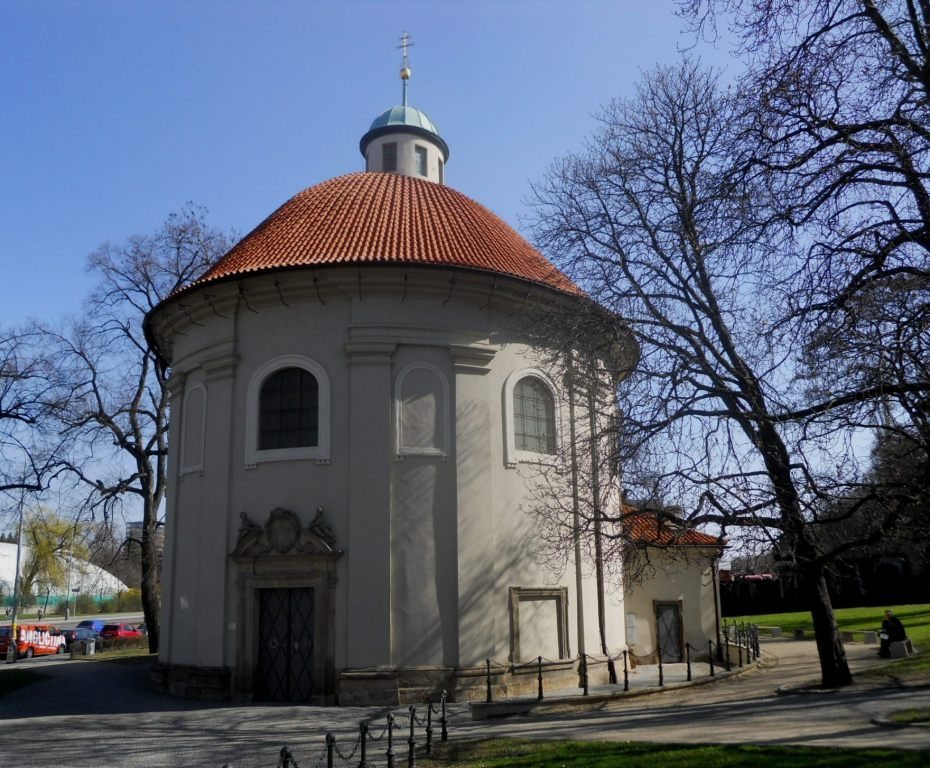
The Church of Saint Roch in Žižkov is a Roman Catholic church in Prague, Czechia, founded as a chapel for the Old Town’s cemetery at Olšany. Construction began in 1680 and was completed on 27 July 1682. It is the oldest church in present-day Žižkov. Its restrained Baroque design, part of a European style that flourished in the seventeenth and eighteenth centuries, also incorporates classicizing features. The church is dedicated to Saint Roch and is also known as the Church of Saints Roch, Sebastian, and Rosalia. These saints were traditionally invoked against plague.
Foundation as a cemetery chapel
The church stands on the site of the former village of Olšany, where Prague’s townspeople had vineyards from the Middle Ages. A plague epidemic in Prague in early 1680 prompted the creation of burial grounds outside the city walls. Three cemeteries were established at Olšany for the Old Town, New Town, and Jewish Quarter. The Old Town council approved a chapel for its burial ground, and Prague Archbishop Jan Bedřich of Valdštejn gave permission on 16 August 1680.
Jan Hainric built the chapel, probably following designs by the French architect Jean-Baptiste Mathey. Saint Roch continued to serve as a cemetery church after Olšany Cemetery began receiving ordinary burials as well as plague victims. People buried in the associated cemetery included theatre practitioner Václav Thám and his brother Karel Ignác, writer and priest Antonín Jaroslav Puchmajer, historian and priest Gelasius Dobner, priest Karel Rafael Ungar, and professor and priest Stanislav Vydra.
Parish use and later changes
In 1839, a governor’s decree abolished the parish church of the Elevation of the Holy Cross, a Christian feast commemorating the cross of Jesus, citing structural defects and its unfavorable location. Its six altars and parish were transferred to Saint Roch, where parish spiritual administration began in 1842. The church is now a filial church, meaning a subordinate church attached to a parish, within the Žižkov parish of Saint Procopius, an early medieval Bohemian abbot and Christian saint, and the Prague Archdiocese.
Later street construction at Olšany led to the removal of part of the cemetery wall and the old rectory. Reconstruction in 2005–2006 included replacement of the entire roof.
Remains
Plan and structure
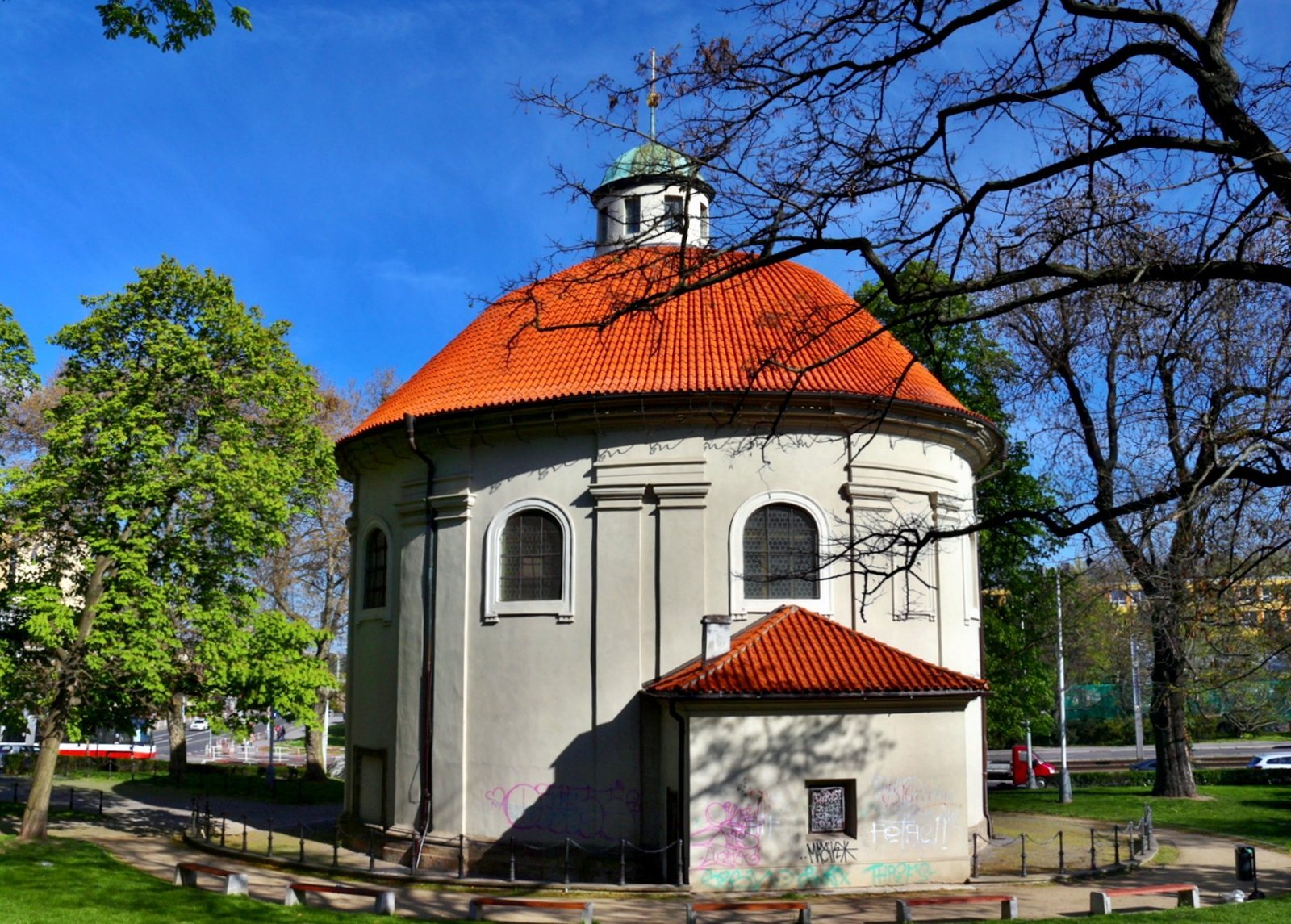
Built of stone and masonry, the church has an oval footprint and a dome topped by a small roof turret with a circular opening. Its shape has sometimes led to the inaccurate label “rotunda,” meaning a round building. Inside, shallow vertical strips and rows of arches divide the walls, with a gallery and protective railing above. The church now stands alone in a green space at Olšanské náměstí.
Altars, paintings, and objects
Main altar
Antonín Baum designed the architecture of the main Neo-Baroque altar in 1879, when the interior was restored and altered. Neo-Baroque is a later revival of Baroque forms. The altar’s frame holds a painting by Ignác Raab dated 1754. It depicts Mary as Queen of Heaven with angels above, while Saints Roch, Sebastian, and Rosalia venerate her below. Symbols in the background evoke the horror and devastation of plague.
Side altars
The altar on the right is dedicated to the Virgin Mary and holds a painting by Jan Heřman dated 1884. Opposite it is an altar to Saint Joseph, together with a statue of Saint John the Baptist donated from Switzerland in 1880.
Wall paintings
G. W. Weis painted the Stations of the Cross in 1854, following drawings by Josef Führich. Above the entrance to the sacristy, a room used for church vestments and preparation, is a large wall painting made by J. Steter in 1766. It depicts a litany, a prayer of invocations and responses, and includes a dedication inscription from the city council.
Portal inscription
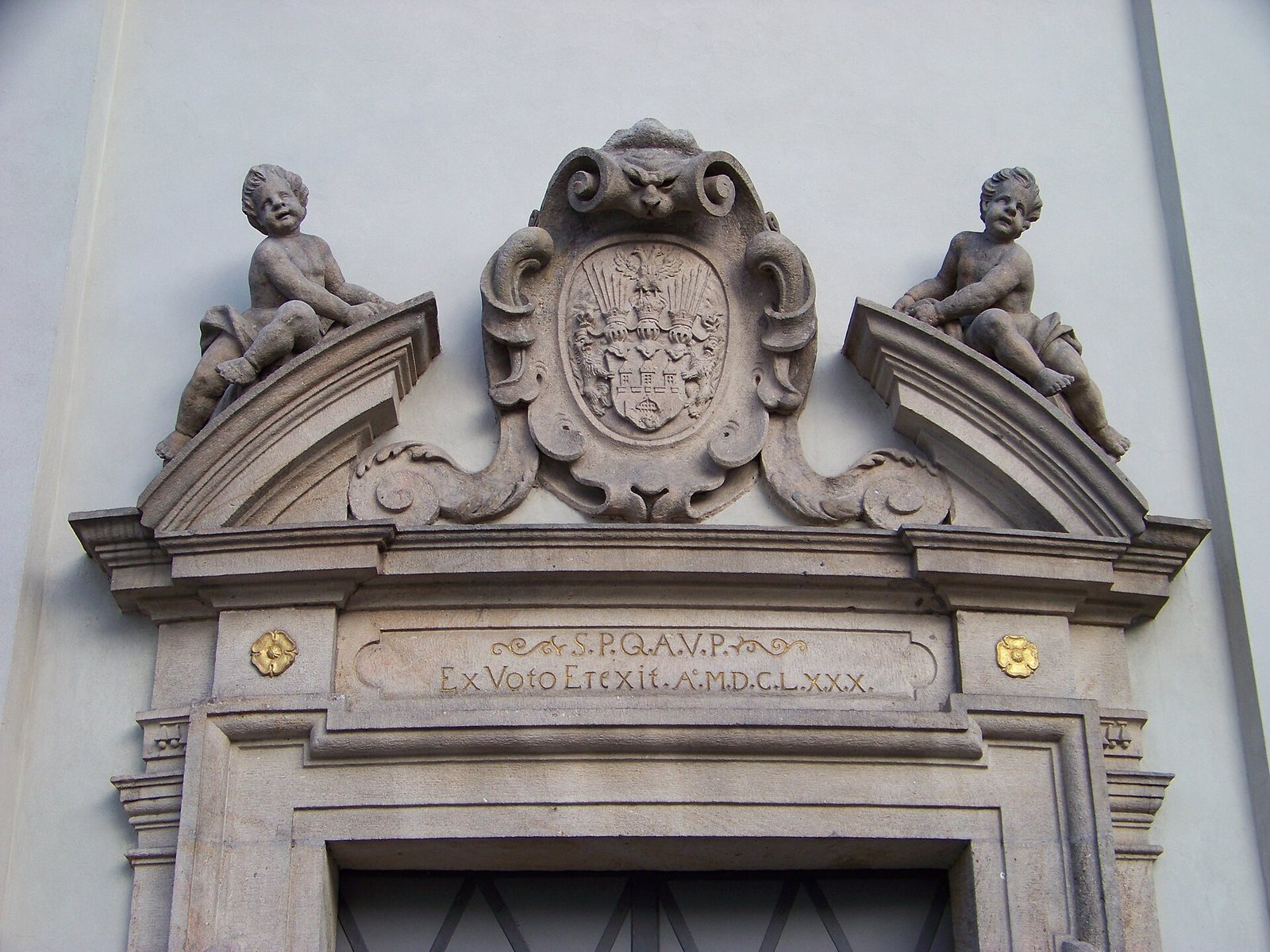
The portal bears the inscription “S.P.Q.A.V.P. Ex Voto A. MDCLXXX.” It identifies the council and community of Prague’s Old Town as having erected the church in fulfillment of a vow in 1680.
Baptismal font
The oldest object associated with the church is a Baroque tin baptismal font dated 1595, made by the tinworker Matouš Voříšek of Roudnice nad Labem. It was transferred to the collections of the City of Prague Museum.