Temple of Apollo in Side: A Roman Temple Dedicated to Apollo
Site at a Glance
- Rating
- 4.8
- Popularity
- Very High
- Country
- Turkey
- Primary era
- Classical
- Eras represented
- Classical
- Civilizations
- Roman
- Site type
- Religious
- Remains
- Temple
On this page7 sections
History
The Temple of Apollo in Side is a Roman temple in Turkey, built around AD 150 in the Corinthian style, an ornate classical architectural form. It was dedicated to Apollo, one of Side’s principal deities. Its construction took place during the reign of Emperor Antoninus Pius (AD 138 to 161), within the Pax Romana, a long period of relative peace and stability across the Roman Empire.
Roman construction and early Christian destruction
By the early Christian period, the temples at Side had fallen into ruin. In the fourth or fifth century, construction of the Southern Basilica’s entrance court replaced the temple area and destroyed the Temple of Apollo.
Rediscovery and debate over identity
In 1885, Polish art historian and traveler Karol Lanckoroński discovered the remains of two ancient temples at Side. Archaeologist A. F. Mansel led large-scale excavations there from 1947 to 1966. He dated the buildings and identified the larger as the Temple of Athena and the smaller as the Temple of Apollo.
Some later researchers have questioned Mansel’s identification of the smaller temple because its reliefs show Medusa, a Gorgon in Greek myth whose head Athena placed on a protective emblem. They have proposed that this building was dedicated to Athena instead.
Repairs and protection
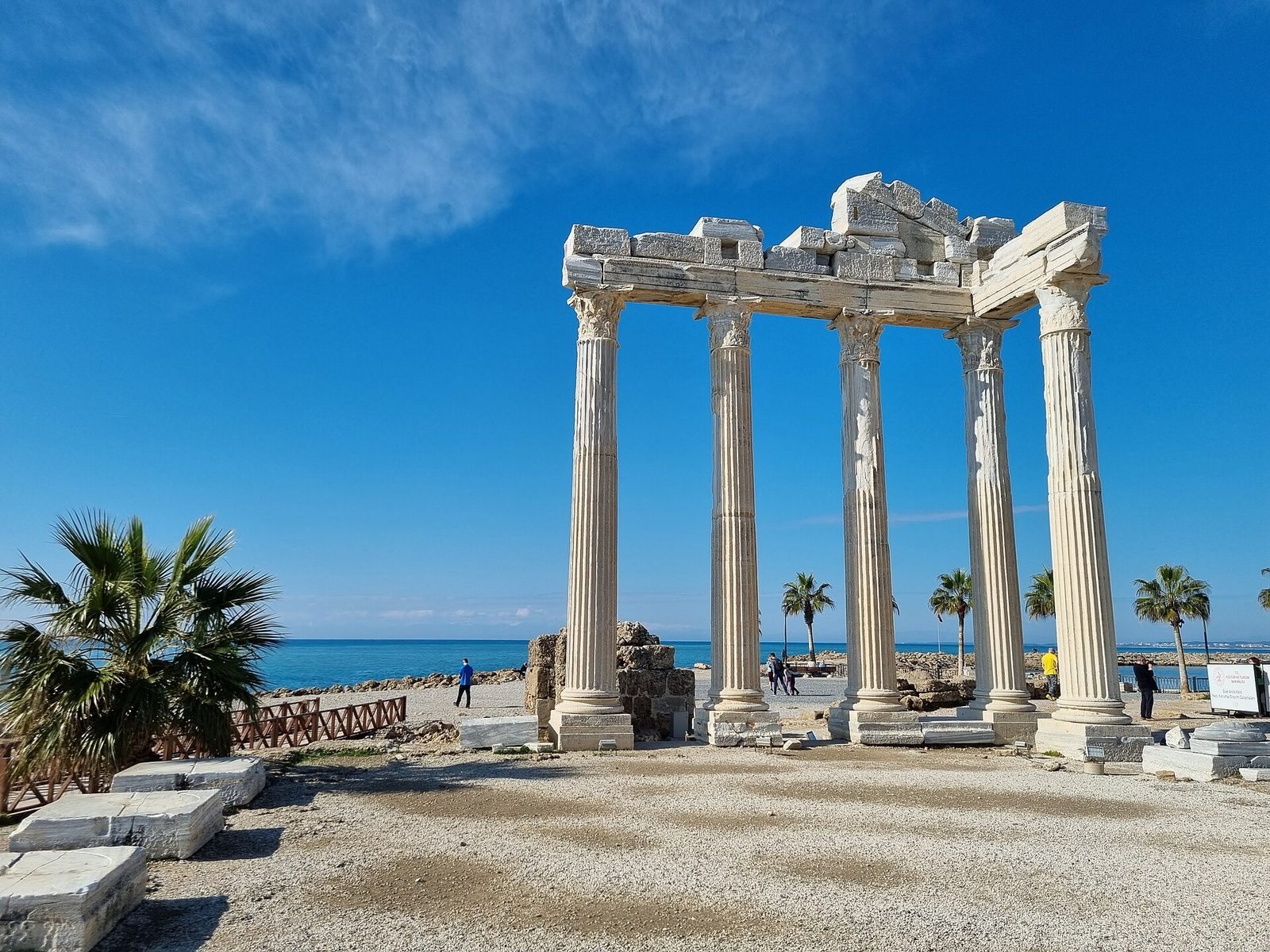
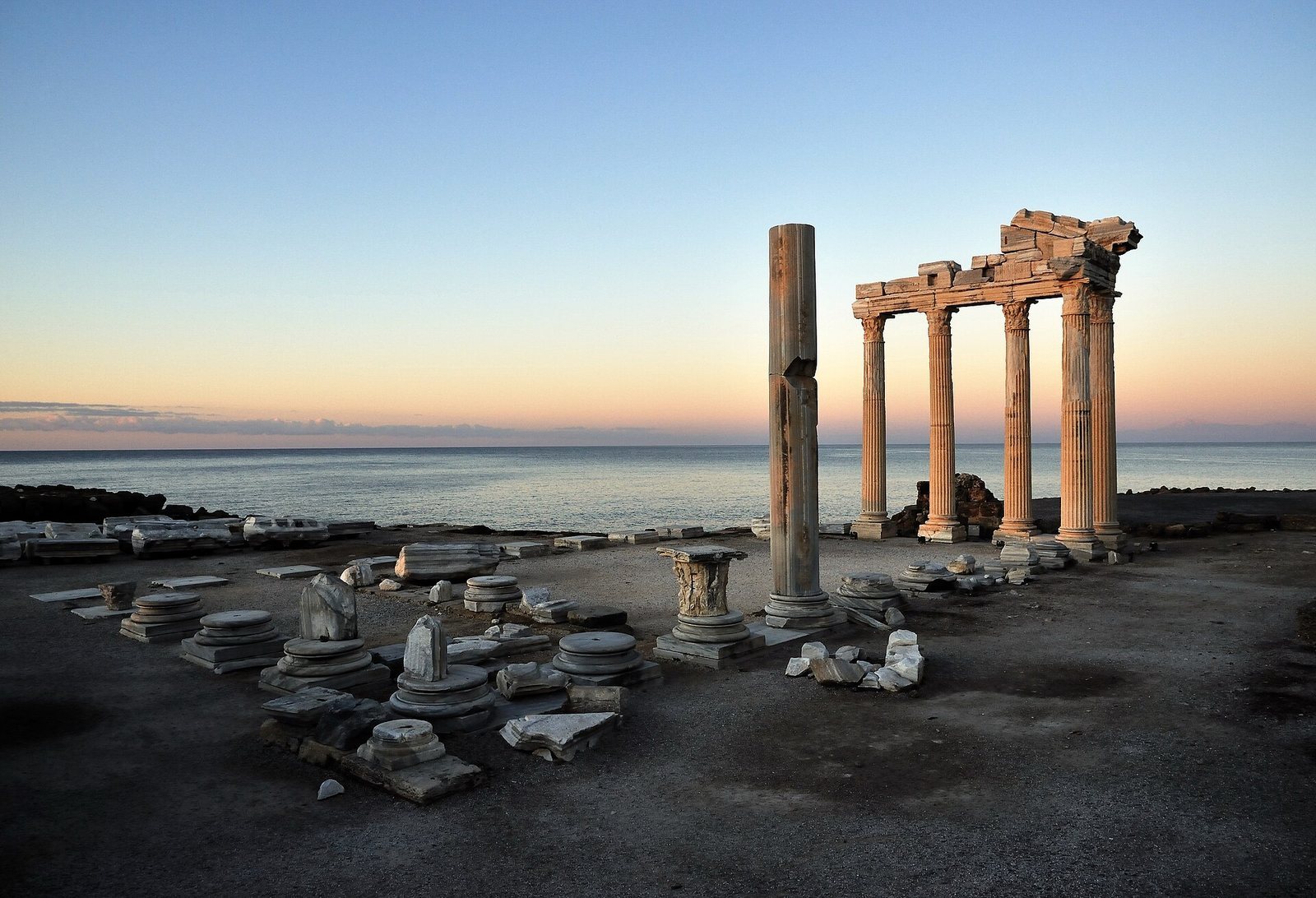
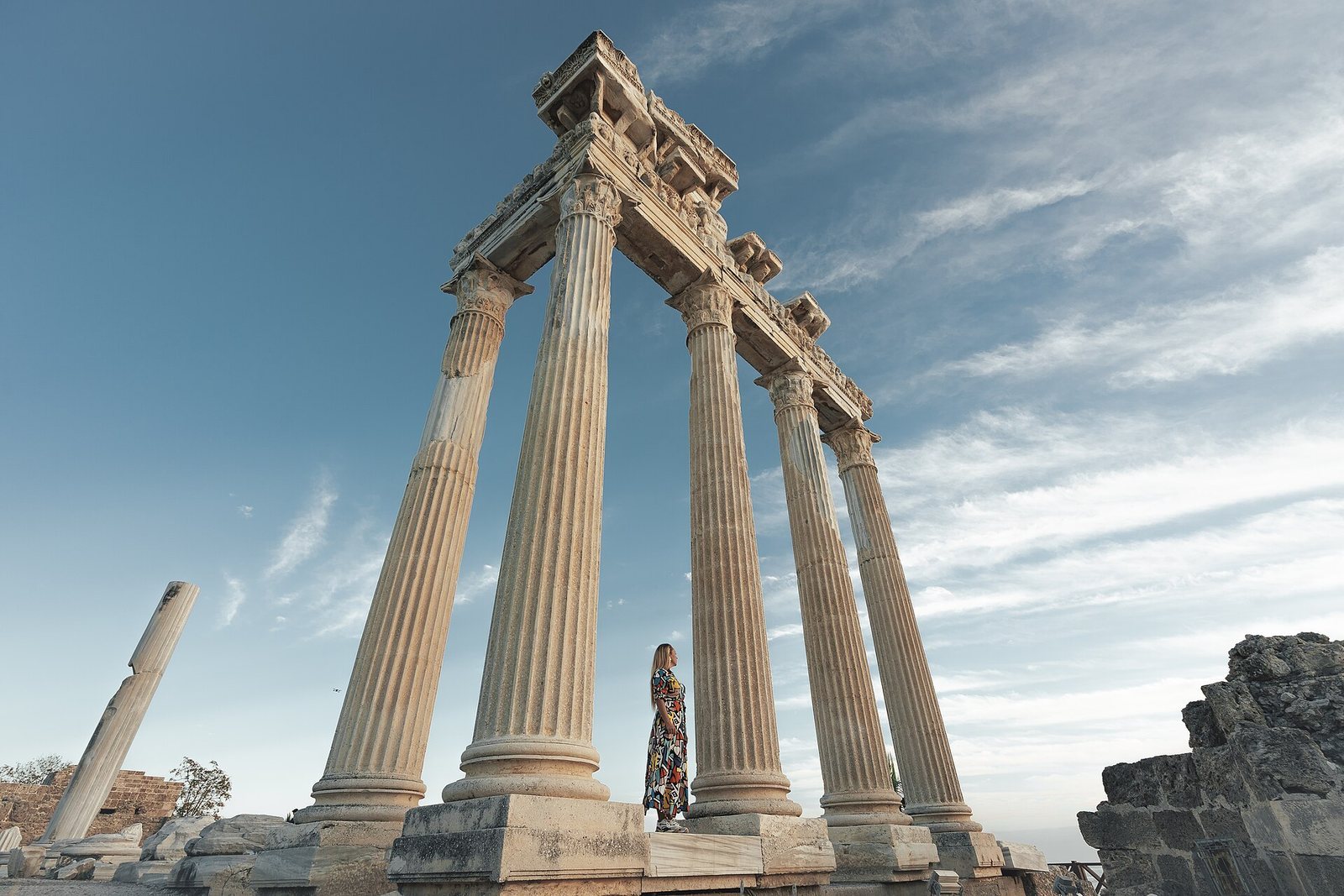
Restoration in the 1980s and early 1990s put five columns and their tops back in place, along with a horizontal structure above the columns and part of the western roof end. Further repairs in 2017 addressed weather-related deterioration and damage to the columns. The Turkish government protects the site.
In 2022, a nightclub opened near the archaeological site of the adjacent Temple of Athena, using historic remains as its entrance. Archaeologists warned that the venue’s lighting and noise could threaten ongoing excavations and surrounding monuments.
Remains
Plan and ornament
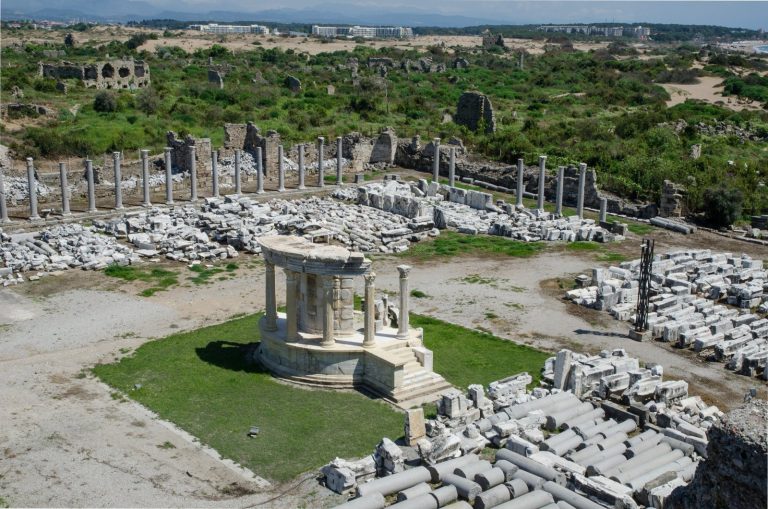
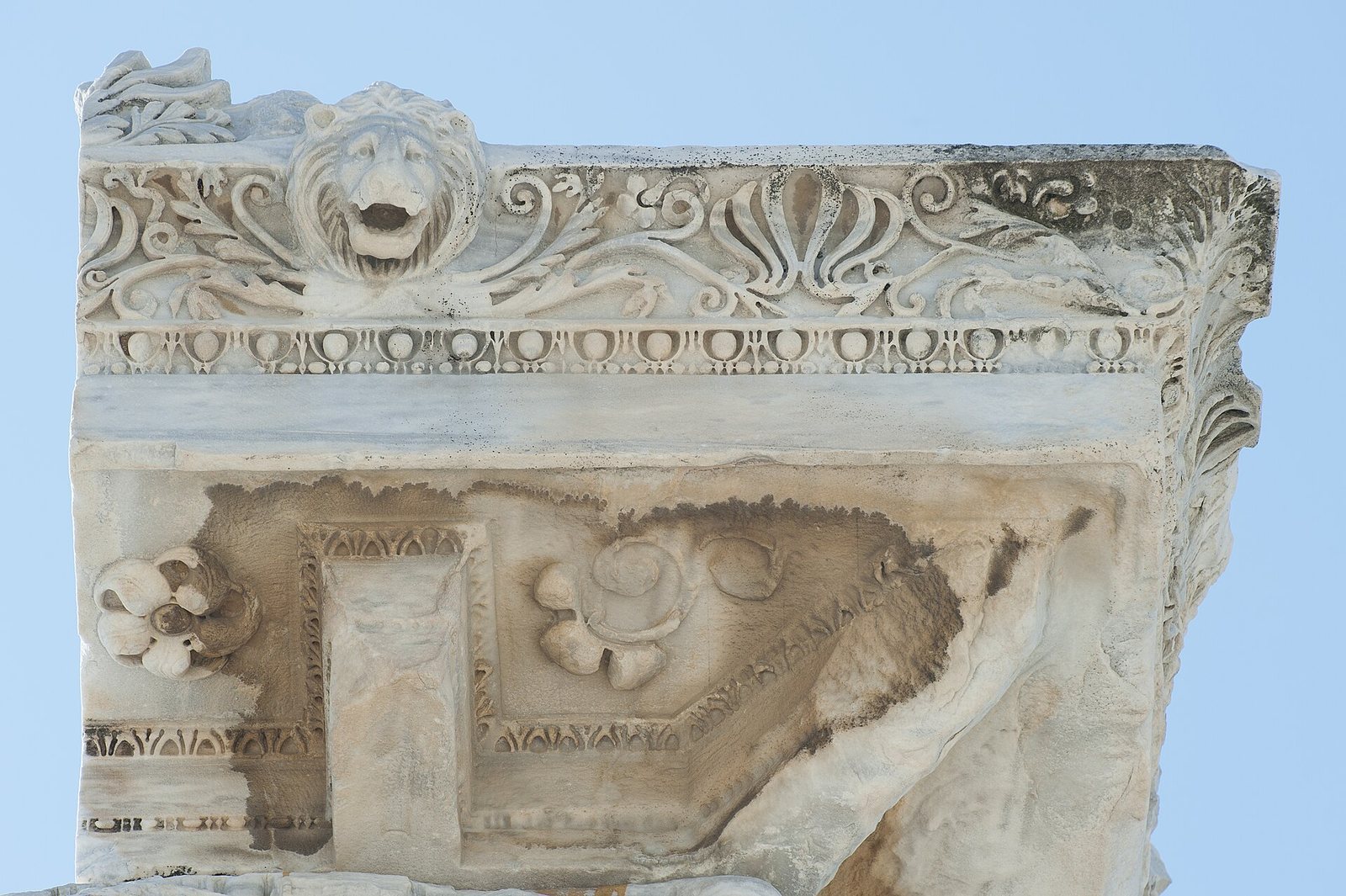
The temple stood at the southern end of Side’s promontory, near the seafront and harbor, with the larger Temple of Athena immediately to its south. Its colonnade had six columns along each short side and eleven along each long side, surrounding a platform about 16 by 30 metres. The columns, including their capitals (the top sections), rose 8.85 metres and had 24 vertical grooves apiece. Inside, an entrance porch with two columns led to the main inner chamber. The horizontal decorative band combined projecting, bracket-like supports with leaf-patterned bases, resembling the grooved blocks used in Doric architecture, and panels bearing reliefs of Medusa’s head.
Surviving structure and condition
Five columns and their capitals remain, together with an entablature, the horizontal structure above the columns, and part of the western pediment, the triangular end of the roof. Most other remains consist of foundations and separate structural elements. The columns stand on reinforced-concrete bases finished to imitate marble. By 2007, the concrete and its facing had crumbled, exposing rusted reinforcing bars.