Santuario della Madonnetta: A Baroque Sanctuary in Genoa
Site at a Glance
- Rating
- 4.8
- Popularity
- Medium
- Country
- Italy
- Primary era
- Early Modern
- Eras represented
- Early Modern, Modern
- Civilizations
- Genoese, Kingdom of Sardinia
- Site type
- Religious
- Remains
- Sanctuary
On this page13 sections
History
The Santuario della Madonnetta, formally the Sanctuary of Our Lady of the Assumption of Carbonara, is a Roman Catholic sanctuary dedicated to the Virgin Mary in Genoa, Italy. It was established for the Discalced Augustinians, a branch of the Augustinian order associated with stricter religious observance, and remains an active place of worship. It is regarded as one of the province of Genoa’s principal shrines dedicated to Mary. Construction of its Baroque church began on 4 May 1695, and it opened for worship on 15 August 1696.
Foundation and construction
The sanctuary grew from a chapel that preacher Carlo Giacinto di Santa Maria enlarged in 1689 on the ruins of the church of San Giacomo. The chapel housed a small alabaster Madonna from Sicily, donated in 1650 by Giambattista Cantoni, a merchant from Savona. The statue’s name, Madonnetta, means little Madonna and gave the sanctuary its familiar name.
Architect Giovanni Antonio Ricca, known as the Elder, designed the new church while retaining the earlier chapel’s basic structure. He became an Augustinian friar after completing the work. On 18 April 1706, Giambattista Costa consecrated the church on behalf of Genoa’s archbishop, Cardinal Lorenzo Fieschi. Its dedication honored the Nativity of Jesus and Mary as the Immaculate Virgin, Assumed into Heaven, and Queen of Angels and Martyrs.
Devotion and later history
Sanctuary tradition holds that in 1696 Mary promised Carlo Giacinto di Santa Maria she would be present there every 15 August, from dawn until sunset, until the end of the world. From that year, the friars opened the sanctuary on the feast day for Genoa’s doge, its chief elected magistrate, three senators, and other worshippers. Mary was said to be visible only to Carlo, who continued to report visions until his death on 23 April 1721.
The annual devotion continued until it was suspended in 1943 because of the war. Worshippers and rector Eugenio Cavallari revived it on 15 August 2012. The sanctuary’s organ, built by Lorenzo Roccatagliata in 1733, was rebuilt by Carlo Giuliani in 1844. Giuliani added a second keyboard, retained most of the earlier instrument, and adapted it for nineteenth-century music; the organ was restored in 2012.
The sanctuary’s exterior decorations underwent a full restoration in 2003. Its Genoese nativity scene has been a permanent exhibition since 1977. Genoa’s tradition of nativity-scene production dates to the early seventeenth century, when the city became a major centre for the craft alongside Naples.
Remains
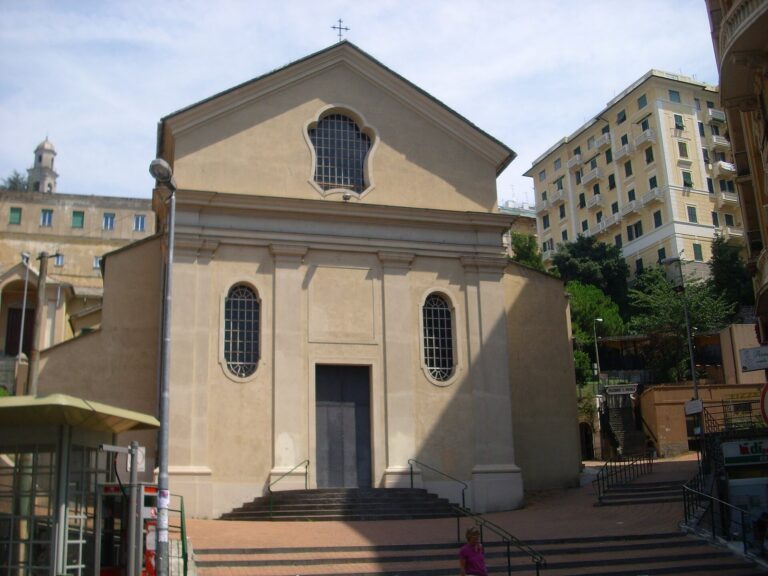
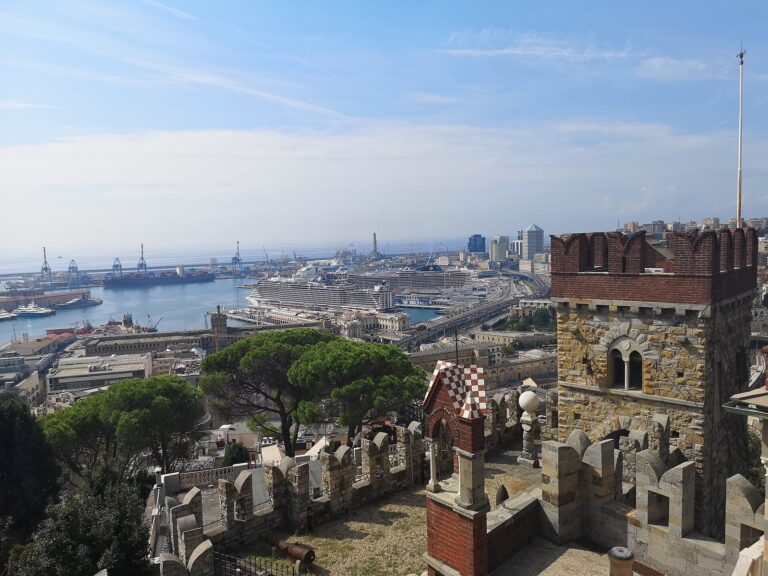
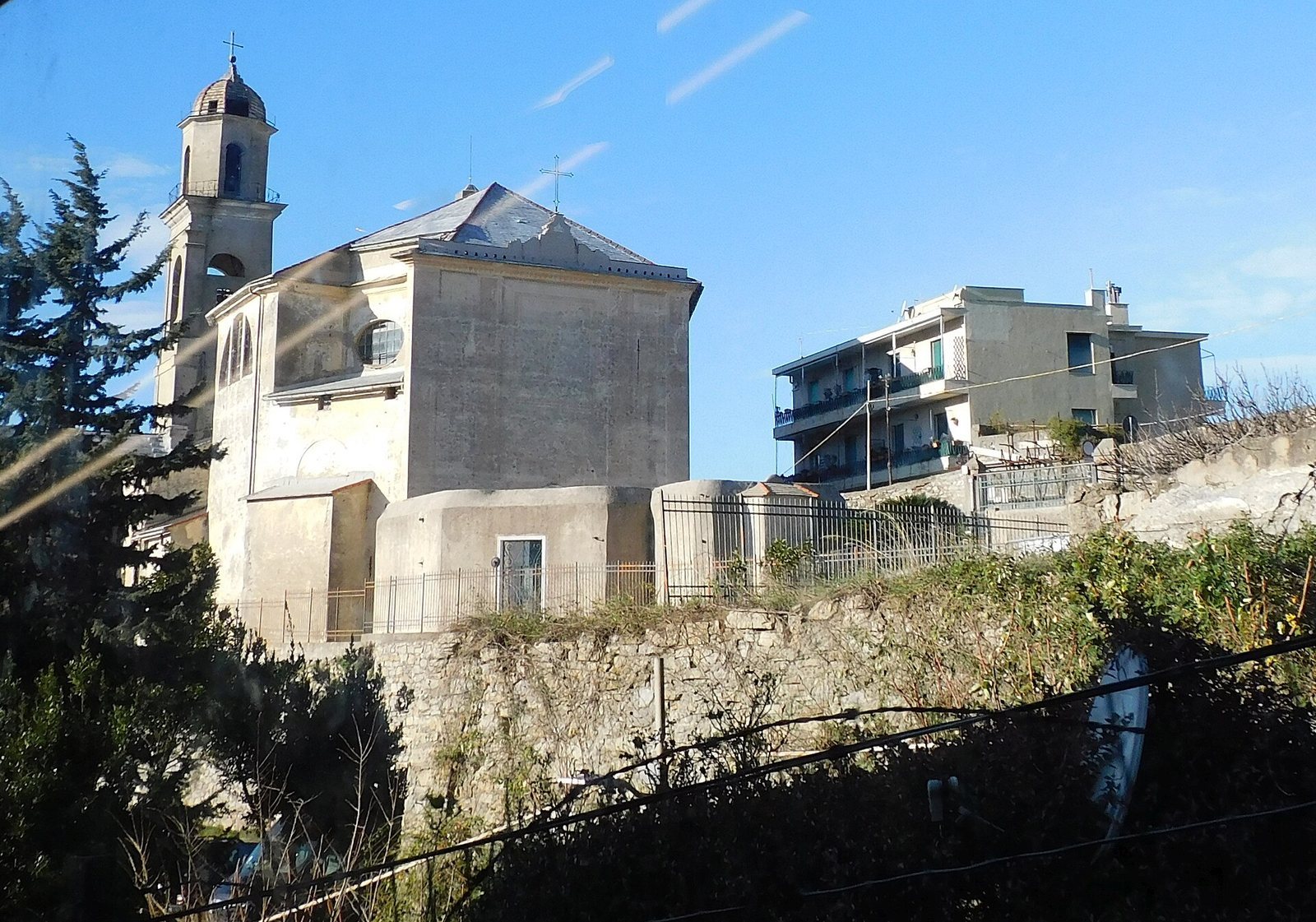
The sanctuary stands on the slope of Righi hill, between the Castelletto and Righi districts. Its church has a tower and a bell tower, while the interior follows an elongated octagonal plan. This shape was understood as a reference to Christ’s Resurrection, symbolized by the eighth day.
Exterior and forecourt
Facade and towers
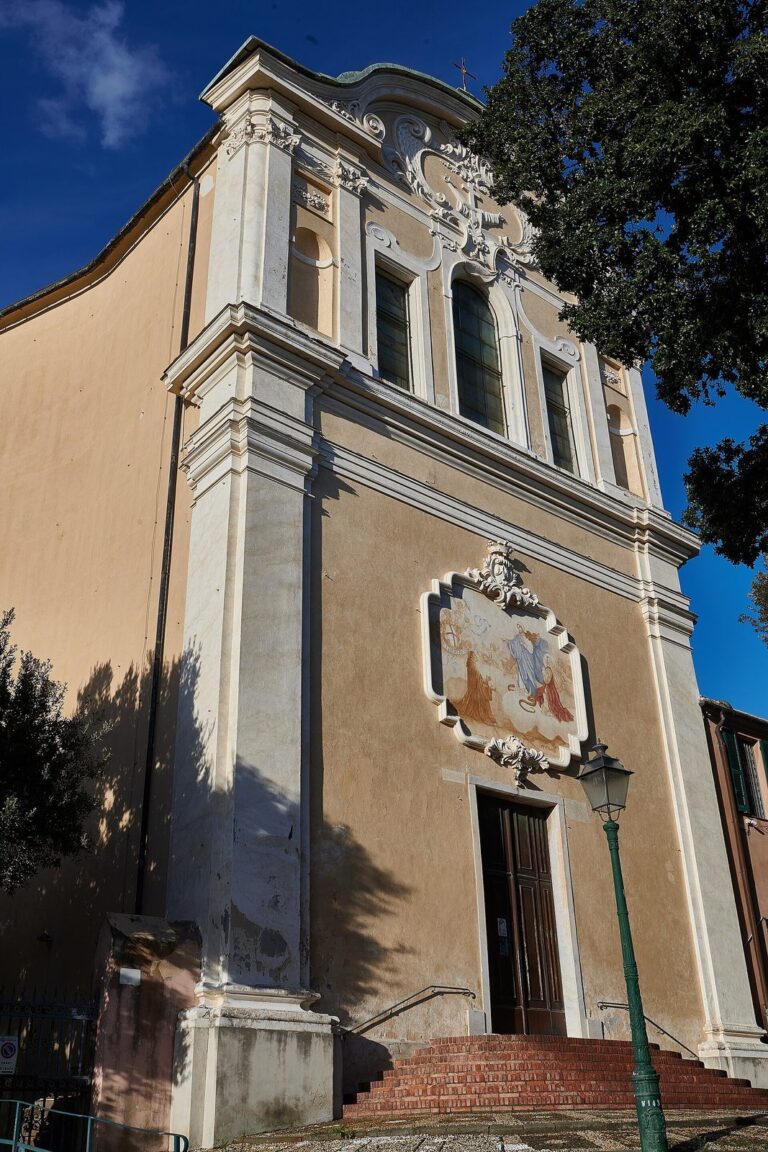
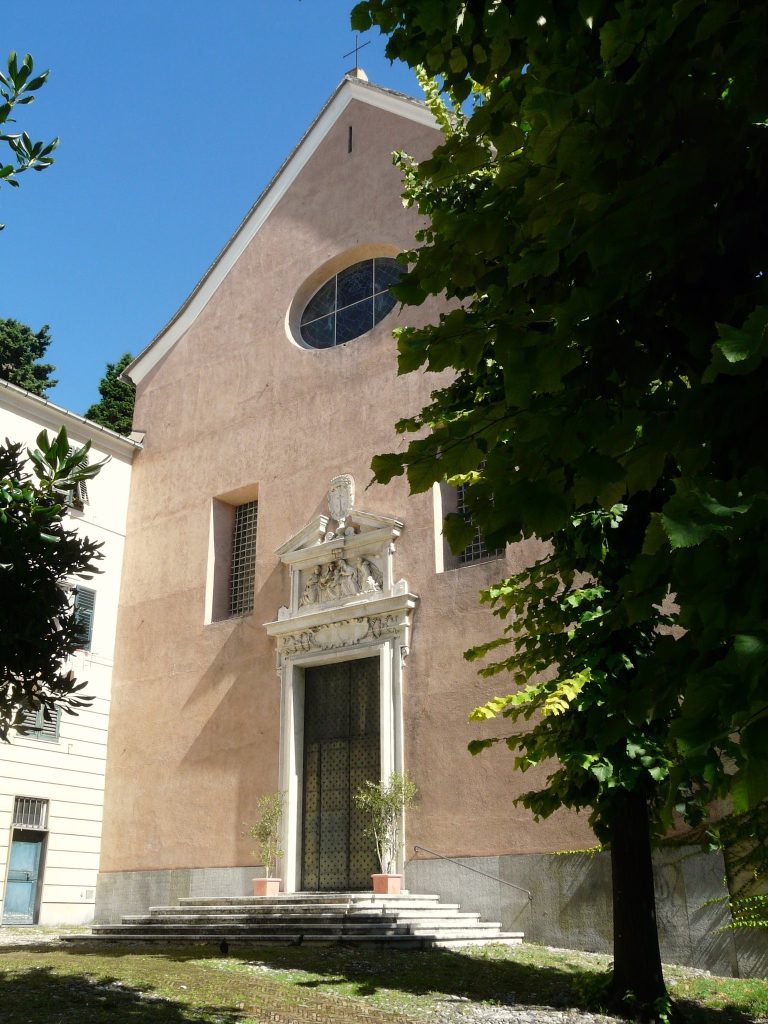
The main facade is decorated with painted architectural details designed to create the illusion of three-dimensional forms. A large square niche at its centre holds a sculpture of the Assumption of the Virgin Mary.
Forecourt and surrounding wall
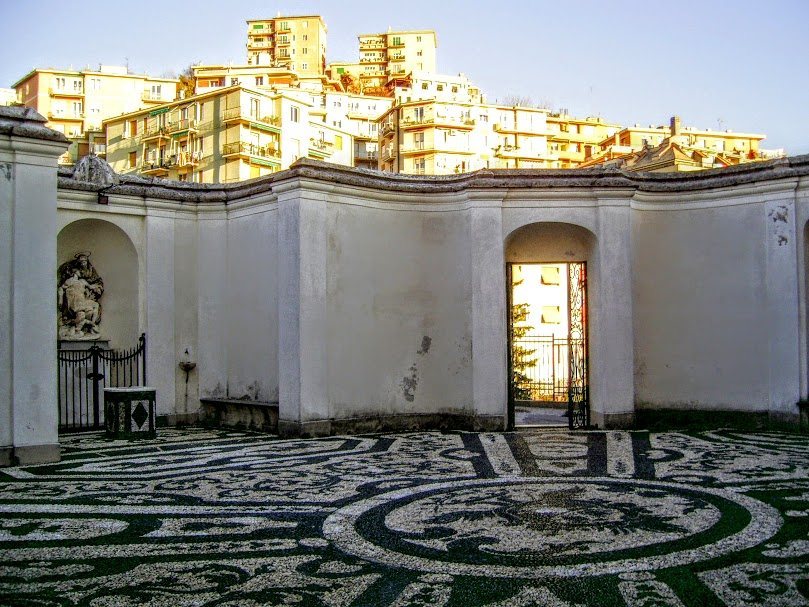
An octagonal forecourt in front of the church is paved with rissoeu, contrasting black and white pebbles. Bartolomeo Storace designed the paving in 1732 and built the surrounding wall in 1731. The wall carries painted images of Mary, and a niche aligned with the church entrance contains a marble Pietà, a sculpture showing Mary with the dead Christ, attributed to Domenico Parodi.
Interior and underground spaces
Church interior
The church has one long central space and six side chapels, three on each side. Two large chapels extending to the full height of the interior mark its crosswise axis, with windows above them. The raised altar area is reached by two flights of stairs and stands over the crypt. The design drew on Ricca’s 1688 project for Sant’Antonino in Lucinasco. Here, the altar area was raised and lengthened to provide access to the chapel and crypt below, while strengthening the church’s lengthwise axis.
Paintings and sculpture
Paintings and decorative plasterwork, most completed in the first half of the eighteenth century, follow a program focused on the sinner’s conversion and the exaltation of the Virgin Mary. Bartolomeo Guidobono’s 1697 paintings include the Coronation of the Virgin on the vault of the crypt chapel and the Supper at Emmaus on the wall of the convent dining room. A statue of the Madonnetta is associated with the school of sculptor Giuseppe Gaggini (1791–1867).
Sacristy
The sacristy contains a sixteenth-century panel showing the Annunciation and the Assumption, a small canvas by Guidobono, and Giovanni Battista Paggi’s 1620 painting Jesus with Saints James and John. The Annunciation panel was formerly attributed to Lodovico Brea.
Crypt
A short sloping passage leads to the underground crypt, a vaulted chamber with an octagonal plan and decorative plasterwork. An opening in the upper church floor reveals it from above; a wooden Pietà by Anton Maria Maragliano and his workshop, dated 1733, occupies the well-like opening. The crypt altar has spiral alabaster columns and holds an alabaster Madonnetta, described as a sixteenth-century copy of the corresponding statue in Trapani Cathedral. The sanctuary contains about 25,000 relics, revered remains or objects associated with saints and other sacred figures.
Genoese nativity scene
A passage from the crypt leads to the room containing the Genoese nativity scene, a sculpted Nativity arranged within a larger setting. Its roughly eighty figures include seventeenth- and eighteenth-century statuettes arranged in scenes of old Genoa, depicting neighbourhoods, crafts, everyday work, and people of different social ranks. Recognizable local monuments form part of the setting. A reconstructed Genoese farmstead appears in a landscape representing the Val Bisagno valley. The wooden figures in the Nativity tableau are attributed to Gaggini, while other wooden statuettes are attributed to Maragliano.