Oude Kerk in Scheveningen: A Late-Gothic Village Church
Site at a Glance
- Rating
- 4.5
- Popularity
- Medium
- Country
- Netherlands
- Primary era
- Medieval
- Eras represented
- Medieval, Early Modern, Modern
- Civilizations
- Duchy of Burgundy, Dutch, Habsburg, Holy Roman Empire
- Site type
- Religious
- Remains
- Church
On this page17 sections
History
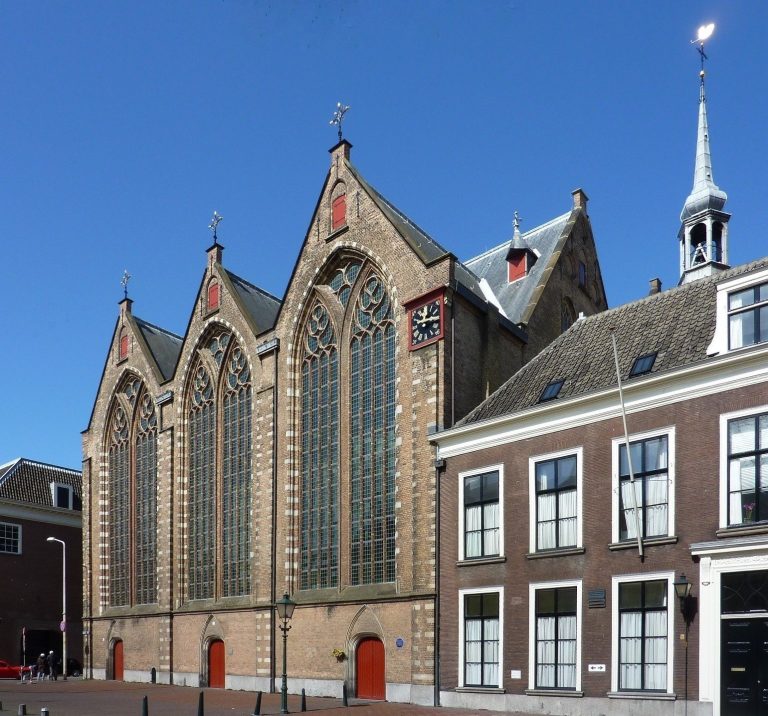
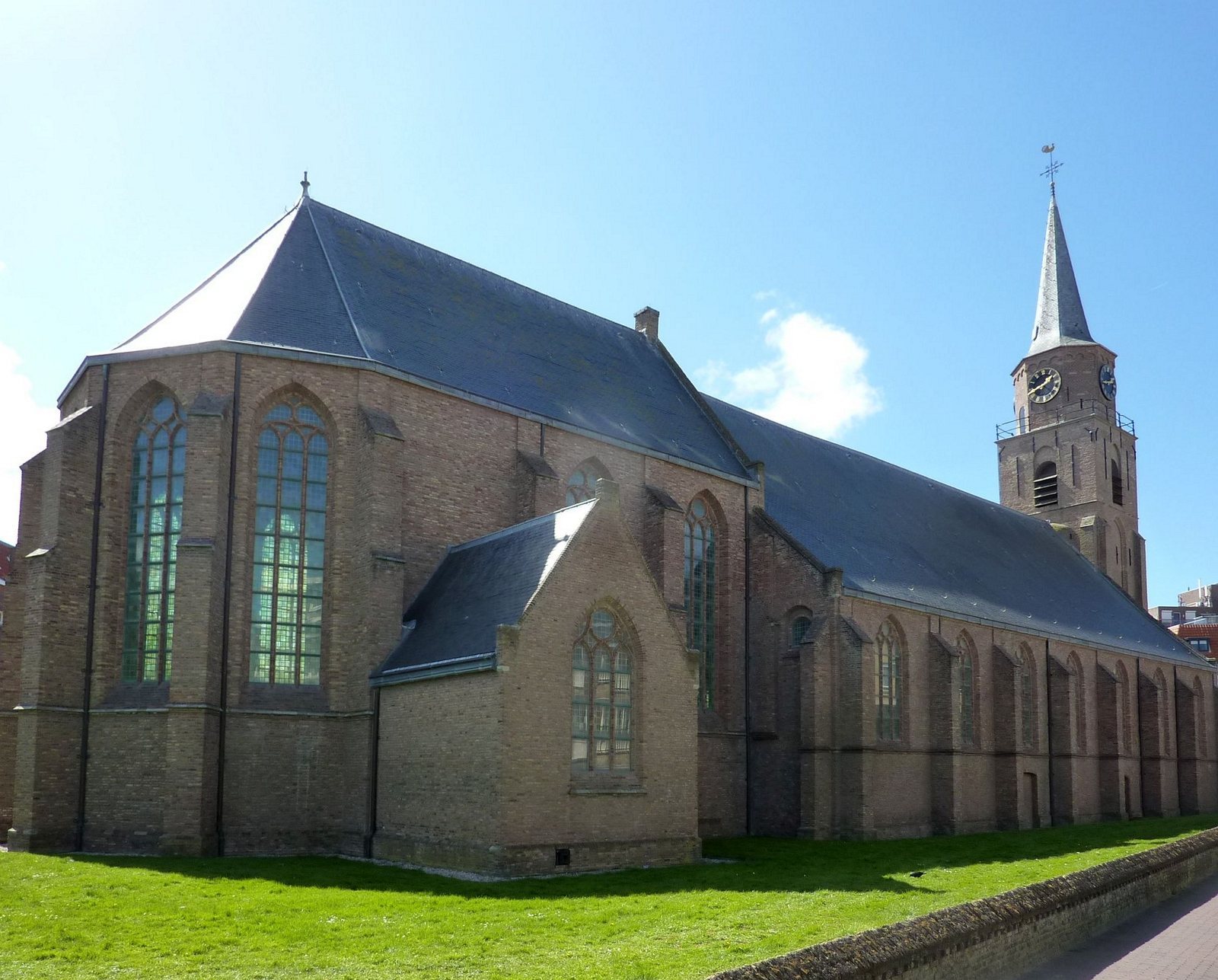
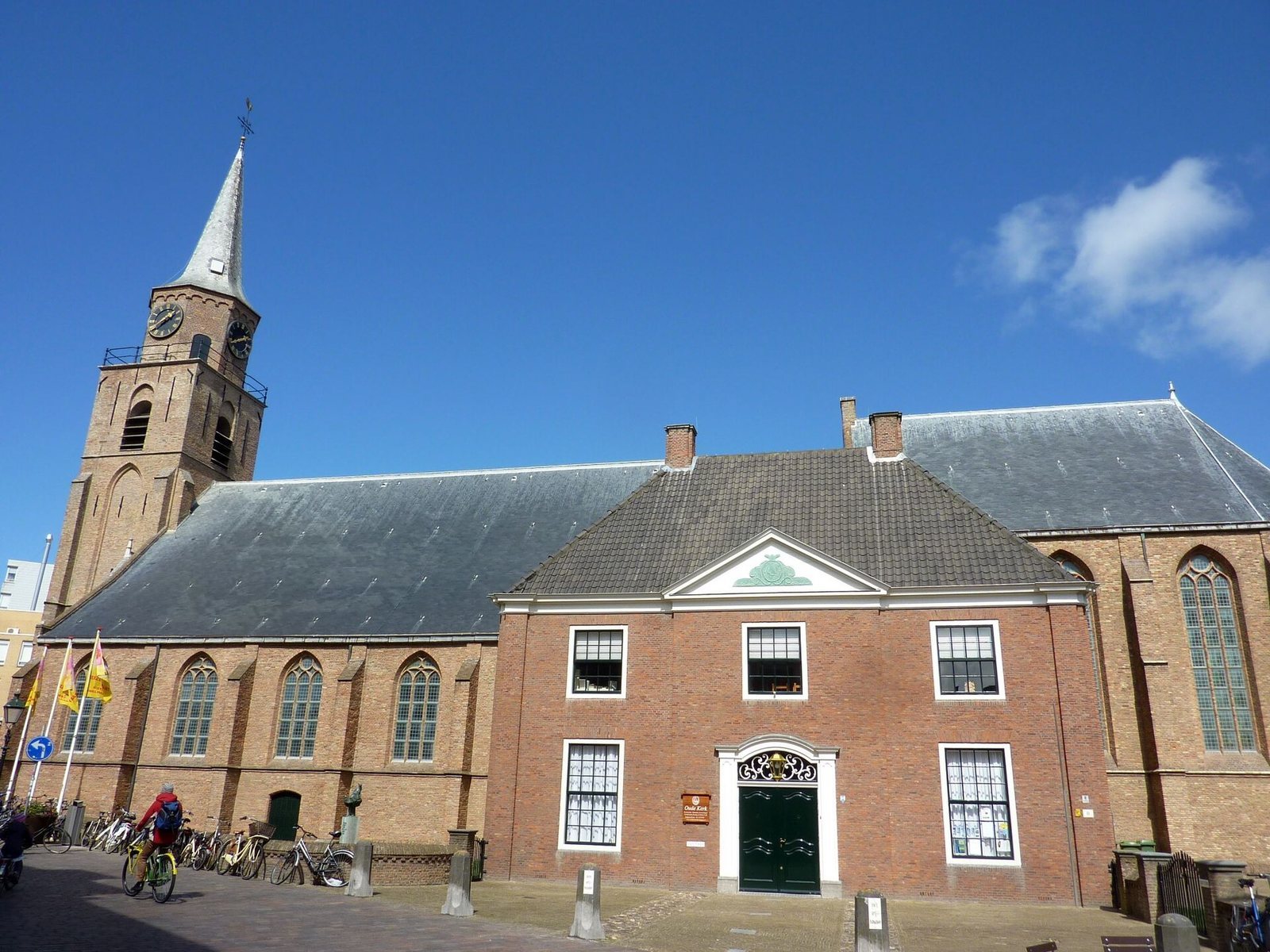
The Oude Kerk in Scheveningen is a late-Gothic church on Keizerstraat in the Netherlands, built in the 15th century and regarded as the oldest building and monument of the former fishing village.
Chapel and parish church
Scheveningen’s chapel was founded in 1357 and dedicated to St Anthony the Abbot, an early Christian religious leader associated with the beginnings of monastic life. Before the chapel became an independent church, villagers had to travel to The Hague to receive the sacraments. The journey across the dunes was particularly difficult for sick and elderly people. In 1466, the chapel gained independent status, allowing the sacraments to be administered in the village.
The present church replaced the chapel during the 15th century. A flood in 1470 prompted substantial rebuilding. The church also survived the All Saints’ Flood on 1 November 1570, which destroyed much of Scheveningen and left the church at the village’s edge rather than its center.
Reformation and later changes
In 1578, Catholic clergy were expelled from Scheveningen and the Protestant Reformation, a movement that established Protestant churches and forms of worship, was introduced. The church was adapted for Calvinist services: its altars, images, and other Catholic furnishings were removed. A screen divided the choir, the area around the altar, from the nave, and the choir later served for religious instruction.
A large churchyard originally surrounded the church. In 1778, the Ter Navolging cemetery was established on a dune near the corner of present-day Duinstraat. It was the first cemetery in the Netherlands located outside a built-up area. When a second church opened on Duinstraat in 1893, the Keizerstraat church acquired the name Oude Kerk, or Old Church, to distinguish it from the new building.
Galleries and other alterations were added in the late 19th century. A restoration in 1957–59 reversed these changes. The Oude Kerk became a Dutch national monument in 1967. It serves a Reformed congregation within the Protestant Church in the Netherlands and also provides space for the Oude Kerk district congregation and the Restored Reformed Congregation Thabor Scheveningen, which belongs to a separate Dutch Reformed Protestant body. The interior is also used for cultural events.
Remains
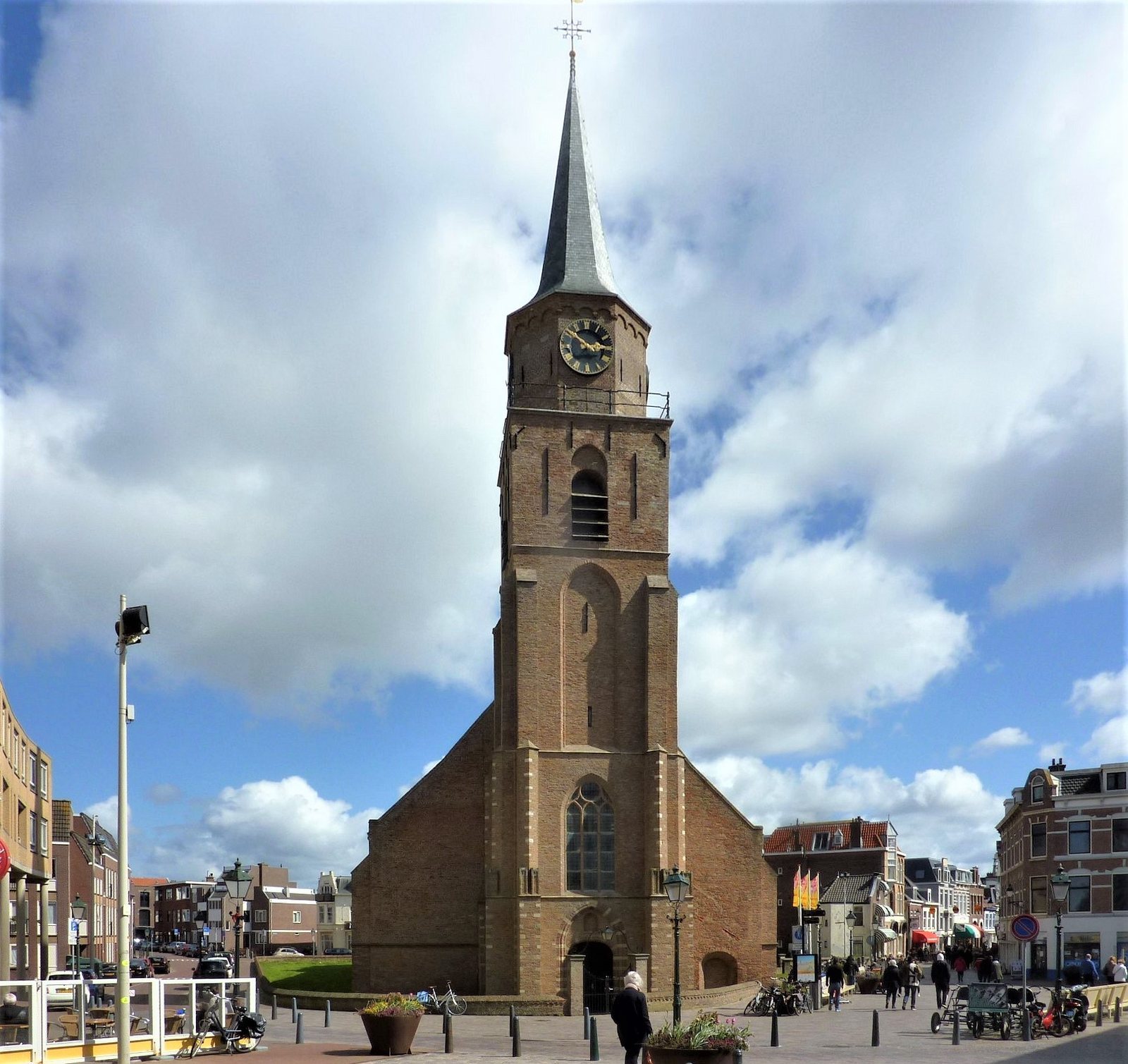
The church stands on a dike beside the North Sea coast. Its late-Gothic plan has three aisles, with a central nave higher than the side aisles but without the upper windows found in a basilica. The church’s layout brings together a raised choir, a west tower, and later additions on its north and south sides.
Building and interior
Plan and structure
Incised numbers in the timber roof indicate that construction took place in the second half of the 15th century. The five-sided, closed choir, which rises above the nave, was already in place at the time of the rebuilding that followed the 1470 flood. The nave followed around 1500, and a west tower was added in front of it around 1525. The tower’s upper storey is octagonal, a form also found at the nearby abbey church of Loosduinen, in a district of The Hague.
Transept and adjoining buildings
A south transept was added during the 16th century. In the 19th century, it was replaced by a sexton’s house, which in turn gave way to a community hall in a style reviving 18th-century Baroque forms in 1957–59. On the north side of the choir, a sacristy, a room used for church services and vestments, was reconstructed on 16th-century foundations.
Floors and restored interior
The restoration removed the north-side galleries and uncovered gravestones that had been covered with floorboards, rearranging them in a new layout. The interior is white-painted. Tiled floors with underfloor heating have replaced the wooden flooring that formerly lay beneath the benches.
Pulpit
The pulpit dates to 1756–57 and is in the Rococo style, an ornate decorative style associated with the 18th century. The woodcarver Jozephus de Bondt made its carved decoration.
Main organ
Gerard Steevens of The Hague built the main organ in 1765 as an instrument with one keyboard and an attached foot-operated pedal. De Bondt carved the front of its case. The instrument was enlarged by the H. B. and G. W. Lohman firm in 1845. J. de Koff & Son changed its arrangement of stops and pipes and added a separate pedal section in 1932; a further expansion followed in 1935. Flentrop restored it in the 1970s, largely returning it to its 1845 arrangement, and part of the pedal work was replaced in 2006. Much of the case’s original, more elaborate carving was lost during alterations. Three figures remain, including King David, the biblical king traditionally associated with the Psalms, on the central tower.
Choir organ
A separate choir organ was built in 1791 by Johann Michael Gerstenhauer of Monnickendam for a Catholic clandestine church, a discreet place of worship used by a community unable to worship openly, in Westwoud, North Holland. After standing at several locations in the province, it was restored by Flentrop in 1959 and installed in the Oude Kerk in 1961.
Bells, carillon, and clock
The tower holds a bell cast in The Hague in 1597 by Conraet Antonisz. A second bell cracked and was sold in 1798; a replacement was installed in 2013. Since 1975, the tower has also held a 37-bell carillon, a set of tuned bells played from a keyboard, cast by Eijsbouts of Asten. A pendulum in a tower clock was tested by Christiaan Huygens, the Dutch mathematician and physicist. Clockmakers later used the name Scheveningen pendulum for the design, which was adopted in most tower clocks as a more precise alternative to the earlier balance mechanism.
Memorials and historical objects
Gravestones
The oldest gravestone in the church dates to 1469 and marks the grave of churchwarden IJsbrant Arentszoon, who died on 25 September that year. Another stone commemorates five girls born in Scheveningen on 5 January 1719. One was stillborn, and the other four lived for a day. They were buried in the choir on 18 February, 44 days after their birth.
Memorials to Van Heemskerck and Pansier
A tomb monument to Cornelis van Heemskerck (1724–1783), an advocate at the Court of Holland, stands beside the tower on its south side. Theodorus Pansier (1768–1818), director-general of all Holland’s signal posts in 1811, was buried in the choir.
Whale remains
The jaw and other remains of a 20-metre sperm whale that stranded on Scheveningen beach in 1617 stand in a corner beside the church’s north wall.
Church seal and fishing boat model
A stained-glass window depicts the church seal, which shows a traditional Dutch fishing boat. The church also displays an 80-centimetre model of the fishing boat SCH 107 Scheveningen, added in 2012.