Kala Wewa: An Ancient Irrigation Reservoir in Sri Lanka
Site at a Glance
- Rating
- 4.6
- Popularity
- High
- Country
- Sri Lanka
- Primary era
- Classical
- Eras represented
- Classical, Medieval, Modern
- Civilizations
- Unclassified
- Site type
- Infrastructure
- Remains
- Dam
On this page10 sections
History
Datusena and the reservoir’s construction
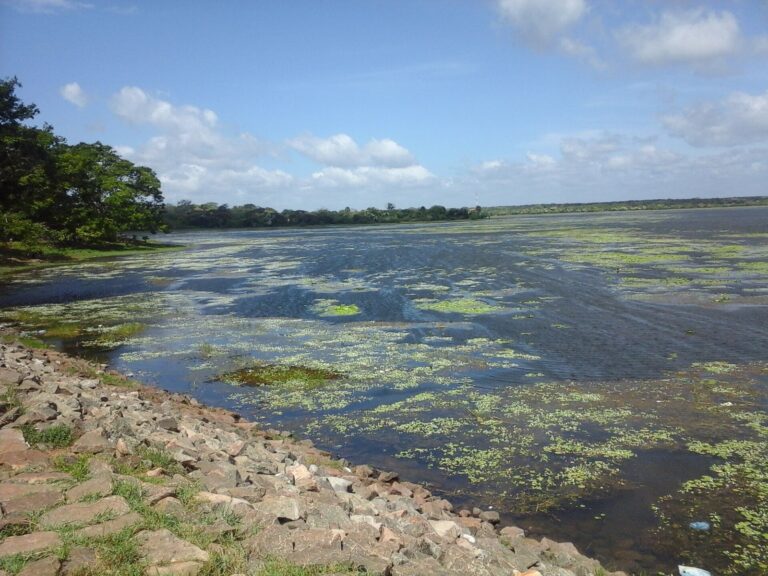
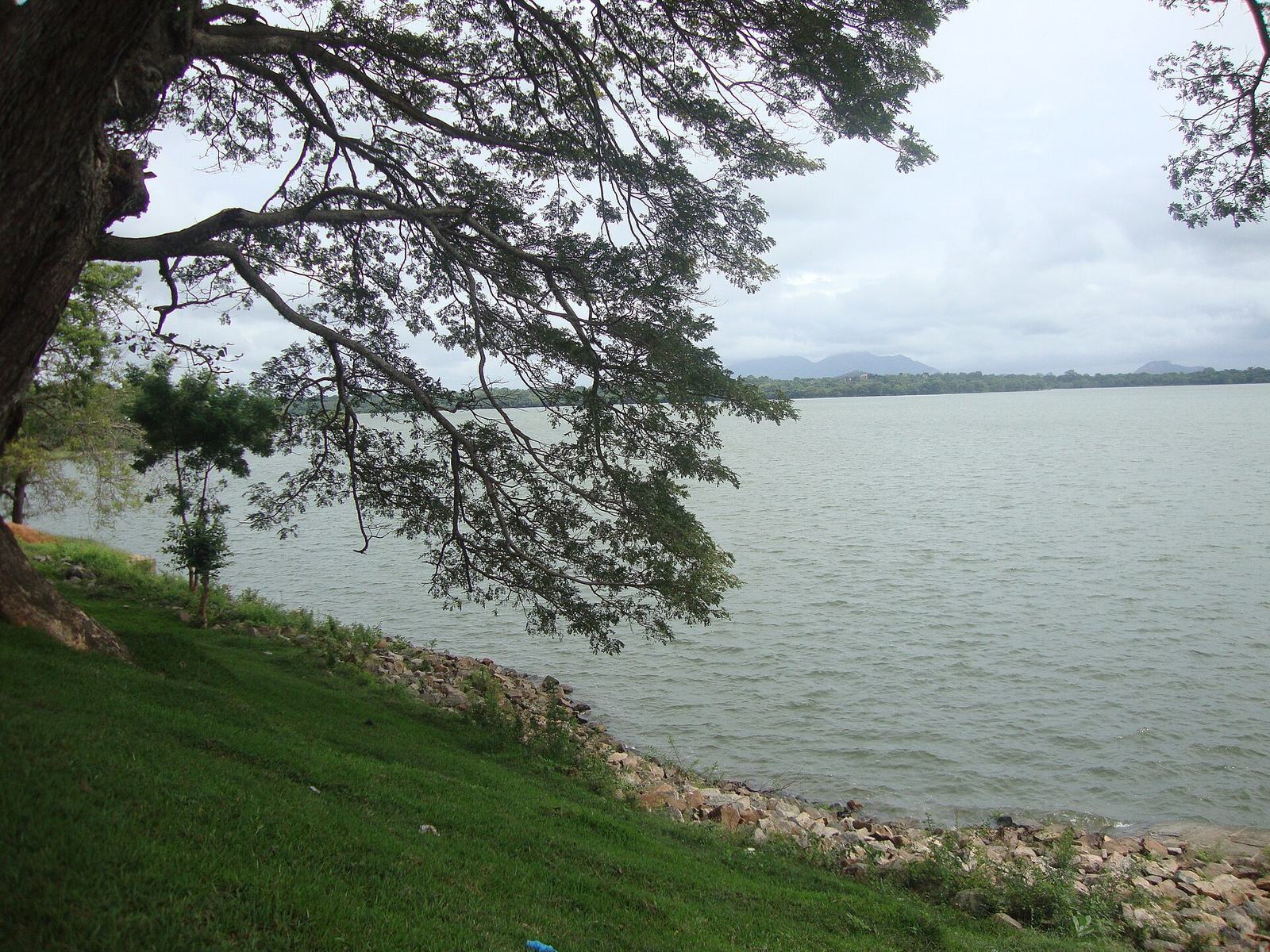
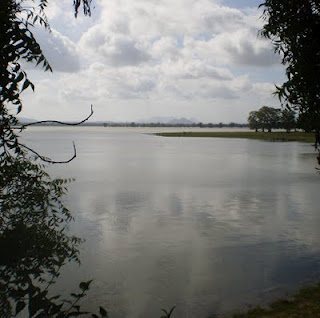
Kala Wewa is a reservoir in Sri Lanka, built in 460 CE by King Datusena as part of an effort to restore the island’s irrigation system. After defeating Tamil invaders who had controlled parts of northern Sri Lanka, Datusena reunited the country and developed reservoirs and canals around Anuradhapura. He built Balalu Wewa nearby after Kala Wewa, and the two reservoirs were linked to create the largest reservoir in Sri Lanka at that time.
Local traditions offer different stories about Kala Wewa’s origins. In one, a forest-dweller named Kadawara told Datusena about water held back in a stream by plants; the king is said to have built the reservoir at that place. Another tradition tells of a boy who helped construct the reservoir. When it threatened to overflow, the boy’s father is said to have offered his life to preserve it for public use. The story relates that he was reborn as Kadawara, a deity who guarded the divine assembly and commanded a host of spirits.
Royal expansion and restoration
King Mahinda II, who ruled from 777 to 797 CE, later enlarged the reservoir. In the twelfth century, King Parakramabahu I restored it.
Repairs and continuing use
Kala Wewa underwent repairs during the governorships of Sir William Henry Gregory and Sir Arthur Hamilton-Gordon, British colonial governors of Ceylon, the former name for Sri Lanka under British rule. In 1958, its embankment was rebuilt to connect it with Balalu Wewa.
The reservoir supplied smaller rural tanks and fed water through the Jaya Ganga to Tissa Wewa for the people of ancient Anuradhapura. Since 1976, it has served as one of the main storage reservoirs in the Mahaweli Irrigation Scheme, a large water-management and irrigation programme, supplying people in Sri Lanka’s North Central Province. Its water is also used for freshwater fishing and for growing grasses preserved as cattle feed. Kala Wewa and Balalu Wewa are jointly recognized by the International Commission on Irrigation and Drainage as a World Heritage Irrigation Structure in the category of historic irrigation heritage.
Remains
Reservoir, waterworks, and sculpture
Reservoir and embankment
Kala Wewa is the principal reservoir in the Kala Wewa–Balalu Wewa complex, which has a storage capacity of 123 million cubic metres. At full capacity, Kala Wewa covers about 7 square miles (18.1 square kilometres). Its shoreline is estimated at about 40 miles (64.4 kilometres), although shoreline length is not a precisely defined measure. The dam is 22,572 feet (6,879.9 metres) long and about 48 feet (14.6 metres) high. The embankment is about three miles long and 200 feet wide, with a height of 60 to 80 feet.
Spillway and sluices
A stone spillway and three main sluices regulate the reservoir’s outflow. The central main sluice is 40 feet wide and releases water into the Jaya Ganga, which carries it to paddy fields.
Jaya Ganga
Also called Yodha Ela, the Jaya Ganga is an ancient canal about 54 miles (86.9 kilometres) long. Over its first 17 miles (27 kilometres), its average gradient is about six inches per mile.
Avukana Buddha
Near Kala Wewa stands the Avukana Buddha, a 12-metre-high stone image of the Buddha in a standing pose, facing out over the reservoir. The statue is attributed to Datusena.