Yapahuwa: Medieval Capital and Fortress of Sri Lanka
Site at a Glance
- Rating
- 4.7
- Popularity
- Medium
- Country
- Sri Lanka
- Primary era
- Medieval
- Eras represented
- Medieval, Early Modern
- Civilizations
- Sinhalese
- Site type
- Military
- Remains
- Citadel
On this page10 sections
History
Yapahuwa in Sri Lanka was a medieval royal capital and military stronghold established in 1273 by King Bhuvenakabahu I. The king transferred his capital from Dambadeniya in response to invasions from South India, and the elevated rock became the centre of royal, defensive, and religious activity until 1284. The site was originally known as Yapawwa, while Yapahuwa is a later form of the name.
Capital of Bhuvenakabahu I
Bhuvenakabahu I, who reigned from 1272 to 1284, brought the Sacred Tooth Relic from Dambadeniya to Yapahuwa. The relic was believed to be a tooth of the Buddha, and in medieval Sri Lanka its custody was closely linked to legitimate kingship. It was therefore installed in a purpose-built Tooth Temple within the new capital, continuing the established association between the ruler and possession of the relic.
Yapahuwa served simultaneously as a royal capital and a fortified stronghold. Its position on a massive granite rock gave the settlement a defensive advantage, while the palace and fortress complex controlled the elevated citadel and its approaches.
Pandyan Capture and Later Religious Use
After Bhuvenakabahu I died in 1284, the Pandyans, a South Indian ruling dynasty whose invasions affected Sri Lanka during the late thirteenth century, captured Yapahuwa and seized the Sacred Tooth Relic. The relic was taken to South India, and the capital was largely abandoned as a centre of royal government.
Parakramabahu III, who ruled from 1287 to 1293, recovered the relic in 1288 and temporarily placed it at Polonnaruwa. Yapahuwa then continued in religious use. The site had earlier functioned as a Buddhist monastic centre, and Buddhist monks and religious ascetics inhabited it after its period as a capital. A Buddhist temple known as Yapahuwa Rajamaha Vihara was built during the Kandyan period, the era when the Kingdom of Kandy was the principal Sinhalese kingdom before the island became part of the British Empire.
Remains
Fortified Rock and Approach
Citadel and Enclosure
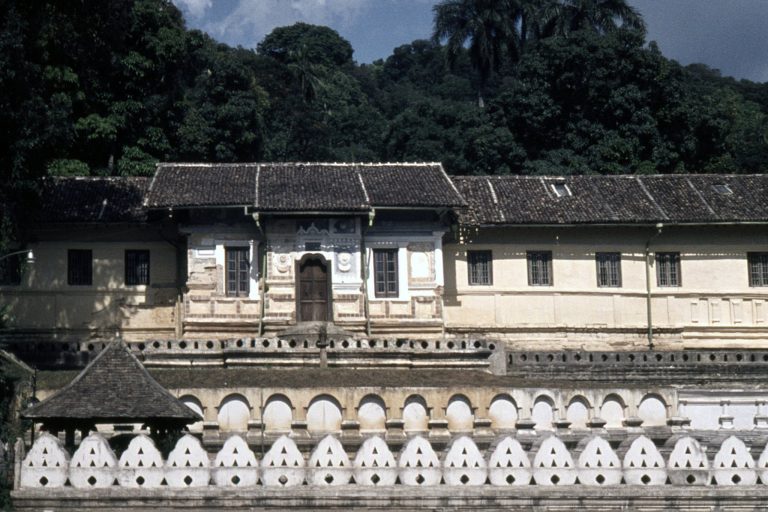
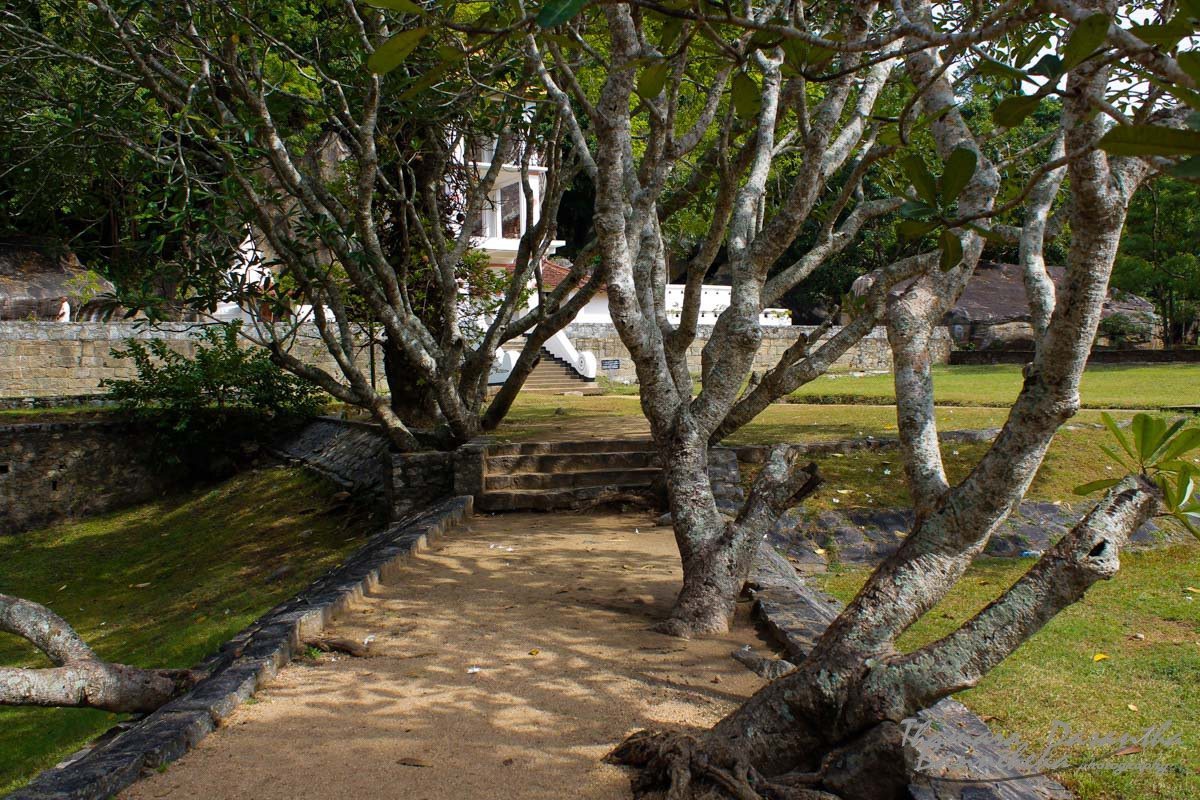
The citadel occupies a granite rock that rises about 90 metres above the surrounding lowlands, approximately midway between Kurunegala and Anuradhapura in Sri Lanka’s North Western Province. The palace and fortress complex was built on the rock in 1273. At its southern base, a fortified enclosure includes two moats, ramparts, and the remains of several buildings, including a Buddhist shrine. These surviving elements express the site’s combined role as a defended capital and religious centre.
Ornamental Staircase
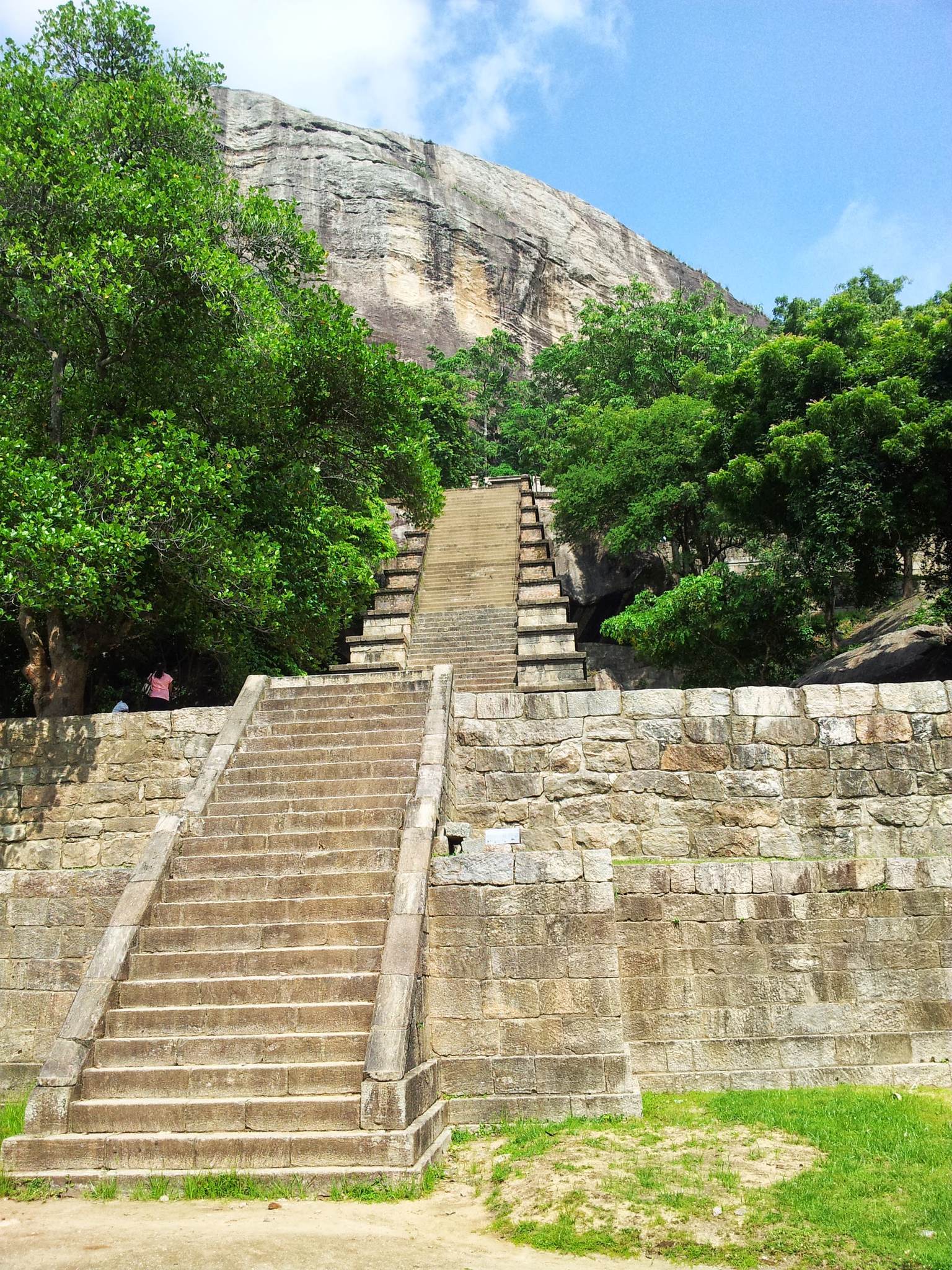
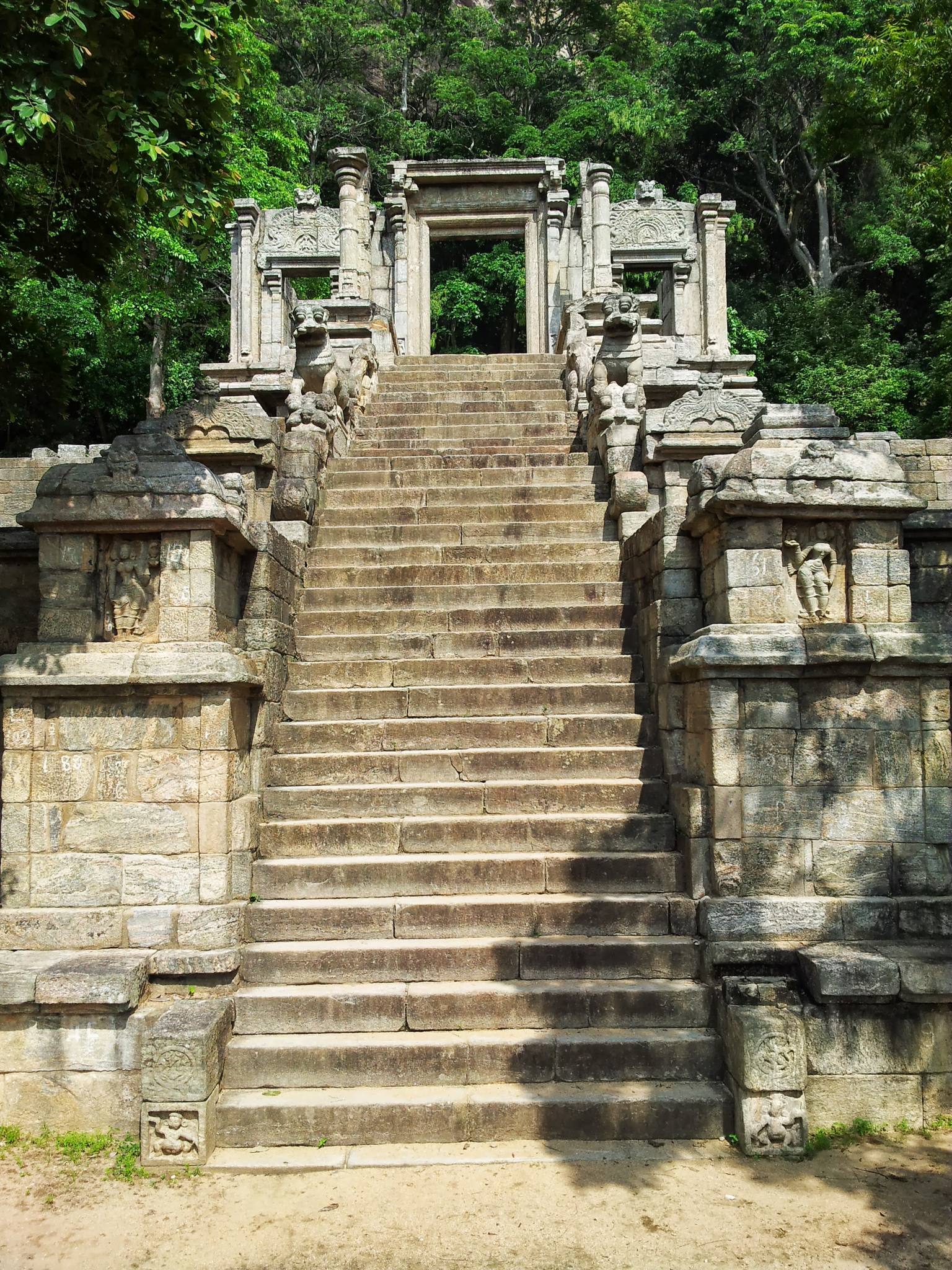
The principal approach to the upper rock is an ornamental staircase of about 100 steps, rising at an angle of approximately 70 degrees. It is arranged in three sections. The lower flight has roughly 15 to 20 steps and stands before a brick wall. A middle flight of about 30 to 40 steps is bordered by large square structures and vegetation, followed by an upper flight of approximately 40 to 45 steps.
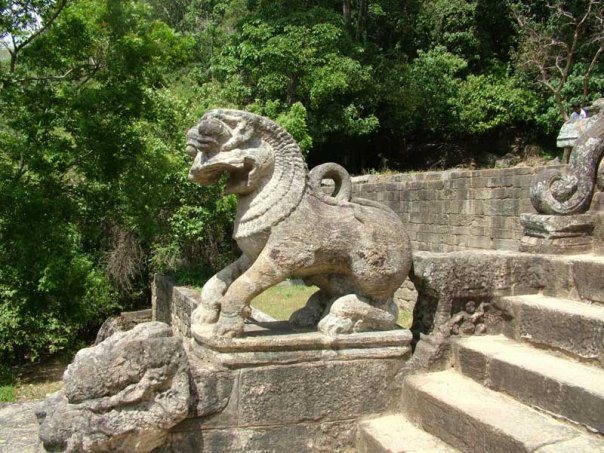
The upper section contains a stone portal or doorway known as a vahalkada, together with Makara balustrades, dwarf figures, and lion-like creatures. Makara is a mythical aquatic creature commonly used in South Asian religious and architectural decoration. A local folktale says that the gaze of the carved creatures points towards a treasure, although the claim has not been confirmed.
Summit and Cave Shrines
Tooth Temple and Summit Monuments
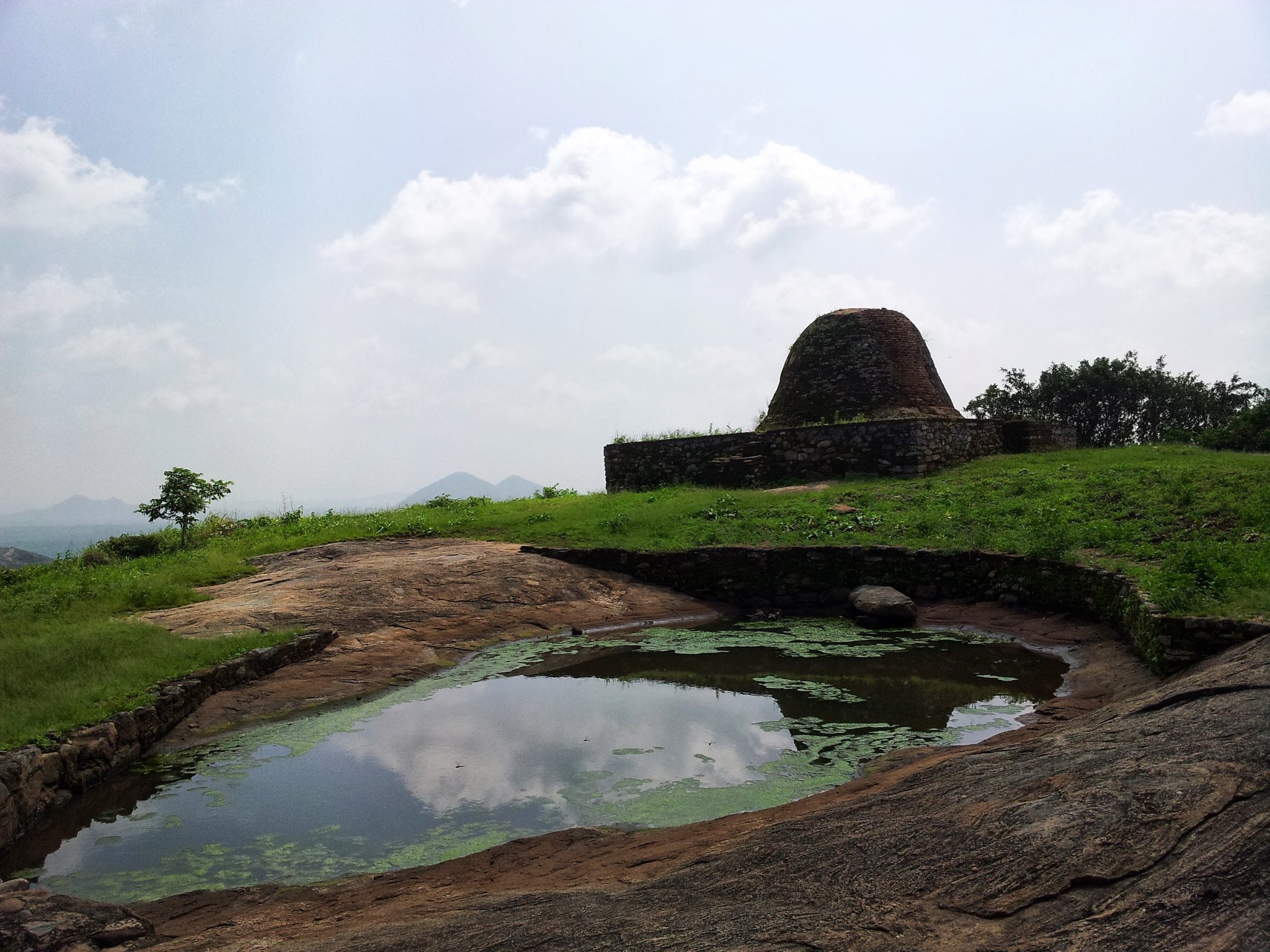
The former Tooth Temple stood at the top of the third staircase. Its surviving remains consist of a ruined outline and a platform marking the building’s foundation. The structure is believed to have had a simple yet imposing design. The summit also contains the ruins of a small Buddhist stupa, or chetiya, called Kota Wehera, as well as a Bodhi-tree shrine and a small pond. A Bodhi shrine is a sacred feature centred on a tree descended from the tree under which the Buddha attained enlightenment.
Caves and Religious Art
Several caves occur around the rock and its lower slopes. One contains a shrine with Buddha images, while another bears an inscription in Brahmi, an ancient writing system used for some of the earliest inscriptions in South Asia. Cave structures near the base of the fortress contain Kandyan-period murals and Buddhist statues. A further cave near the lower part of the rock is associated with Buddhist monks, preserving evidence of the religious activity that continued after Yapahuwa ceased to serve as a capital.