Gal Pota: The Stone Inscription of Polonnaruwa
Site at a Glance
- Rating
- 4.2
- Popularity
- Very Low
- Country
- Sri Lanka
- Primary era
- Medieval
- External website
- Open
- Eras represented
- Medieval
- Civilizations
- Sinhalese
- Site type
- Civic
- Remains
- Monument
On this page6 sections
History
Gal Pota is a twelfth-century stone monument in the ancient city of Polonnaruwa, Sri Lanka, created during the reign of King Nissanka Malla between AD 1187 and 1196. It belongs to the later Polonnaruwa period, when the city was a major political and cultural centre. The monument stands in the Dalada Maluwa sacred precinct, east of Hatadage, and its inscription presents the king’s lineage, Buddhist devotion, generosity, military achievements, and efforts to promote Buddhism.
Nissanka Malla’s Reign
The stone was brought to Polonnaruwa from the Mihintale area, approximately 90 to 100 kilometres away. The exact source remains uncertain, since another reading of the inscription has been understood to point to Sigiriya, around 25 kilometres from Polonnaruwa. The text does not provide a specific date. Among its claims, it describes Nissanka Malla’s conquest of India, presenting this as part of the king’s military record, and emphasizes his support for Buddhist institutions and religious practice.
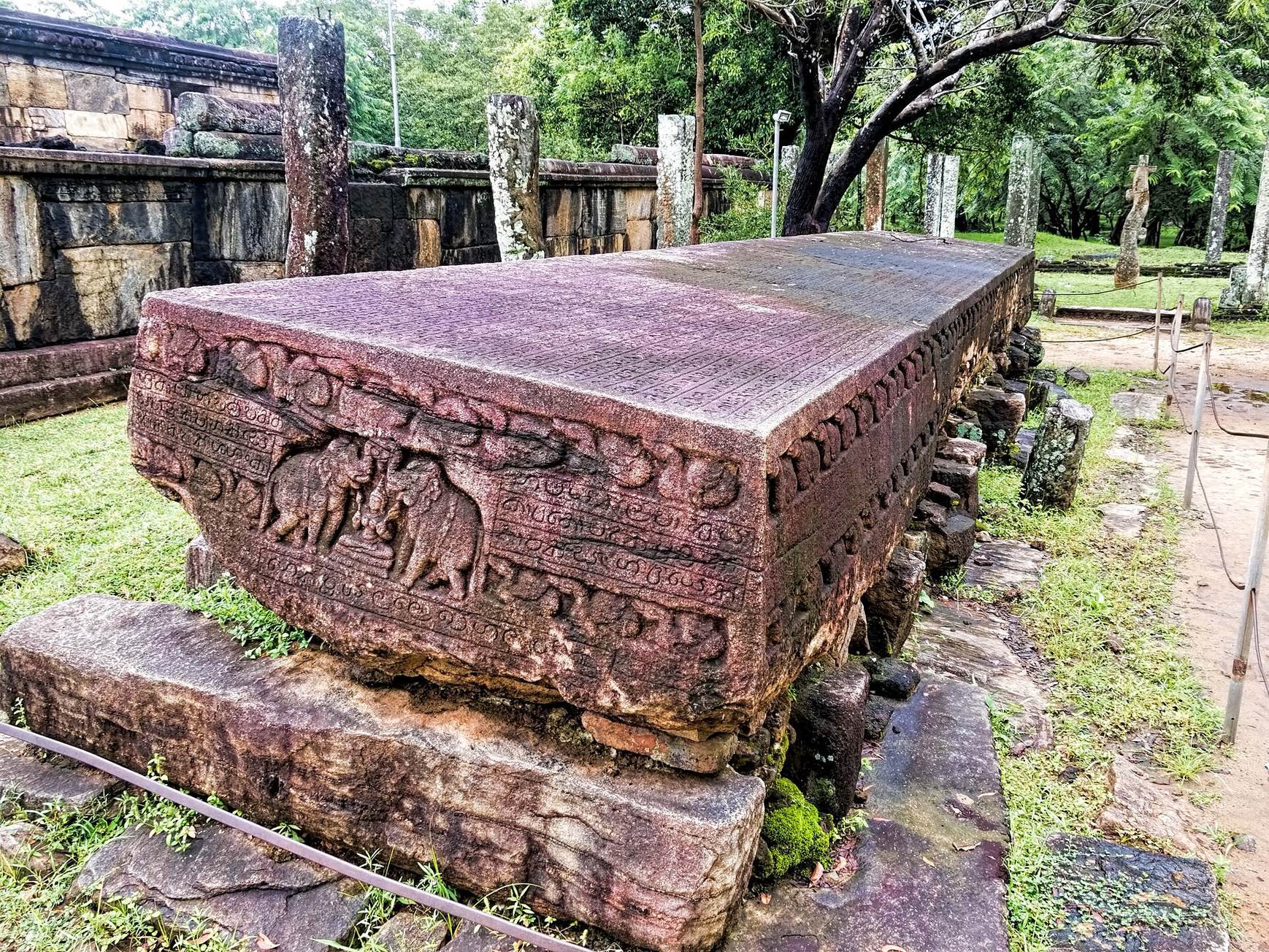
Gal Pota means “stone book,” a name that reflects its resemblance to palm-leaf books traditionally used for Buddhist writings and royal genealogies. The monument was originally placed on a brick pedestal and protected by a roof carried on ten pillars. Its scale and inscription made it an important royal monument within Polonnaruwa’s sacred landscape.
Remains
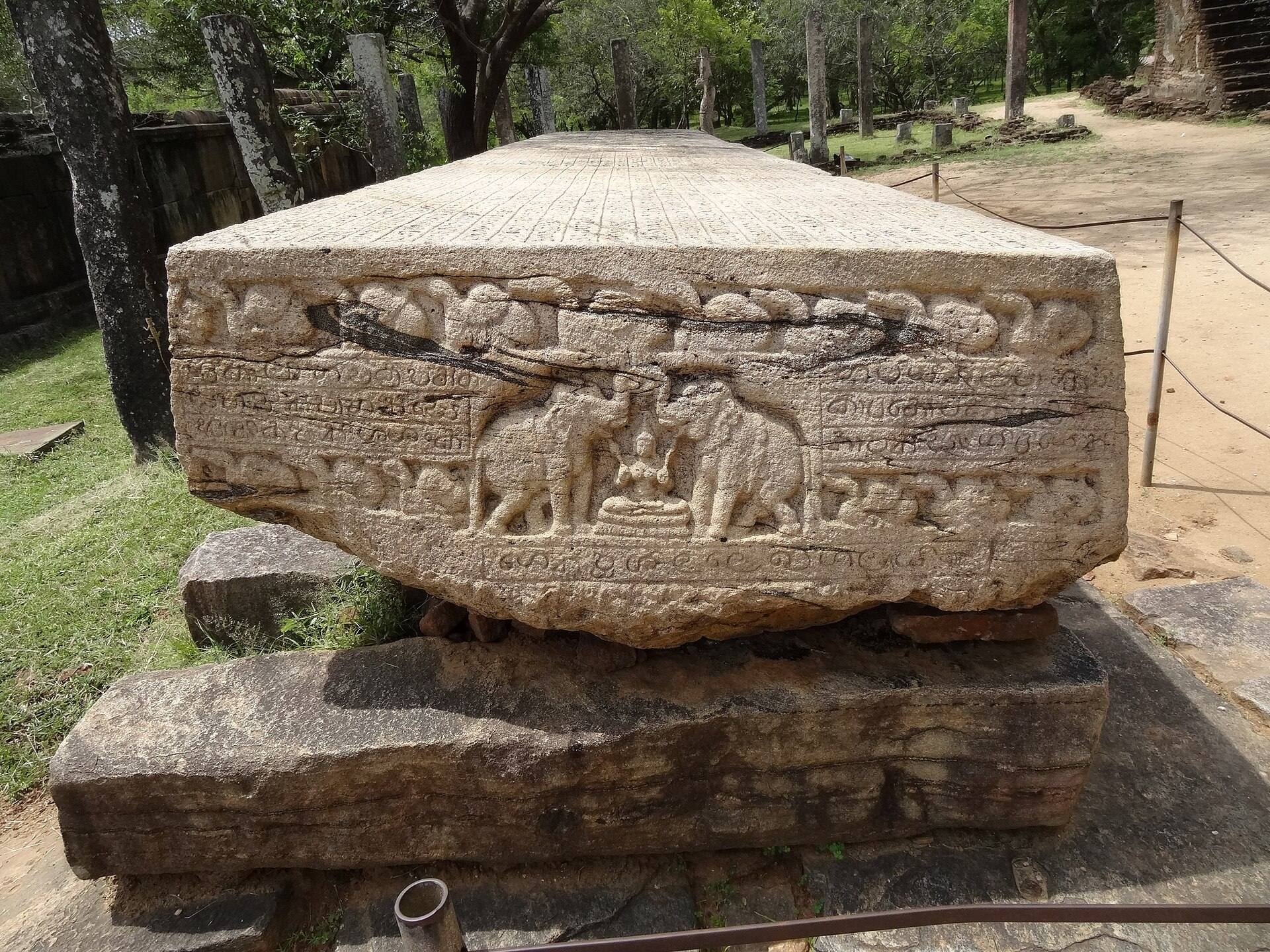
Gal Pota consists of one large stone block aligned from north to south. It measures approximately 8.2 metres in length, 1.4 metres in width, and 66 centimetres in thickness, with an estimated weight of 15 to 25 tonnes. The block is shaped like an enlarged palm-leaf book, while its decorated surfaces combine writing with carved imagery.
The Inscribed Stone
The upper surface carries a Sinhala inscription, written in an older form of the writing system used for the Sinhala language. The text contains approximately 4,300 characters arranged in three columns and 72 lines. The third column is damaged. The letters were probably filled with liquid iron to make them easier to read. The inscription is regarded as the longest known inscription discovered in Sri Lanka and occupies the principal surface of the stone.
Reliefs and Decorative Features
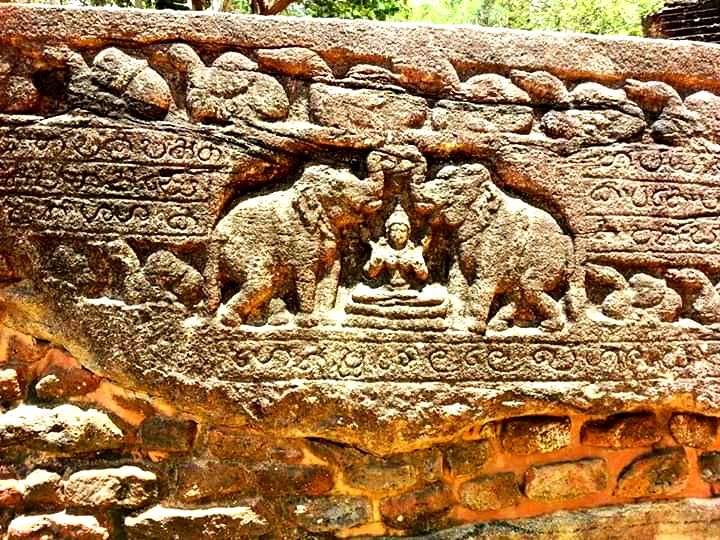
Reliefs and representations of mythical beings cover the sides of the block. One carving probably shows Lakshmi, the Hindu goddess associated with prosperity and abundance, holding two flowers while two elephants pour water over her. This Gaja Lakshmi imagery may indicate Hindu influence in the monument’s decorative programme. The longer side also bears two rows of swans, all facing left.
Original Protective Structure
The stone originally rested on a brick base beneath a roof supported by ten pillars. This protective structure formed part of the monument’s original presentation and sheltered the inscribed block within the Dalada Maluwa area.