Magdalen Chapel: A Sixteenth-Century Chapel and Almshouse in Edinburgh
Site at a Glance
- Rating
- 4.4
- Popularity
- Low
- Country
- United Kingdom
- Primary era
- Early Modern
- Eras represented
- Early Modern, Modern
- Civilizations
- British, Kingdom of Scotland
- Site type
- Religious
- Remains
- Chapel
On this page14 sections
History
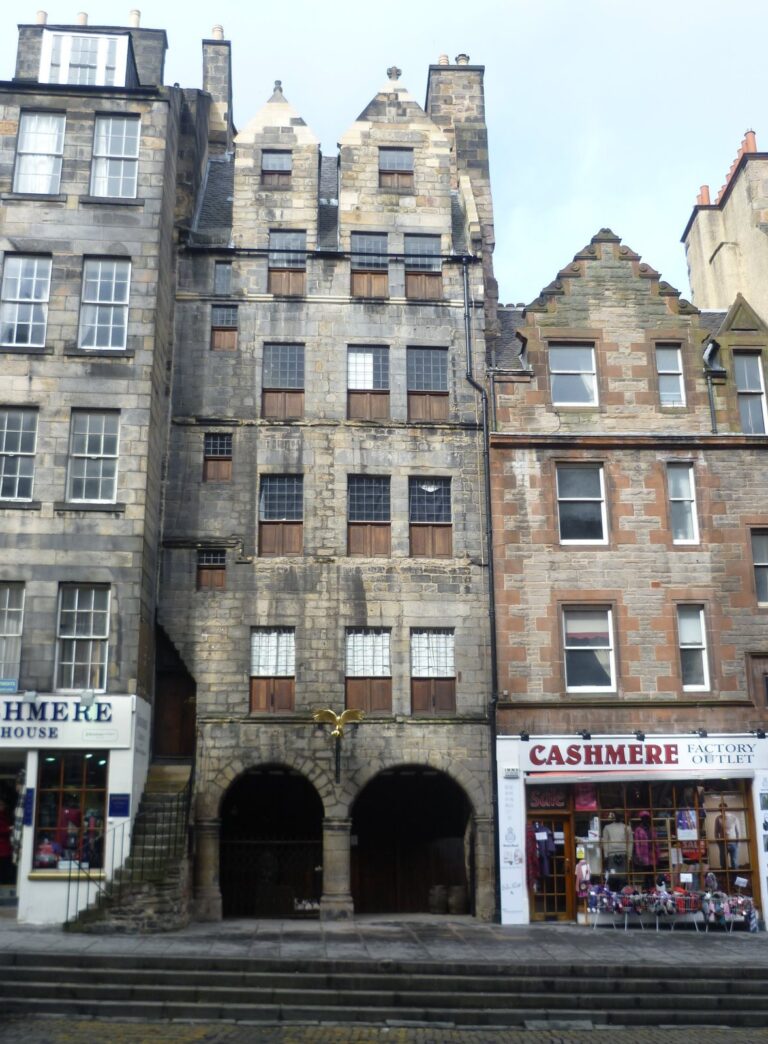
Magdalen Chapel was built on Cowgate in Edinburgh, Scotland, United Kingdom, between 1541 and 1544 with money bequeathed by Michael MacQueen and support from his widow, Jonet Rynd. MacQueen, a merchant who supplied spices and linen to the royal household, died in 1537. The chapel’s 1547 Foundation Charter, a legal document setting out the terms of a foundation, provided for a chaplain and an almshouse for seven poor men, who were to pray for the soul of Mary, Queen of Scots. Before the Scottish Reformation, the sixteenth-century transition from Roman Catholicism to Protestant churches in Scotland, Queen Regent Mary of Guise arranged academic lectures at the chapel.
Foundation and Reformation
Jonet Rynd died in December 1553 and was buried at the chapel. Patronage then passed to the Incorporation of Hammermen, an association of metalworkers. In 1555, Isobel Mauchan gave £1,000 Scots; she may have been a close friend or relative of Rynd. John Rynd was censured for removing Mauchan’s carved coat of arms, amid apparent tension between the families of the donors.
The charter required Roman Catholic worship and barred the Hammermen from acting against Roman Catholic interests. If they failed to meet these conditions, the property was to return to Rynd’s heirs. After the Reformation, the Hammermen replaced their Roman Catholic chaplain with a Protestant minister. The former chaplain sued successfully to keep receiving his salary until he died in 1567. Tenants withheld rent because the charter’s terms were no longer being fulfilled, but the Hammermen’s wealth allowed them to retain patronage of the chapel.
Trades and Covenanter Worship
The Church of Scotland’s General Assembly, its principal governing body, met in the chapel in April 1578. A tradition also places the first Assembly there, in December 1560. John Craig, a former Dominican friar who became a Protestant reformer, preached in Latin after spending many years away from Scotland. From 1596, the chapel regularly hosted meetings of the Convenery of the Trades of Edinburgh, a body representing the city’s trades. The chapel’s name also came to refer to the Convenery itself.
The chapel hosted conventicles, religious meetings often held outside the established church, by Covenanters, Scottish Presbyterians who opposed religious policies they believed broke their covenants. The largest gathering noted in the account took place on 17 May 1674, when William Weir preached. In 1689, the heads and hands of executed Covenanters, which had been displayed in different parts of Edinburgh, were brought to the chapel before burial at Greyfriars Kirk.
Later Congregations and Uses
Episcopalians, members of churches governed by bishops, used the chapel. In the eighteenth century it also housed Edinburgh’s second Baptist congregation. In 1765, Robert Carmichael and seven others left an Old Scots Independent congregation after adopting the belief that baptism should be for believers and performed by immersion, or submerging a person in water. After receiving baptism in London, Carmichael baptized four men and three women in the Water of Leith at Canonmills on 25 November 1765. The congregation worshipped at Magdalen Chapel regularly until 1774.
A printing press operated either in the chapel or in a nearby building, though its precise location is uncertain. In the early nineteenth century, the Bereans used the chapel for worship. They followed John Barclay, a former Scottish Presbyterian minister, and his modified form of Calvinism, a Protestant theological tradition associated with John Calvin.
Sale and Restoration
The Hammermen sold the chapel in 1857 to the Protestant Institute for Scotland, and the building was used by the Edinburgh Medical Missionary Society. A major restoration in 1992–93 followed a fundraising campaign supported by Alex Neish. The chapel is now the headquarters of the Scottish Reformation Society. It became a Category A listed building on 14 December 1970; in Scotland, this is the highest listing category for buildings of special architectural or historic interest.
Remains
The chapel’s surviving features include a wooden platform at the east end, fittings above its entrance, and windows and memorials within the building. These elements reflect changes to its arrangement and decoration across several centuries.
Structure and Early Fittings
East End and Entrance
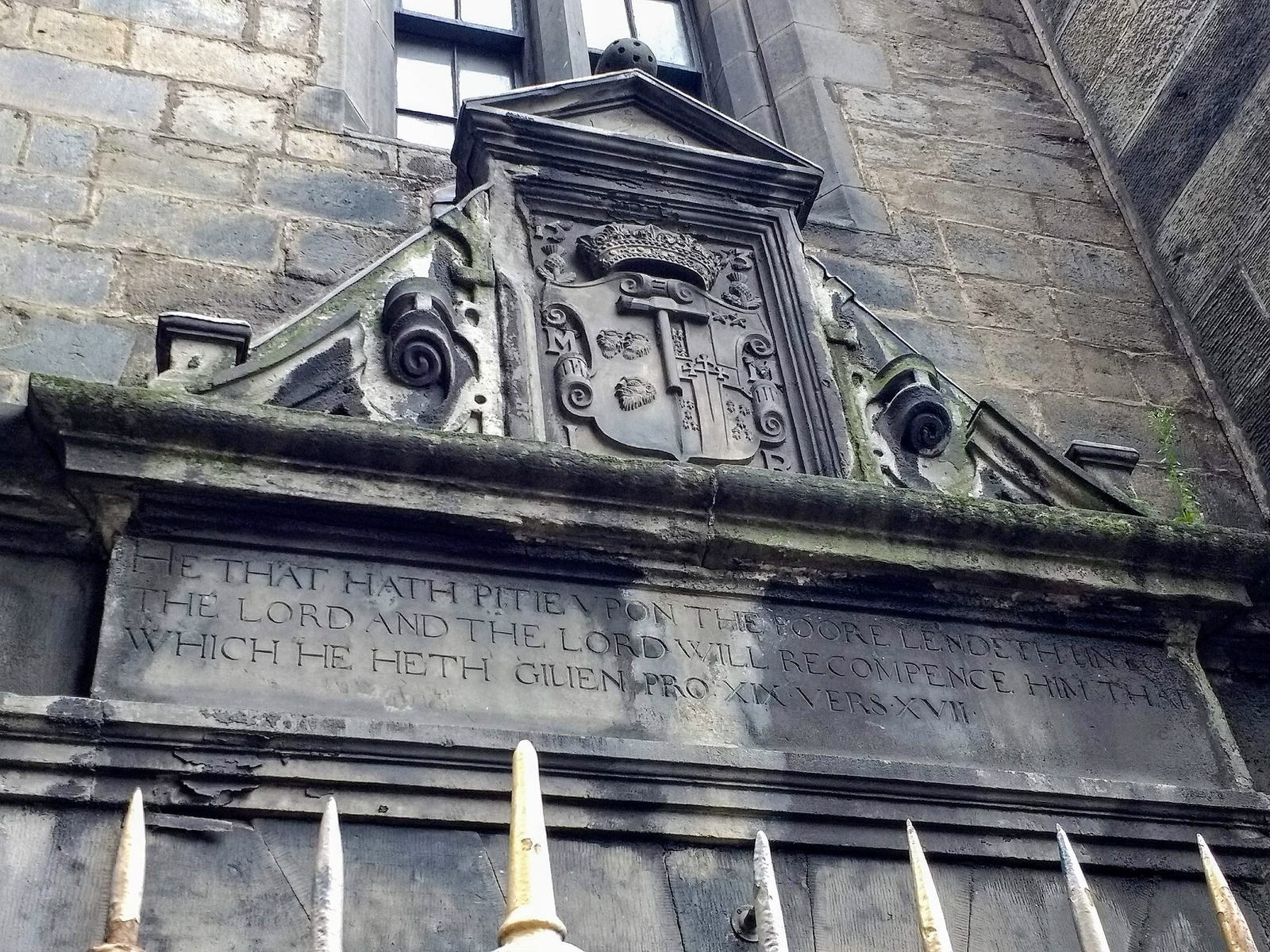
A semicircular wooden platform was installed at the east end around 1615, when the chapel’s layout was altered. Above the entrance, an inscription reads, He that hath pity upon the poore lendeth unto the Lord and the Lord will recompence him that which he hath given, Pro. XIX vers XVII.
John Sawer carved the armorial panel above the door in 1615; it was moved to its present position in 1649.
Tower, Spire, and Bell
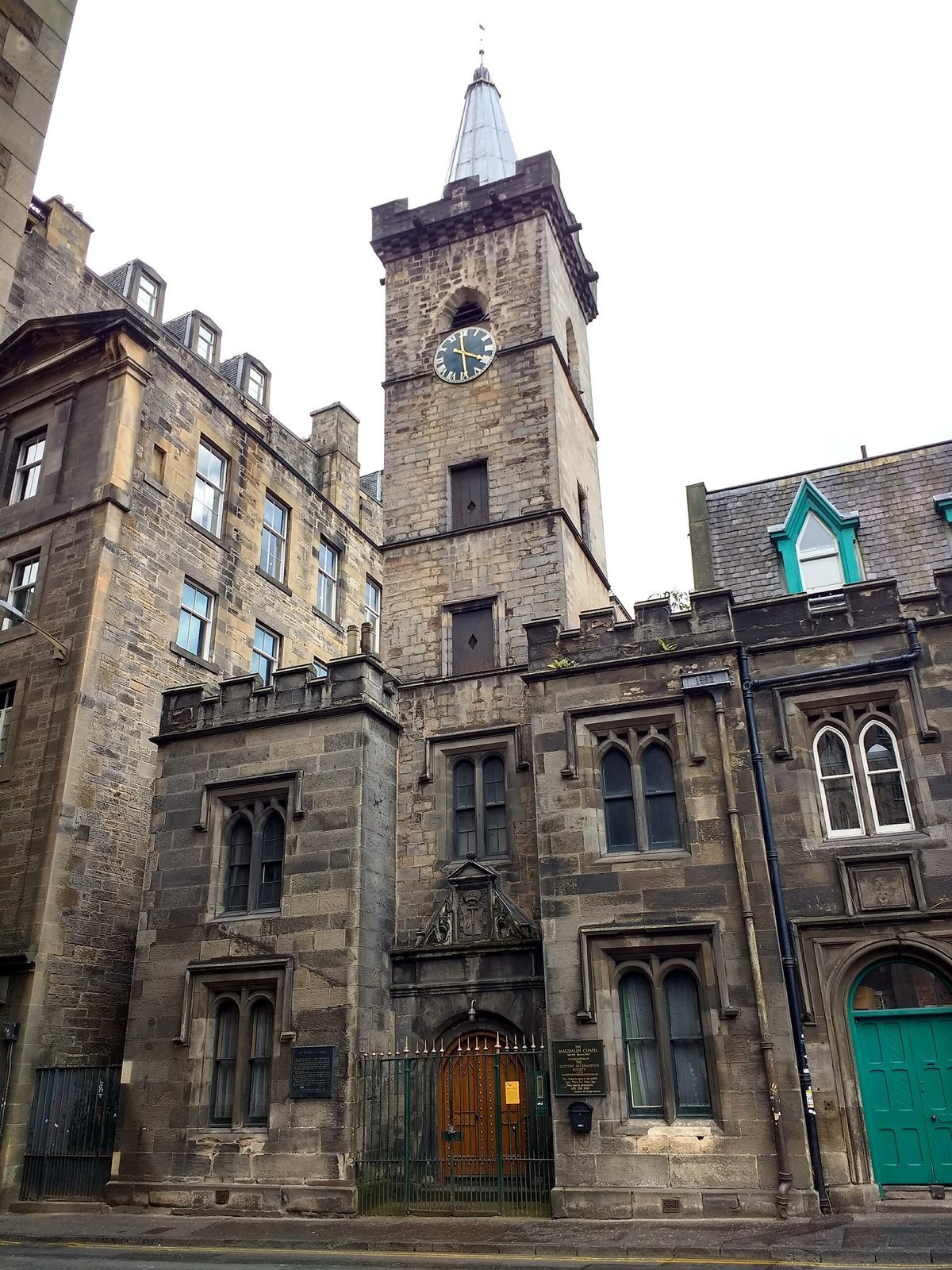
A tower and spire were added about 1620. The chapel’s bell was made in 1632 by Michael Burgerhuys, a Dutch bell founder from Middelburg.
Interior Features and Memorials
Ceiling Fragment and Panelling
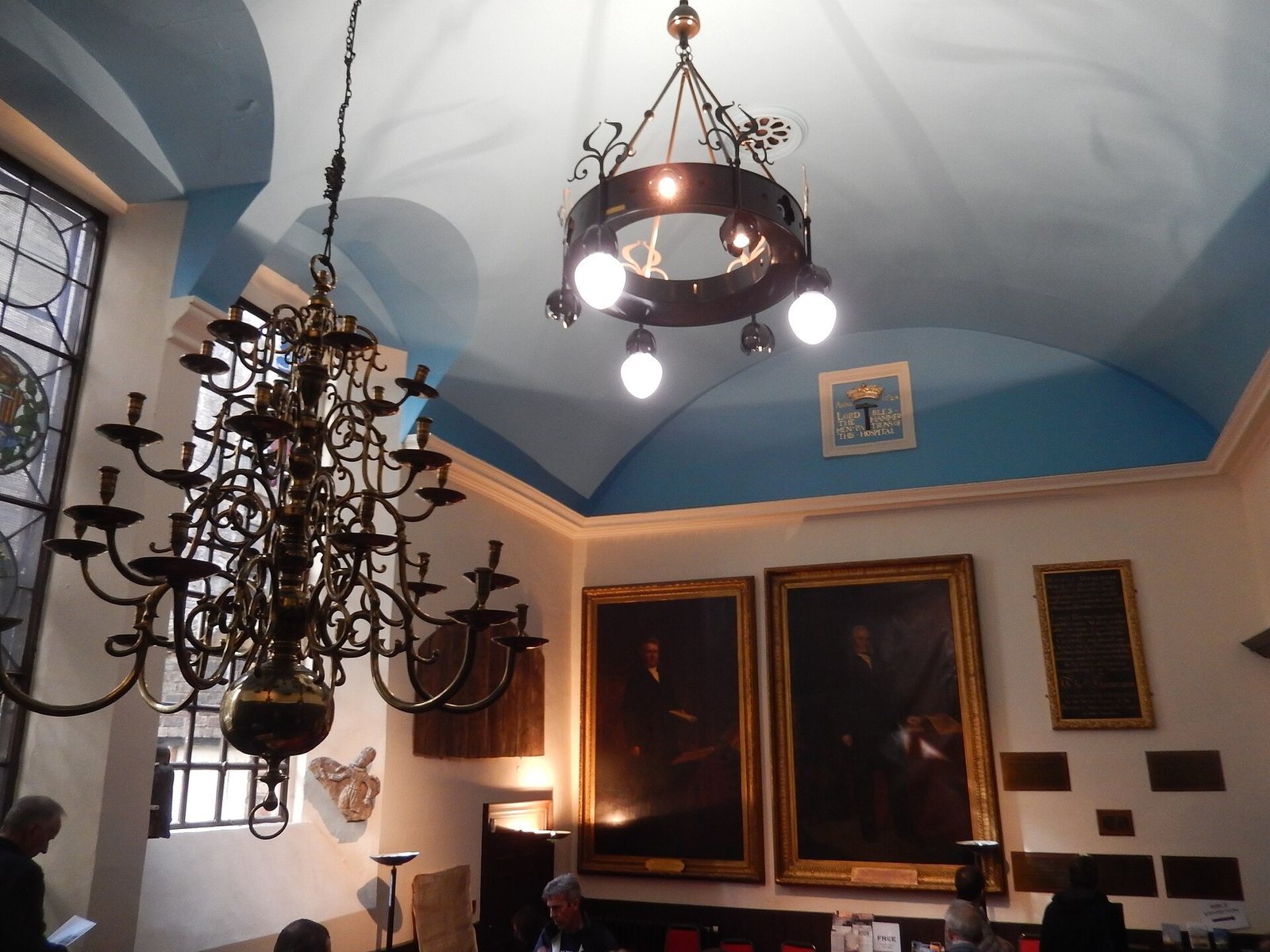
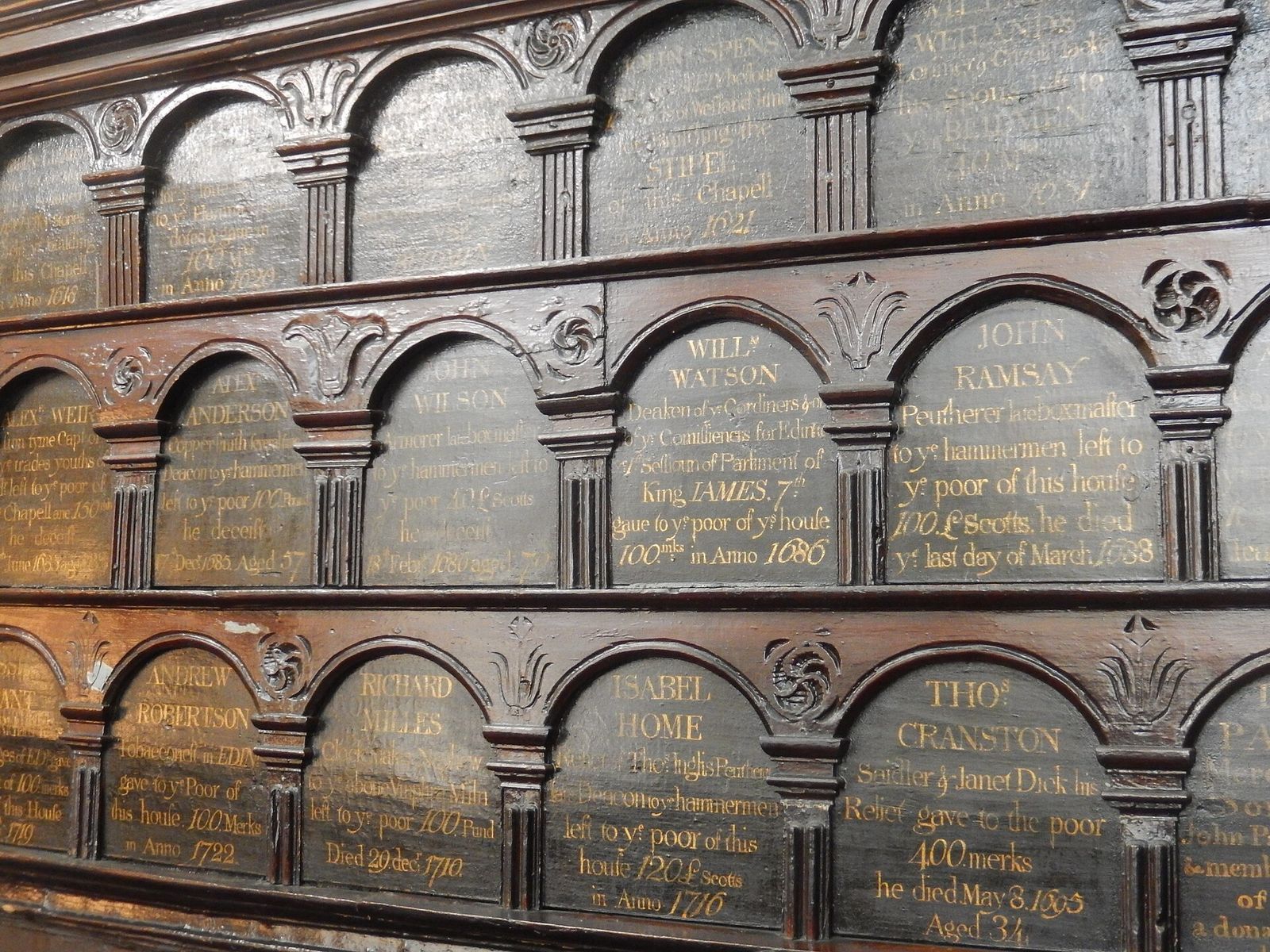
Alexander Boswall painted the chapel ceiling in 1725 in a sky-coloured design with clouds and a gilded sun at the centre. A fragment of the painted work is displayed on the south wall. The chapel’s panelling records gifts made by members of the Incorporation of Hammermen.
Stained Glass
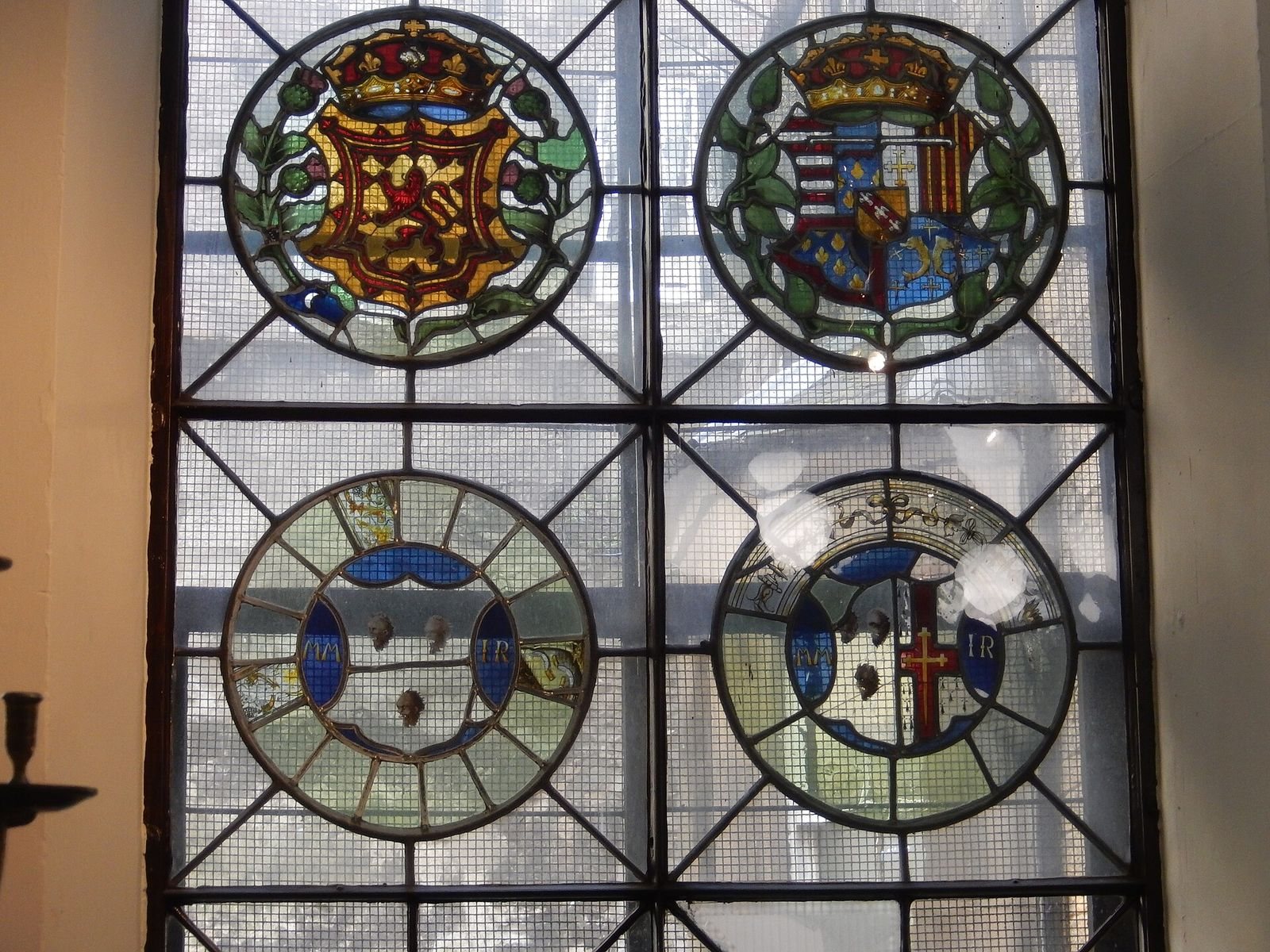
The middle window in the south wall shows the Royal Arms of Scotland and the arms of Mary of Guise. It is described as Scotland’s only intact pre-Reformation stained-glass window. The main south window contains stained glass made in 1893 by William Graham Boss.
Rynd Tomb
Jonet, also known as Janet, Rynd’s tomb lies in the southeast of the chapel. It bears her coat of arms and an inscribed border.
Covenanter Objects
The chapel contains a sword reputed to have belonged to Covenanter Captain John Paton. A table there was used to prepare the bodies of the Marquis of Argyle, Hew Mackail, and John Dick for burial after their executions in 1661, 1666, and 1684, respectively.