Reformed Church L’Auditoire: A Geneva Chapel for Teaching and Worship
Site at a Glance
- Rating
- 4.7
- Popularity
- Medium
- Country
- Switzerland
- Primary era
- Medieval
- Eras represented
- Classical, Medieval, Modern
- Civilizations
- Holy Roman Empire
- Site type
- Religious
- Remains
- Chapel
On this page9 sections
History
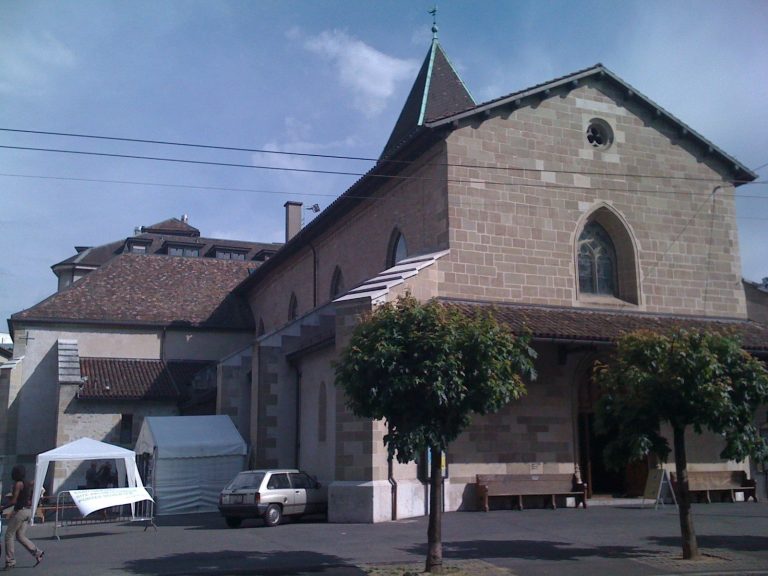
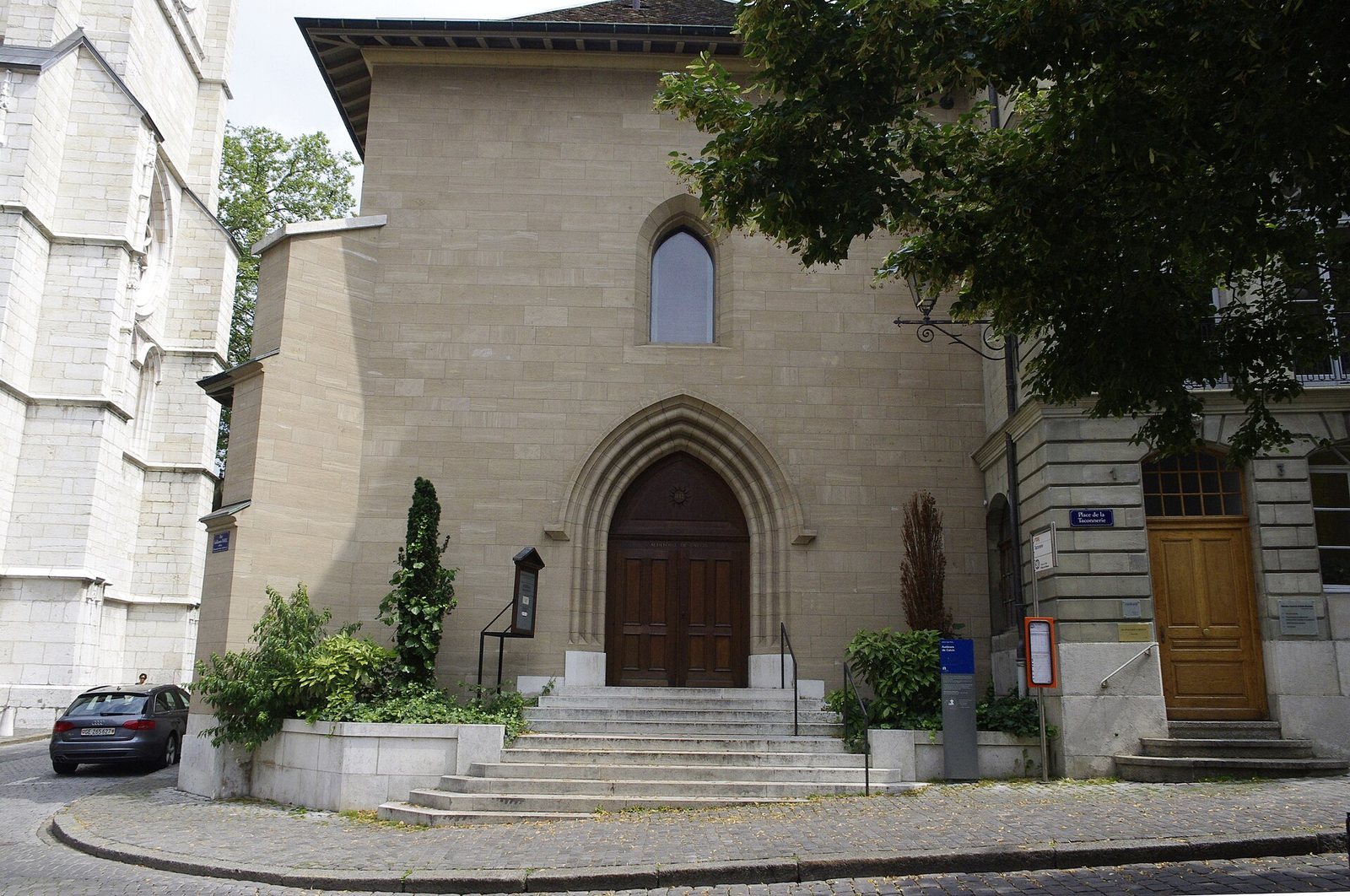
Reformed Church L’Auditoire is a fifteenth-century Gothic chapel in Geneva, Switzerland. Bishop Bernard Chabert founded it as a Catholic place of worship dedicated to Notre-Dame-la-Neuve.
The Reformation and the Geneva Academy
In 1536, as Geneva adopted the Protestant Reformation, a movement that challenged Roman Catholic authority and practices, John Calvin turned the chapel into a lecture hall for Reformed theology, the Protestant tradition associated with his teaching. Bible studies took place there each morning at 7:00. In 1559, the chapel became the first home of the Geneva Academy, founded by Calvin and also known as the University of Geneva.
Refugees and Reformed congregations
Calvin made the chapel available to Protestant refugees from across Europe, who worshipped in their own languages. Italian Waldensians, members of a Christian movement that became associated with the Reformed tradition, later worshipped there, along with Dutch and Scottish Reformed groups. Many Reformed churches regard L’Auditoire as a cradle of their faith.
During his exile in Geneva in the 1550s, Scottish reformer John Knox led worship at the chapel for English-speaking Protestant refugees. Ideas he developed there influenced the Scottish Reformation. Scottish Presbyterian congregations also used the chapel; Presbyterian churches are governed by elders.
Restoration and continuing worship
After the chapel had deteriorated, the World Alliance of Reformed Churches, an international organization, and the National Protestant Church of Geneva agreed in 1954 to restore it. The work was completed in 1959 under the direction of Reverend Dr. Harrison Ray Anderson, a minister at Chicago’s Fourth Presbyterian Church and a former moderator, or presiding officer, of the Presbyterian Church.
The congregation belongs to the Protestant Church of Geneva. The chapel continues to host worship in languages other than French, including services by Dutch and Italian Reformed congregations and a Church of Scotland congregation, which meets there on Sundays.
Remains
Chapel, windows, and organ
Setting and foundations
The austere chapel stands on Place de la Taconnerie in Geneva’s old town, beside St. Pierre Cathedral. It forms part of the Espace Saint-Pierre complex, which also includes the cathedral and the International Museum of the Reformation. Its foundations belong to earlier religious buildings dating to the fifth century.
Stained-glass windows
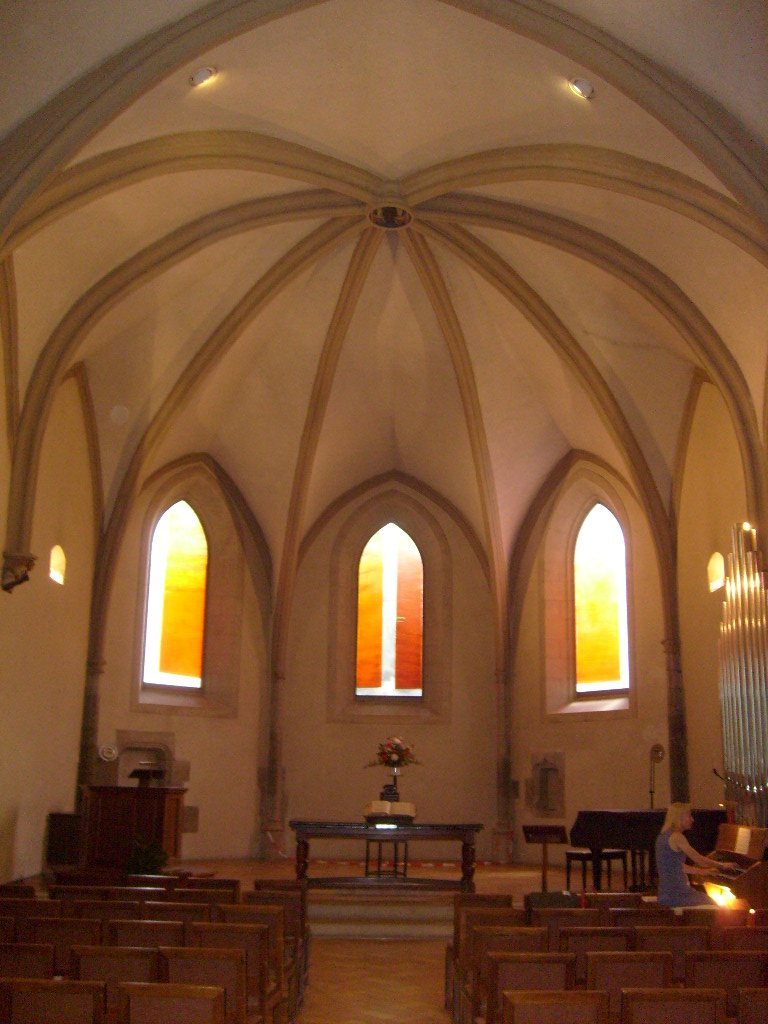
Between 2004 and 2007, French artist Udo Zembok, who was of German origin, created nine stained-glass windows for the chapel. They use large, lead-free, single-piece glass panels colored with pigments, fused and shaped in molds while heated. Four of the largest windows are predominantly red, while the other five, which are smaller, are mainly blue.
Organs
A two-keyboard pipe organ made by Gruaz was installed in 1963, with its keys connected mechanically to the pipes. In 2009, representatives of the congregations using the chapel advanced plans for a more versatile organ for worship and concerts. They selected French organ builder Bernard Aubertin, with advice from François Delor, the official organist of St. Pierre Cathedral. Aubertin’s new organ was installed in April 2014.