Athenaeum of Hadrian: A Roman School for Literary and Scientific Studies
Site at a Glance
- Rating
- 4.6
- Popularity
- Low
- Country
- Italy
- Primary era
- Classical
- Eras represented
- Classical
- Civilizations
- Roman
- Site type
- Civic
- Remains
- School
On this page5 sections
History
Foundation and purpose
The Athenaeum of Hadrian was an imperial school for literary and scientific studies founded in Rome, Italy, in AD 135. The Roman historian Aurelius Victor provides the principal ancient account of its foundation, linking it to Hadrian’s pacification of the East and the introduction of the Eleusinian Mysteries, Greek religious rites associated with Demeter and Persephone. The school’s name evoked Athens, then regarded as a center of learning. Another interpretation connects it with Athena, the Greek goddess of wisdom, and the original sense of a sanctuary dedicated to her.
Its teaching covered grammar, rhetoric, philosophy, dialectic, and law. The Athenaeum also hosted public readings of poetry in Greek and Latin, alongside readings of scholarly works, and emperors sometimes attended. It served as both a place of formal instruction and a venue for literary and intellectual gatherings.
An imperial institution
The Athenaeum had permanent professors and teachers, who received substantial salaries. During the reign of Emperor Marcus Aurelius, Adrianus of Tyre, a Greek teacher of rhetoric and argumentation, moved from Athens to Rome and gained a teaching post there. Senators attended his lectures, reflecting the school’s role in bringing Greek learning into the life of the capital.
Roman historian Cassius Dio associates the Athenaeum with a meeting involving Silius Messala, a consul and one of Rome’s senior magistrates, and a group of insurgents. After the episode, the men who had assassinated Emperor Pertinax were arrested. Pertinax had ruled briefly in AD 193.
Later emperors strengthened teachers’ legal standing and established a fixed teaching staff. Regulations for students in Rome issued in AD 370 point to the school’s scale and standing. By the reign of Theodosius II in the fifth century, its staff included three rhetoric teachers, ten grammar teachers, five sophists, or teachers of rhetoric and argumentation, one philosopher, and two law instructors.
Later standing and influence
References to the Athenaeum in ancient writing extend from the late second to the late fifth century. It appears to have retained its reputation into the sixth century, even after the Western Roman Empire had ended, and later became known as the Roman School.
Institutions modeled on the Roman school were established in cities including Lyon, Nîmes, Milan, Carthage, and Constantinople. In AD 425, Theodosius II founded a separate Athenaeum at Constantinople, where subjects included medicine, philosophy, law, and botany. This eastern institution continued under the Byzantine Empire, the eastern continuation of the Roman Empire centered on Constantinople. It was reorganized in 1054 and resumed after the city’s capture in 1453 under a different name.
Remains
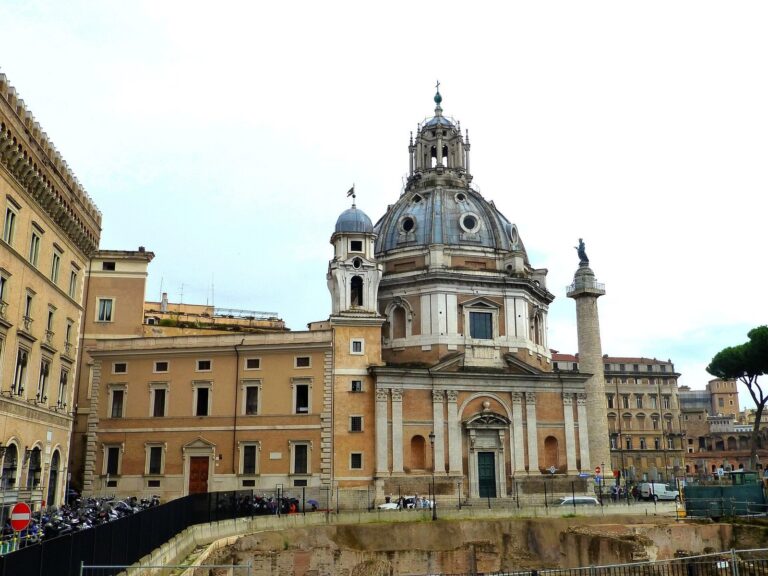
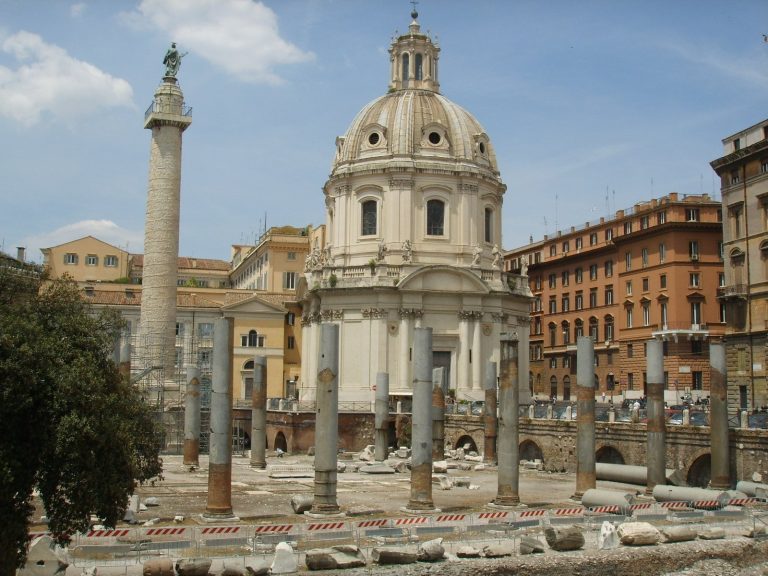
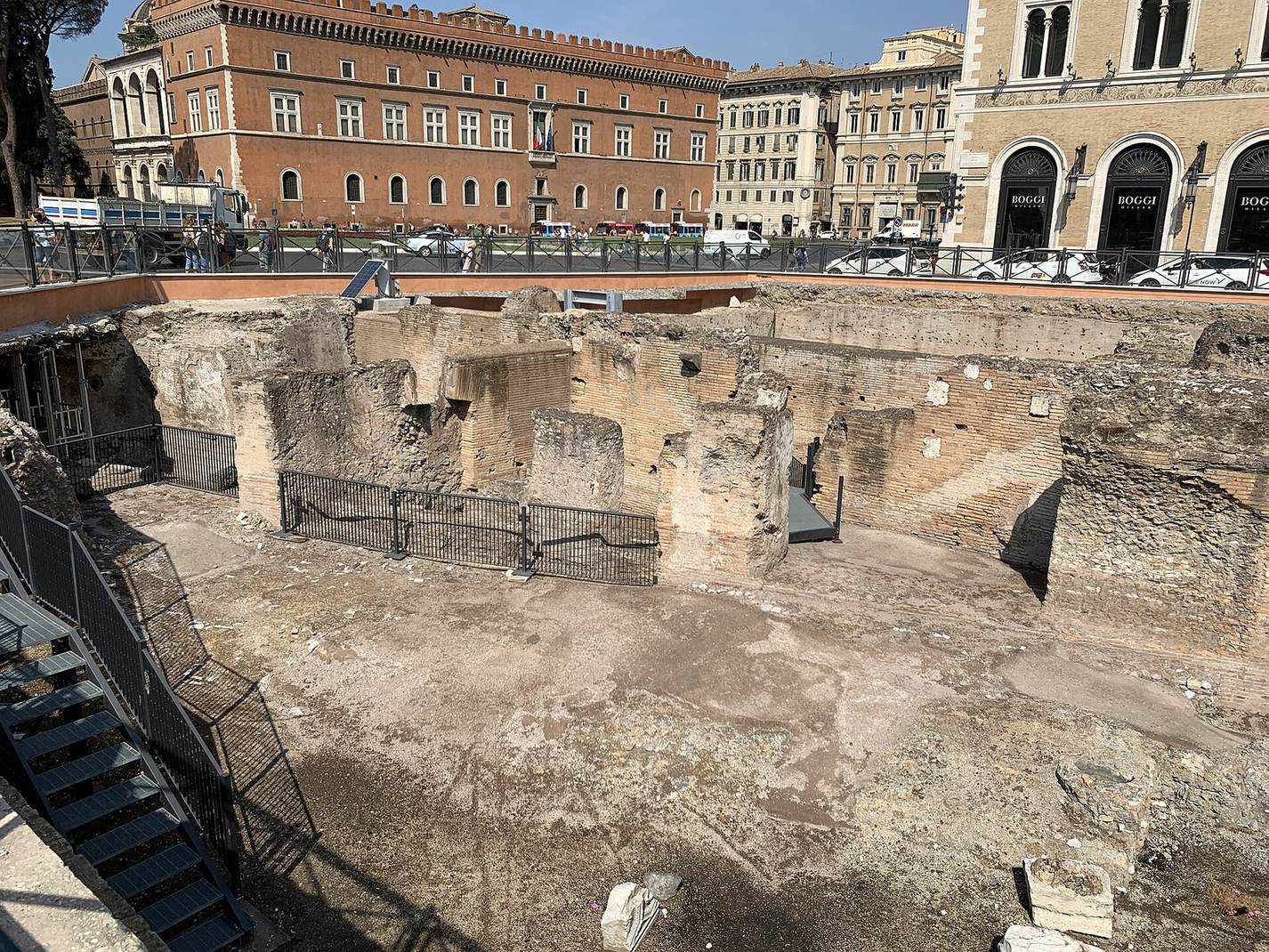
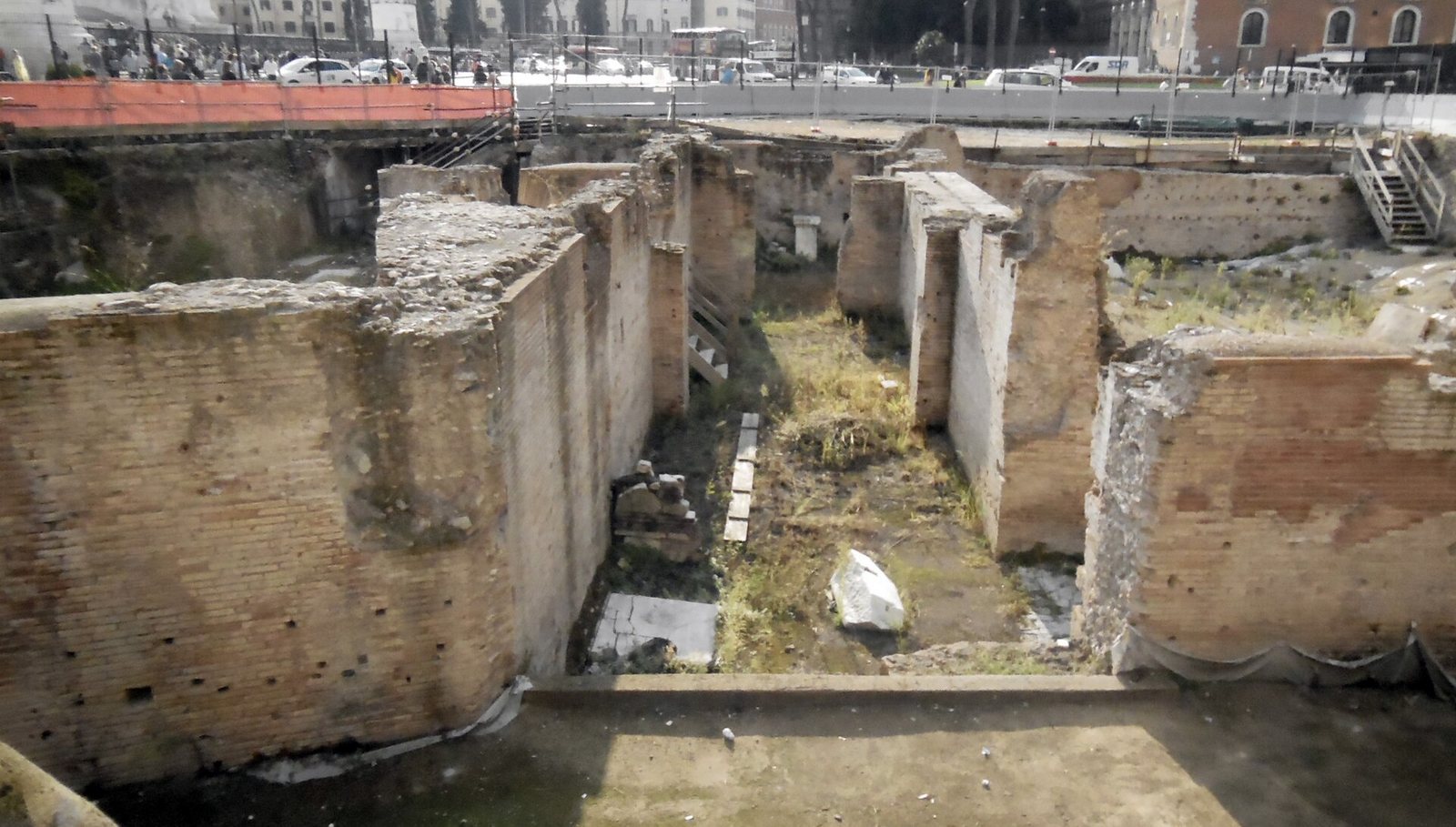
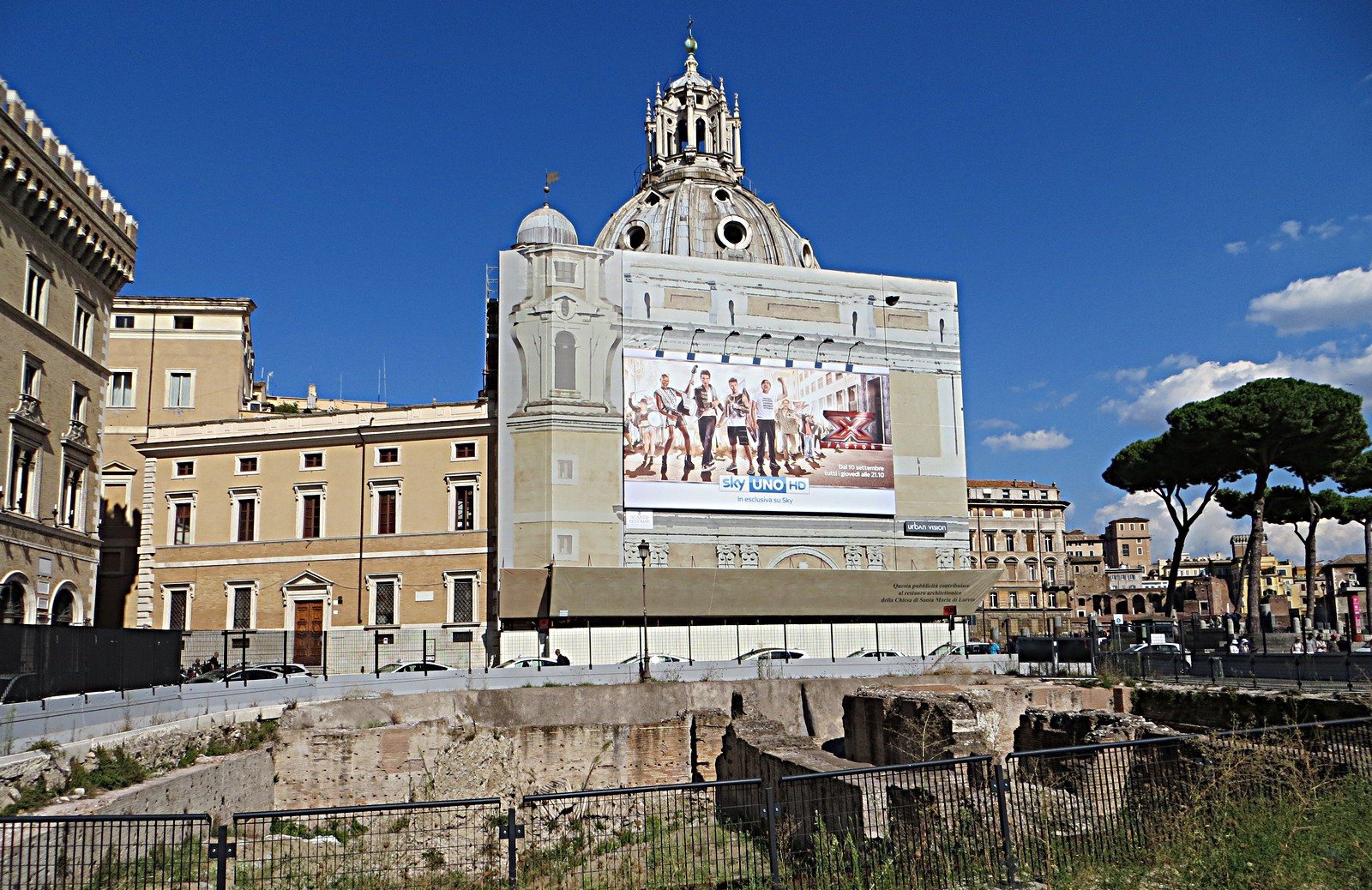
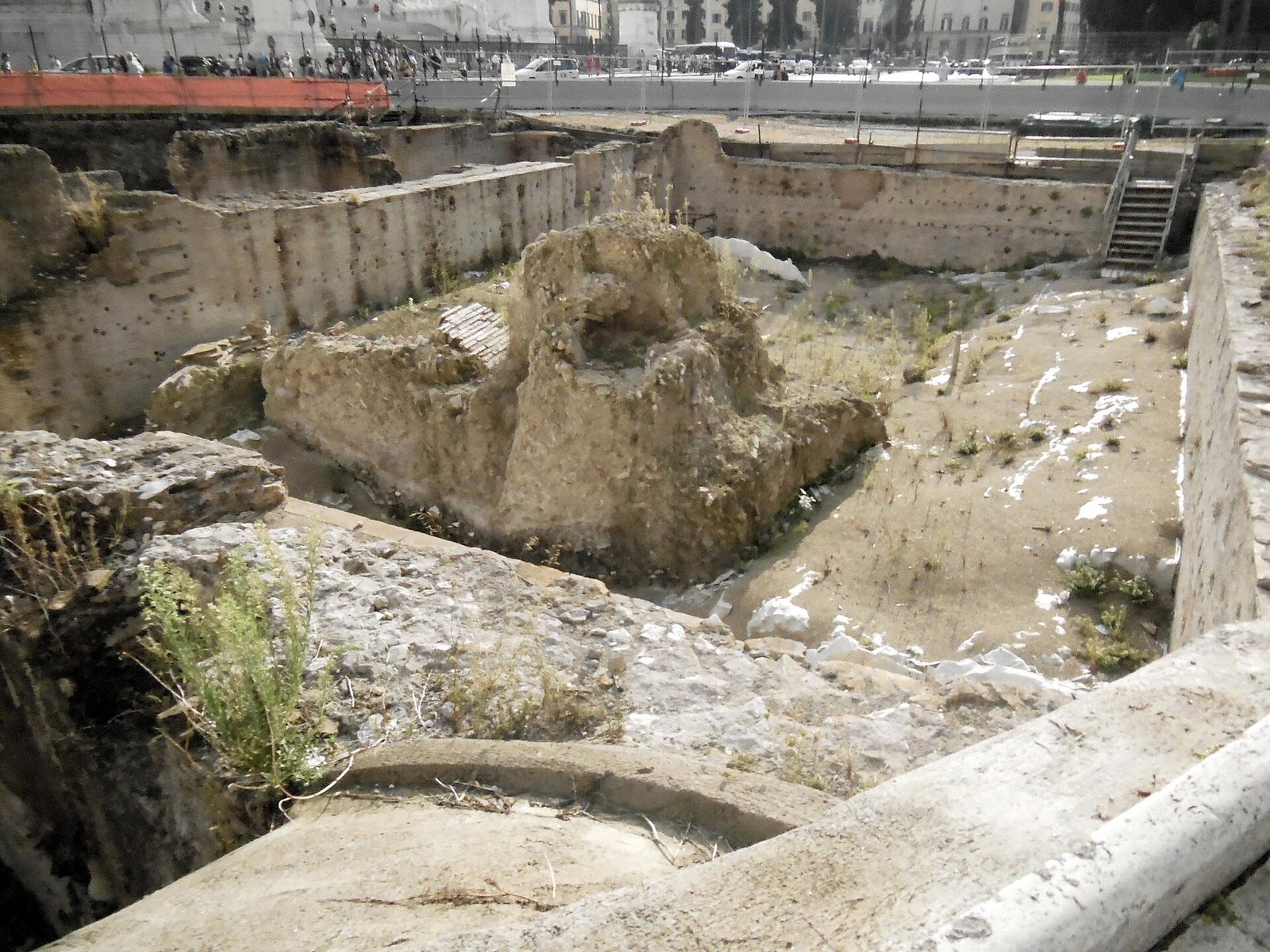
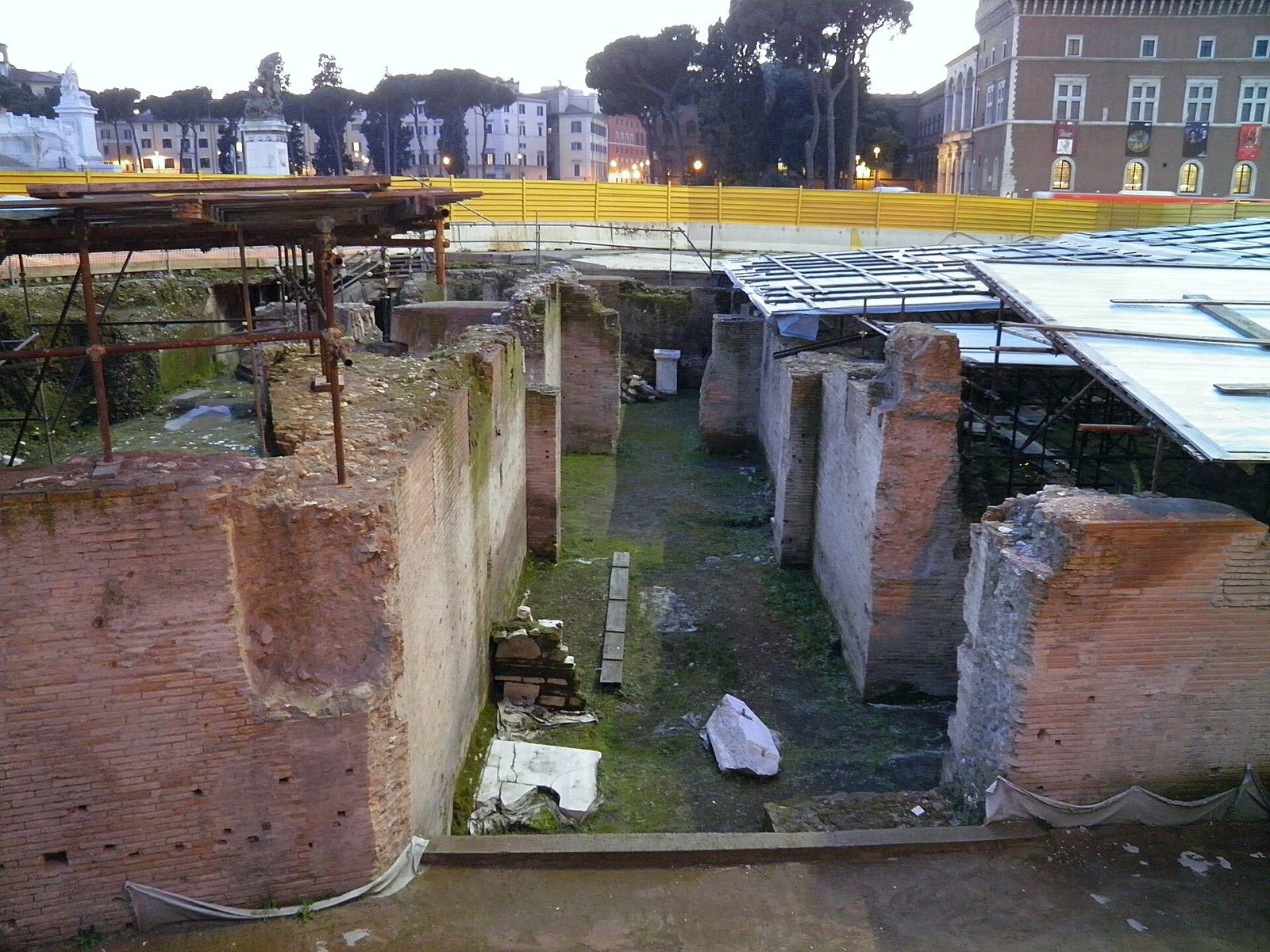
The remains attributed to the Athenaeum lie beneath Piazza Venezia, near the Capitoline Hill. The complex appears to include at least two lecture halls arranged in a fan-like pattern around Trajan’s Column. Ancient descriptions suggest a building shaped like a theatre or amphitheatre. Within the excavated complex, the halls had tiered seating on opposing sides, joined by a wedge-shaped corridor containing stairs to an upper floor.
Marble decorated the interiors. The arrangement has no complete parallel among known Roman buildings, although the opposing seating tiers resemble those in Roman senate houses, including the Curia Julia, the Senate’s meeting house in the Roman Forum. Excavations for Rome’s Metro C line in the late 2000s brought the remains to light, but their identification as the Athenaeum remains uncertain; a law court is another proposed interpretation. Before their discovery, possible locations for the school included the Capitoline Hill, the Campus Martius, and the Velabrum, and the building had sometimes been identified with the ancient Graecostadium, a place-name of uncertain meaning.