Clopton Bridge: A Late-Medieval Stone Bridge in Stratford-upon-Avon
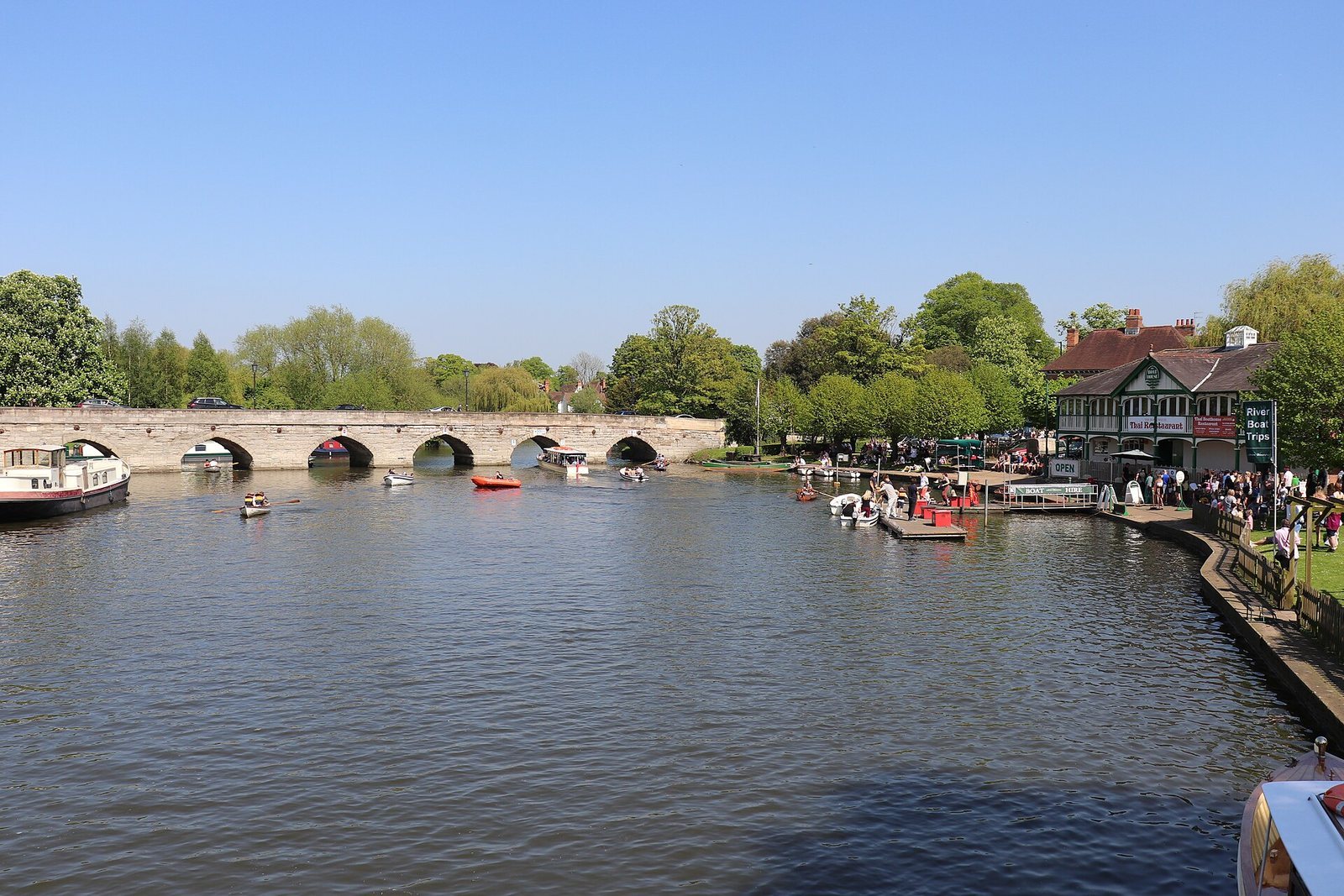
Site at a Glance
- Rating
- 4.6
- Popularity
- Low
- Country
- United Kingdom
- Primary era
- Medieval
- Eras represented
- Medieval, Early Modern, Modern
- Civilizations
- British, English
- Site type
- Infrastructure
- Remains
- Bridge
On this page9 sections
History
Clopton Bridge is a late-medieval stone arch bridge over the River Avon in Stratford-upon-Avon, United Kingdom. The crossing could be forded in Saxon times, and it gave the town its name. Hugh Clopton, a Stratford native who later became Lord Mayor of London, financed the stone bridge. Work began around 1484 and was completed in the late fifteenth century.
The earlier crossing and stone bridge
A timber bridge at the site is first mentioned in 1235. It required repeated repairs, while high water could make crossing difficult or dangerous. In the sixteenth century, the English antiquary and travel writer John Leland described the bridge as a poor timber structure without a causeway.
Repairs and conflict
Two arches were rebuilt in 1524, and the bridge was repaired after flooding in 1588. During the English Civil War, the conflict between Parliament’s forces and supporters of the monarchy, an arch was demolished in the 1640s to hinder an opposing army. It was later repaired. In 1696, funds were collected to raise the parapets, which were only four inches high in some places.
Nineteenth-century changes and later use
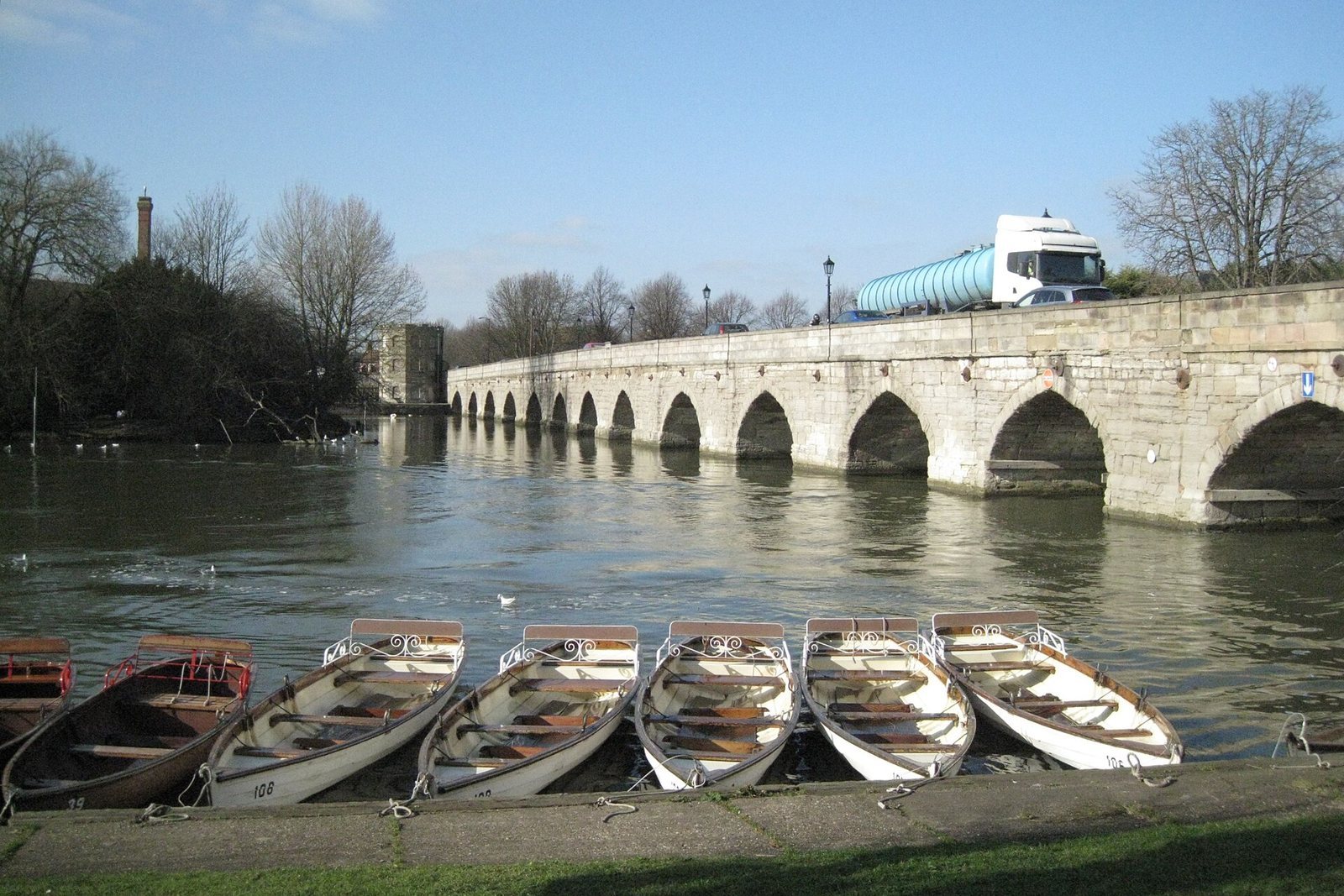
The bridge was widened on its north, upstream side in the early nineteenth century. A tollhouse tower was added in 1814, followed by a cast-iron pedestrian footway in 1827. The bridge formerly collected tolls and remains in use by pedestrians and the A3400, which carries one-way vehicle traffic out of Stratford-upon-Avon.
Clopton Bridge is a Scheduled Monument, a historic site protected by law. The bridge and its attached former tollhouse received Grade I listing, a designation for buildings of exceptional interest, on 25 October 1951.
Remains
The bridge is a long, multi-arched stone crossing with later features along its upstream side. At its far end, a former tollhouse tower stands on the riverbank shared with Stratford-upon-Avon’s town centre.
Bridge fabric and attached structures
Masonry spans and piers
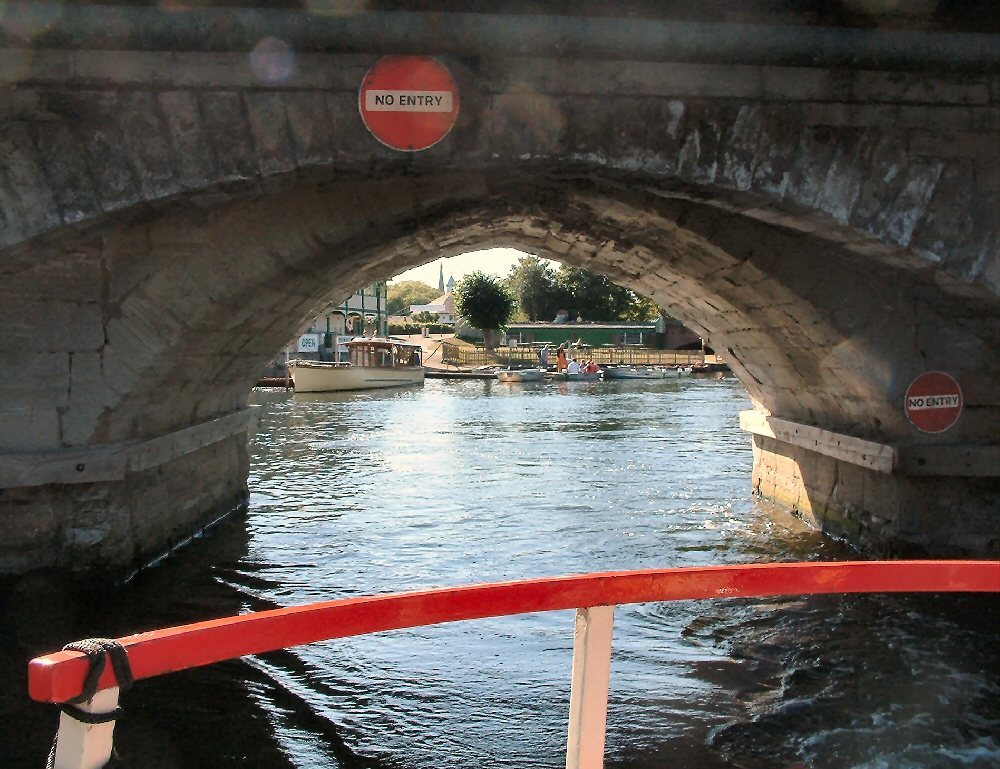
Approximately 152 metres (500 feet) long, the bridge is built of grey limestone ashlar, finely dressed stone blocks laid in regular courses. Its original arrangement comprised 19 arches of unequal size, including 14 pointed arches forming the principal spans. V-shaped cutwaters project from the piers to deflect water and reduce the force of floods; some piers also contain refuges for pedestrians.
North-side footway
The upstream, north side has a brick facing, giving it a different appearance from the opposite side. A cast-iron pedestrian footway runs along this edge of the bridge.
Former tollhouse
The attached former tollhouse is a ten-sided tower at the far end of the bridge. It stands on the southwest-facing side, on the same side of the river as the town centre.