Shakespeare’s Birthplace: A Historic House Museum in Stratford-upon-Avon
Site at a Glance
- Popularity
- Very High
- Country
- United Kingdom
- Primary era
- Early Modern
- Eras represented
- Early Modern
- Civilizations
- English
- Site type
- Domestic
- Remains
- House
On this page11 sections
History
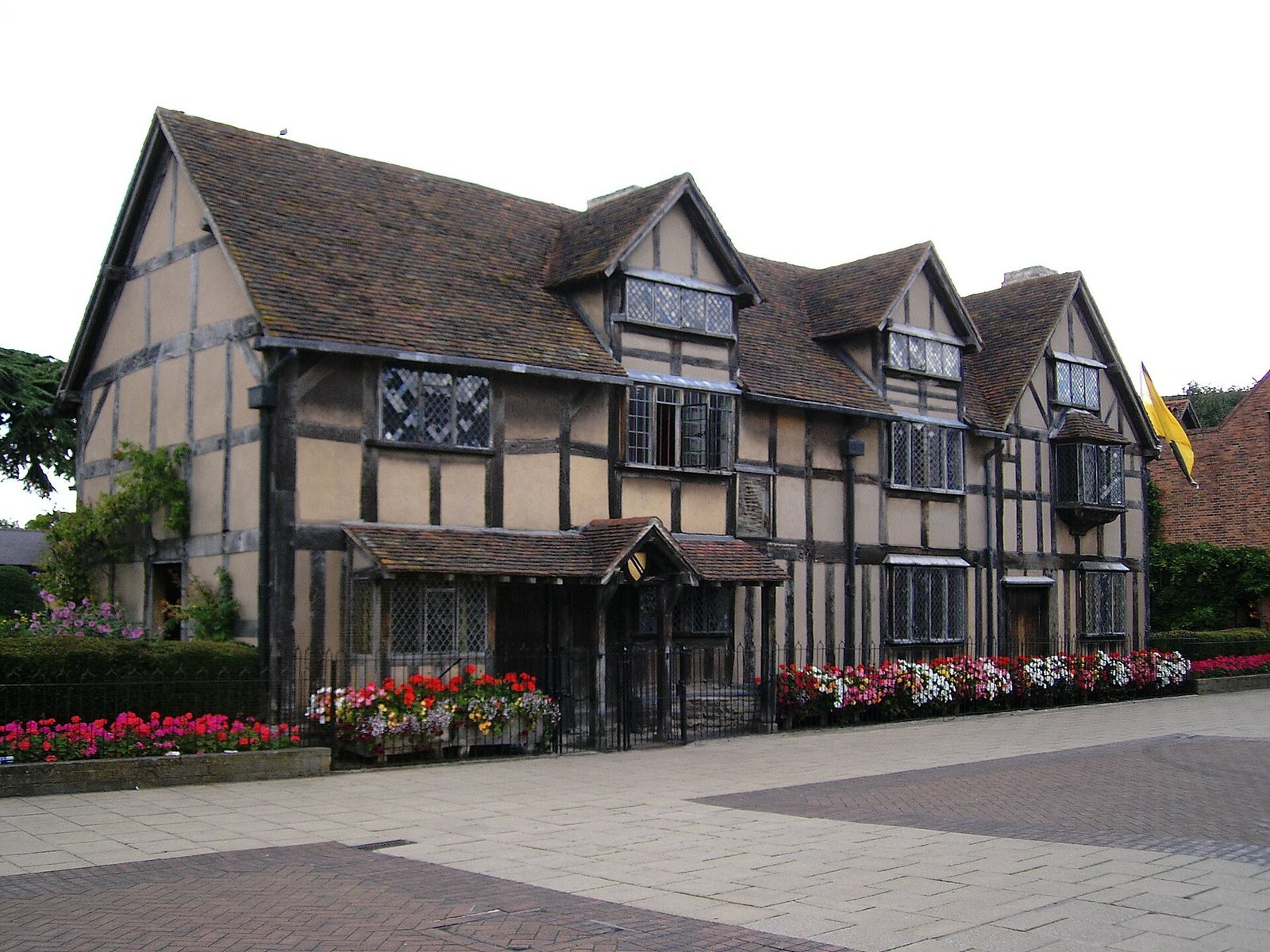
Shakespeare’s Birthplace is a house on Henley Street in Stratford-upon-Avon, United Kingdom, believed to be where William Shakespeare was born in 1564 and spent his childhood. It probably dates to the mid-sixteenth century, perhaps around 1530, though it may be older. The house is now a public museum owned and managed by the Shakespeare Birthplace Trust.
John Shakespeare and the family home
John Shakespeare, a glove maker and wool dealer, was living at the property by 1551. A fine issued in 1552 for debris left outside a Henley Street house may relate to this address. John was renting the house when William was born, and bought two houses on Henley Street outright in 1574. He used the property for both family life and work, dividing it into two parts to accommodate his business.
From family home to inn
After John’s death, the property passed to William. As William already owned New Place in Stratford, he leased the main house to Lewis Hiccox, who turned it into an inn. First called the Maidenhead, it later became the Swan and Maidenhead. The smaller house at the northwest end remained a residence. By William’s death in 1616, his recently widowed sister Joan Hart lived there.
William’s will left the whole property, including the inn and smaller house, to his elder daughter Susanna. It passed to her only child, Elizabeth, in 1649, and to Thomas Hart, a descendant of Joan Hart, in 1670. Joan’s family continued to rent the smaller house after her death in 1646. The Hart family owned the property until 1806, when they sold it to Thomas Court, a butcher who also took over the inn. After the Harts left Stratford in the 1790s, the smaller house was rented to butcher Thomas Hornby. His wife remained a tenant and caretaker until her rent rose in 1820. The building had fallen into disrepair before interest in it revived during the eighteenth century.
The house drew visitors including Isaac Watts, Charles Dickens, Sir Walter Scott and Thomas Carlyle. Its guest book also records Lord Byron, Alfred, Lord Tennyson, John Keats and William Thackeray.
Preservation and museum
In 1846, Thomas Court’s widow put the property up for sale. American showman P. T. Barnum proposed buying it and shipping it to the United States. In response, the Shakespeare Birthday Committee formed and raised £3,000, including a donation from Dickens, to purchase the house in 1847. The committee later became the Shakespeare Birthplace Trust through a local act of Parliament.
The house had been part of a terrace, and its neighboring buildings were demolished as a fire-prevention measure. From 1857 to 1864, the Trust reconstructed the exterior, guided by a 1769 engraving and surviving architectural evidence. The house has been Grade I listed since 25 October 1951, the highest English category for buildings of special architectural or historic interest. In 1964 the Trust opened the Shakespeare Centre beside the house, developed chiefly through the efforts of its director, Levi Fox. The Trust continues to own and manage the birthplace as a museum.
Remains
The house
Construction and materials
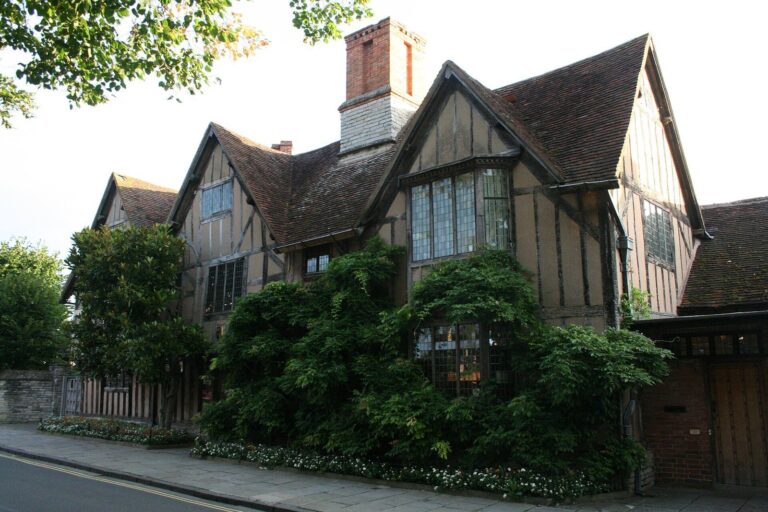
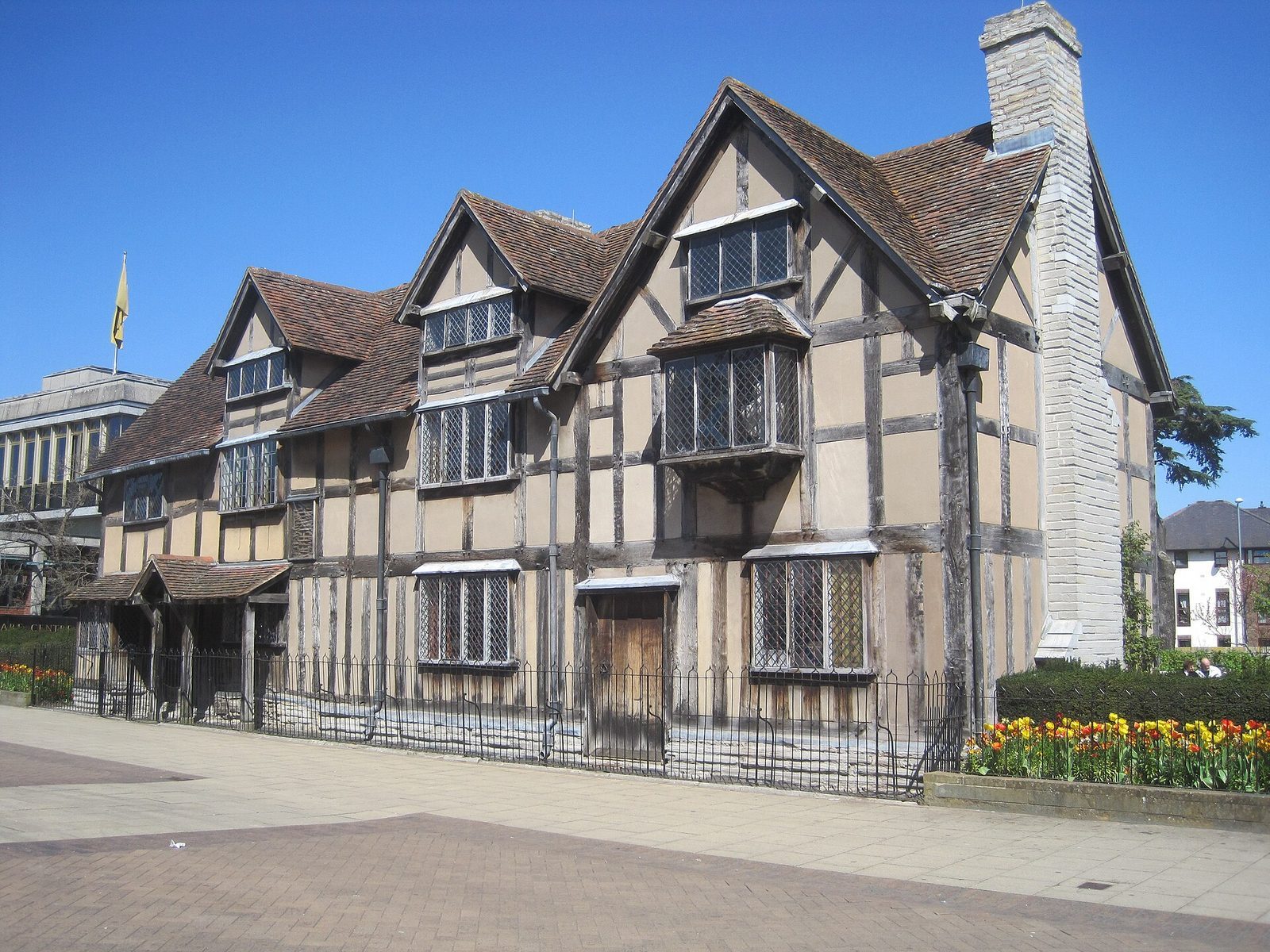
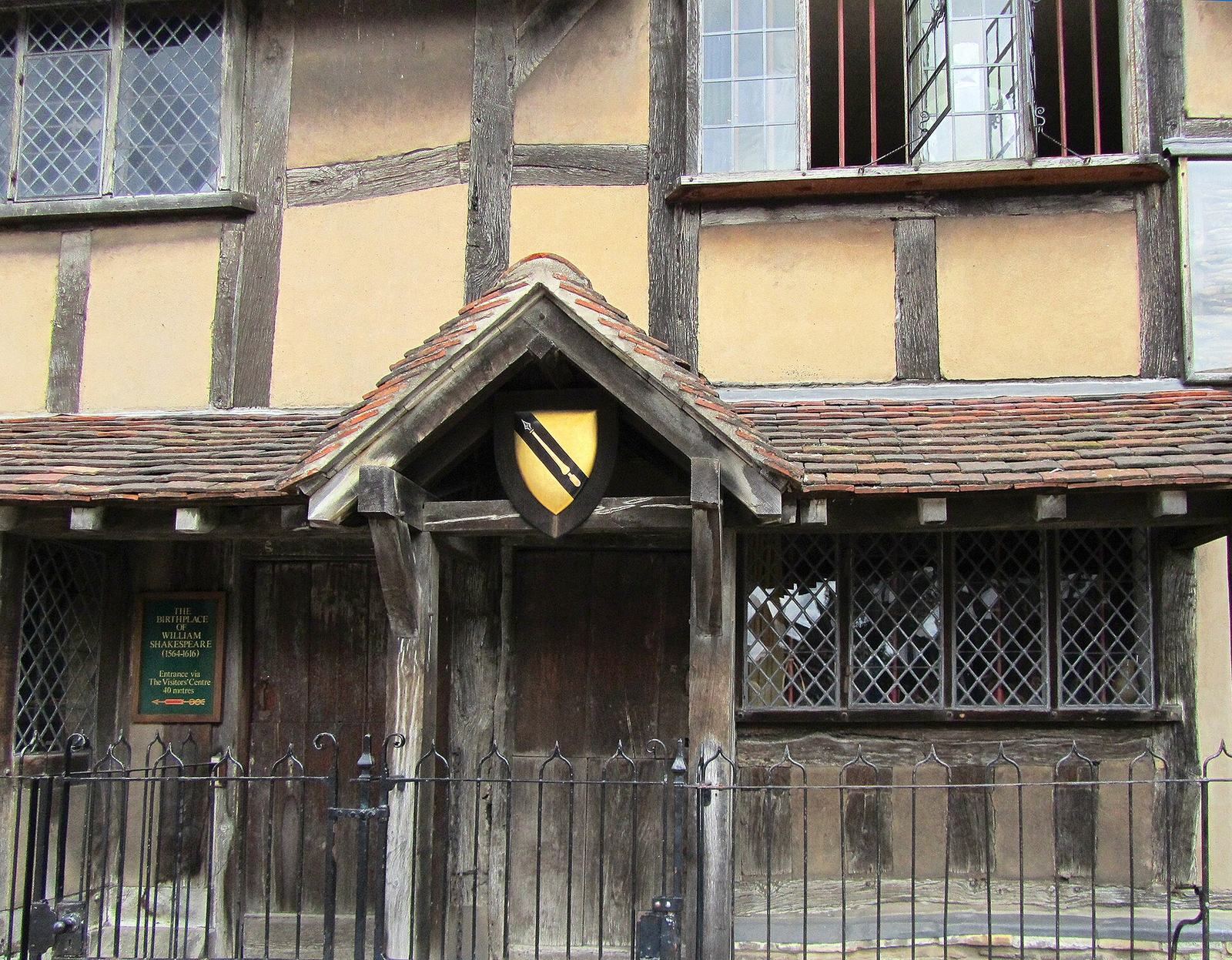
The house is a relatively simple half-timbered building, with an exposed structural frame and infill walls. Its oak timbers came from the Forest of Arden, and blue-grey stone from Wilmcote was also used. The walls include wattle-and-daub, woven strips of wood covered with clay or earth. A framed panel above and to the right of the porch roof exposes the woven wattle. Large fireplaces combine early brick and stone, while the ground floor has stone-flagged floors. Part of the exterior was faced with brick in the early nineteenth century; the later reconstruction restored its sixteenth-century appearance.
Plan and rooms
The original house was rectangular and arranged from northwest to southeast. On the ground floor, a parlour with a fireplace adjoined a hall with a large open hearth. A passage ran across the plan, beside a room probably used as John Shakespeare’s workshop. Three first-floor chambers followed a similar arrangement and were reached by stairs from the hall. The stairs were probably near the position of the present staircase. Tradition identifies the chamber above the parlour as Shakespeare’s birthroom.
Later additions and garden
A separate, one-bay-wide house, now called Joan Hart’s Cottage, was later added to the northwest end. At the rear, the present kitchen has a chamber above it. A walled garden behind the house contains flowers and herbs known in Shakespeare’s time.
Furnishings and interpretation
Period domestic furnishings help present the house as a family home, while a glove-making workshop is associated with John Shakespeare’s trade. One windowpane bears visitors’ signatures from across the centuries.
The Shakespeare Centre
Beside the historic house, the Shakespeare Centre is a modern glass-and-concrete building. It serves as the Trust’s headquarters and houses its library, documents and collections, as well as displays relating to Shakespeare.