Bourne Park House: A Queen Anne Country House in Kent
Site at a Glance
- Rating
- 5
- Popularity
- Very Low
- Country
- United Kingdom
- Primary era
- Early Modern
- Eras represented
- Early Modern
- Civilizations
- Unclassified
- Site type
- Domestic
- Remains
- Elite Residence
On this page12 sections
History
Foundation and ownership
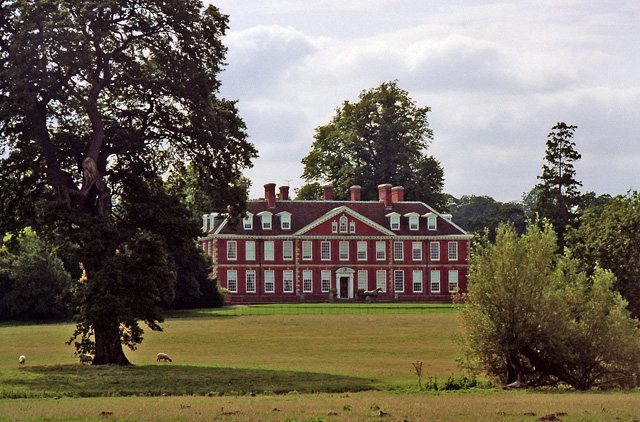
Bourne Park House is a Queen Anne country house between Bishopsbourne and Bridge near Canterbury, in Kent, United Kingdom. Built in the early eighteenth century in a style associated with that period, it was commissioned by Elizabeth Aucher, widow of Sir Anthony Aucher, and replaced an earlier Bourne family building. Elizabeth maintained the house while her only son, Sir Hewitt Aucher, was a minor, then transferred it to him in 1708.
Sir Hewitt left the property to his elder sister, whose marriage brought it into the Beckingham family. Matthew Bell bought the house in 1844. Major Sir John Prestige acquired it in 1927 and carried out extensive renovations.
Mozart family and cricket
In the last week of July 1765, Leopold and Anna Maria Mozart stayed at Bourne Park with their children Maria Anna and Wolfgang Amadeus. The family were travelling on a European Grand Tour, an educational journey through Europe, and visited Sir Horatio Mann, who leased the house, before continuing to The Hague.
Mann established a cricket ground in the park. High-level matches were played there from 1766 to 1790.
Later history
The house was sold to Richard Neame in the 1960s and passed from him to a monastic community in 1976. Around 1982, it was sold to Lady Juliet Wentworth-Fitzwilliam. In 1956, the poet and architectural critic John Betjeman placed Bourne Park on a list of attractive English buildings he feared would be destroyed. By 1965, the house was described as having been unoccupied for several years and needing restoration and modernization.
Bourne Park House is Grade I listed, while the ice house and bridge in its grounds are Grade II listed. The University of Cambridge continues archaeological research at the site.
Remains
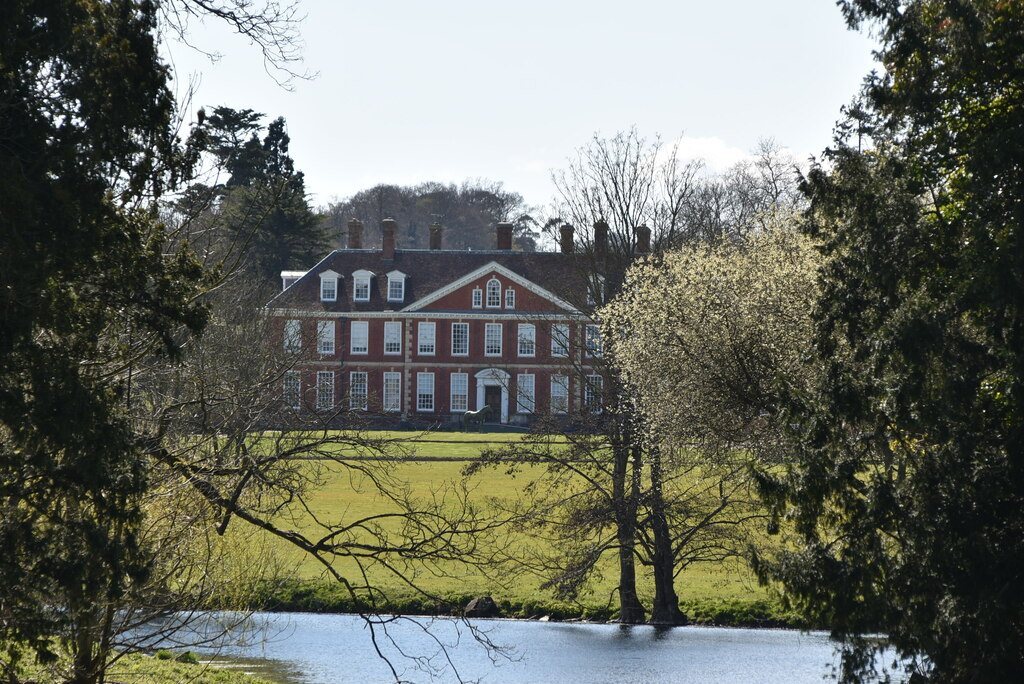
The house stands within parkland and is a large rectangular building of red brick. Its surviving features include architectural details from its early history, later interior work, planted avenues and grounds structures.
The house
The two-storey house has an attic, a basement and a hipped tile roof, which slopes down on all sides. Its 13-bay facade is divided into sections by its openings and structural divisions. A five-bay central projection is crowned by a pediment, a triangular feature, containing a Venetian window with a large central opening flanked by two smaller ones. The interior was altered in 1848 and retains an eighteenth-century staircase, panelling and ceilings.
Parkland and grounds
Avenues and trees
The landscaped grounds include an eighteenth-century lime avenue, a yew walk, Wellingtonia trees and cork oaks. Wellingtonia is a British name for the giant sequoia. Some trees were lost in the October 1987 storm. An account from 1965 described the estate as covering 57 acres. Today, the 3.6 hectares (9 acres) adjoining the house remain with it, while the rest of the estate is separately owned.
Ice house and bridge
An eighteenth-century ice house of red brick stands in the grounds. Such buildings stored ice before mechanical refrigeration. A bridge crosses the Nailbourne, the stream that feeds the park lake.
Cricket ground
The park’s private cricket ground was historically called Bishopsbourne Paddock and is also known as Bourne Paddock.
Archaeological evidence
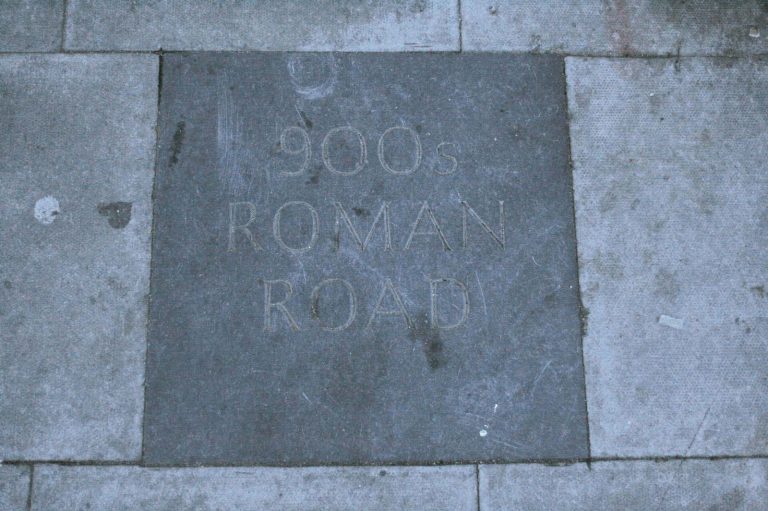
Finds indicate use of the area from the Bronze Age, with further evidence from Roman Britain. The earliest object found is an Iron Age silver coin; numerous other finds are associated with the Roman period.
The Fitzwilliam Collection
The house holds the private Fitzwilliam Collection, inherited by Lady Juliet Wentworth-Fitzwilliam as a descendant of the Earls Fitzwilliam. Formerly kept at Wentworth Woodhouse, the collection includes portraits by Anthony van Dyck and Joshua Reynolds, works by the horse painter George Stubbs, and a copy of John James Audubon’s The Birds of America. Six paintings by van Dyck are among its holdings.