Ajdanovac Monastery: A Serbian Orthodox Monastery in Serbia’s Toplica Region
Site at a Glance
- Rating
- 4.9
- Popularity
- Medium
- Country
- Serbia
- Primary era
- Medieval
- Eras represented
- Medieval, Early Modern, Modern
- Civilizations
- Ottoman, Serbian
- Site type
- Religious
- Remains
- Monastery
On this page9 sections
History
Ajdanovac Monastery is a Serbian Orthodox monastery on the southern slopes of the Jastrebac Mountains, near Velika Plana and Prokuplje in Serbia’s Toplica region. It belongs to the Eparchy of Niš, an Eastern Orthodox diocese, and its church is dedicated to Saint George. The church’s construction date is uncertain.
Fifteenth to Seventeenth Centuries
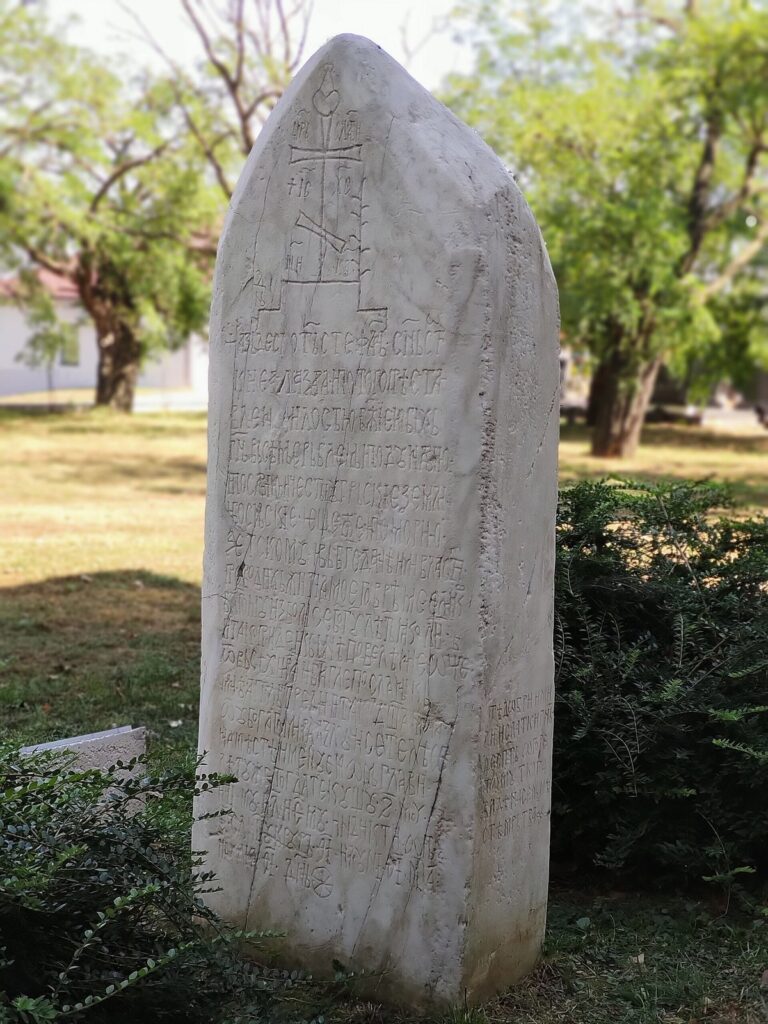
A painted inscription dated 1492 identifies Ajdanovac as a metochion, a dependent monastic holding, of Naupara Monastery. Ottoman census registers from the fifteenth and sixteenth centuries also show that Ajdanovac held substantial property.
The monastery was apparently damaged around 1690 during the Great Migration of Serbs, a major movement of Serbs amid conflict between the Ottoman and Habsburg empires, led by Patriarch Arsenije III Čarnojević. After its Serbian population left, the monastery was abandoned and looted, and Albanians settled in the region. Local tradition says that an Albanian named Ajdin saved the monastery from further destruction and that its name comes from him.
Restoration and Twentieth-Century Change
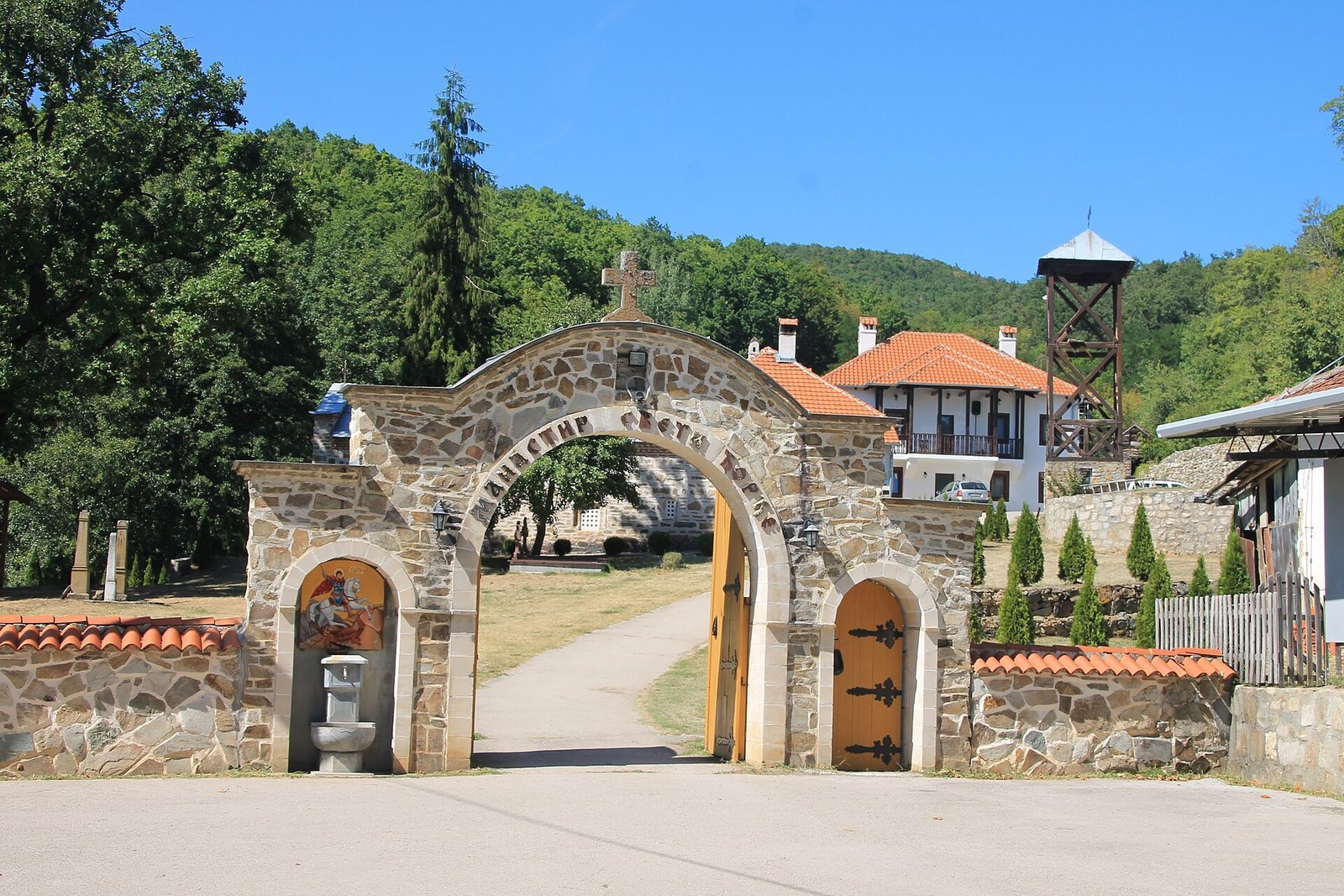
After Serbia gained independence in 1878, Albanians gradually left the Toplica region. Ajdanovac was restored in 1887, with further restoration in 1907. During King Milan Obrenović’s reign, the monastery also received residential buildings and a memorial fountain.
Bulgaria occupied the Toplica region in November 1915. The following year, Ajdanovac was looted and partly burned. New monastic quarters were built after the First World War, and the church served as a parish church until the monastery reopened in 1936.
Further restoration took place in 1949. Ajdanovac was listed as a Serbian cultural monument of great importance on 31 March 1970. Conservation work on the church’s architecture and frescoes followed in 1996 and 1997.
Remains
Church Plan and Exterior
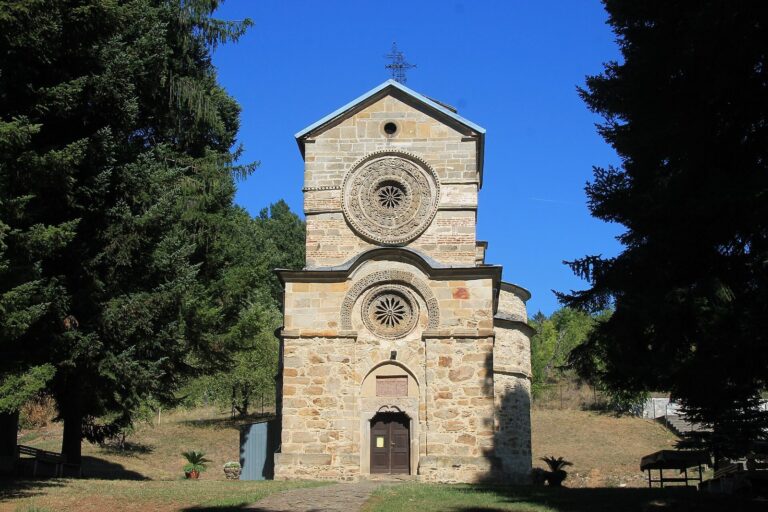
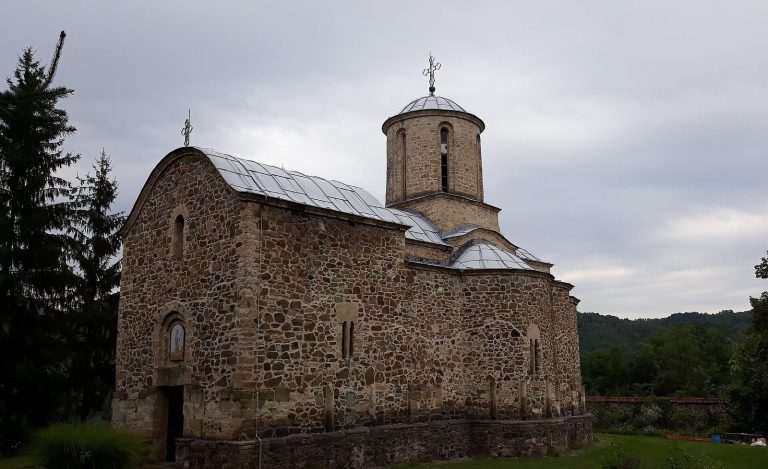
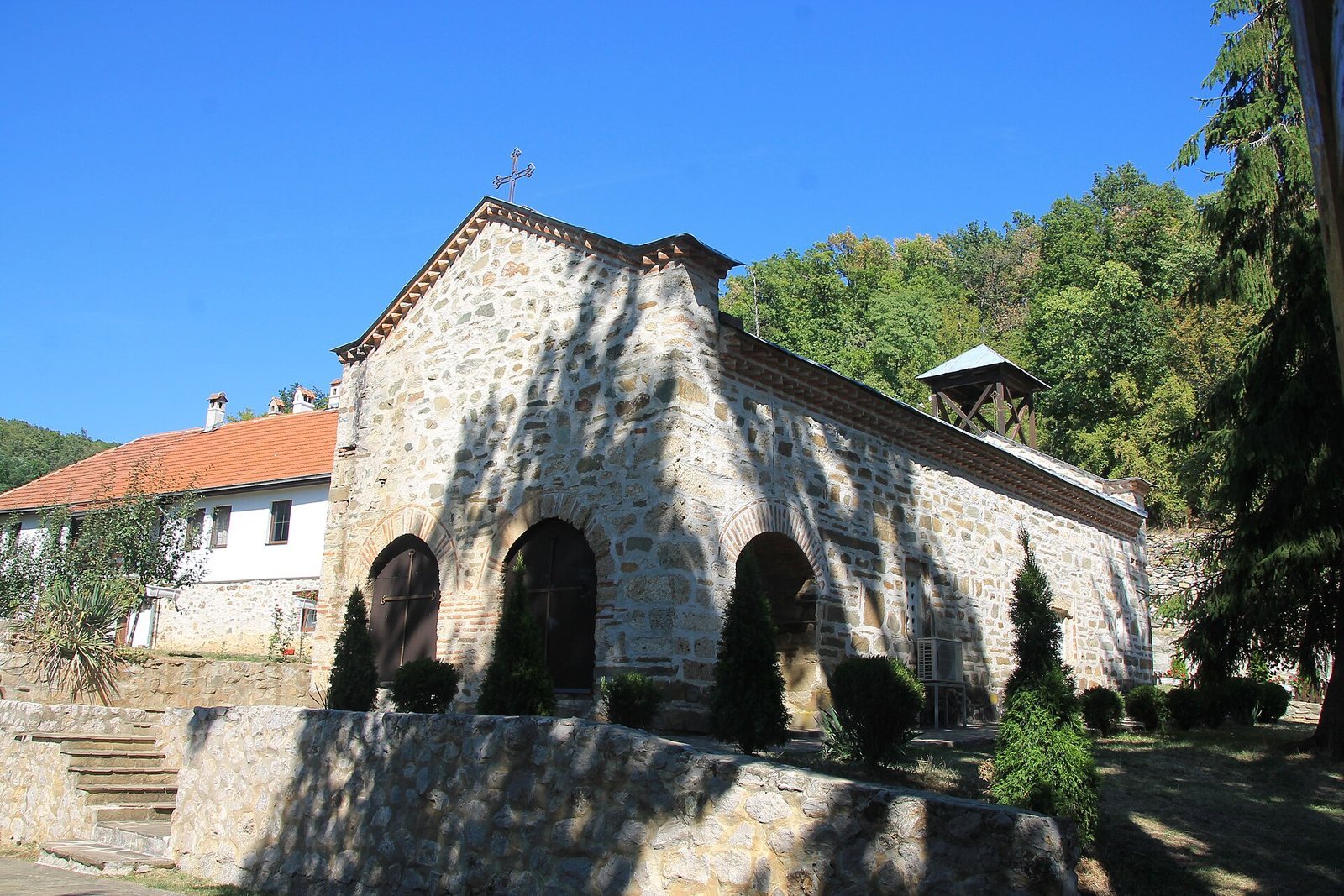
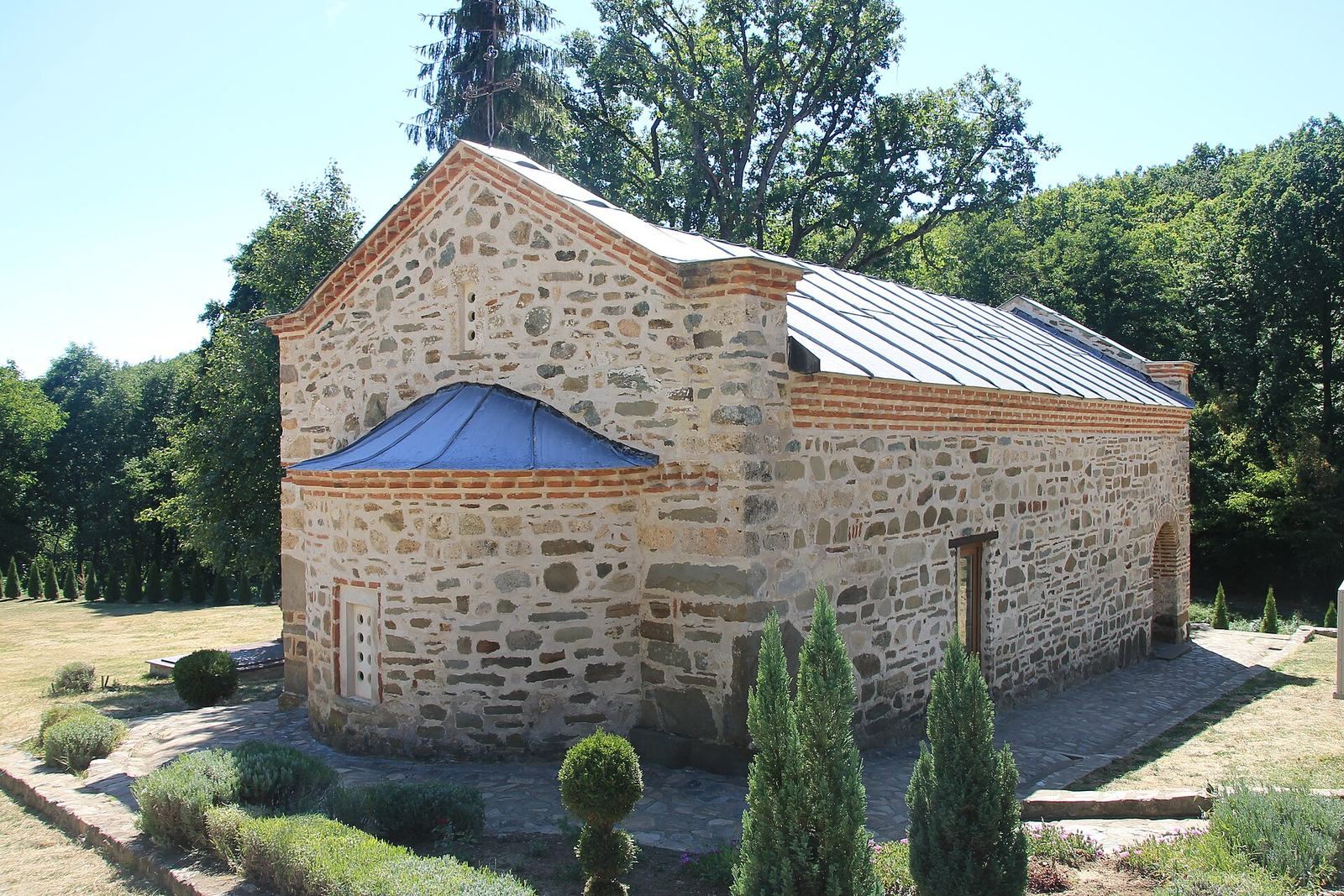
The Church of Saint George has a simple, elongated single-nave plan. At its eastern end, a small semicircular apse projects outward; to the west, the nave is preceded by a narthex, an entrance vestibule, and a later open porch. Two niches in the eastern part serve as the prothesis, where the Eucharistic gifts are prepared, and the diakonikon, a space for liturgical preparation and storage. The plastered exterior is undecorated. A plain gabled roof covers the church, which has neither a dome nor a bell tower.
Frescoes
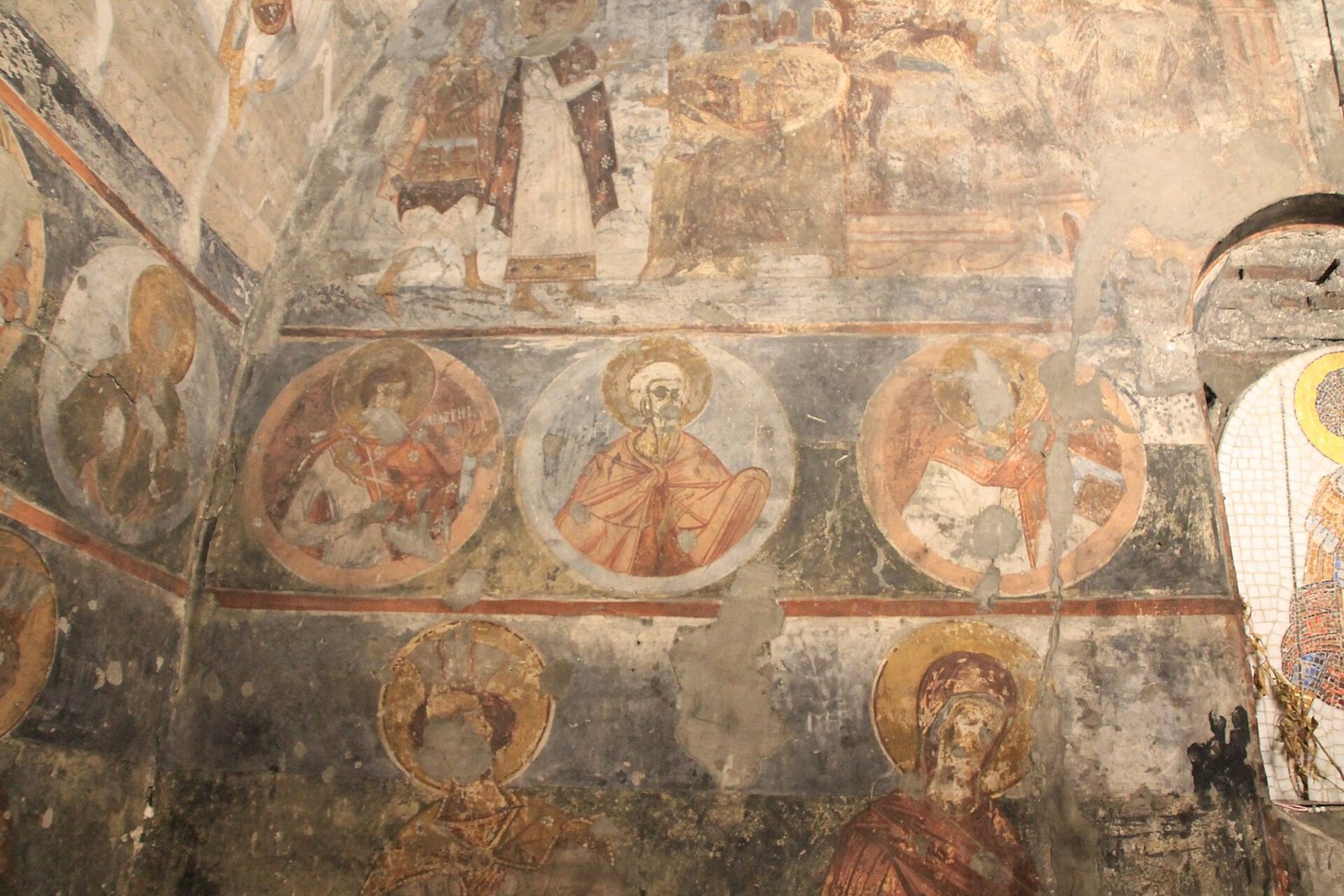
The church’s frescoes, or wall paintings on plaster, survive in part. The best-preserved group is on the north wall of the narthex, where full-length figures of saints and warrior saints include Saint George, Saint Helena, Saint Procopius, and Saint Marina. The south wall has two standing saints, six medallions, and a Crucifixion. Paintings dated to 1492 have firm outlines and rich colors. Their style, errors in inscriptions, and iconographic choices suggest that their painters came from northern Greece. Other subjects include the Great Feasts of Christ, celebrations of major events in Christ’s life, and the Last Judgment. Distinctive details include Saint Marina fighting the devil and a boy added to an equestrian image of Saint George. Paintings in the nave date to the seventeenth century.
Iconostasis
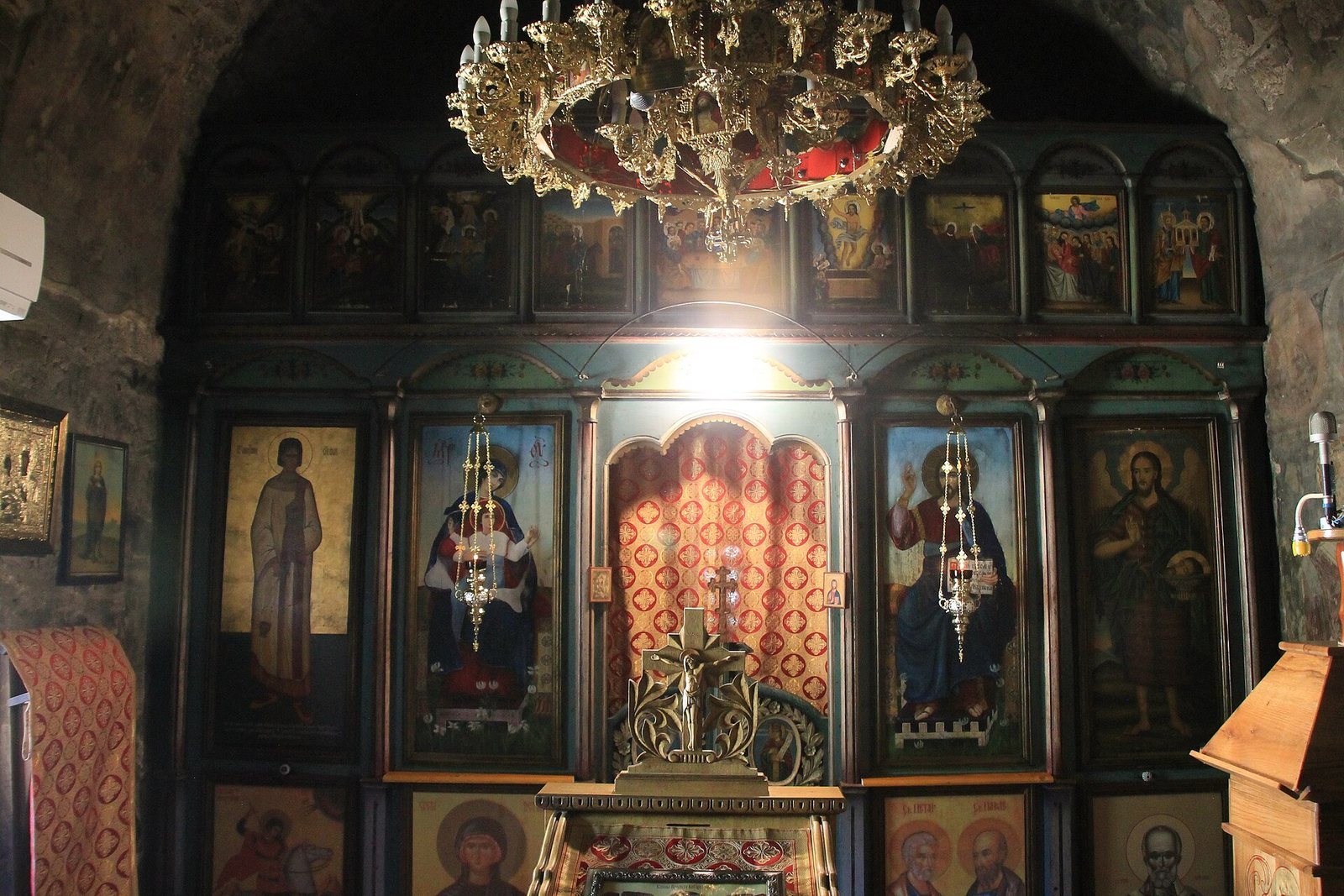
The church has a Neoclassical iconostasis, the screen separating the sanctuary from the main body of the church. Made during King Milan Obrenović’s reign, it draws on ancient Greek and Roman forms.
Monastic Buildings
The monastery’s residential buildings are known as konaks. Those present in 1916 were destroyed when the monastery was looted and partly burned, and new quarters were built after the First World War. A memorial fountain was also added during the period of restoration under King Milan Obrenović.
Books and Reliquary
The monastery preserves several liturgical books from the eighteenth and nineteenth centuries, as well as a reliquary believed to contain relics of the prophet Nahum, whose book appears in the Hebrew Bible and the Christian Old Testament.