Prasat Ta Muen: A Khmer Buddhist Chapel in Thailand
Site at a Glance
- Rating
- 4.5
- Popularity
- Medium
- Country
- Thailand
- Primary era
- Medieval
- Eras represented
- Medieval
- Civilizations
- Khmer
- Site type
- Religious
- Remains
- Chapel
On this page4 sections
History
Prasat Ta Muen is a Buddhist sanctuary at Ta Muen Pass in Thailand’s Dangrek Mountains, built under Jayavarman VII, a Khmer king of the Angkorian Empire, in the late 12th or early 13th century. Its Bayon style was a Khmer architectural and artistic tradition associated with Jayavarman VII and named for the Bayon temple at Angkor.
The sanctuary probably served as a chapel for one of the many rest houses, or way stations, commissioned by Jayavarman VII. Chinese traveler Zhou Daguan referred to it in writings from near the end of the 13th century. Inscriptions at Angkor, the Khmer imperial capital, place the associated rest house among 17 stations on the route to Phimai, a Khmer-period temple complex in present-day Thailand.
Prasat Ta Muen has sometimes been confused with the larger Prasat Ta Muen Thom amid changes to the names of sanctuaries in the group. The impression that Ta Muen Thom lay farther inside Cambodia resulted from an inaccurate depiction of the boundary line, not from the relocation of a marker. Thailand’s Fine Arts Department registered Prasat Ta Muen as an archaeological monument for protection and preservation.
Remains
Plan and construction
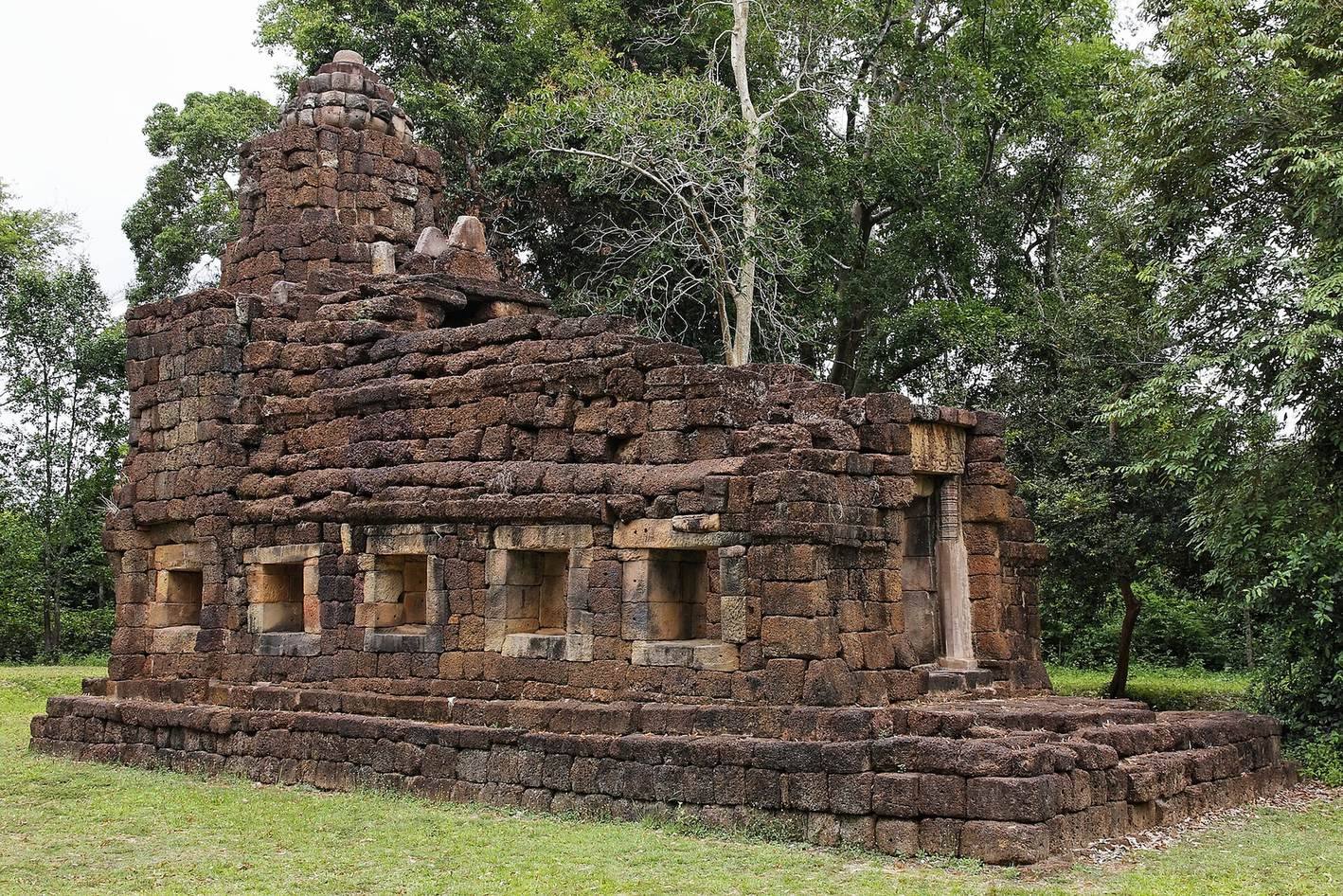
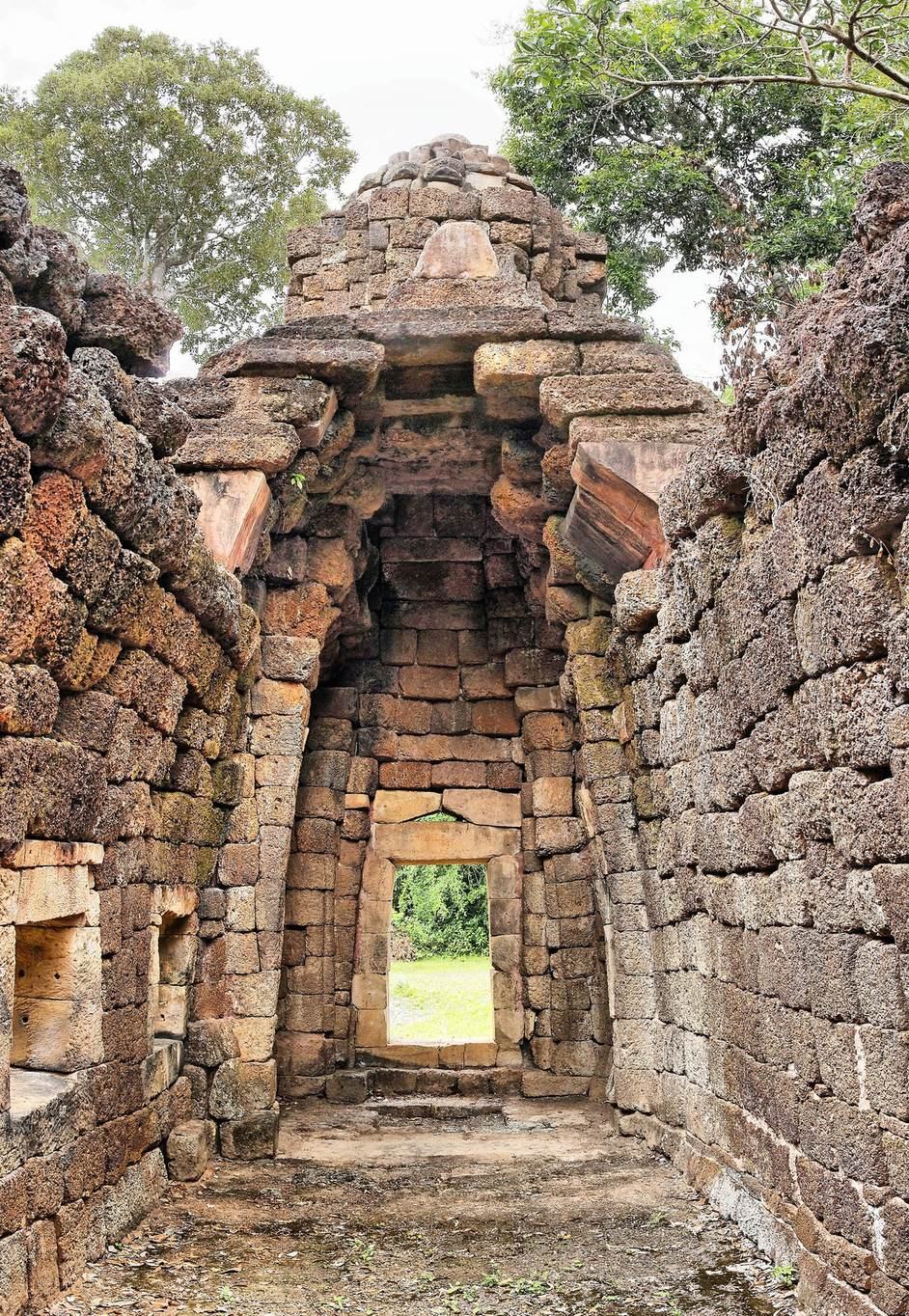
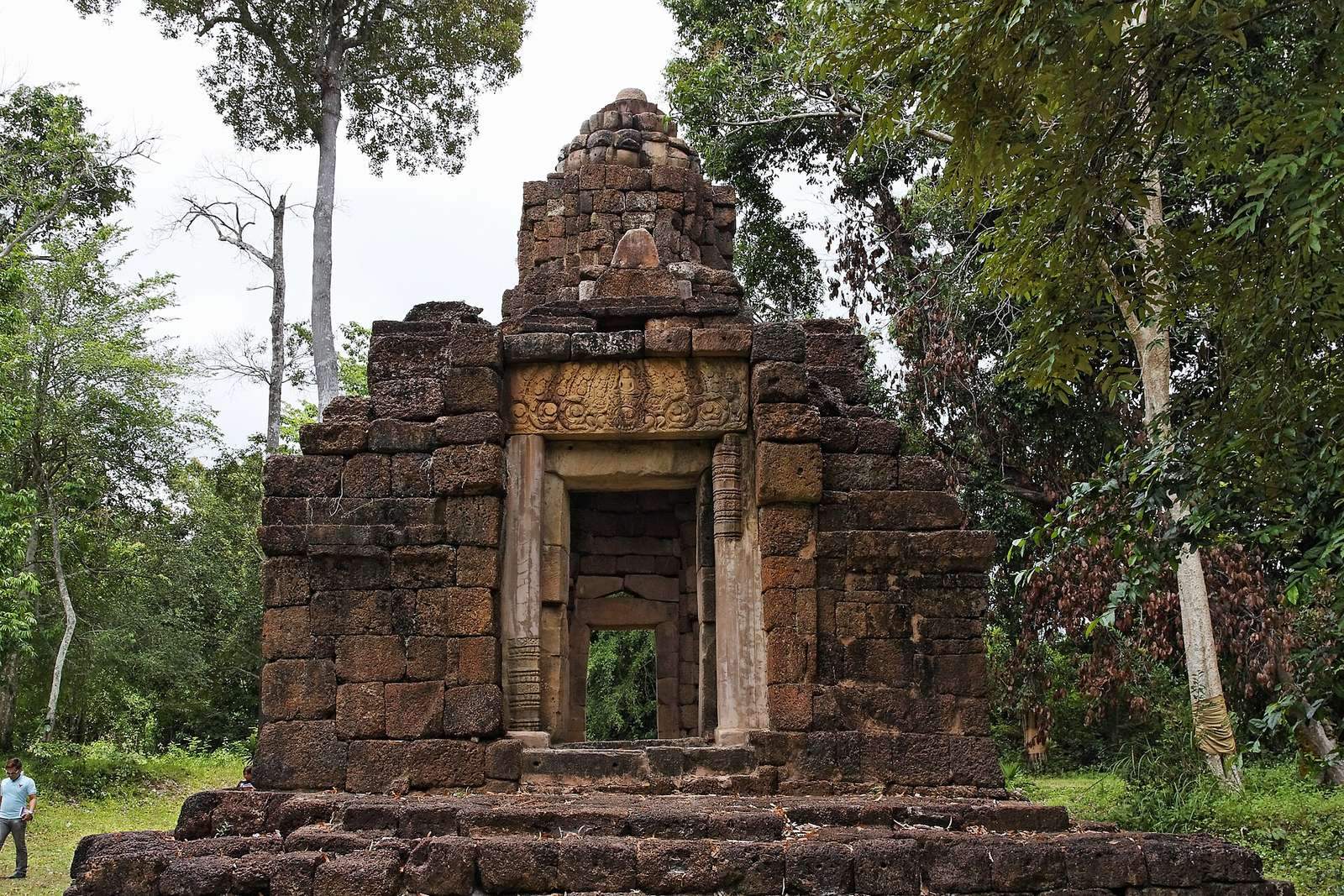
Prasat Ta Muen is the smallest of the three sanctuaries in the Ta Muen group, which also includes Prasat Ta Muen Thom and Prasat Ta Muen Toch. It stands about 390 metres northwest of Ta Muen Toch, near the Thai-Cambodian border. Built of laterite, an iron-rich rock used as a building material, the chapel joins a long porch to a square-based tower. The tower measures 6.3 metres across at its base and stands 13 metres high; the porch is 12 metres long and 5 metres wide.
Openings and carved decoration
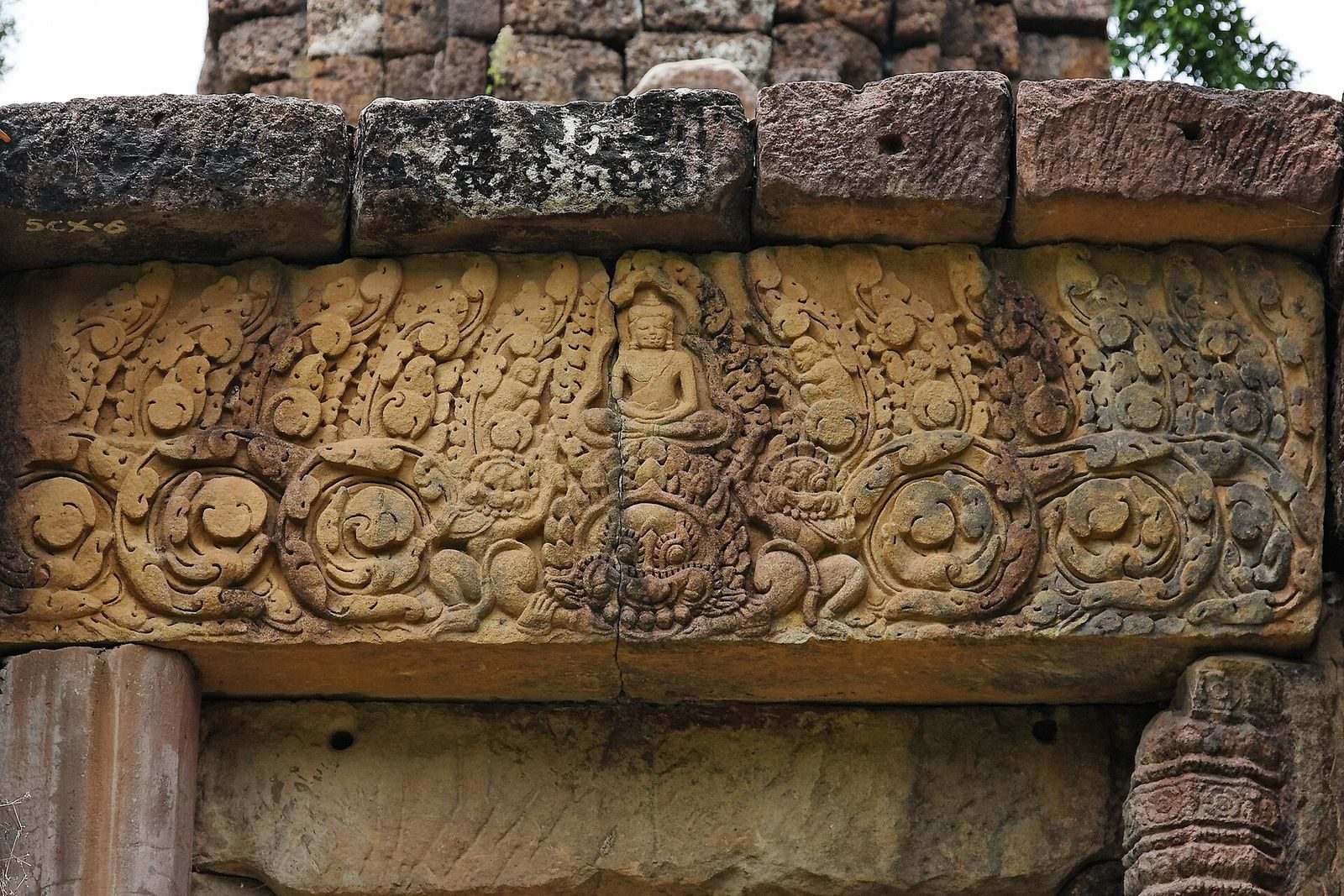
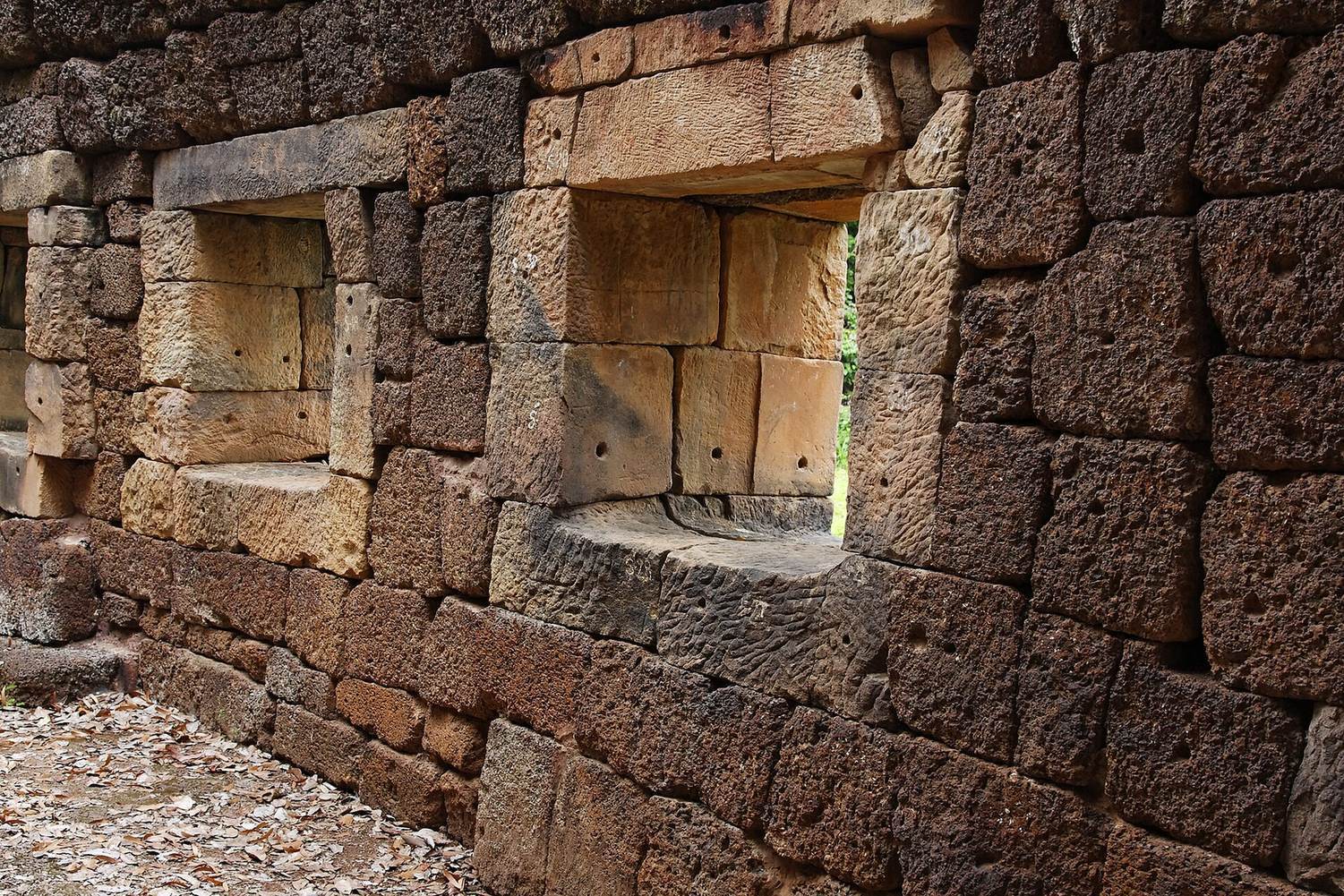
The chapel faces east and has a doorway at each end. Five sandstone windows are set into the south side: four in the porch and one in the tower. At the eastern entrance, small columns flank a horizontal beam. Its carved decoration depicts a seated Buddha above a kala, a mythical face motif used in South and Southeast Asian art. A similar plan appears in rest-house buildings at Preah Khan and Ta Prohm.