St Kentigern’s Church, Caldbeck: An Anglican Parish Church in Cumbria
Site at a Glance
- Rating
- 4.8
- Popularity
- Low
- Country
- United Kingdom
- Primary era
- Medieval
- Eras represented
- Medieval, Early Modern, Modern
- Civilizations
- British, English
- Site type
- Religious
- Remains
- Church
On this page13 sections
History
St Kentigern’s Church, Caldbeck, is an active parish church in Cumbria, England, belonging to the Anglican tradition, a Christian tradition historically rooted in the Church of England. Dedicated to Saint Kentigern, an early medieval Christian saint and missionary also known as Saint Mungo, its foundation is dated to 1150. It stands on the site of a church dating to the sixth century, while the earliest fabric of the present building belongs to the 12th and 13th centuries.
Medieval alterations
In 1512, the cleric John Whelpdale directed a major phase of work that included rebuilding the chancel and adding a chantry chapel, a chapel endowed for prayers or services for the dead. The chapel later served as the south vestry.
Later changes and present status
A further stage was added to the tower in 1727. The church was restored in 1880, including work on the chancel’s timber roof. A second restoration in 1932 brought new aisle and clerestory windows and an open timber roof in the nave.
The church belongs to the Diocese of Carlisle, an area under a bishop’s jurisdiction, and to its Carlisle archdeaconry and deanery, subdivisions of that structure, within the Province of York. It has been a Grade I listed building since 11 April 1967, a category for buildings of exceptional architectural or historic interest in England.
Remains
Church building
Plan and materials
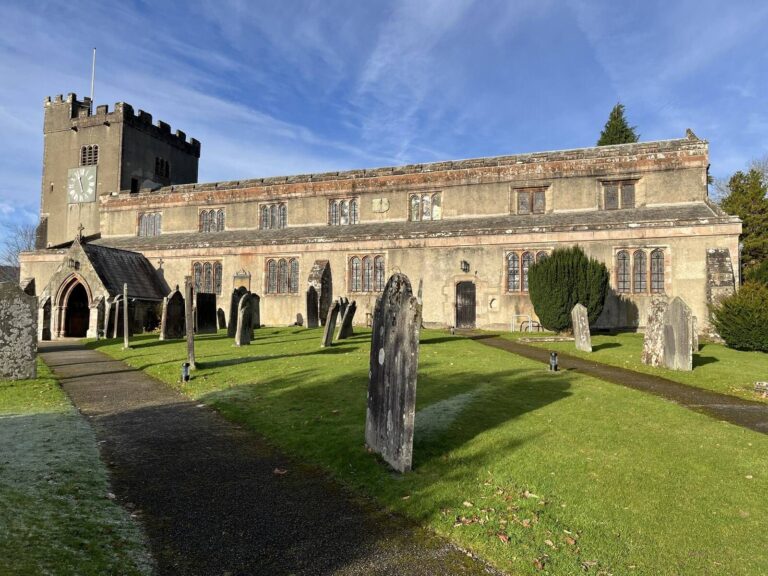
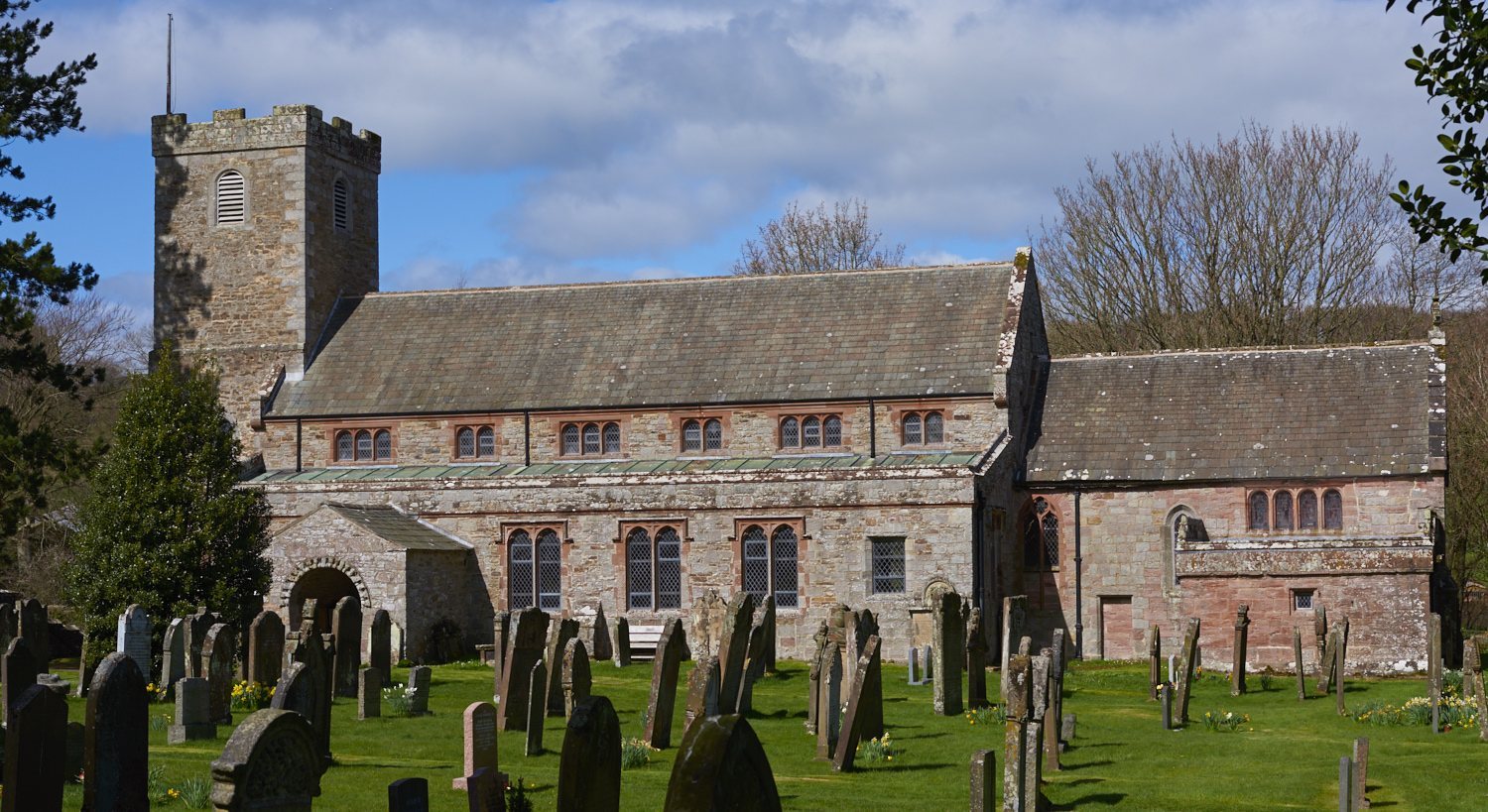
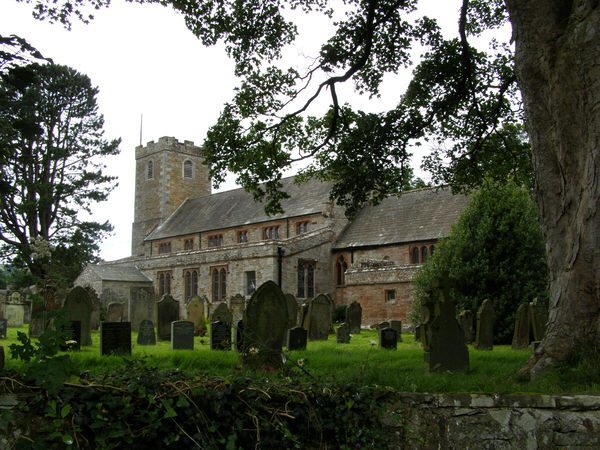
The church has a six-bay nave, each bay a structural division of the building, with aisles on its north and south sides. A clerestory, the high windowed wall above the adjoining roofs, rises over the nave. The plan also includes a two-bay chancel, a south vestry, a south porch and a square west tower. The main body is built of sandstone blocks; the tower is limestone, with dressed sandstone corner stones called quoins. Green slate covers the roof. The gables have protective coping stones, and a cross finial stands on the east gable.
Tower
The west tower has three stages. Its lower two are medieval and rise to a string course, a projecting horizontal band of masonry. An inscription appears on the upper stage. Round-arched openings with louvres accommodate the bells, and the tower is finished with a battlemented parapet.
Doorways and porch
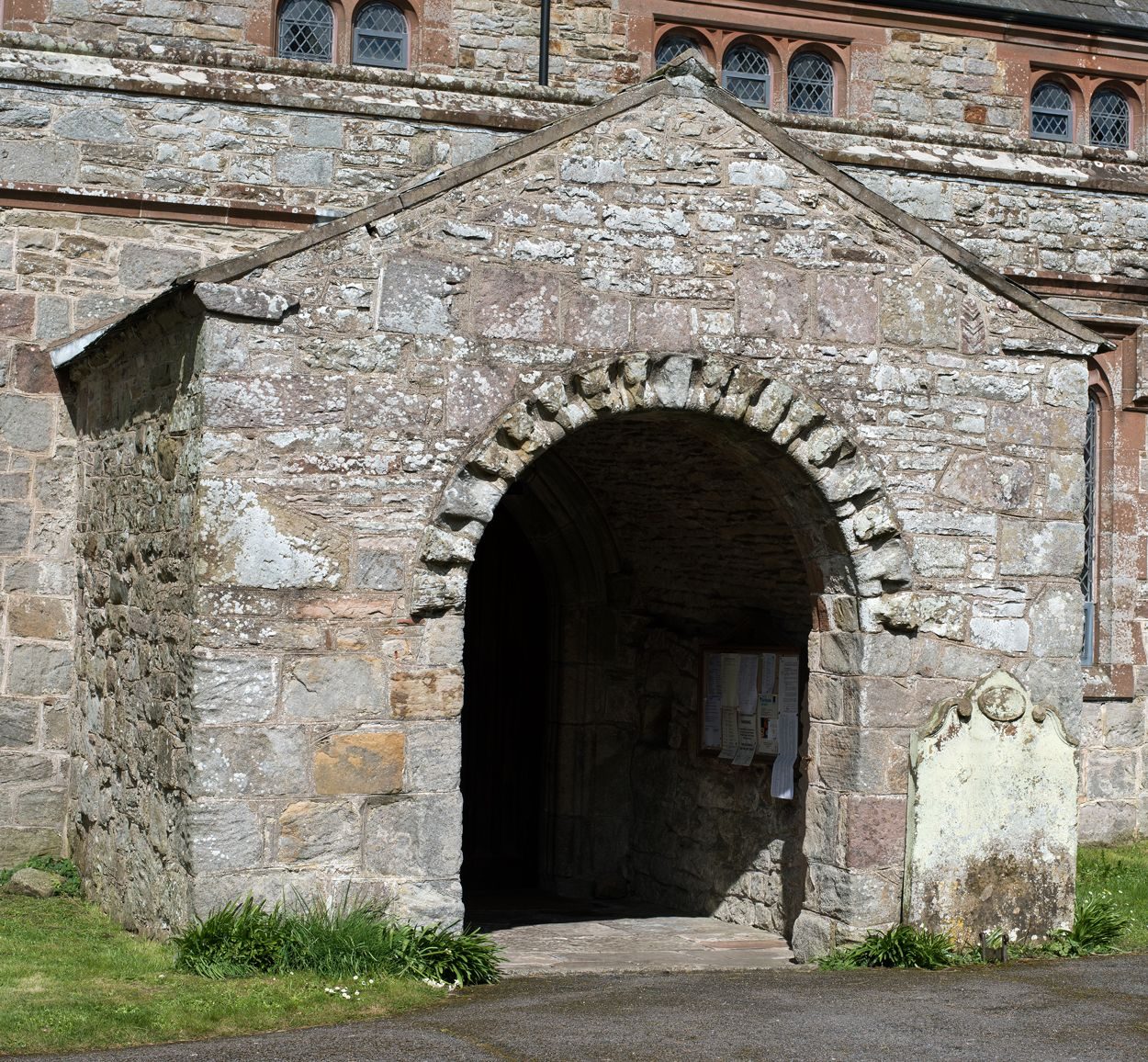
A relocated doorway in Norman architecture, the English Romanesque style that followed the Norman Conquest, forms the opening between the tower and nave. A second moved Norman doorway is set inside the porch. The porch also contains a medieval grave slab and a holy-water stoup, a vessel for holding holy water. A priest’s doorway in the south wall is blocked.
Windows and glass
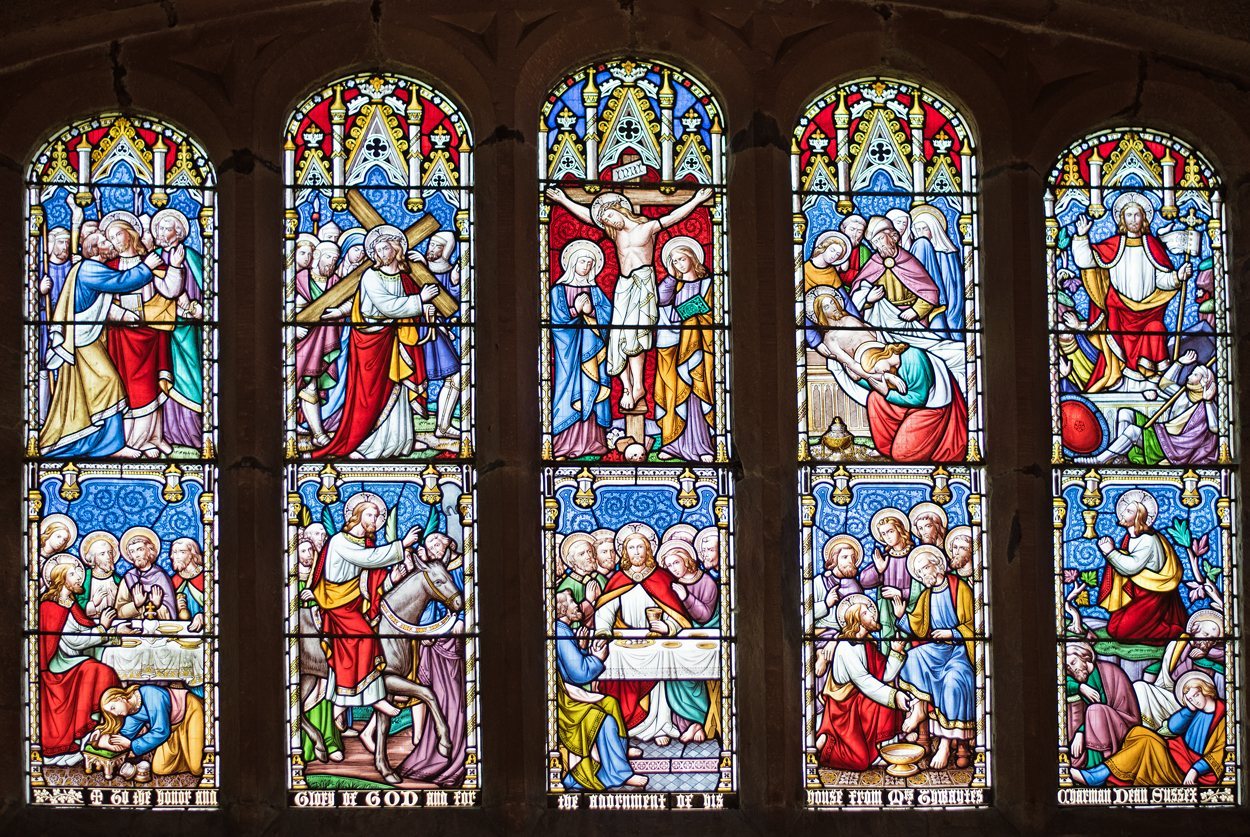
The aisle windows have two lights each, with trefoil heads, a three-lobed ornamental shape. One window is original; the others belong to a later phase. The clerestory has windows with two or three lights. In the chancel, two original windows sit above a low-level squint, an opening that gives a view of the altar from an otherwise obstructed position. A four-light window is set above the vestry, while the five-light east window carries an inscription to John Whelpdale.
William Wailes made the stained glass in the east window in 1867; its scenes concern the final days of Jesus. Two north-aisle windows made by James Powell and Sons in 1938 portray Saint Kentigern and Saint Cuthbert, an early medieval Northumbrian bishop and saint.
Baptistry and fittings
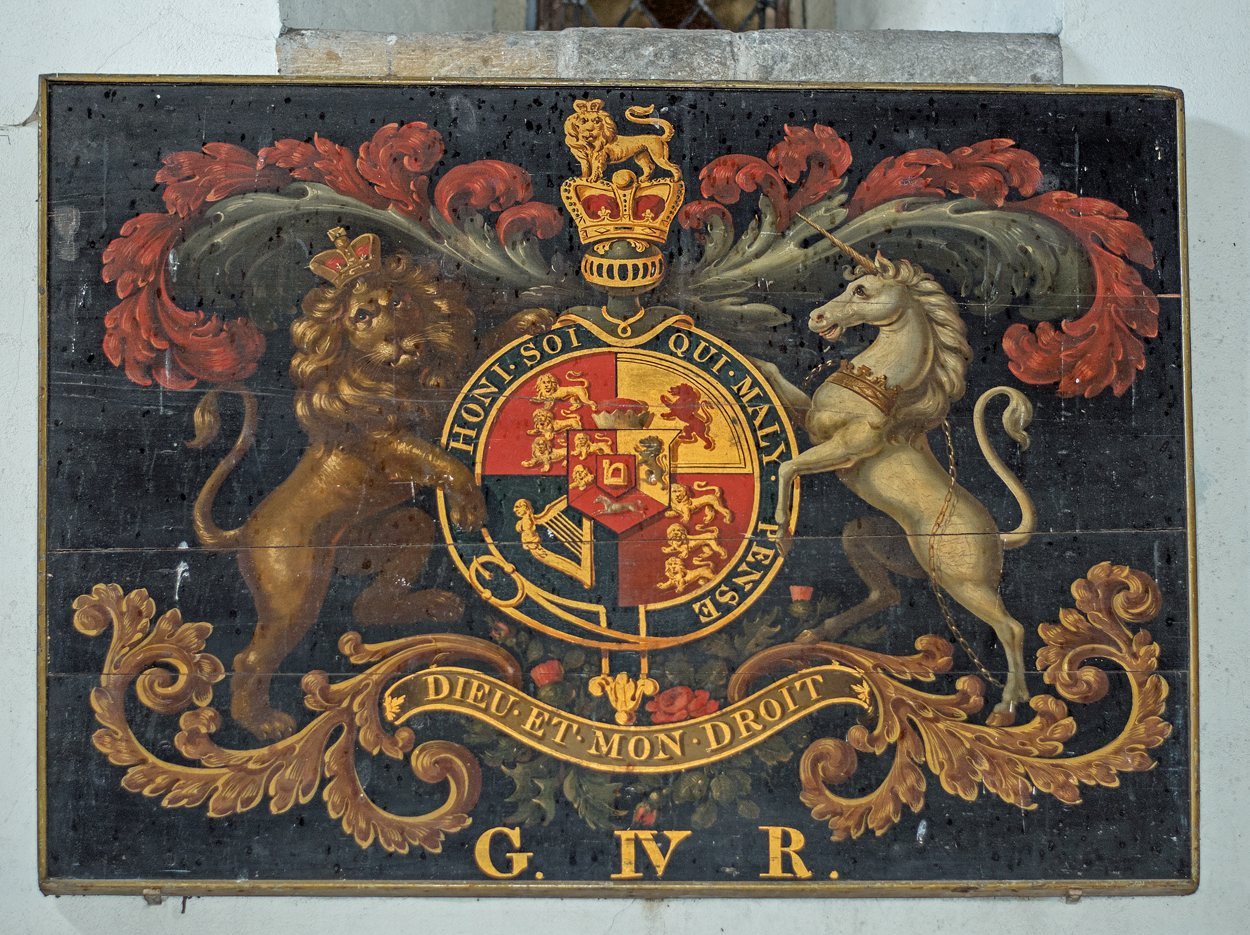
The baptistry, an area set aside for baptism, contains a hexagonal font, a basin used for baptism, dating from the 14th century. A 13th-century piscina, a basin used in church ritual, is set into the south wall. On the west wall are the royal arms of George IV, king of the United Kingdom from 1820 to 1830, and a painted text dated 1731.
Churchyard and nearby well
St Mungo’s Well
St Mungo’s Well lies close to the church. It is a holy well, a well regarded as sacred and associated with religious observance. Christians were baptised there in the sixth century.
Burial places
The churchyard contains the grave of John Peel, a local huntsman who is the subject of the song “D’ye ken John Peel?”, and the burial place of Mary Robinson Harrison, also known as the Maid of Buttermere or the Buttermere Beauty.