Groby Old Hall: A Fifteenth-Century Manor House in Leicestershire
Site at a Glance
- Rating
- 3.7
- Popularity
- Very Low
- Country
- United Kingdom
- Primary era
- Medieval
- Eras represented
- Medieval
- Civilizations
- English
- Site type
- Domestic
- Remains
- Manor House
On this page6 sections
History
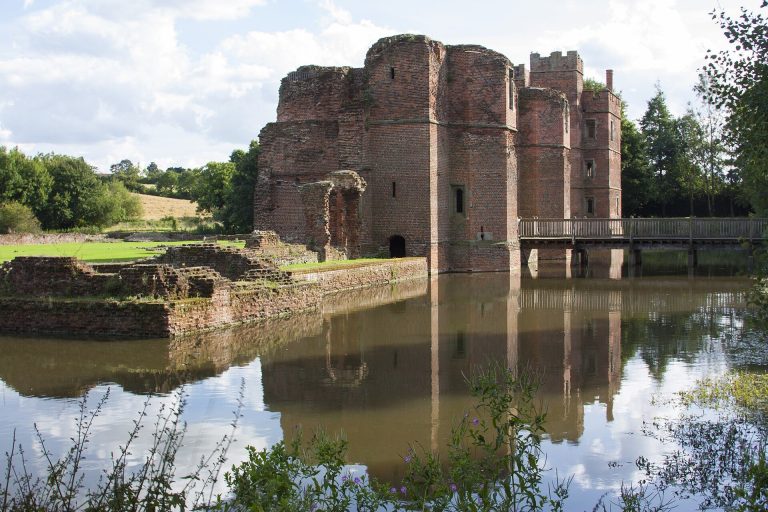
Groby Old Hall is a partly fifteenth-century brick manor house in Groby, Leicestershire, United Kingdom, close to the site of Groby Castle. Associated first with the Ferrers and then the Grey family, it formed part of an estate whose fortunes became entangled with the Wars of the Roses and the early Tudor court.
Ferrers and Grey Inheritance
An earlier grand manor hall, which preceded the present building, was probably built by the Ferrers family, Barons of Groby. The first Baron Ferrers of Groby received his title for service to Edward I and Edward II, successive Plantagenet kings of England. Around 1432, the hall and barony passed to the Grey family through the marriage of Sir Edward Grey and Elizabeth Ferrers, granddaughter and heir of the fifth Baron.
Elizabeth Woodville married Sir Edward Grey’s son John and lived with him at Groby. They had two sons. John died at the Second Battle of St Albans in 1461, during the Wars of the Roses, a series of conflicts between the rival houses of Lancaster and York over the English throne. Elizabeth petitioned Edward IV to restore her confiscated lands, succeeded, and later married the king.
Thomas Grey and the Tudor Period
Elizabeth and John’s son Thomas Grey rose from Earl of Huntingdon to Marquess of Dorset in 1475, a promotion to a noble rank above an earl. After Edward IV died and Richard III took the throne, Thomas fled to France and joined Henry Tudor’s Lancastrian cause. Tudor’s victory over Richard III in 1485 brought Henry to the throne as Henry VII. Thomas then held a precarious position at court but worked to improve the Grey family’s manor at Groby.
Thomas also began a much larger house at Bradgate, several miles away. His son completed it after Thomas’s death in 1501, and it became the family’s home for about 240 years, with an interruption around 1554. Thomas’s great-granddaughter, Lady Jane Grey, was born and raised there.
Later History and Literary Reference
Groby Old Hall remained part of the estate as the Grey family’s fortunes changed. The date when the earlier grand hall was demolished is unknown. An archaeological investigation in 2011 did not establish it. The building is listed at Grade II*, an English category for buildings of particular importance and more than special interest.
Ford Madox Ford’s 1925 novel Parade’s End features a fictional ancestral home called Groby Hall, associated with Christopher Tietjens and set in Yorkshire. The fictional house was probably inspired by Busby Hall rather than the Leicestershire manor.
Remains
Gatehouse and Hall Fabric
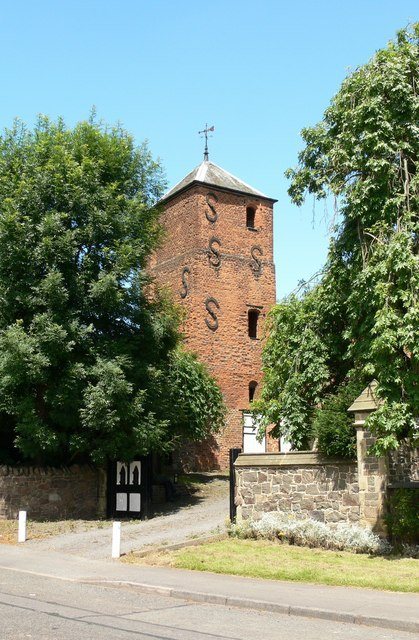
The surviving manor house stands near the site of Groby Castle and includes a red-brick gatehouse begun on the site of the earlier manor. Thomas Grey appears to have started the gatehouse as part of his improvements to the estate. It later became part of the building known as the Old Hall and is among England’s earliest brick buildings. The house is partly fifteenth-century, though it may also incorporate remains substantially older than that fabric.