Holy Trinity Church in Jelgava: A Baroque Lutheran Church and Surviving Tower
Site at a Glance
- Rating
- 4.7
- Popularity
- High
- Country
- Latvia
- Primary era
- Early Modern
- Eras represented
- Early Modern, Modern
- Civilizations
- Duchy of Courland and Semigallia, Polish–Lithuanian Commonwealth
- Site type
- Religious
- Remains
- Church
On this page6 sections
History
Holy Trinity Church in Jelgava is a former Baroque Lutheran church in Latvia, commissioned in 1574 for the city’s German Lutheran community. Lutheranism is a Protestant Christian tradition. The church became Jelgava’s oldest place of worship and masonry building, and the first stone church in Courland and Semigallia, a Baltic duchy ruled by the Kettler dynasty.
From wooden church to stone building
In 1522, under the Livonian Order, a branch of the medieval Teutonic Order that ruled territories in Livonia, a small wooden Catholic church stood where the surviving tower now stands. In 1574, Duke Gotthard Kettler selected Jelgava as one of his residences and granted the town city rights. He then commissioned a stone church beside the older building. A Dutch master builder is credited with its design.
Construction was delayed by a partition of the state, the Polish-Swedish War, and internal conflicts. The church was completed during the rule of Duke Friedrich Kettler and consecrated on 25 May 1615. Its clock and bells had been made in 1575. In 1641, Princess Elisabeth Magdalena of Pomerania, Friedrich’s wife, donated the church’s altars.
Tower, destruction, and preservation
During the rule of Duke Friedrich Casimir, a tower designed by an architect was built between 1686 and 1688. It was the tallest structure in the duchy. In 1862, an architect oversaw its raising, after which it became the tallest building in prewar Jelgava.
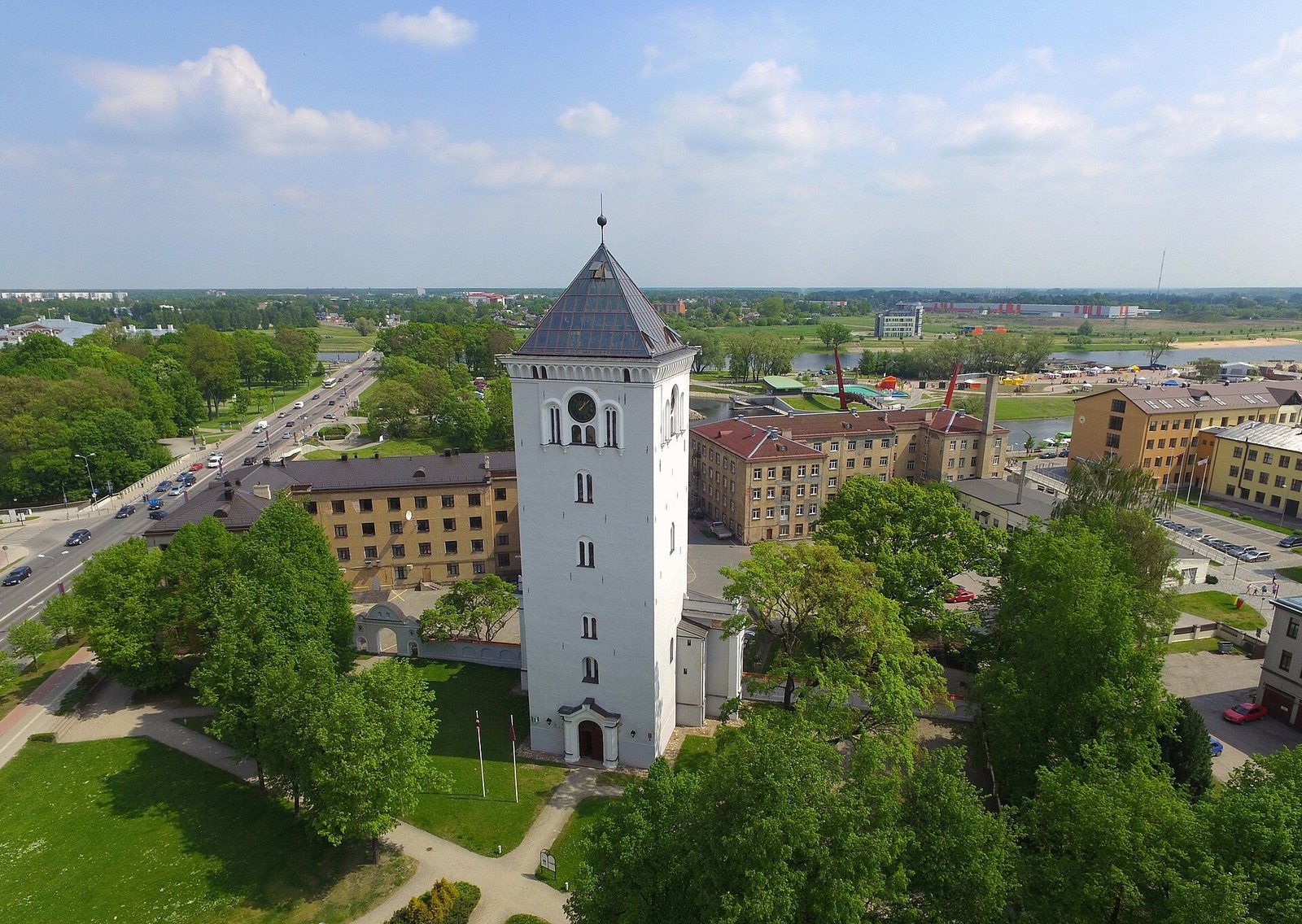
A Soviet air raid during the Battle of Jelgava set the church ablaze on 27 July 1944, and it was not rebuilt. In 1954, Soviet military engineers blew up the altar section and later demolished the remaining church walls. The tower was left standing as Jelgava’s tallest building for military purposes. Repairs began in 1958 at the initiative of the city’s chief architect. The tower was added to the Latvian SSR’s list of cultural monuments of republican significance in 1969 and listed as a state-level cultural monument in 1998.
The municipality took ownership of the tower in 1993. A glass roof was added in 2004, and work in 2009–2010 adapted the tower for cultural and educational use.
Remains
Church remains and forecourt
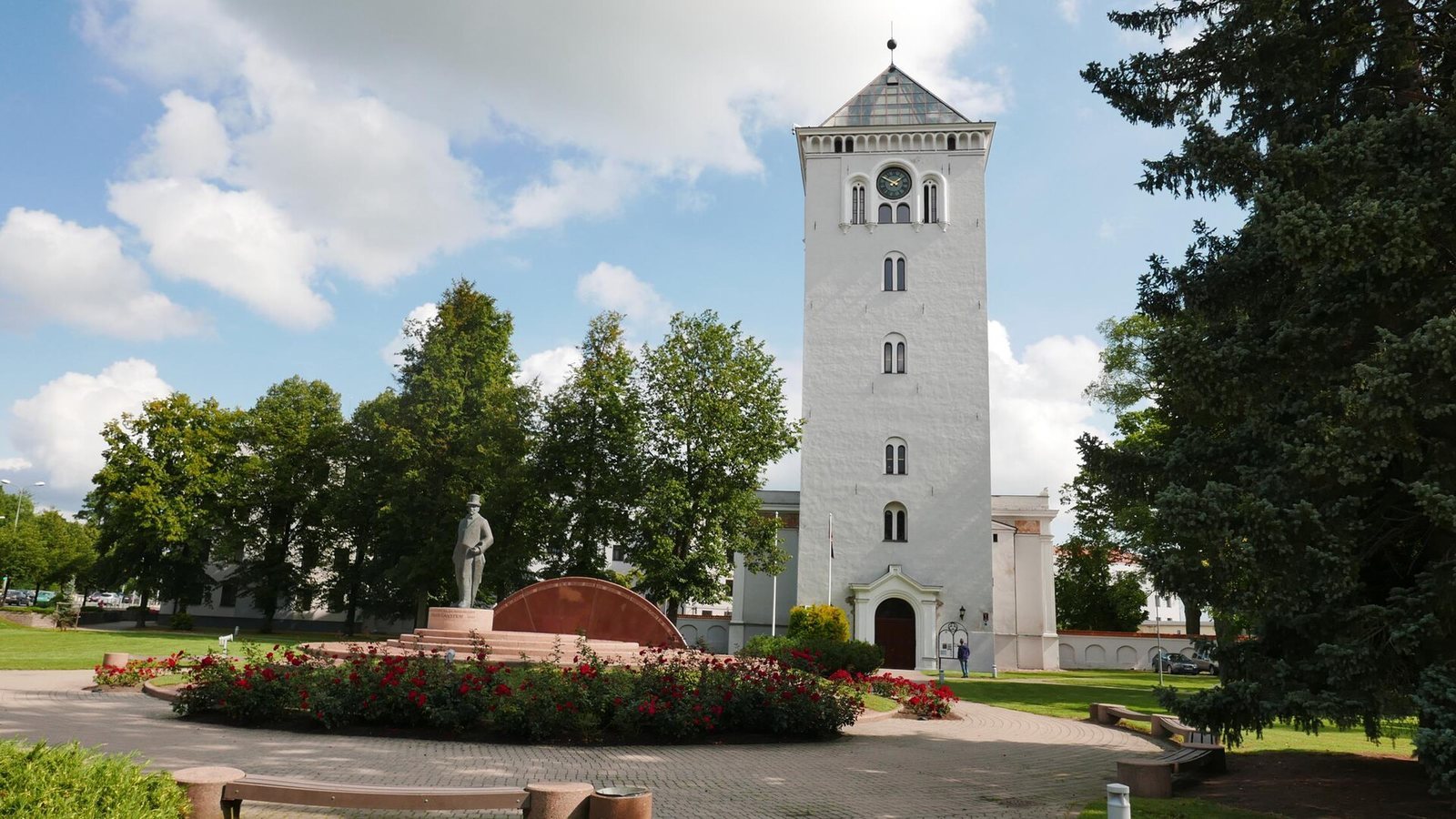
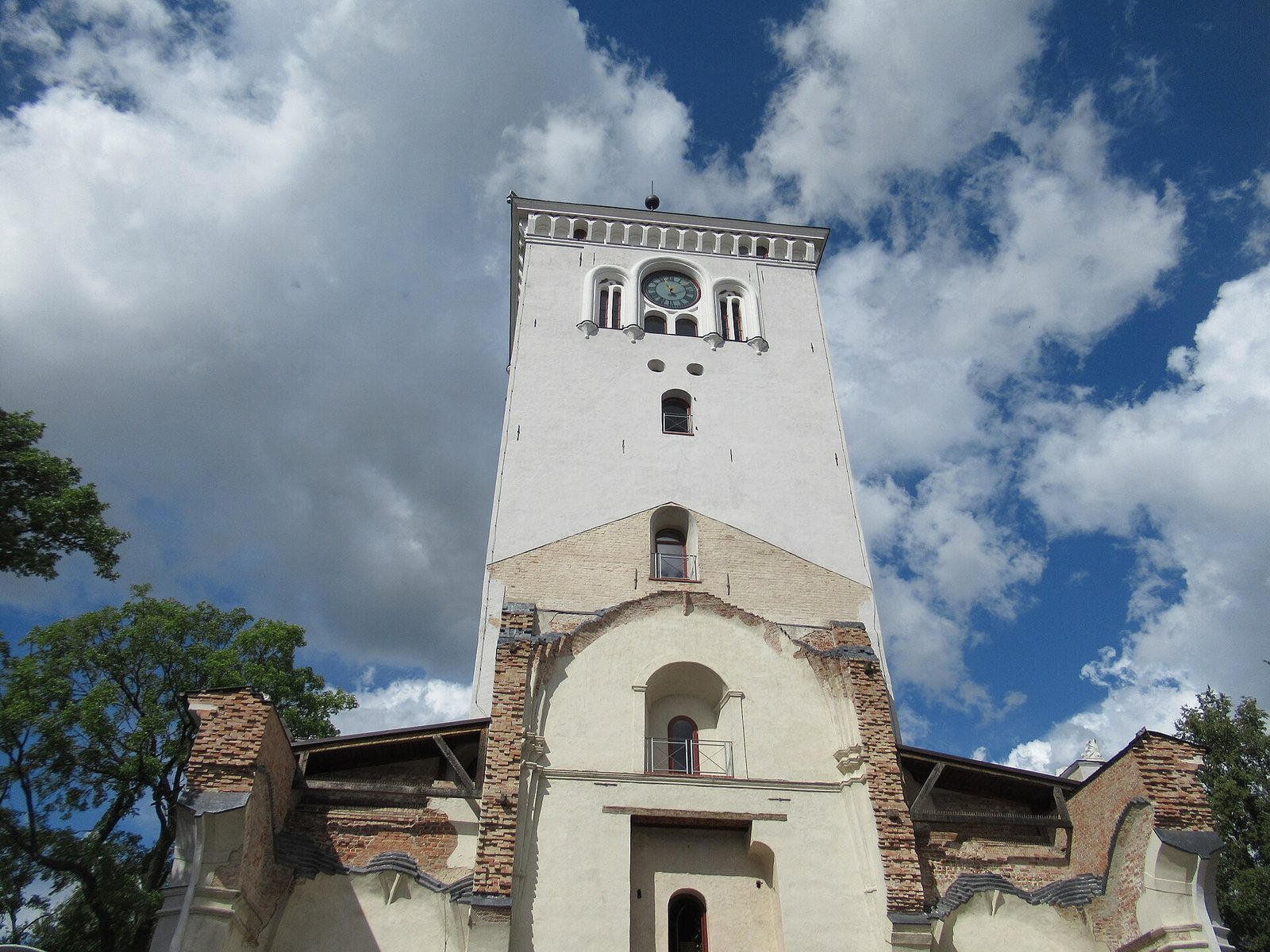
The church itself was destroyed, but excavation east of the tower revealed part of the original nave, the main space where the congregation gathered, and sections of the original exterior wall masonry. These remains are incorporated into a sunken forecourt. A stone sculpture and fountain called Trinity, by Jānis Aivars Karlovs, was unveiled at the centre of the forecourt in 2011.
Surviving tower
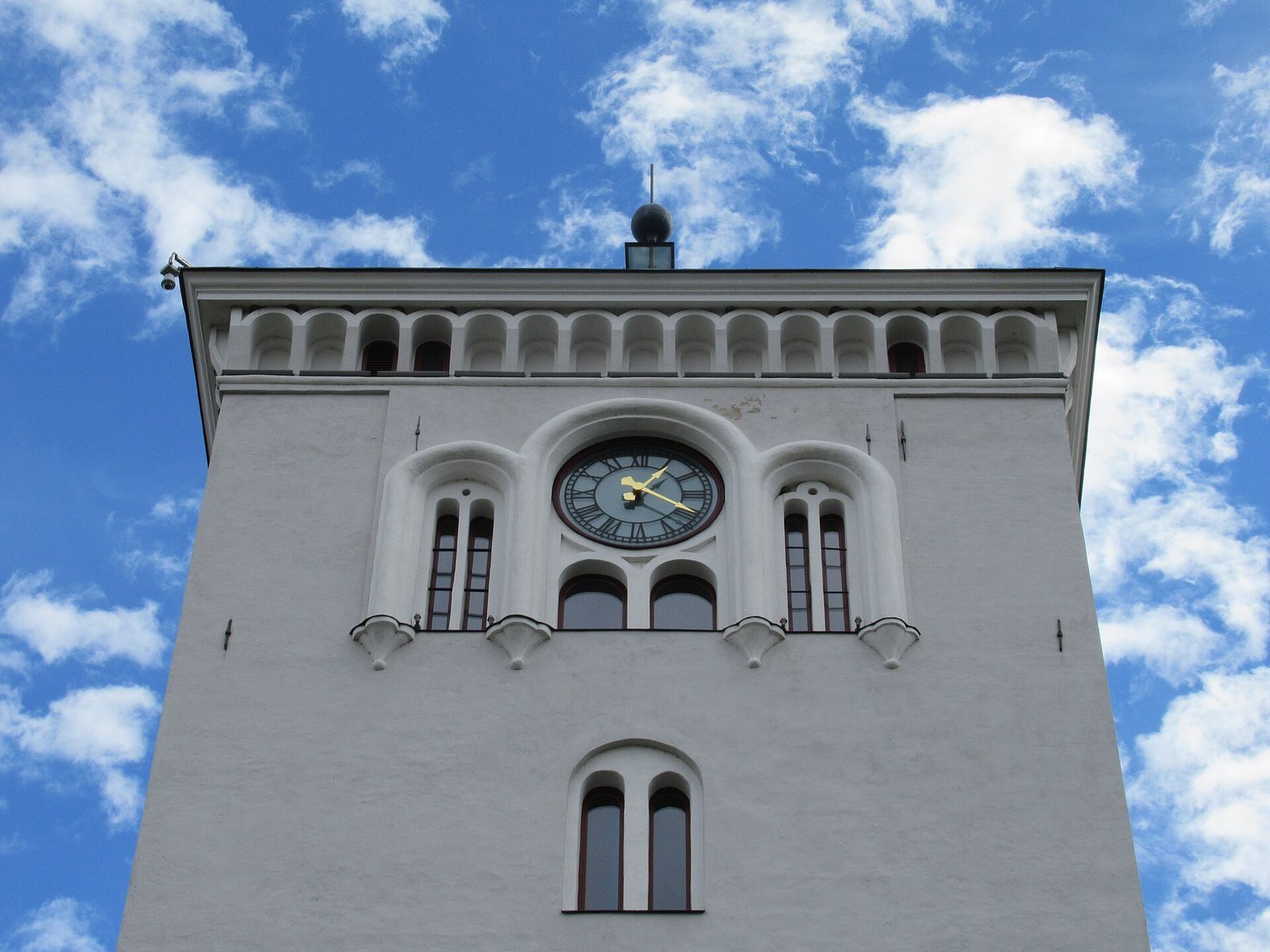
The tower retains its original form and now stands 50.17 metres high. It was originally 49.68 metres tall and reached 80.5 metres, including its gilded cross, after it was raised in 1862. Its nine floors include historical exhibitions on the third, fourth, and fifth floors, a conference hall on the seventh, and an exhibition hall and viewing platform on the ninth. The exhibitions cover Zemgale and Latvia’s presidents, Jelgava and the church across changing eras, and folk costume in Zemgale. Touchscreens on the fourth floor provide virtual views of the church’s historic exterior and interior.