Torosay Castle: A Scottish Baronial Residence on the Isle of Mull
Site at a Glance
- Popularity
- High
- Country
- United Kingdom
- Primary era
- Modern
- Eras represented
- Modern
- Civilizations
- British
- Site type
- Domestic
- Remains
- Castle
On this page7 sections
History
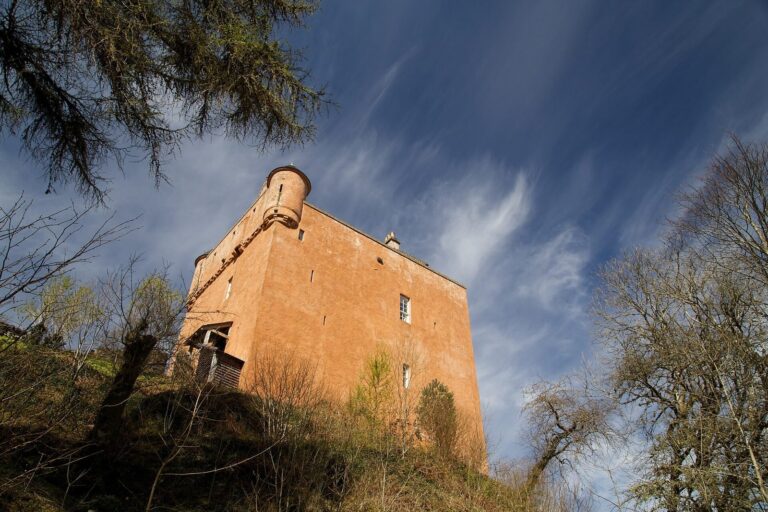
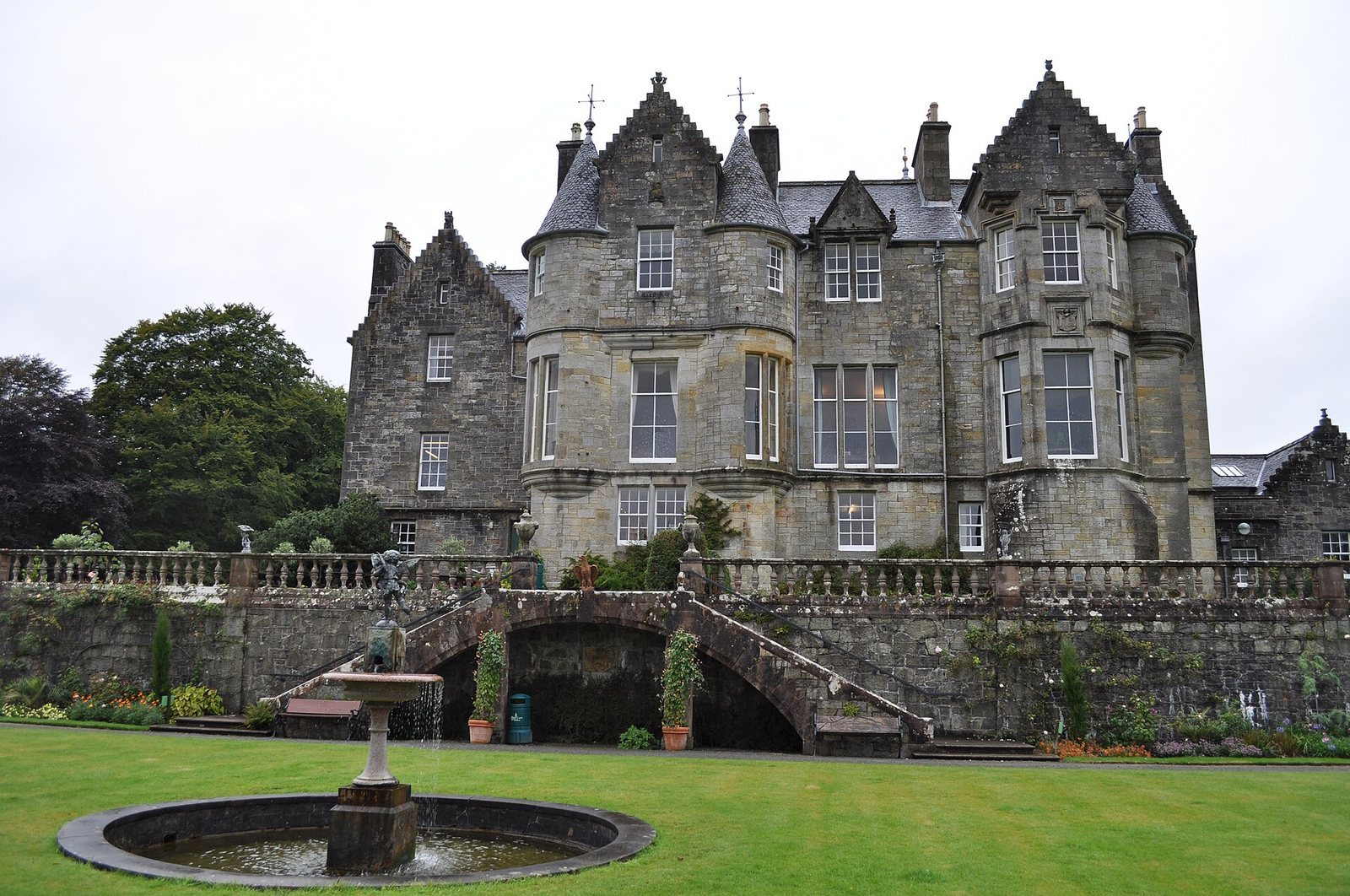
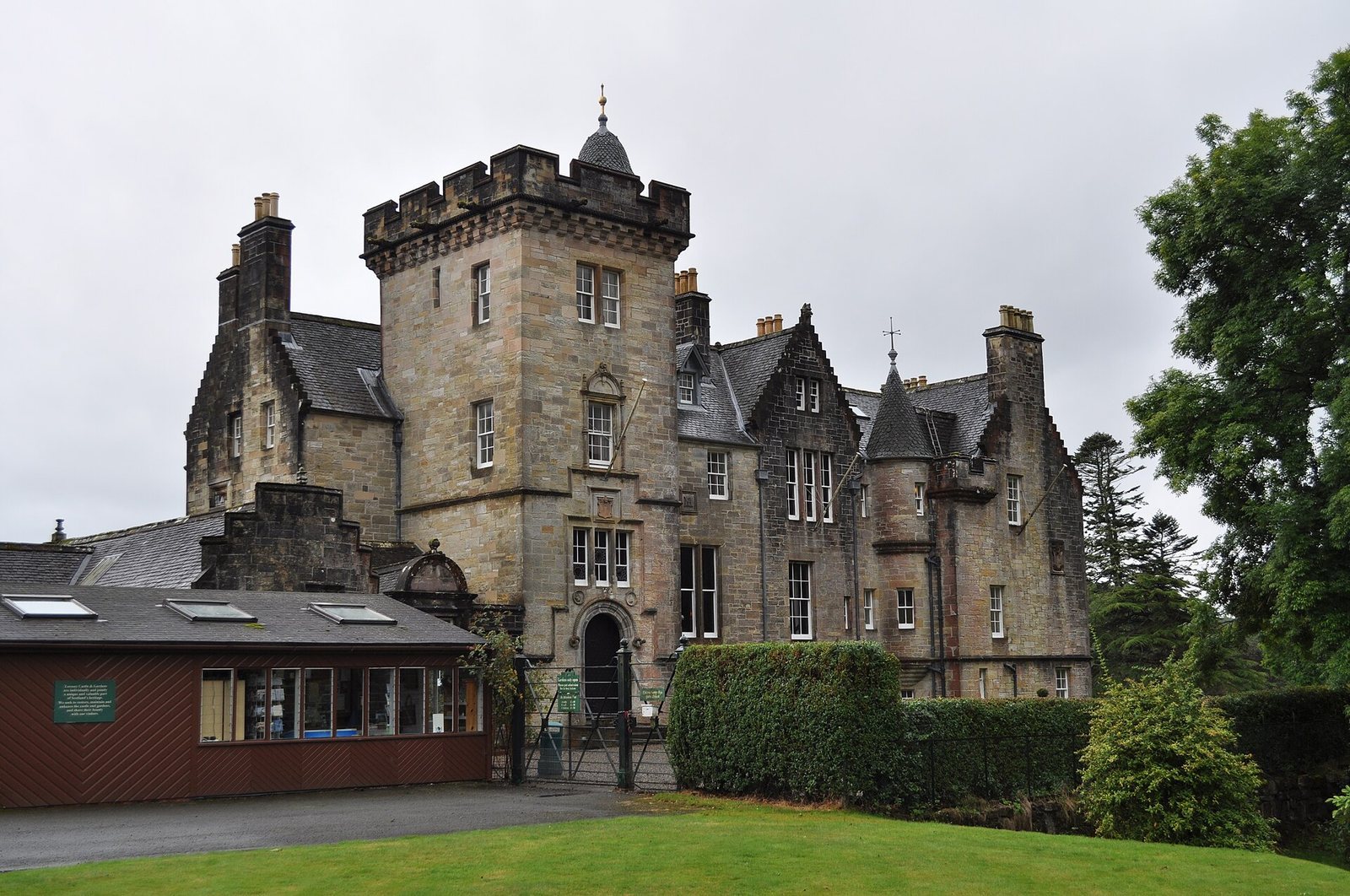
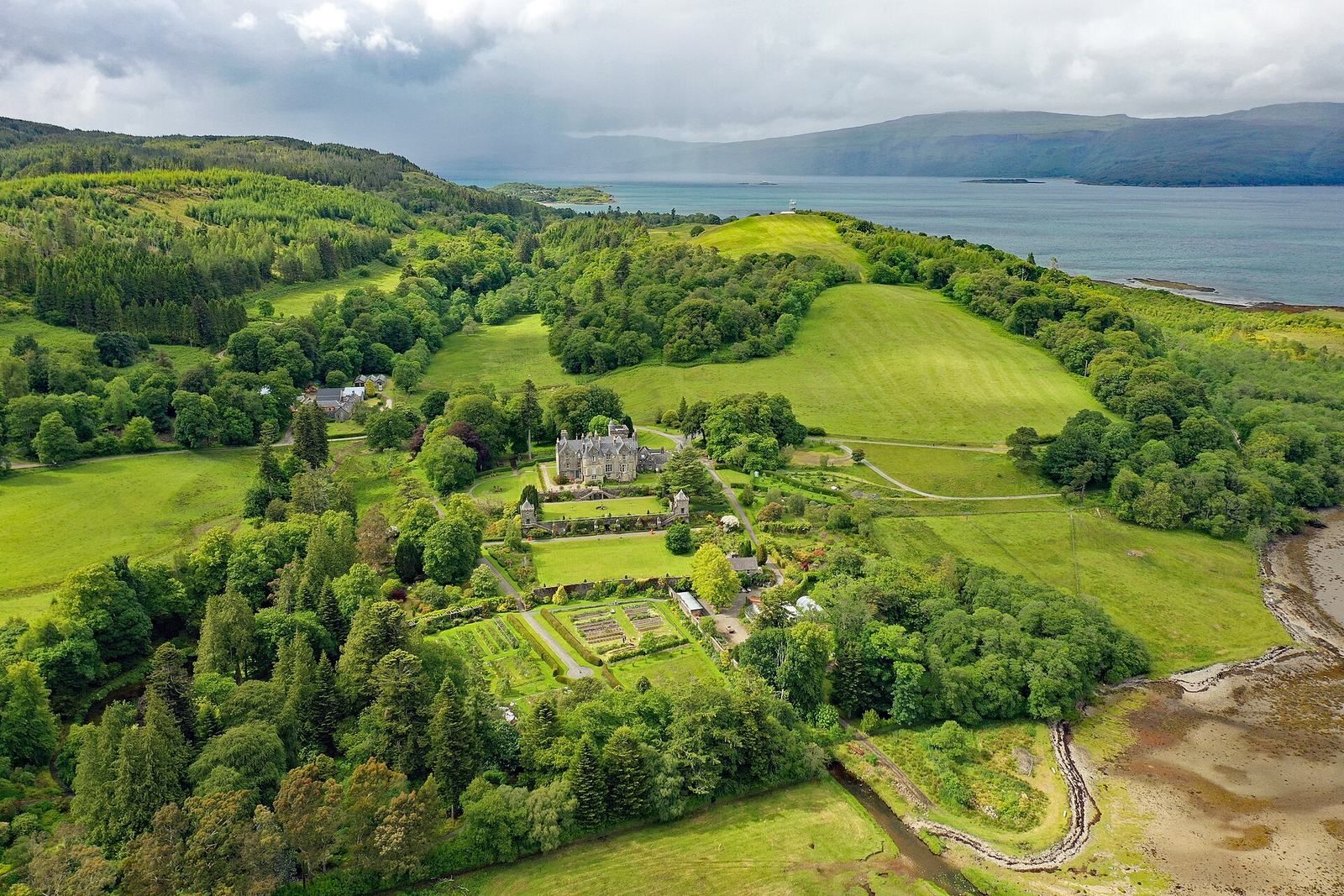
Torosay Castle is a Scottish Baronial residence on the Isle of Mull, Scotland, United Kingdom, commissioned by John Campbell and built from 1856 to 1858. Scottish Baronial architecture revived forms associated with Scottish castles and baronial houses. The estate passed through several families and, after Guthrie Castle left the Guthrie family, Torosay was generally regarded as the seat of Clan Guthrie, a Scottish family lineage with a historic identity.
From Achnachroish House to Duart House
In the 1820s, the Dukes of Argyll transferred the estate to Colonel Campbell of Possil Park, Glasgow. He commissioned Achnachroish House, a Georgian residence. Georgian architecture was a British style associated with the reigns of George I through George IV, from 1714 to 1830. Colonel Campbell’s son John inherited the estate in the 1850s, demolished the earlier house, and commissioned Edinburgh architect David Bryce to design a larger residence. Work began in 1856, and the completed house was named Duart House in 1858.
Guthrie ownership and the Torosay name
John Campbell sold the property in 1865 to Arbuthnot Charles Guthrie. Guthrie’s business interests had suffered during the American Civil War, fought in the United States from 1861 to 1865, contributing to his financial difficulties. Members of the Guthrie family retained the estate until 1911. Around 1900, Murray Guthrie, the second laird, or Scottish landowner holding an estate, developed gardens around the house.
After Murray Guthrie died in 1911, his widow, Olive Murray, adopted the name Torosay Castle, partly to distinguish the house from Duart Castle on Mull. The property was sold as a ruin that year to Sir Fitzroy Maclean, who arranged its restoration. Angela du Maurier is said to have lived at Torosay for a time with Olive Guthrie; du Maurier dedicated her 1940 novel Weep No More to “Olive Guthrie of Torosay.”
Later uses and preservation
After the Second World War, the house operated as a hotel called The Tangle of the Isles, which closed soon afterwards. In the early 1970s, the lairds opened the house and gardens to the public. Torosay Castle became a Category A listed building in 1971, and its designed landscape entered Scotland’s Inventory of Gardens and Designed Landscapes in 1987.
Christopher Guthrie-James, the fifth laird, sold the castle in 2012. It closed for renovation and was occupied by a private family again in December 2013. Kenneth Donald McLean, the sixth laird, undertook renovations to the house and gardens.
Remains
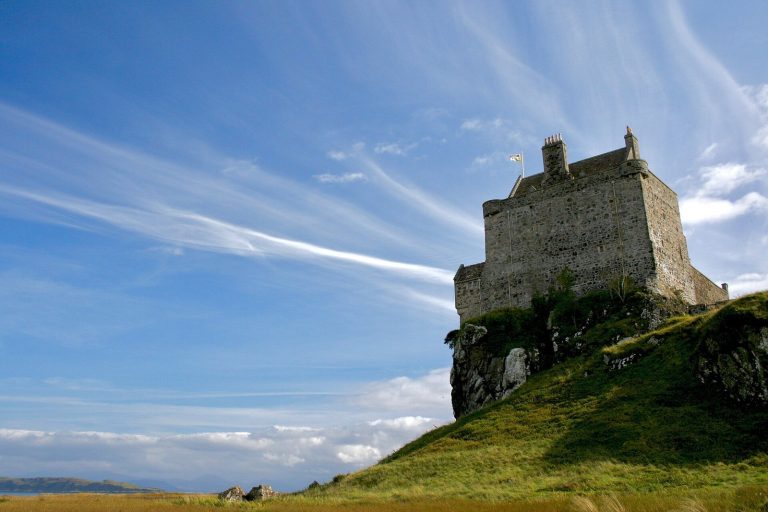
The large Scottish Baronial house is set within about five hectares of gardens. The grounds include formal terraces and a Japanese garden.
Terraces and sculpture
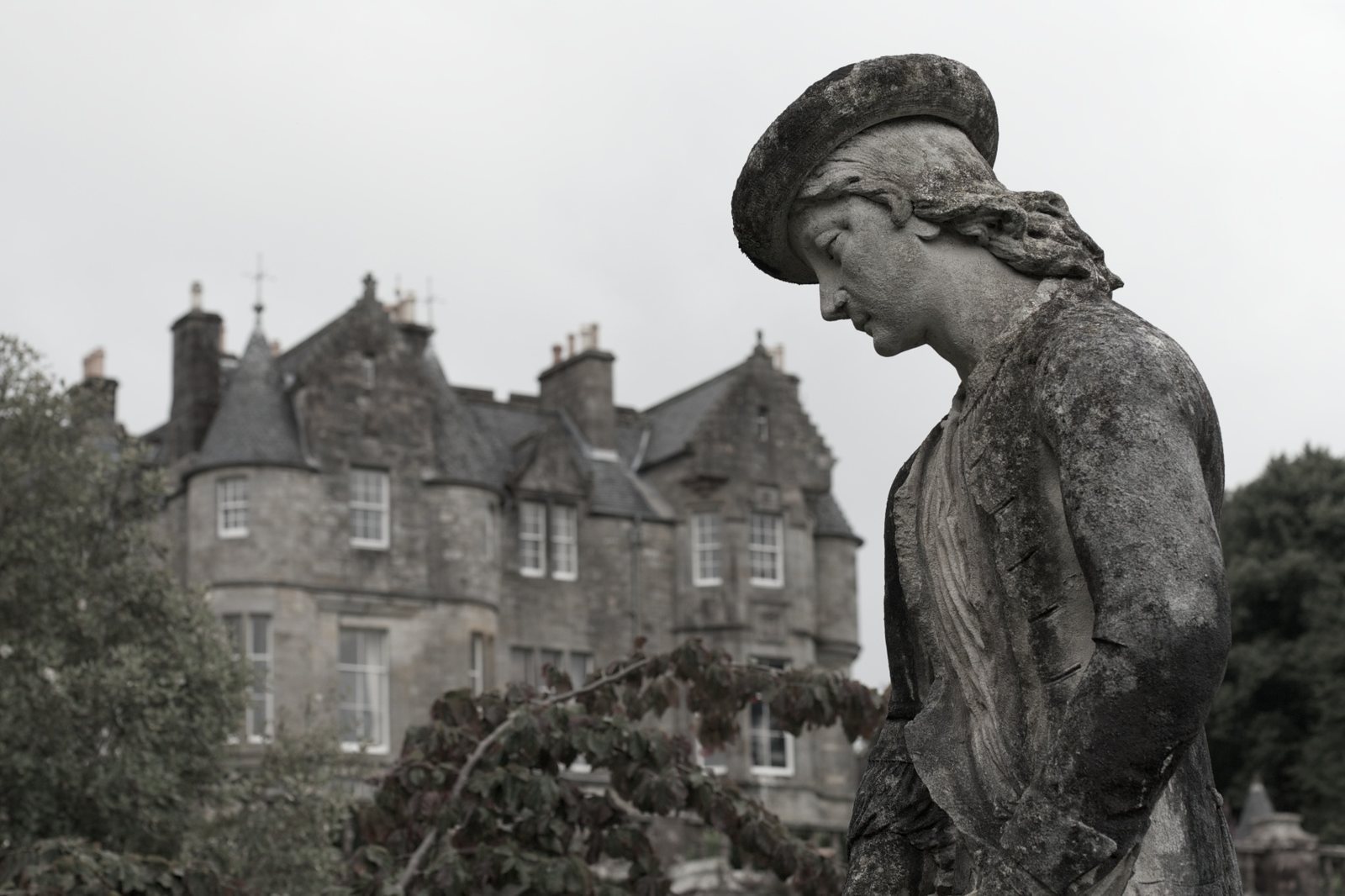
The formal terraces were laid out around the turn of the twentieth century and are attributed to Scottish architect Sir Robert Lorimer. The garden’s Statue Walk contains 19 sculptures associated with the style of Italian sculptor Antonio Bonazza, and the group has also been attributed to him. The sculptures were acquired during a visit to Italy and shipped to Scotland as ballast in a cargo vessel at negligible cost.
Interior and movable features
Paintings in the dining room show Royal Navy ships anchored in Duart Bay during the 1890s. In July 2008, a bottle of Veuve Clicquot champagne dated 1893 was found in good condition inside a sideboard. It is believed to have remained there since at least 1897. At the time of its discovery, it was described as the oldest known bottle of that champagne; it is now displayed at the Veuve Clicquot visitor centre in Reims, France.